Have You Lost Your Mind?

By Phillip Starr

I used to ask my students, “Have you lost your mind?” They’d look at me quizzically and I’d continue with my query, “Where did you put it?” And they’d continue to stare at me…

When someone grabs you or punches at you, where does your mind go? Where does it fix itself? For most people, the mind instantly becomes attached to the spot where they are being seized or on the opponent’s fist…and this is a serious error. Remember, where your mind goes, so does your attention, your body, and your energy.

As an experiment, have a partner firmly grasp your wrist. If you place your mind and your attention on where he has clutched you, you will be unable to free yourself or move much at all. However, if you focus on your One-Point (my term for the dantien or “tanden” in Japanese) you will find that your body can move in any direction. Your elbow and your shoulder have not been immobilized either, and you can move them quite easily. Thus, you have many options for dealing with this form of attack…unless you fix your mind on the spot where you have been attacked.

If your partner intends to punch you, you mustn’t focus your attention on his fist. In swordsmanship, you are told not to focus your mind on your opponent’s sword. If you do, you will very likely lose the battle.

So, where should you fix your mind, you ask? The best example I can think of has to do with swordsmanship. You are holding your sword and are poised in front of your opponent who also wields a sword. What is your objective? If you answer that your primary intention is to stay alive, then you will probably fail. The correct is, of course, to cut your enemy! Your mind and intention should be fixed on him rather than on yourself, his weapon, or where he intends to cut you.

The opponent is, of course, at a disadvantage; he must attach his intention to a particular part of you. He must know if he’s going to direct his cut at your head or shoulder, if he’s going to punch you in the nose, or seize your left wrist or right lapel. This means that HIS MIND IS FIXED and not free to move about. His mind is focused on a particular form of attack, which is directed at a specific target. Consequently, it cannot immediately respond to any kind of counter-measure. It can only direct its single attack; it cannot react defensively. This is the great flaw of attack.

So next time you practice, especially with a partner, make sure you don’t lose your mind…

BBC Shaolin Temple video reaction — The Tai Chi Notebook

Get the inside view on the recent BBC Shaolin Temple documentary from a YouTuber who lived there for 3 years training Shaolin Kung Fu. What is real and what is fake? Find out here:

via BBC Shaolin Temple video reaction — The Tai Chi Notebook

Zen and the art of Brexit — The Tai Chi Notebook

In my last post on Yoga I mentioned the political situation here in the UK at the moment. If you’re in the US, Europe or elsewhere and you can’t figure out what’s going on in the UK then welcome to the situation! Neither can we. The whole thing is madness. I recently read something that […]

via Zen and the art of Brexit — The Tai Chi Notebook

Rules of Appropriateness, in Martial Arts and Politics — Kung Fu Tea

Fragmentation and Unification Recently I had a chance to catch up with one of my old Kung Fu training brothers. We had a great time training at the same Wing Chun studio. That was years ago. Then I left Salt Lake City for Western New York and, a few years later, our Sifu relocated to […]

via Rules of Appropriateness, in Martial Arts and Politics — Kung Fu Tea

Chinese Martial Arts in the News: August 19, 2019: Hong Kong, Bruce Lee and New Books! — Kung Fu Tea

Introduction Its been a long hot month with lots of Chinese martial arts news. That means that now (before the start of the new semester) is the perfect time to get caught up on recent events! For new readers, this is a semi-regular feature here at Kung Fu Tea in which we review media stories that mention […]

via Chinese Martial Arts in the News: August 19, 2019: Hong Kong, Bruce Lee and New Books! — Kung Fu Tea

Why Martial Arts Are Great for Kids!!!

Education is very important for kids. But besides attending school, your kids should also be engaged in some kind of athletic activity. This would allow them to develop a more versatile set of skills.

Martial arts are one of the best ways to have your kids engaged in physical activity. But how exactly are your kids going to benefit from them?

We’d like to pinpoint 4 key benefits of martial arts for kids and make you pack your backpack and go to work out!

Athletic development

Nowadays, health and weight issues are quite common among adults. Thereby, it is exceptionally important to set kids on the right track and teach them to appreciate and care for their health.

If your kids like martial arts, they are going to become more for them than just a thing that you want them to do. Training would become a lifestyle for your kids, and no matter what, they would want to keep martial arts in their life.

Even just buying a punching bag for your kid and let him/her train on it. It will have a dramatic effect on the whole athletic development especially if its combined with training in a gym.

In addition, kids grow rapidly, and martial arts can improve their growth. Rather than sit all day in front of the computer, kids should engage in physical activities. Don’t get us wrong, kids should do what they like, but it would be great to mix things up with some exercise.

Self-defense skills

Many people study martial arts because they want to acquire self-defense skills. And since the world we are living in isn’t particularly safe, self-defense skills are very valuable for kids to have.

And among kids, physical conflict is very common. Children test their capabilities and have a need to affirm themselves, which causes bullying. And while fighting isn’t always the best answer to bullies, your kids should have the skills to defend themselves with.

Discipline

Discipline is a very important thing to teach to your kids. And what better way than via martial arts?

Martial arts, as pretty much any other athletic activity, have their own challenges. Performing a move hundreds of times may be routine and difficult, but it is necessary to do to become better.

Life isn’t as easy as it may seem to kids. And by adding some controlled difficulty to it, martial arts may be able to teach them to work for the result.

Respect

Respect arguably is the most valuable asset martial arts could provide your kids with. All other benefits are very important as well, but respect is a thing that many young people lack. And you’d certainly want your kids to have the right moral standards ingrained in them.

During sparring, there are certain rules to be followed. Children bow to each other, as well as to their instructors and the masters who came before them. They also learn to respect their partners and establish proper boundaries for behavior.

Instructors also play a key role in the establishment of moral standards in kids. Good instructors are going to stress the respect issue regularly and remind children to respect their self, their peers, teachers, and parents.

Martial arts may seem to be about punching, kicking, and throwing. But in reality, all the physical benefits of martial arts are secondary to the moral standards which kids can learn from their instructors.

Review of Tancheng Chan Kung fu School

Check out some of the latest reviews of Tancheng Chan Kung fu School one of the most affordable schools available for learning kung fu in China.

Tan Cheng Chan Wu International Kung fu School 

Tancheng Chan Wu International Kung fu School is an all-inclusive residential kung fu school in China offering food, accommodation, martial arts training and additional classes for very reasonable prices. At this kung fu school you can learn Shaolin Kung fu, Taichi, Qigong, Wing Chun, Calligraphy, and even Chinese traditional music. With 3 meals a day included as well as the choice of rooms or a private apartment students are given a level of flexibility that is not available at some other international martial arts schools in China in terms of accommodation options.

Located in Linyi, Shandong Province and close to Mengshan National Park the martial arts school has a rural feel as well as a good Kung fu Master to Kung fu Student ratio. Living costs at the school are low and the school translators are more than happy to provide students with assistance when necessary either when learning kung fu or for daily life.

Ashraf Abouali, from Lebanon

“The Tancheng Chan Kungfu School is a great place to learn Kungfu and experience the best form of the Chinese culture, it is located in a peaceful place surrounded by farms and large wheat fields, I learnt Wingchun and Shoilin Kungfu and gained a brotherhood that will stay with me for life. The masters are amazing, they care for you alot and they will consider you part of there family, and they will listen to all what you have to say and make you benifet from all you potentials. “

Salman Abouali, from Lebanon

“Tancheng Chanwu international kungfu school is the best place to learn kungfu and the best experience you can make in life with best masters.”

Markus Joohs, from Germany

“Good atmosphere to train and experience kungfu, friendly staff and experienced kungfu masters. Very nice area and real China feeling and great food, nice vegetarian options especially for breakfast. Have been there for a month and hope to go there soon again”.

Kenadid Osman, from Somalia

“A great place to learn kung fu, located in beautiful countryside by lashes and trees, masters are pretty helpful and professional, people at the school are friendly And place is so clean. It doesn’t matter whether you’re familiar with martial arts or not. In just three months i learnt kung fu skills that i will use over a lifetime.”

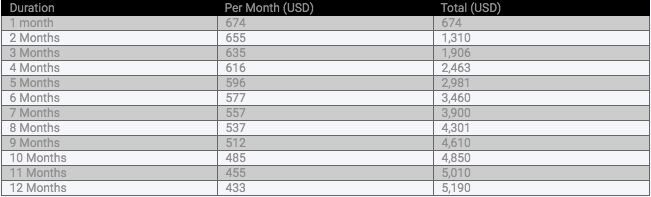
For further information on this school you can visit the studymartialarts.org website for an independent look at what the school has to offer. For a quick guide to pricing see their monthly prices below.


The Drunken Boxing podcast. Episode 1 Marin Spivak. — The Tai Chi Notebook

Byron Jacobs, who produced the excellent XingYi San Ti Shi primer I posted recently, has launched a new podcast that’s well worth checking out. In the first episode, Byron talks to Marin Spivak, Chen Tai Chi disciple of Chen Yu, about what it’s like going to live and train gung fu in Beijing as a […]

via The Drunken Boxing podcast. Episode 1 Marin Spivak. — The Tai Chi Notebook

Research Notes: A Japanese Martial Arts Demonstration — Kung Fu Tea

It will come as no surprise to regular readers that I am a fan of late 19th and early 20th century martial arts ephemera. Postcards, being visual, cheap and easily mailed around the globe, were one vector by which popular images of a wide variety of physical and combative practices were spread. As we […]

via Research Notes: A Japanese Martial Arts Demonstration — Kung Fu Tea

Three Thoughts on Hong Kong, Social Dislocation and the Fog of War — Kung Fu Tea

“Prediction is very difficult, especially about the future.” Niels Bohr (among others). With Trepidation I would like to outline three quick points about the current situation in Hong Kong, particularly as it relates to (and sometimes sidesteps) the traditional martial arts. Like many of you, I am following events in the city […]

via Three Thoughts on Hong Kong, Social Dislocation and the Fog of War — Kung Fu Tea