Kung Fu in Thailand Day 3: A Day of Rest

Greetings everyone,

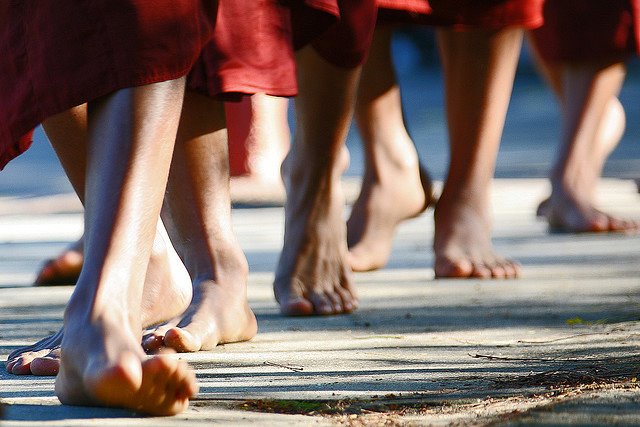
Yesterday, Wednesday, was a rest day, as is Saturday. We bundled up in Sifu’s truck and drove north to Mae Hong Son close to Burma. We visited some hill tribe markets and two principal Temples, one in front of a small lake and another on a hill overlooking the town. The hill tribes women’s hand weaving is exceptional and they sell the most delicious wild honey by the side of road. One of the highlights of the day was when we picked up four Buddhist monks walking up the winding mountain road who piled in the truck with us. Not only is Sifu Iain extremely knowledgeable in Kung Fu and martial arts in general, he has also a deep knowledge and experience of the local area and its peoples. Thus, our journey was one through the historical, cultural and philosophical landscapes of the region. Being so close to Burma there is a very strong influence from the Shan people. Indeed, the whole area has been flooded with various ethnic groups, in particular hill tribes fleeing conflict in Burma. I finally had the current political situation in Thailand explained effectively over lunch by Sifu Iain and the day ended at the Temple on the Hill in Mae Hong Son, Wat Phra That Mae Yen. It is hard to describe how extraordinary are these temples. The view from the mountain top on which the temple sits was spectacular as the jungle stretched out below with its forested hills and mountains, limestone spires and the blazing sun setting behind.
IMG_0868

Today we followed the same training schedule from 6 am to a little after 9 a.m., and 3:30 p.m. to about 6:15 p.m. Along with my extra 2 hours in the middle I also received a real Thai Massage. It was as much ordeal as it was massage but the lady hired for the massage was very good natured. She is a strong and gifted traditional massage therapist. She laughed at the noises I made with her elbows in my back and foot in my leg and told me to say, “Sooo, sooo!”. She tweaked my nose and invited me to the discotheque tonight in Pai but I told her I couldn’t go. I learned later from Sifu that men with big noses are considered extremely handsome in this part of Thailand; I’ve finally found somewhere that values my natural good looks and charm! We did a lot of Chi Kung, stretching and meditation today. We also continued with the Tigre-Crane Sum Chien and another sequence I have not yet described called Shuan Yang, which in English is called Sun Frost White Crane. Shuan Yang is a kind soft or gentle martial art that looks a lot like Tai Chi, but more martial. Indeed, some believe it to be the origins of Tai Chi. We did some great punching drills with the suspended sand filled cloth sacks and had a marvellously vigorous kicking session. Today on weapons I got to take up the actual bladed sabre, the Tan Dao or Chinese Broadsword. Wow, that was a gas training with sword in the open outdoor training ground my traditional black and gold Kung Fu pants billowing wet chest bared to northern Thailand’s blazing afternoon sun.

IMG_0856At tea Sifu spoke of the history of Nam Yang’s Tigre-Crane lineage. His Master’s Master, Master Ang, was the one I mentioned earlier who brought the art out of China and passed it eventually to Master Tan Soh Tin who then passed it to Iain Armstrong, the man I call Sifu. What an amazing history. Master Ang started Kung Fu as a boy and had three different masters. His first master was known as “the secretive old man” who introduced him to Tigre-Crane at 8 years old. His second master was an herbal medicine peddler who specialized in the Shaolin weapons system and Tiger form. The third was a Shaolin monk. I was amazed to learn that Master Ang eventually fought in Sun Yat-Sen’s army with the Koumintang, which was subsequently taken up by Chian Kai-Shek. As the Communists became victorious and began executing the Shaolin Kung Fu martial artists Master Ang emigrated to Singapore and later started Nam Yang in 1957. He ran the club until his death in the mid 1980s and the leadership passed to Master Tan who trained Sifu Iain. Iain now has schools here in Thailand, in the UK, in Russia and another about to open in Italy. It is very special to be a part of this lineage and I hope to bring home some foundational skills I can practice on my own. I’ve taken to playing flute under the stars while the others arrive to the outdoor training area for the morning session. Thus, I must sign off as 5 a.m. comes early!

by David Lertzman

David Lertzman Ph.D. is the Assistant Professor of Environmental Management and Sustainable Development PI: Energy Indigenous Environment Interface Research Program, Haskayne School of Business, University of Calgary.

This blog entry is part of a series of blogs David Lertzman wrote for StudyMartialArts.Org detailing his experiences training at Nam Yang Shaolin Kung Fu Retreat. If you’re interested in visiting this school book your place here and get an exclusive discount  Nam Yang Shaolin Kung Fu Retreat.

Kung Fu in Thailand Day Two: The Training Begins!

Today was an awesome day! I was up about 5:30 a.m. and we started a little before sunrise with Chi Kung and Sam Chien, crescent moon shining with mist hanging off the jungle. We trained with the group this morning from 6-9 am and in the afternoon session from 3:30 until a little after 6 p.m. I did 2 hours of solo instruction focussing on Chi Kung and Sum Chien. Sum Chien is a series of moves that forms a basis for the Southern Shaolin Tigre-Crane form we are learning. I also got to begin weapons training with staff and starting on Chinese Sabre using a stick. I thought staff would come more easily to me than sword but I probably did better with the sword technique. I worked on weapons with the head student who is also an instructor. The hardest part is probably the footwork. All in all I would say we spent about 2.5 hours today in stretching and conditioning, lots of stretching.

IMG_0864

In the evening we focused on special breathing techniques that apply to Chi Kung and Sum Chien, which Sifu said were actually quite advanced. I did well with my prior yoga and Chi Kung training. Then we worked on punching drills into heavy cloth sacks filled with sand hung from the rafters. It makes your knuckles pretty red but is very instructive on technique and really fun!! The idea is not to swing the sack but to be able to dent it by sending your chi into the target. One of my favourite times of day is the break in training when Sifu call us up to the veranda where we sit on teak stools and he pours special tea in all our cups on a table shaped like a dragon. He then delivers teachings about technique principles, tells stories and dispenses wisdom. Like I said, you can tell a lot about Sifu by how his chief students treat him: with utmost respect and admiration, hanging off every word with the rest of us. Sifu spoke about Kung Fu as a way of life; the martial aspect is part of a bigger picture and no one part is more or less than the other. Kung Fu prepares us for meditation and the pathway to enlightenment.

At afternoon tea Sifu spoke about the tendons. I had mentioned that I felt where an injury in my shoulder was really being stretched when being corrected in some technique for practicing one of the slow punch forms early in the morning. At first it hurt but I stayed with it and then it started to open. Sifu said that such body awareness is the first step to Kung Fu. He said one’s tendons have a grain like wood. When you get injured it forms a pattern in the tendon, like a knot. As you develop your awareness you can use the Kung Fu forms to go into the tendon and open it up taking out some of the scar tissue and re-patterning the tendon. He said something else that was very profound which reminded me of Sequoyah. Speaking about training and repetition, for example of a simple movement like a step or the most basic punch over and over again, Sifu said that you could never get board of anything that is done with deep intention and full awareness.

Life here has a rather monastic feeling. We train before sunrise and retire a little after sunset. Two meals a day are wholesome yet simple, rice with vegetables and a clear, tangy vegetable soup, prepared by our cook who is mostly blind and comes from one the tribes originally on the Burmese side. Accommodations are comfortable yet spartan, the bed being a heavy, handcut bamboo cot. It is surprisingly quite chilly in the morning and I really missed my fleece pants for the first couple hours but had to put on a good showing as a Canadian while everyone else was quite bundled up.

There are several people training, all male from young to old: two other Canadians, a Dutch fellow, a Belgian and a Brit. The Belgian and Brit are senior students. One is already a teacher and the other well on his way, very dedicated, lovely young men. Tomorrow we have a rest day and are going to see some remote hill tribes with whom Sifu is connected. I’m pretty sore in many places with a nice, large bruise on my arm from yesterday’s push-hands activity, and very happy.

Love and Blessings
David

David Lertzman Ph.D. is the Assistant Professor of Environmental Management and Sustainable Development PI: Energy Indigenous Environment Interface Research Program, Haskayne School of Business, University of Calgary.

This blog entry is part of a series of blogs David Lertzman wrote for StudyMartialArts.Org detailing his experiences training at Nam Yang Shaolin Kung Fu Retreat. If you’re interested in visiting this school book your place here and get an exclusive discount  Nam Yang Shaolin Kung Fu Retreat.

Kung Fu in Thailand Day One: Arrival

Steve-Website-Photo1I have arrived in Pai, Mae Hong Son Province for two weeks of traditional Shaolin Kung Fu training in northern Thailand. After a flight delayed by fog we flew a short but spectacular journey over forested mountains and I’m now at Nam Yang Mountain Retreat, International Martial Arts Kung Fu and Meditation Training Centre. Although my work contract allows for 6 weeks of holiday, this is the first real vacation I’ve had since our honeymoon 8 years ago. I really need it.

It is very special here. Nam Yang was created by Sifu Iain Armstrong and his wonderful Thai wife under the guidance of Grandmaster Tan Soh Tin with whom he has studied 30 years. Grandmaster Tan’s master brought southern Shaolin (Tigre-Crane) Kung Fu out of China after Mao’s ascendancy when the Shaolin martial artists were being executed. Nam Yang is near the town of Pai in northern Thailand about 30 km from the Burmese border. They grow most of their own food, including the rice, pineapples and bananas. The architecture is beautiful in the local traditional style giving the whole place a Shaolin Temple like quality. It is an extraordinary achievement! They have a large kitchen and open eating area, an office, Buddha House for meditation with two great Nagas (Dragons) descending the stairs, two training octagons, one which is covered and one open-area, plus the living quarters. Accommodations are simple, almost spartan, but we have what we need to get by and it is lovely!

I had a great sit with Sifu Iain over a special tea to review my training goals surrounded by the beautiful landscape and sprawling grounds of Nam Yang Retreat Centre. Afterwards I joined in the evening’s training. We did about 1.5 hours stretching and prep before doing push-hands and some basic drills. Sifu Iain is so authentic. You can tell a lot about Sifu by how his chief students treat him; that says it all. There are several people training, all male from young to old. Two other Canadians, a Dutch fellow, a Belgian and a Brit. The Belgian and Brit are senior students. One is already a teacher and the other well on his way, lovely dedicated young men. We went to Pai for supper tonight as one is leaving tomorrow after having been here some months. The other pretty much lives here training every day all day and sometimes teaching. Tomorrow we start at 6:00 am with Chi Kung for the sunrise. Wednesday is a rest day and we will go to town of Mae Hong Son on the Burmese border visiting remote hill tribes with whom Sifu is connected.

Kap Kuhn Kap (Thank you in Thai),
David

David Lertzman Ph.D. is the Assistant Professor of Environmental Management and Sustainable Development PI: Energy Indigenous Environment Interface Research Program, Haskayne School of Business, University of Calgary.

This blog entry is part of a series of blogs David Lertzman wrote for StudyMartialArts.Org detailing his experiences training at Nam Yang Shaolin Kung Fu Retreat. If you’re interested in visiting this school book your place here and get an exclusive discount  Nam Yang Shaolin Kung Fu Retreat.

Training with Master Zhou

SMA – Baji Zhandao UK training camp visit to Tianjin to train with Master Zhou.

Master Zhou Jingxuan teaches in Xi Gu park in Hong Qiao District. Historically this park continues to attract many of Tianjin’s famous martial arts masters and students. The park is a hive of activity throughout the day.

Master Zhou teaches the rare inner courtyard Shaolin martial art of Jin Gang Ba Shi. In addition to that he also teaches Piguazhang, Xingyi quan, Baji quan, Li style Taichi and Chou Jiao. As our trip to visit with Master Zhou was relatively short we focused our learning on the basics of two specific styles Piguazhang and Bajiquan.

After a warm welcome in Tainjin and some photos we enjoyed two hours of great training in Xi Gu park with Master Zhou. After the training we were invited for dinner with Master Zhou his senior students and a number of representatives from the Tianjin Martial Arts Association.

The following is an assortment of clips from the two day seminar as well as a short clip from a discussion on the evolvement of Bajiquan in Tainjin.

All the training you see in the video took place in Xigu Park where Master Zhou regularly teaches.

For further information on studying with Master Zhou, the Shang Wu Zhai Academy as well as a host of other masters in China and Thailand check out the http://www.StudyMartialArts.Org website.

798 Art District – Exploring Beijing’s Art Scene

798 Art District in the north-east of the city is Beijing’s “SoHo” and is home to a large arts community. Paintings, ceramics, and street art are scattered throughout the area and it’s ex-industrial factories provide artists with flexible open space for arts installations both big and small. The most important of these art galleries include the expansive 798 Space Gallery, Long March Space and UCCA (China’s largest privately funded art museum).
The charm of the area is preserved in its post-industrial feel and the Maoist inspired art slogans and original features scattered throughout the converted factories and shop floors.
As an arts community 798 has both endured and suffered because of its success. Initially development pressures almost saw the district completely redeveloped however, successful campaigning and the growth in tourism resulted in the reclassification of the area as a legitimate art district supported by the government.Nevertheless rising land prices and development pressures remain. As a result many of the original artists of the neighbourhood who set up studios in these former military factories, including Factory 798 which originally produced electronics have been priced out due to increasing rents. Only a handful of the most successful of these artists continue to live and work in the district.

“Creating a unique backdrop to display the art”

“Galleries both big and small sell and display art works”
798 continues to thrive despite the rising prices. Today the district is filled with not only art galleries but also gift shops, book shops, restaurants, cafés, artsy clothing stores and of course street vendors. 798 Art District is one of Beijing’s most popular tourist destinations and certainly China’s largest and most famous arts district.
One of the highlights of the district is its change ability. The installations move, change and evolve. The details, textures and colours of the works of art, the setting and the people offer the viewer new interesting sensory stimuli around every corner.
Taking photos is a must. The street art unique, weird and unusual is accessible and allows you to participate and interact with this very Chinese art experience.
“Reform and Opening Up” (改革开放 – gǎi gé kāi fàng)
798 Art District can be found at Jiuxianquao Road and Jiuxianqiao North Road, Beijing. Entrance is free and it is open each day from 10:00am-6:00pm.

View this article on storehouse – https://www.storehouse.co/stories/g2xa-798-art-district

My Site – http://www.StudyMartialArts.Org

The Path of Mindfulness

Image

The oldest evidence for walking on two legs comes from one of the earliest humans known, Sahelanthropus. Walking upright may have helped this species survive in the diverse habitats near where it lived—including forests and grasslands. Today the habitat of the modern humans are urban areas and walking no-longer is matter of life and death but quality of life.

As a low impact exercise over 10,000 steps are recommend each day so its not an exercise that will help you loose pounds like running will. However, the benefits of walking can not simply be measured in weight loss or even fitness gains. Walking is much more than that. Walking is about the maintenance of overall physical and mental health. A evolutionary leap that is one of the most natural parts of our lives.

As a child our first steps are greeted with joy and as an adult our last with sadness. Walking is central to our being whether as a means of movement, a health exercise, a de-stresser, a way to clear your mind, think or connect to your own body or nature. As a result it’s a natural choice for an active meditative exercise that everyone can do.

Here’s a simple set of instructions for one form of walking meditation that focuses on connecting you to your own body and your surroundings.

1. Be aware of your posture, reduce your speed, relax and regulate your breathing with long slow deep breaths .

2. Using your five senses, listen to your surroundings and take a moment to become aware of them. Turn your attention to smells and touch, smile and explore your surroundings with wonder.

3. Become aware of your body, its movements its sway and connect to the sensation of walking. Observe how your body feels during the process of walking and enjoy these sensations for short periods of relaxed mindfulness.

So if you’re in Beijing here are my top three parks in Beijing for mindful walking:

1. The Temple of Heaven

2. Beihai Park

3. The Temple of Earth

Check out this app that is designed to help you integrate mindfulness into your daily routines. https://itunes.apple.com/hk/app/gps-for-the-soul/id586099254?mt=8 or alternatively. Leave your phone behind and get rid of all technological attachments for a mindful walk.

Check out www.StudyMartialArts.Org for martial arts adventure travel and training options in Beijing and World Wide.

Martial Arts & Language Learning in China

If you’ve ever wanted to Study Martial Arts in China, an awesome way to do that would be with one of these combined Martial Arts and University Language Courses.

The benefit of one of these programs will be the practical skills you can learn throughout the experience that can actually legitimately add value to your CV and future employability. These programs allow participants to develop their martial arts and also their understanding of Chinese culture and also importantly the language. It’s a unique way to study with a high level master outside the normal international kung fu school route as that all important Chinese visa will be got through the University.

This video clip above was taken in Yantai, Shandong province. Yantai is a small second tier Chinese City on the northeast coast of China. It has cheap housing and has a good environment. Yantai is famous for a number of kung fu styles including Taichi Mantis, Tongbei quan, Baguazhang and more.

The city itself is a little hot bed of kung fu schools and masters and is well worth a look.

For details of our Traditional Martial Arts and Language Learning programs contact us now! Study Mandarin and Traditional Chinese Martial Arts in China – http://www.StudyMartialArts.Org

Check out Master Sui’s full biography and training schedule here – http://www.studymartialarts.org/master/master-sui-peng-fei/49.html — with Bernard De Premonville in Yantai, Shandong.

A Guide to Teaching English Abroad & Studying Martial Arts

Do you have friends or classmates that have taught English in China, Japan, or Thailand and wondered to yourself, “How can I get paid to live in China,  Japan or Thailand and follow my passion for Studying Martial Arts?”  With millions and millions of people learning English in Asia, the demand for native English-speaking teachers is insatiable and virtually any native or fluent English speaker can gain employment teaching English abroad.  But like any great endeavor in life, moving to a foreign country to teach English and follow your martial arts path requires research, planning, initiative – plus a few tips from teaching abroad experts like those at StudyMartialArts.Org who have experience of combining English teaching with Martial Arts studies.  Take a peak at these 12 crucial tips and pointers for teaching English abroad to help you get started.

teach-english-in-china1. Know that virtually anybody can teach English abroad

With approximately 1 billion people learning English worldwide, the demand for native English-speaking teachers is insatiable and virtually any native or fluent English speaker can gain employment teaching English abroad. Remember this:

  • A background in education or professional teaching experience is not required to teach English abroad.
  • You do not need to speak a foreign language to teach English abroad.
  • Prior international travel experience is not a prerequisite to teach English abroad.
  • A college degree is not required to teach English abroad. But it certainly will help. As more and more people take the English teaching route to discover Asia the market is becoming increasingly flooded with job seekers. With this increase tighter controls are being applied. Visas require more often now those with experience and so a TEFL certificate is becoming more handy. Ultimately, the more qualified and well connected you are the better employment opportunities you will get. Because after all you are here for the most part to study kung fu so the last thing you need is to be stuck in a job that requires too much travel, too little work to make ends meet or too many hours.

Remember that hiring standards will certainly vary from country to country, so remember to consider what countries you are qualified to teach in.

2. Research your tail off

If you plan to move halfway around the world to teach English and Study Martial Arts, you owe it to yourself to research all aspects of your great international adventure to make it as rewarding and successful as possible. To start, focus on the martial aspect. Where is that Shifu you have dreamed of learning from?What styles are you interested in? Also check out this country chart which compares salaries, hiring requirements, interview procedures and visa information for teaching English abroad in more than 50 countries around the world. Also, check out our other articles for more information about teaching English abroad. When you’re ready to start diving into program options, be sure to read reviews and weigh all of the possibilities. Salary, livability, conditions, benefits, time commitments, and the potential for an incredible and positive experience will all play major factors in your decision.
05.brucelee3. Make sure to earn your TEFL certification

Even though you don’t need a degree or professional teaching experience, if you want to teach English abroad professionally, you need to take an accredited TEFL certification course, especially if you have no background in teaching English as a foreign language (our guide to TEFL helps lay this all out for you). An accredited TEFL certification course will provide you with the skills you need to competently run 4-6 classes a day, and will outline the best ESL teaching tools. TEFL certification will also provide you with a recognized qualification that most schools and language schools around the world seek when hiring new teachers. Remember, most schools around the world will not hire you off the street to teach English professionally simply because you are a native or fluent English speaker! One of the biggest difficulties that new teachers face is the challenge of creating fun, engaging, and plenty of activities for the ESL classroom. TEFL courses will give you insight on the types of games and lessons that are successful with different age groups. Get a head start by reading our tips for lesson planning or take notes of the 10 best games for ESL teachers.

4. Consider whether to go with an organized program or independently

Many TEFL training schools do provide job placement assistance and it’s definitely something to check for when researching your options, because quality assistance should insure that you don’t have to pay for a job placement. Many top programs provide it for free with the course tuition. Others may charge additional fees for placement or assistance. Teaching abroad through an organized program is a great option for first-time travelers to a new region, especially if the local language is one you’re less-than-absolutely-fluent-in. For most people looking to go abroad, there are enough jobs and plenty of resources in the way of free job boards, recruiters, and other resources, that there really should not be a need to pay hundreds or thousands of dollars for a placement. Also, programs that guarantee or receive payment for placements will limit you to job options offered by the program, which are a drop in the ocean of the thousands of job opportunities worldwide that you may be qualified for. If you are looking to teach English in Asia, Russia or the Middle East, you may consider working with recruiters that interview and hire English teachers from the U.S., Canada and elsewhere on behalf of schools in these countries. Typically you should not pay such recruiters for placement. Working with recruiters can make the process of interviewing and lining up a position abroad easier though as they can provide assistance and guidance with matters like setting up interviews and arranging documents for your visa. The key, as always, is to research and work with reputable, well-established recruiters. But be aware, most recruiters who do this will then get paid by the school you work for so their payment could be coming out from your potential monthly wage.

5. Remember: hiring and interview procedures vary from country to country

Be flexible and open to new experiences

Remember demand is high in Asia so schools hire all year-around, nevertheless elementary and high schools recruit primarily during the spring, summer and winter for positions beginning in Jan/Feb and September. Many Asian schools will hire new teachers directly from their home country, this is good for a number of reasons one being securing that all important visa and having the right papers from day one. This means that if you want the security of having a job waiting for you when you hop on a plane to your teaching destination, you should concentrate your efforts here.

6. Plan to break even

This means that even as a first-time English teacher teaching you can expect to earn enough to pay your bills – rent, food, daily transportation, etc. – and live comfortably, though modestly. This means that you’ll be able to travel and go out on the weekends and engage in other personal pursuits like taking language lessons and martial arts. However, this will often be very dependent on luck, your color and whether you are a native speaker. You shouldn’t expect, at least at first, to be making enough salary to put money in the bank at the end of every month. This can take time and it is often 6-12 months before you start earning back on your initial investment, the money you spent on settling in job, hunting and securing accommodation and finding with the right kung fu master.
640x450_thai_boxing7. If you want to make more money, this is possible but very dependent on your qualifications and experience

Most people don’t go into teaching for the money, but if you’re looking to make enough to save for extra travel it is possible with the right qualifications and connections. English teachers can typically make enough to save 30%-50% of their income after expenses, and often receive benefits like free airfare and housing. Monthly savings typically range from about $400 a month in a nation like Thailand up to $1000 or more in South Korea. However, be realistic. More and more these opportunities are limited to those with experience, the right papers and longer term commitment.

8. Consider using a Martial Arts School as a springboard

The growing number of martial arts schools in both China and Thailand offer a great opportunity for the savvy martial arts adventurer to use the schools as a base from which to explore teaching opportunities and of course training with other masters outside the international kung fu school system. To make the most out of these opportunities your current school location or planned schools location will be the key.

Rural schools in the depths of the Chinese, or Thai countryside will not be the most suitable if you’re limited to weekend for finding a school or another master. The good news is that StudyMartialArts.Org offers a great Free consultation service. They can easily help advise you both on potential schools, masters near by and that all important teaching job or employment contact.

9. Set a realistic timeline and plan ahead

Getting a job and moving half-way around the world to teach English or Study is not like choosing which parties you’re going to hit this weekend or selecting what you’re going to wear to the gym – it’s not a spur of the moment sort of deal. While hiring cycles and procedures vary worldwide, you should usually plan on taking 3-6 months from the point when you begin your TEFL certification and job search to actually getting on a plane and taking off to go abroad and begin your teaching job. In some cases, as when applying for government public school programs like JET in Japan. Remember the process of applying, interviewing and making travel arrangements may take 6-9 months or even longer.

10. Be prepared for start-up costs

Teaching English abroad may be the most cost-effective way to live and travel overseas for an extended period, but like most major undertakings in life, it requires a degree of financial planning. Major start-up costs typically include:

  • TEFL Certification: $1,000 – $2,500 for a fully accredited online or in-person class – trust me, it’s worth it.
  • Transportation to your destination country: typically $300-$1000 for North Americans traveling to other continents.
  • Support in your new country until you start getting paid: even if you have a job waiting for you when you arrive, you won’t typically get paid on your first day of work. These expenses can range from $500, if your housing is provided and your job is pre-arranged, to even higher while you interview for a position, wait for the right job, rent an apartment or find a conveniently placed master that you want to study with.

Although start-up costs for teaching English abroad in Asia are typically lower because in many cases you can line up your job in advance, and many schools, particularly in South Korea and China, cover airfare and housing costs. But more than often these are not paid until a trial period has been complete or certain part of your contract. In addition to this as your purpose is not just to teach but also to study kung fu extra complications and few choices may be available to you. This is why some managed programs with initial costs are worth considering.

11. Engage your friends and family

You will need their love and support, and in some cases, their advice and financial assistance. At the same time, don’t let their fear of losing you stop you from going abroad – Mom will just have to understand that you’re going to miss a Thanksgiving or two. The good news is that thanks to technology, it’s easier than ever to stay in touch from all corners of the globe. Email, Facebook and other social media make conversing and sharing photos a cinch, and with Skype, you can enjoy video calls with friends and family as often as you like, for free.

Guilin12. Be open-minded and flexible

If you won’t even consider teaching anywhere but places that are just like the home, you’re only cheating yourself. The fact is that you are unlikely to get a job just like at home. This should not stop you from experiencing the adventure of living and traveling abroad, whether it be in China, Thailand, Japan or anywhere else. Also, bear in mind that you are not limited to one destination – you can always teach in one country or region and then move on to another and as in any field, the more experience you gain, the more opportunities will come your way.


Essentially the only way that you can’t teach English abroad is if you don’t have the initiative to make it happen – so let’s go! That means researching your options, getting a TEFL certification and putting together a timeline. Be realistic and organized, but don’t hesitate to broaden your horizons and take chances either. Moving abroad is meant to be adventure, so embrace it! Inspired by – Go overseas.


SMA School Visit – Rising Dragon Martial Arts School (Part 1)

Exceptionally small tables and chairs at the Qing Tang Fu Restaurant

Last night I went to a Shaanxi Food Restaurant with my fantastic girlfriend that happened to have the smallest table and chairs I’ve seen outside a nursery. Check them out!!

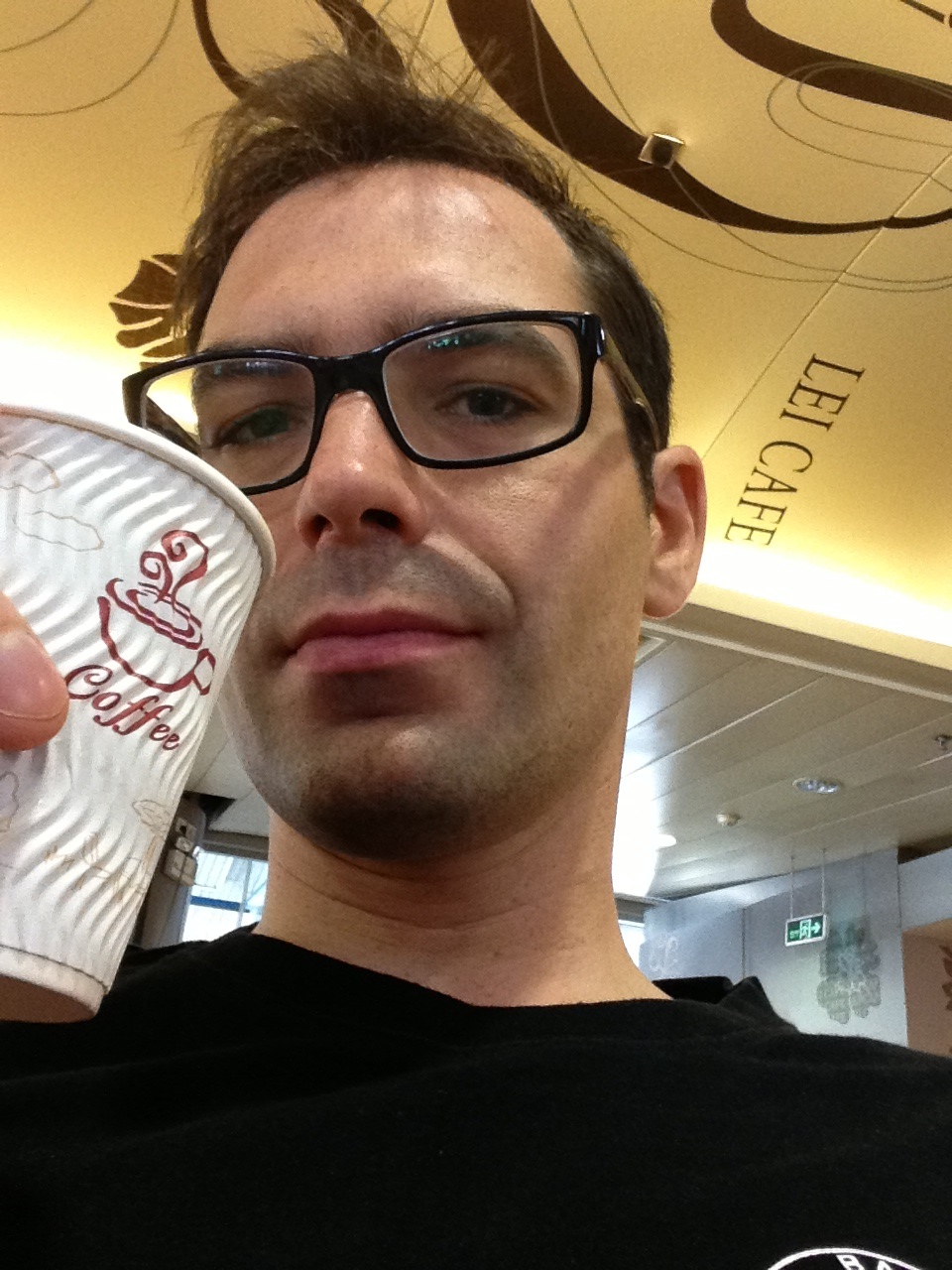
The perfect cup of joe at Beijing Airport
The perfect cup of joe at Beijing Airport pre flight

The restaurant, Qing Tang Fu, serves great suantang shuijiao and is located in Beijing’s Dongcheng District. Here’s a link if you are ever in the neighbourhood and have a craving for their sour soup dumplings. https://studymartialarts.wordpress.com/wp-admin/post.php?post=338&action=edit .

With a 5am start at the back of my mind and fully satisfied from the delicious food we headed home so I could prepare for my trip. Now I’m chilling out and blogging to pass my time at the airport while waiting for my flight to Shanghai.

So I’m off on another one of my frequent martial arts school visits. I usually concentrate these annual trips to the summer holiday due to other commitments. This time I’m off to meet up with Scott from Rising Dragon Martial Arts School for a tour of their new school location. The school will move to Jiangsu province in September and will be a short train ride outside of Shanghai.

With great transport links to and from both Shanghai and the capital Beijing it will be in easy reach for our SMA international martial arts students as well as those already in China. Situated within a revitalised Taoist site costing in-excess of 10 million US dollars the school will offer a very different experience from the existing site which is currently in one of the most beautiful rural areas I have visited here in China. A number of questions spring to mind for my meeting with Scott. Why the move from the current location having spent half the last decade creating such an amazing school there? How did the opportunity for the new school location come about? What will you miss about the last school? And of course what plans do you have for the new school?

Having talked a number of times to Scott over the last few weeks prior to my trip I can tell he is excited to tell me about his future plans for the school.

A picture of Rising Dragon Martial Arts School. In the picture you can see the students from the schools BJJ class. This is one of the only international full-time martial arts schools that combine Chinese arts stand up game with BJJ's ground game. Check out that stunning location in the background.
A picture of Rising Dragon Martial Arts School. In the picture you can see the students from the schools BJJ class. This is one of the only international full-time martial arts schools that combine Chinese arts stand up game with BJJ’s ground game. Check out that stunning location in the background.

To be continued…….https://studymartialarts.wordpress.com/2013/09/09/sma-school-visit-rising-dragon-martial-arts-school-part-2/

If you want to study martial arts in China make http://www.StudyMartialArts.Org your first contact for information on schools, training discounts and travel and training resources all at no additional cost.

A Lesson on Breathing

From Zen Mind, Beginner’s Mind

by Shunryu Suzuki

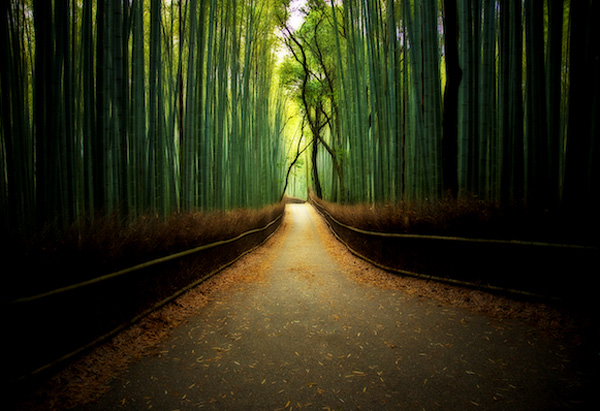
A path between a bamboo forrest.

When we inhale, the air comes into the inner world.  When we exhale, the air goes out to the outer world.  The inner world is limitless, and the outer world is also limitless.  We say “inner world” or “outer world,” but actually there is just one whole world.  In this limitless world, our throat is like a swinging door.  The air comes in and goes out like a swinging door.  The air comes in and goes out like someone passing through a swinging door.  If you think, “I breathe,” the “I” is extra.  There is no you to say “I.”  What we call “I” is just a swinging door which moves when we inhale and when we exhale.  It just moves; that is all.  When your mind is pure and calm enough to follow this movement, there is nothing:  no “I,” no world, no mind nor body; just a swinging door….

Tozan, a famous Zen master, said,

“The blue mountain is the father of the white cloud.  The white cloud is the son of the blue mountain.  All day long they depend on each other, without being dependent on each other.  The white cloud is always the white cloud.  The blue mountain is always the blue mountain.”

This is a pure, clear interpretation of life.  There may be many things like the white cloud and blue mountain:  man and woman, teacher and disciple.  They depend on each other.  But the white cloud should not be bothered by the blue mountain.  The blue mountain should not be bothered by the white cloud.  They are quite independent, but yet dependent.  This is how we live….

When we become truly ourselves, we just become a swinging door, and we are purely independent of, and at the same time, dependent upon everything.  Without air, we cannot breathe.  Each of us is in the midst of myriads of worlds.  We are in the center of the world always, moment after moment.  So we are completely dependent and independent.  If you have this kind of experience, this kind of existence, you have absolute independence; you will not be bothered by anything.

BOOK LINK – http://www.amazon.com/Zen-Mind-Beginners-Informal-Meditation/dp/0834800799

www.StudyMartialArts.Org