The Psychology of Martial Arts | Mastering Mindset for Peak Performance

Tick, tick, tick—time’s ticking down and the match is about to start. Don’t let the nerves take over; take control of your mind! It’s time to focus, breathe, and remember: the hardest punch you’ll throw today might just be at your own thoughts.

But are you here to fight your opponent or wrestle with your inner chatter?

It’s the final round of a tournament, and your opponent is strong—stronger than you expected. You’re exhausted, sweat dripping, lungs burning. The crowd cheers, but it’s all a distant hum. For a moment, you hesitate. Doubt creeps in. Can I do this? Am I good enough?

Then you remember your training—not just the drills, but the mental preparation.

In that moment, you tap into the psychological techniques that have been ingrained in your routine, the strategies that help you stay calm, focused, and resilient. This is where the true power of martial arts comes from: mastering the mind.

5 Psychological Techniques to Master Your Mindset and Achieve Peak Performance

Your mind is your most powerful weapon in martial arts. When your mind is sharp, even the toughest opponent can’t break your focus.or your confidence. These techniques help sharpen focus, build resilience, and prepare you for any challenge.

1. Visualization for Mental Rehearsal

What it is: Visualization makes you practice the action, movements, and results you want to acquire in the martial art.

Why it works: Neuroscience proves that thinking through an action develops the same neural structures as if one would perform the said action physically. It boosts confidence, promotes the development of muscle memory, and prepares the body for unpredictable challenges.

How to do it:

  • Find a quiet space where you won’t be distracted.
  • Close your eyes and vividly picture yourself doing the technique perfectly, whether it’s executing a pinpoint kick, dodging an attack, or landing a clean strike.
  • Focus on all senses. Listen to the crowd, feel your uniform, and even imagine how your muscles are tight.
  • Practice for 5–15 minutes daily, especially before competitions.
  • Visualize overcoming obstacles, like recovering from a mistake mid-fight, to build mental toughness and be resilient.

2. Mindfulness and Present-Moment Awareness

What it is: Mindfulness is the state of being completely present in the now, without being distracted by the past or future. It makes a martial artist live free from influences of thoughts and emotions under pressure.

Why it works: By being mindful, there is the improvement of reaction time, overthinking reduction, and entering a state of “flow,” where movements become automatic and seamless.

How to do it:

  • Start with 10 minutes of mindful breathing. Settle in a comfortable position and breathe deeply, focusing solely on the sensation of air entering and leaving your body.
  • In training, use the body scan technique. Bring your attention to how your feet feel on the mat, the tension of your hands, or the rhythm of your breathing
  • While sparring or in matches, practice “micro-mindfulness” by bringing attention back to your breath between exchanges to remain grounded.
  • Regular mindfulness practice off the mat builds your ability to remain calm and adaptable during extremely stressful periods.

3. Positive Self-Talk and Affirmations

What it is: This requires one to notice self-defeating thoughts and replace them with empowering positive language.

Why it works: Negative thoughts drain your energy and focus. Positive self-talk keeps your mindset strong, boosts motivation, and helps you recover quickly from setbacks.

How to do it:

  • Make a list of affirmations having to do with martial arts, such as: “I am ready and able.” “Every strike strengthens me.””I learn with every challenge that comes my way.”
  • Write them down so you see them each day in the mirror or in your training journal.
  • When you find yourself having negative thoughts during training, interrupt that thought with a positive phrase. For example, Negative, “I’m bad at grappling.” I just come here every session and learn and improve my grappling techniques.”
  • Make self-talk a habit, so it becomes your default mode during matches and tough training sessions.

4. Goal Setting with a Growth Mindset

What it is: Goal setting is about creating structured, measurable objectives that focus on progress rather than perfection.

Why it works: Clear goals provide direction, motivate consistent effort, and foster resilience when faced with adversity. A growth mindset ensures that you use mistakes as opportunities to improve.

How to do it:

  • Use the SMART framework. Define exactly what you want to achieve (e.g., “Improve my spinning backkick accuracy”).
  • Attach a metric to track progress (e.g., “Land it successfully 8 out of 10 times in practice”).
  • Set goals that stretch but don’t overwhelm you.
  • Tie goals to your martial arts journey (e.g., mastering moves for an upcoming tournament).
  • Set a deadline to track improvement (e.g., “In 4 weeks”)
  • Break down larger goals into smaller ones to avoid feeling overwhelmed and to celebrate accomplishments. Example:

Week 1: Focus on positioning

Week 2: Perfect the timing

Week 3: Train in sparring conditions.

5. Controlled Breathing to Manage Stress

What it is: Breathing techniques help regulate your nervous system, lowering anxiety and maintaining focus. They are important in managing adrenaline spikes during competitions.

Why it works: Slow, controlled breathing activates the parasympathetic nervous system, counteracting the fight-or-flight response. This ensures clarity of mind and better endurance.

How to do it:

  • Practice the 4-7-8 technique: Inhale through your nose for 4 seconds.Hold your breath for 7 seconds.Exhale slowly through your mouth for 8 seconds.
  • Implement this technique prior to matches, in between rounds, or after an intense round to collect oneself.
  • Box breathing is another strategy. Breathe in for 4 counts, hold for 4, exhale for 4 counts, and pause for 4 before repeating
  • Combine breathing with visualization to enhance its calming effects.Envision whatever’s causing stress leaving your body with every exhalation.

These techniques work wonders for mastering your mindset, but wait, have you tried this specific yoga?

“Warrior’s Focus Yoga” A super-short yoga flow to enhance mental clarity and calm for martial arts.
Steps Mountain Pose (Tadasana)How: Stand tall, feet together, arms relaxed by your sides.“Stand like a mountain, steady and strong,
Your focus is sharp, where you belong.”
Warrior II (Virabhadrasana II)How: Step one foot back, front knee bent, arms stretched wide. Gaze over your front hand.“Stretch like a warrior, balance in sight,
Grounded in calm, ready to fight.”
Reverse WarriorHow: Tilt your back hand to your thigh, lift the front arm high. Open your chest as you inhale deeply.“Rise like a champion, heart open wide,
Breathe in your strength, with the world on your side.”
Child’s Pose (Balasana)How: Kneel, stretch your arms forward, forehead to the mat. Breathe deeply.“Rest like a river, peaceful and still,
Let go of the chaos; embrace your will.”
Time: Just 3 minutes! Repeat the flow twice for added focus and peace. Perfect for prepping your mindset before training or competition. 🥋

Conclusion

Successfully mastering the psychology of martial arts doesn’t merely depend on physical strength or perfect technique; instead, it requires mentally training oneself to remain calm, focused, and resilient in intensifying situations. Through all these mental strategies—visualization, mindfulness, positive self-talk, goal setting, controlled breathing, and even a quick session of Warrior’s Focus Yoga-you will be placed in an optimum position to handle all the pieces of the challenge of combat sports in and out of the ring.

If you are seasoned or just getting started in martial arts training, it is the right mindset that sets you on the path to overcoming the many obstacles coming your way. But remember, tools also matter. Being a partner with wholesale MMA gear manufacturers ensures you get the finest gear to accompany all your preparation, whether it is mental or physical. The psychological impact this has can also help you master your mind for peak performance.

Discovering China in the Post-Pandemic Era

By David Kelly
July 19, 2024

As the world emerges from the shadow of COVID-19, China has reopened its borders to international travelers, beckoning visitors to explore its storied landscapes, rich cultural heritage, and timeless martial arts traditions. For those eager to experience the Middle Kingdom in this new chapter, the time is ripe to plan a journey that delves into the heart of this dynamic and ever-evolving nation.

Travel to China

The resumption of overseas travel to China has been carefully orchestrated, with stringent health and safety protocols in place to ensure the well-being of both visitors and local communities. Travelers must obtain a valid visa, which can be secured through the Chinese embassy or authorized agencies. Even better news is that for the following six countries Switzerland, Ireland, Hungary, Austria, Belgium, and Luxembourg nationals will have up to 15 days of visa-free travel to China.

Upon arrival, visitors are no longer subject to temperature checks or are required to undergo testing, depending on the prevailing public health guidelines. Masking requirements and other preventive measures are more of a courtesy to other travelers.

One of the most significant changes in the post-pandemic landscape is the increased reliance on digital platforms for travel planning and bookings. Savvy travelers would do well to familiarize themselves with popular Chinese apps like Ctrip and WeChat, which offer a wealth of information and seamless booking capabilities for flights, accommodations, and transportation within the country.

Navigating the Cultural Landscape

China’s rich cultural tapestry is a tapestry that has been woven over millennia, and the post-pandemic era presents an opportune time to delve into its timeless traditions and customs. From the awe-inspiring grandeur of the Great Wall to the serene tranquility of ancient water towns, the country offers a boundless array of iconic sights and immersive experiences.

For first-time visitors, it’s advisable to start with perennial favorites, such as the Forbidden City in Beijing, the Terracotta Warriors in Xi’an, and the picturesque water towns of Zhejiang province. These quintessential destinations not only provide a captivating glimpse into China’s storied past but also serve as gateways to deeper cultural engagement.

Beyond the well-trodden tourist trails, travelers can venture off the beaten path to discover the unique regional identities that contribute to the country’s multifaceted cultural fabric. In the southern reaches of Guangxi, for instance, the enchanting landscape of karst formations and the vibrant ethnic minority communities offer a refreshing alternative to the more crowded metropolises.

Martial Arts Immersion

Perhaps one of the most alluring aspects of a post-pandemic visit to China is the opportunity to immerse oneself in the country’s renowned martial arts traditions. From the iconic Shaolin Temple in Henan to the bustling streets of Foshan in Guangdong, China remains the epicenter of various schools of martial arts, each with its own distinct philosophy and technique. During COVID-19, many of these were hit hard, went into hibernation, or left the country for pastures new.

For those seeking a more immersive experience, numerous martial arts academies and training centers across China welcome international students, offering intensive programs that delve into the physical, mental, and spiritual dimensions of these ancient fighting arts. Whether it’s the fluid grace of Taichi, the explosive power of Sanda, or the disciplined precision of Wushu, visitors can embark on a journey of self-discovery and physical transformation under the tutelage of seasoned masters.

Beyond the dojo, the cultural exploration of martial arts can extend to the realms of traditional Chinese medicine, calligraphy, and the philosophical underpinnings that have shaped these practices over the centuries. By immersing themselves in this multifaceted world, travelers can gain a deeper understanding of the holistic approach to well-being that is deeply rooted in Chinese culture. More on this later.

Culinary Adventures

No visit to China would be complete without a culinary adventure that tantalizes the senses and expands the palate. The country’s diverse regional cuisines, each with their own distinct flavors and cooking techniques, offer a veritable feast for the senses.

From the fiery Sichuan peppercorns of the southwest to the delicate seafood dishes of the coastal provinces, China’s culinary landscape is a kaleidoscope of tastes and textures. Travelers can embark on guided food tours, participate in hands-on cooking classes, or simply wander the bustling night markets to savor the myriad of street food delicacies.

Beyond the well-known favorites like Peking duck and dim sum, the post-pandemic era presents an opportunity to explore the lesser-known regional specialties that have long been cherished by local communities. The preservation of traditional foodways and the rise of farm-to-table movements in China offer a glimpse into the country’s rich gastronomic heritage and its evolving culinary landscape.

Planning Your Journey

As the world emerges from the COVID-19 pandemic, China stands ready to welcome travelers with open arms, inviting them to rediscover the country’s timeless wonders and immerse themselves in its vibrant cultural tapestry. Whether you’re drawn to the iconic landmarks, the captivating martial arts traditions, or the culinary delights, a journey to the Middle Kingdom in the post-pandemic era promises to be a transformative and unforgettable experience.

As you plan your trip, be sure to stay up-to-date on the latest travel guidelines and health protocols, and consider working with a reputable travel agency or tour operator to ensure a seamless and hassle-free journey. With careful preparation and an open mind, you’ll be well on your way to discovering the hidden gems and timeless treasures that make China such a captivating destination.

Adding Exercise to Your Training – The Martial Artist’s Greatest Conundrum…Solved

by Steve Grogan

Many martial artists have a long way to go when it comes to physical fitness. This is due to the following:

  1. They are looking at exercise in the wrong way.
  2. They think that, with all the time they devote to martial arts training, there is no way they could fit an exercise routine into their schedule.

Their opinions on both of these fronts is misinformed. The goal of this article is to set the record straight.

First, you will be given an alternate way to look at exercise.

Second, you will learn about a method of exercise that not many people know about: High-Intensity Resistance Training.

CHANGING YOUR PERSPECTIVE ON EXERCISE

There are many martial arts students who don’t see any benefit in strength training. This is because martial arts styles sell the promise that if a person knows more about body mechanics and the proper way to generate power, they will be able to hit harder than a bigger, stronger opponent.

This is true to a certain extent. However, this statement reveals that martial artists are missing the point of the exercise. Its purpose is not mainly to gain muscle (that is just a byproduct); its purpose is to make you healthy.

Many martial arts teachers look down on strength training because they believe in the myth that lifting weights will somehow make you tense all the time. (Nothing could be further from the truth, although that is a subject for another article.)

Lifting weights will not make you a muscle-bound oaf. That is an incorrect assumption for two reasons:

  1. Not everyone even has the genetic potential to gain as much muscle as the guys in bodybuilder competitions.
  2. Having more muscle is not a bad thing.

Stronger muscles allow you to perform your techniques with more explosiveness, which means more hitting power. Since hitting harder than your adversary is the name of the game, it is obvious how being stronger is ideal.

With that covered, we must now answer every martial artist’s greatest conundrum: “How could I possibly fit an exercise program into my schedule when I already spend so much time going to class, practicing forms, sparring, etc.?”

THE ANSWER – HIGH-INTENSITY RESISTANCE TRAINING

Most gyms and personal trainers push programs where you need to work out five to six days per week, for an hour or longer. Given the amount of time that a martial artist spends on going to class and training on their own, this is a tall order.

Plus, we cannot ignore the fact that martial artists have more in their lives than just their art. They have full-time jobs (complete with commute time), romantic partners, kids, friends, and errands. In other words, they are just as busy as everyone else.

Another problem with these programs is that there is not a lot of downtime between workouts and/or martial arts classes. If you go to a Gut-Busting Boot Camp on Monday night and then go spar on Tuesday night, you are more likely to get injured.

The more you exercise, the more wear and tear you put on your body. With each opening and closing of your joints, you run the risk of injury, not just in the form of hurting the joints themselves, but also of muscle pulls and the like.

Therefore, the answer must be the opposite of what the “experts” say: we need less exercise. This sounds counterintuitive, but if you change how you think about exercise, it will make sense.

Here is how you look at exercise: think of it as medicine.

Let’s say someone is diagnosed with some physical ailment that will require them to constantly take medicine for the rest of their lives. The doctor puts them on Medication A at a dosage of 10mg and says, “Take this twice a day.”

There is no effect.

The doctor says, “Try Medication B at 15mg, once per day.”

Still no change in the patient’s condition.

The doctor says, “Hmmm…you felt a little better on Medication A, right? Just not completely better. So…let’s put you back on that one at a dosage of 20mg, three times per day.”

The patient winds up in the ER. Feeling guilty over his error, the Doctor looks over the charts once more and says, “Okay, same medication, but 15mg twice per day.”

Suddenly, the patient is doing wonderful. In fact, they rebound so dramatically that no one suspects anything was ever wrong!

What is the lesson we can learn from this?

To paraphrase Dr. Doug McGuff (author of the book that got me interested in this method: Body by Science), it needs to be the right medication, the right dosage, and the right frequency.

The same holds true of exercise. Do too much, and you might overtrain. However, if you do too little, your muscles will atrophy (break down), and you’ll lose whatever gains you had.

WHAT IS THE HIGH-INTENSITY RESISTANCE TRAINING DIFFERENCE?

Executive Decision: I am going to abbreviate this as “HIRT” going forward to save some space.

Go to the gym, and what do you see? There’s some guy in the corner doing bicep curls, making the weights go up and down as fast as he can so he can bang out some arbitrary number of repetitions within a certain time limit.

Not only is this dangerous (swinging super-heavy weights in a fast manner can definitely lead to ligament tears, muscle pulls, etc.), but it isn’t even really a workout because he’s making the weight go up and down via momentum instead of muscular work!

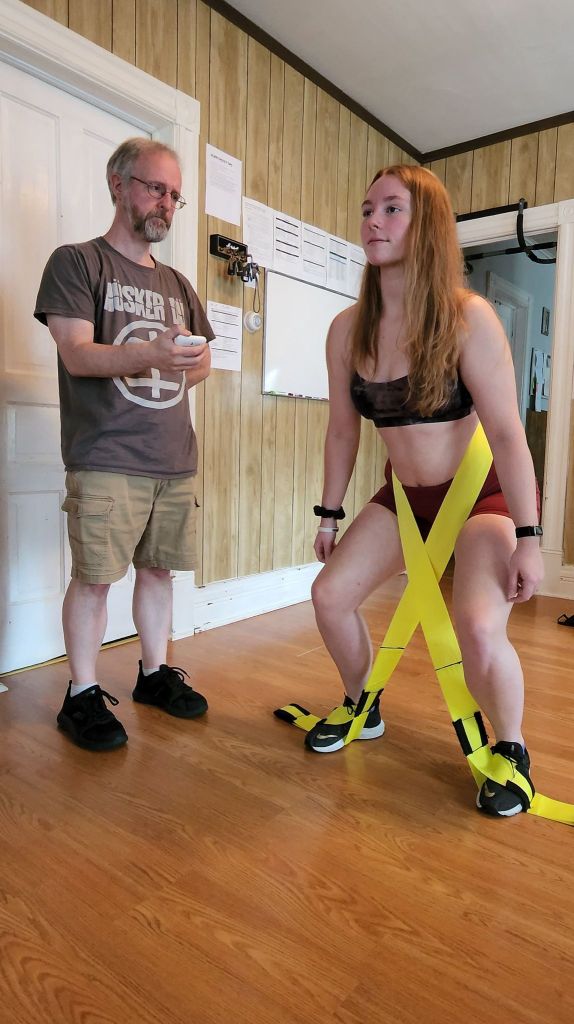
HIRT workouts consist of a series of anywhere from 5-12 moves. Usually, there is one exercise per muscle group. These are performed in a slow and controlled manner; ideally, you want to move the weight for at least five seconds in both directions. When your limbs are at their fullest extension, you do not lock them out. (Otherwise, this means your skeleton is supporting the load, and there is no tension on the muscle.)

Conversely, when you bring the limbs back, you do not set the weight all the way down. This is because your muscles are in their weakest position at that point, and it will be harder for you to get the weight moving again.

You do this for one set. Then you move to the next exercise. Keep going until you are done, and that is it.

Yes, you read that right. With HIRT, there is:

  • No warm-up. You move so slowly that there is no need.
  • No stretching. In fact, stretching can do more harm than good. (That would be best explored in another article.)
  • No cooldown. Actually, that isn’t 100% true: there is a cooldown portion: when you walk from the gym to your car.
  • Also, no need for a separation of strength training and cardio days. You will find that, aside from getting stronger, the HIRT method gives you cardio improvements.

HOW DOES HIRT BENEFIT A MARTIAL ARTIST?

Now that we’ve outlined the way to do a HIRT workout, let’s look at the reasons why this is perfect for martial artists.

  1. It is time-efficient. When you are doing only a half hour once a week, it should be easy to figure out how to fit martial arts training and exercise into your schedule.
  2. No risk of injury. Due to the slow and controlled manner of the exercises, there is no way you are going to pull or tear something. In fact, you won’t even need a warm-up!
  3. No risk of overtraining. The danger of the 6-days-per-week routines is that, when combined with martial arts training, the odds increase that you could hurt yourself. If you’re working out only once a week, that is nearly impossible.

The reason I say “nearly” impossible is because that depends on how strenuous your martial art training is.

The main concern here revolves around the activity of sparring. If your school has sparring, you’ll want to skip that activity for at least two days after your workout.

You can still practice forms and techniques, as well as run through some self-defense scenarios, but you will be far too drained to do anything as intense as sparring.

WHAT DO HIRT WORKOUTS LOOK LIKE?

I am not asking anyone to watch this entire video. (It is 41 minutes.) However, it is here for those who want to know more.

Follow Me Through My High-Intensity Resistance Training Workout

CAN THIS BE DONE AT HOME?

After seeing all the fancy equipment in that video, you might wonder, “Can I do it if I don’t have access to all that gear?”

The answer: YES! In fact, here is another video where I show you how little gear you’d need to do this at home:

Gear Needed to Do HIRT at Home (Plus a Cat)

CONCLUSION & ONE FINAL RESOURCE – THE AUTHOR HIMSELF

Hopefully, this article has presented a clear picture, showing why this training methodology is perfect for a martial artist.

Before leaving, I want to extend one final resource to you: namely, myself. If no facilities near you teach this exercise, and you really want to try it, you can contact me. (All contact information and links are in my Bio at the end of this article.)

Here’s to a fitter, happier, healthier you.

BIO: Steve Grogan has been a practitioner of Wing Chun Kung Fu since early 1995. He started doing High-Intensity Resistance Training in January 2020. At that time, he weighed 241 pounds. By July 2020, he was down to 175.

His passion for the effectiveness of this training method inspired Steve to become a Certified Personal Trainer, which he achieved in August 2022. If you are interested in learning more about High-Intensity Resistance Training and maybe even want to try a complementary lesson (Steve can do them in person or remotely), visit his site: https://cdhirt.com/

You can also reach him in the following ways:

EMAIL          –    stevegrogan@stevegrogansbf.com

TIKTOK         –    https://www.tiktok.com/@stevegrogansbf

INSTAGRAM      –    https://www.instagram.com/stevegrogansbf/

Endorphins and Exercise: How Exercise Helps with Depression

As the pandemic is taking its toll on the job market, finance, and economy more people are becoming jobless. As unemployment is increasing, mental health is becoming worse with every passing day. People are now becoming concerned about physical as well as mental health because they are finally realizing the importance of both. According to psychologists, the behavioral school of thought talks about human behavior, their lifestyle; and small changes that are changing the overall human life. In short, it talks about the fact that when you engage in physical activity and transform your living patterns, this impacts the production of a happy hormone that helps in relieving stress and anxiety.

For understanding the benefits of a workout and how it impacts mental health, we need to understand our anatomy. In addition to anatomy, we must also have a grip on human psychology and how our daily exercise affects mental health.

Psychological Benefits of Exercises

We all know that according to Maslows hierarchy of needs, self-actualization is at the top of the pyramid. With regular workouts and exercises the human body goes through change, this means that the physical activity improves and the self-image of the person improves as well. While exercising the body secretes a chemical that is known as endorphins. With the help of endorphins, the reception of pain decreases, which also means that it helps in increasing tolerance of pain. Apart from having an impact on pain, endorphins also have an impact on triggering a positive feeling just like morphine. This also means that like the morphine addiction, one can also get addicted to endorphin. This is the same reason, fighters, athletes, and adventure enthusiasts find long harsh playing conditions tolerable. In short, when a person runs and feels exhausted usually this overall exhaustion is linked with a sense of euphoria. Endorphin is manufactured in the brain, spinal cord, and many other parts of the body and helps with overall body response, and suppresses the pain hormone as well. According to most neurologists and neuro-researchers, endorphins work just like a pain killer. However the addiction to endorphin is not the same as that of morphine, instead, most of the researchers claim that endorphin is not additive at all.

Impact of Regular Exercise on Mental Health

Overall, if we see mental health and its impact on the day to day life, we will see that it not only helps in reducing stress but also helps in improving the sleep cycle. A person who doesn’t sleep so well doesn’t allow his body to heal properly and so a tired body impacts the mental health of the individual. Along with improved sleep, it also helps in boosting self-esteem and improving self-image. Daily exercise also helps in reducing anxiety and relieving depression. 

Apart from the mental health improvement, there are so many other improvements as well. Especially if we talk about a heart condition, we can say that exercise strengthens the heart and helps the body in maintaining blood pressure. With the help of regular exercise, the energy level of the body improves and the overall muscles become better. The body gets toned up and string as well and you will see a visible reduction in fats. One of the most surprising things is that it also helps to strengthen the bones and accelerates calcium absorption which helps with increasing bone density.

What Kind Of Exercises Is Considered Healthy?

We all know that exercise is healthy but there is a common notion that excess of everything is bad. This means excess exercise is also bad. To explore this notion further, we need to understand one thing, exercise has so many different types and each type is important in its way. As far as the healthy type of exercise is concerned, we can see that there is no good or bad type. Your body has its limit, if you are exercising regularly, you will eventually learn to listen to your body. This also means that if you ever get exhausted, you will be able to feel it. In short, there is nothing called excess exercise. However, we have seen people pushing their body limits. This usually happens in athletes when they are trying to work for some fight or game. If you keep challenging the limits of your body eventually, your body will not find time to heal and the injuries will become permanent.

Some of the best exercises that are recommended to everyone include aerobic exercise mainly. This includes simple exercises like swimming, jogging, walking, biking, dancing, yoga, gardening, golfing, household chores, etc. The best thing about these exercises is that you don’t need to work too hard, spend too much money, buy equipment or look for special sportswear.

Is Exercise The Only Thing?

So far we have seen that people keep talking about the overall exercises and how these exercises impact human health. Apart from this, people are also exploring ways their daily exercises are impacting their psychological health. However, most people question if physical exercise is the only thing that impacts psychological health. This is not true because there are so many other factors as well. One of the main factors is social support. If the social support is not very strong, soon the person will start getting depressed. A very evident example of this situation is the ongoing pandemic. People are now getting more concerned about their psychological health because their social ties with others are getting weaker. More people are willing to extend a helping hand but the impact of social interaction and touch is still there. According to research conducted by developmental psychologists, children who long for human touch or children who are kept in isolation suffer from more diseases as compared to children who are loved, cared for, and experience proper human touch.

If you are facing some issue with regulating your daily exercise routine, you should start the exercise routine with your partner or join a class. It has been noticed that people who work in a group are more motivated as compared to people who work alone. Apart from the motivation factor, another important thing is the self-assurance and learning factor. With social interaction, you will be able to compare your progress and learn more as compared to learning individually.

Exercise for Improving Mental Health and Depression

For someone who is going through depression, most people talk about regular exercise. However, people are not familiar with the fact that regular exercise is different for everyone. For athletes, working out 3-5 days is considered regular, however, for bodybuilders, the intensity of exercises and the frequency are quite different. If you just want to ease your depression, you don’t have to lift heavy weights or spend long hours in the gym. Simple workouts for a few minutes will be good for you. You should exercise for at least 20 to 30 minutes every day for at least three days a week. You don’t have to spend too much time finding a perfect exercise for yourself. Even if you swim every day for a few minutes, this workout will also be enough for you. For most of the simple exercises, you don’t need proper gear or sportswear, however, for swimming, you will need specialized gear like swimming glasses and a swimming costume.

The Gracie Clan and the Making of BJJ: National Identity, Performance & Culture, 1905-1993

by Jose Tufy Cairus

Legacy

This dissertation examines the transformation of a modernized Japanese school of martial arts, alternatively known as jiu-jitsu or Kodokan judo, into a Brazilian combat sport. It encompasses jiu-jitsu’s introduction in the early 1900s, the creation of a native style in the following decades and its globalization under the hybrid form known as “Brazilian jiu-jitsu.” The adoption of jiu-jitsu in the military is part of a larger project of modernization conceived by the Brazilian elite aiming to provide the emergent middle-classes with innovative fitness trends. Around the World War I, however, a branch of the Gracies, a Scottish cum Rio de Janeiro family with genteel pretensions, joined a troupe of Japanese martial artists and adopted jiu-jitsu as part of their circus act. In the following decades, the Gracies supported by their upper class peers and by a nationalist regime, launched a comprehensive process of jiu-jitsu reinvention that evolves into a hybrid combat sport exported worldwide at the end of the twentieth century. Using sources such as state and private archives, newspapers and magazines this study suggests that the making of Brazilian jiu-jitsu through the agency of the Gracie family reflect historical constructed values stemming from a patriarchal culture, social and racial inequality and nationalism.

READ MORE

How to train at one of Asia’s best MMA gyms

In this short extract I will provide you with a link to an article I completed for a different website I’m working on. This blog will focus on my own personal martial arts journeys plus random travel tips. The one below focuses on how to train at one of Asia’s best MMA gyms, Evolve MMA in Singapore.

“If you’ve ever wanted to train with top class MMA Coaches in one of Asia’s best MMA gyms you’ll have to do some serious research to budget for accommodation, and food. These are not include currently in evolves training packages. So unless you are staying with friends or family what options are available to make training there possible, in a city dubbed the most expensive city in the world for the fifth year running?

Well lucky for you with, the help of the kind people from Evolve MMA I’ve put together some great budget options. Including some of the best nearby accommodation options to make it as easy on your wallet as possible so you can get more of that top quality training in.

So first up here’s your accommodation options starting with Evolves accommodation partners located within 5 minutes of their Far East Square facility”.

READ MORE! 


The Dojo Kun

by Phillip Starr

The training hall oath…recited at the beginning of class by many martial arts schools worldwide.  The oath is a reflection of the values and spirit of the martial discipline which they practice.  When I trained in Kyokushin karate many, many moons ago, we all recited it before every class and to this day, I remember it; “We will train our hearts and minds for a firm, unshaking spirit….”

We were told that we should focus on the meaning of every line and recite the oath with reverence and spirit.  Nowadays, fewer and fewer martial arts schools utilize a dojo kun, even if their particular style has one (some styles don’t) and of those who do, the students tend to repeat the lines of the oath robotically; like a parrot.

The oath is there to remind us of what we are striving to accomplish and why we leave sweat and blood on the training hall floor.  It’s our fault as instructors that this particular aspect of training has fallen by the wayside and been forgotten.  But we can readily find it again and put it to the use for which it was originally intended.  Shall we re-trace our steps back a little distance and retrieve it?

ELEMENTS TO REMEMBER

by Phillip Starr

In earlier writings, I’ve mentioned the concept of “kyo”, which is the chink in your opponent’s armor; it is an opening, a “window of opportunity” through which you can quickly enter his defense perimeter and bring him down. Well, that’s what you hope to do, anyway.

I can see that you’re a little perplexed. “Whaddya mean, ‘what I hope to do?’” Well, you’re going to barrel through that window and…then what? Stop and consider that once you enter that window, not only are you close enough to strike the opponent…but he is equally close to you! Ah, yes…I saw some eyebrows jump. Hadn’t thought about that, had you? You bet. So, you’d better bring him down because if you fail, it’ll be his turn.

There are five key elements that must be studied and practiced repeatedly if you are serious about developing real martial skill. We’re going to look at each one individually.

SURPRISE OF ENTRY

This would seem pretty obvious but many people miss it. Your movement (not just your technique) must occur suddenly and without warning. The enemy must have no clue that you’re on your way and when it happens, he should be taken by complete surprise. This means that you have to train to eliminate any “telegraphs” (small movements or physical signals) that indicate your intentions. If you fail to do this; if you inadvertently “telegraph” your plans to your foe, the results will be disastrous.

SPEED OF ACTION

In this wise, I’m not talking about how fast you can deliver a punch or kick; I’m talking about how swiftly you can move your entire body and deliver your techniques . You dare not be too slow or pause in the middle of your attack lest you provide the opponent with your own moment of “kyo.” Your movements must be smooth and quick, never wooden, clumsy, or “jerky” as if you were a robot. Everything flows together seamlessly, without a break.

Both of these first two elements, Surprise and Speed, have to do with the concept of timing and rhythm. These concepts are discussed in detail in my book, “MARTIAL MECHANICS.” It presents special training routines that will help you polish your timing and better understand the idea of “rhythm” and how you can apply it to your best advantage. I strongly suggest that you save up your beer money for a couple of days and purchase a copy.

CLOSING WITH THE ENEMY

The objective here is to take the opponent’s ground! You must close with him as quickly as possible while simultaneously firing out powerful blows. You are already inside his defense perimeter and he must do his best to defend himself against the onslaught. He has no chance to mount a counter-offensive; your blows force him to focus on defense. Train to apply the techniques with which you are the most comfortable, including both grappling as well as percussive techniques. You must figuratively “grab him by the belt” and don’t let go!

VIOLENCE OF ACTION

This goes hand in hand with the previous element. Your attack must be overwhelming and extremely violent. This isn’t to say that you must become angry or otherwise lose control of your emotions. On the contrary, you must control your feelings and keep your spirit calm. Bear in mind that your objective is to take his ground (remembering that no battle was ever won by letting the enemy keep his ground…) and run over him. Literally.

CONTROLLED EGRESS

Once the enemy has been brought down, you must immediately move out of his striking range. Keep in mind that thugs rarely hunt solo; he’ll likely have friends very close by. You must be prepared to deal with them, so don’t pause, “pose”, and admire your handiwork as if you’re in some grade B kung-fu movie. Maintain eight-directional zanshin and prepare for whatever may come next.
Here endeth the lesson.

My Home for 3 Years in China

Here’s the latest school review for one of the toughest schools we work with and one that is nonsense good for Sanda and combat kung fu. Owen Gibson trained at Master Wang’s Kung fu School in China for 3 years.

I trained under Shifu Wang Xing Long for almost 3 years from 2016-2019. The life here is hard, and it certainly isn’t for everyone. However this school is distinguished from the rest – because it breeds warriors. Here, there is no pretence. The school doesn’t attempt to cater to the foreign ideas of what a kung fu school should be like. It’s cold, it’s basic, and you just have to work hard every day. Shifu gives his everything into his students – especially if he see’s you work hard. He lives and breathes this school, and truly cares about you (even though it may not seem like it when he’s screaming at you while you’ve been lizard walking a kilometre). This school breeds warriors because it’s impossible to be any less if you work hard. I achieved my masters level 4 (black duan) with Shifu’s help. The school is my home, and I strongly advise anybody wishing to learn legitimate kung fu to go here – as you’ll be hard pressed to find other legit places for foreigners (I’m looking at you schools in Shandong).

A consistent thread when you train with Master Wang from all his school reviews is the hard, relentless and strict traditional training. Training is 5 days per week 6-8 hours per day. Winters are bitterly cold but the rewards and results from the training speak for themselves. Get through training here and you will have the confidence to take on any challenge. Master Wang’s school offers Sanda, Shaolin Kung fu, and Taichi quan.

For further information on travel and training in China visit www.studymartialarts.org – for independent reviews, without the BS as well as free assistance and support providing you book through our platform.

Kun Khmer Weight-loss & Siem Reap Fitness Camp

More and more people are contacting me to book places at weightloss and fitness camps focusing on martial arts. One of the best in terms of fun, training and location is Kingdom Fight Gym’s camp in Siem Reap close to the famous temples of Angkor Watt.

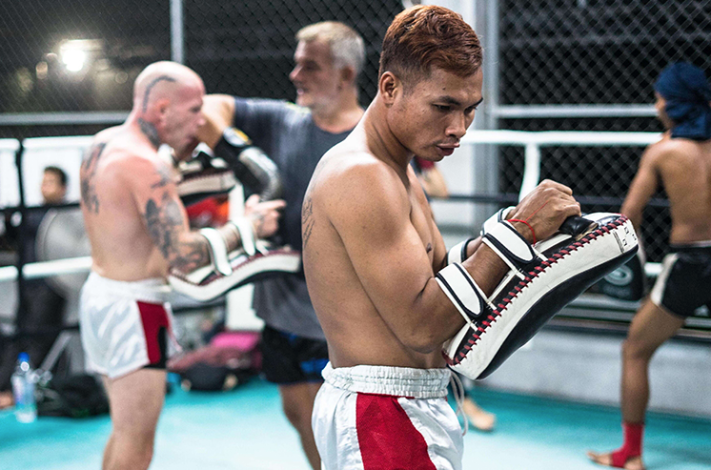
Kingdom Fight Gym aims to restore the ancient fighting art of Kun Khmer. At Kingdom Fight Gym you can learn this ancient martial art from the Khmer Empire. The Gym offers Kun Khmer (Khmer Boxing) intensive training camps which include two 2 hour long classes per day. In addition to that it also offers group classes for kids and adults, Private training with experienced coaches (active and retired fighters, local and foreigners).

Kingdom Fight Gym, Siem Reap is run by Mark van Dongen and Kwok-Leung Tsang. Their aim was to create a social, cultural sports centre that partners with the local population and existing, sustainable organisations in Cambodia and Netherlands in order to contribute to the lives of Cambodian youth. The Gym provides them with a place to learn mutual respect, how to defend themselves, connect to their culture, gain self-confidence and develop as a well rounded individual.

Here are three of the latest reviews from people who have attended the camp and trained at the gym.
‘Everything was amazing: the atmosphere, facility, equipment. The real gems are the people; coaches, fighters and the gym community. Super friendly and approachable. The coaches have extraordinary amount of experience and I liked the different techniques they introduced. The trips were organized perfectly. Such a treat to see the beauty of Cambodia and how much it can offer to a tourist like myself (… including .50 cent beers)!!!’

Joanna from the United States

‘Excellent organization, great communication, wonderful and helpful staff, well equipped gear, attention to each individual. We have never done something like this, and would definitely do it again. A big thank you.’

Cécile from Switzerland

‘I spent one month here and it was the best investment in myself I’ve ever made, so rewarding in many ways. Daz, Rith and Bora are all amazing coaches that make you train hard but still have a really good time and laugh a lot. I will surely try to come back at some time, thank you guys once again for an amazing time!’

Jon P from England