Training that could make you a Master in Yang Style Taichi Chuan

We have all read and heard stories about the near magical skills achieved by some Taijiquan masters of the past. Many people find the skills for which the art became famous illusive. Nonetheless we strive to achieve the best we can and keep the art alive.

It is safe to say that there are many causes for such a lack of true skill development in Taijiquan, from poor teachers to lazy students and so on.

One of the primary causes is simple misunderstanding; people misunderstand both what to train and how to train. Thus the causes being incorrect the effects can only follow to be incorrect as well.

The Yang family divided the training into three aspects. Each one has its purpose and time, each one has an effect on the other and must be trained in the right proportion and be trained correctly to achieve success.

The three components of training are :

  • Lian (练) or practice
  • Yong (用) or usage and
  • Biaoyan (表演) or show.

Practice is the solo training, the body of the work. This includes jibengong or basic body methods, zhan zhuang or standing post, song gong, nei gong, gong li or power exercises and deep work on different postures and internal methods and much more.

Usage is the partner work, the pushing hands training, application and sparring. Working on stick, adhere, join and follow and applying the different jins and skills developed in the practice component of the training.

Show is what we see as Taijiquan these days, it is going through the entire Dalu set, focusing on things like even tempo, smooth movement and looking graceful, traditionally it was used to show the art to outsiders without divulging the practice or the usage of the style.

These days most practitioners of the art only work on the ‘show’ aspect of training, neglecting the essence in the ‘practice’ and the application in the ‘usage’. This leads to an attempt to reverse engineer the practice and the usage from the show. It is easy to see how things go wrong from here.

All of the Practice and Usage aspects of Yang style Taijiquan are covered in the Discover Taiji online training course  and trained in all of my live seminars.

This post was authored by Adam Mizner

Labor Unions, the Growth of Kung Fu and the Survival of Wing Chun — Kung Fu Tea

***Its Labor Day in the United States and I am currently off on a fieldwork trip. As such this seems like a great time to revisit a post from earlier this year on the importance of guilds and labor unions in the Chinese martial arts, a critical and too often overlooked subject. Enjoy!*** National […]

via Labor Unions, the Growth of Kung Fu and the Survival of Wing Chun — Kung Fu Tea

Cities famous for Martial Arts in China – Cangzhou City, Hebei

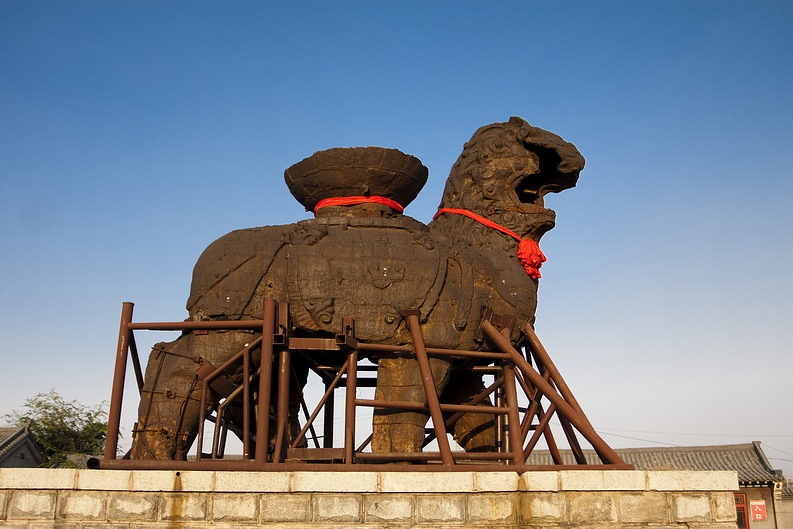
The-Iron-Lion

by Greg Bundage

Cangzhou City is in the South-east of Hebei Province and is called the martial arts and acrobatics village – one of the birthplaces of Chinese martial arts. It has a population of about half a million and is only 90 km from Tienjin, a major port city 180 km south of Beijing.

Cangzhou is the famous hometown of martial  arts. Enjoying equal fame with central China’s Dengfeng and southeast China’s  Putian, Cangzhou is one of the three traditional martial arts centers. With a long history, Cangzhou has various martial arts sects. A person born in  Cangzhou is probably going to be asked whether he is good at martial arts during his first meeting with others.

In the late Qing Dynasty, many martial arts masters emerged. The most famous master is Wang Wu, who was called Big Blade. Another master Huo Yuanjia (1868-1910 A.D.), whose original family home was in Cangzhou, was regarded as a national hero for his continuous victories over foreign challengers.

There are over 600 martial arts schools in  Cangzhou now, where martial arts fans from all over the world learn and practice martial arts. In local middle and primary schools, martial arts are  listed on sports courses. More than 300 schools established their own martial arts teams. Martial arts have become an important cultural industry in the  city. Many people make their living by teaching martial arts. However, most people practice martial arts for body building and health.
Source: http://www.kungfumagazine.com/forum/showthread.php?t=58645
Source: (Xinhua/Chen Xiaowei)

Bājíquán (Chinese: 八極拳; pinyinBājíquán;Japanese: 八極拳, Hakkyokuken) is a Chinese martial art that features explosive, short-range power and is famous for its elbow strikes.  It originated in Hebei Province in Northern China, but is also well-known in other places today, especially Taiwan. Its full name is kai men baji quan (開門八極拳), which means “open-gate eight-extremities fist”.

Baji quan was originally called bazi quan (巴子拳 or 鈀子拳) or “rake fist” because the fist, held loosely and slightly open, are used to strike downwards in a rake-like fashion. The name was considered to be rather crude in its native tongue, so it was changed to baji quan. The term baji comes from the Daoist classic, the Yijing(I-Ching), and signifies an “extension of all directions”. In this case, it means “including everything” or “the universe.”

The first recorded baji quan teacher was Wu Zhong 吳鍾 (1712–1802). Famous teachers that promoted the style included Wu Xiufeng 吳秀峰 and Li Shuwen 李書文 (1864–1934). The latter was from Cangzhou, Hebei, and earned himself the nickname “God of Spear Li”. A Peking opera Wu Shen (martial male character) by training, he was also an expert fighter. His most famous quote is, “I do not know what it’s like to hit a man twice.” Li Shuwen’s students included Huo Dian Ge 霍殿閣 (bodyguard to Pu Yi, the last Emperor of China), Li Chenwu (bodyguard to Mao Zedong), and Liu Yun Qiao 劉雲樵 (secret agent for the nationalist Kuomintangand instructor of the bodyguards of Chiang Kai Shek). Baji quan has since acquired a reputation as the “bodyguard style”.

Baji quan shares roots with another Hebei martial art, Piguazhang. It is said that Wu Zhong, the oldest traceable master in the baji lineage, taught both arts together as an integrated fighting system. They eventually split apart, only to be recombined by Li Shuwenin the late 18th to early 19th century. As a testament to the complementary nature of these two styles, there is a proverb that goes: “When pigua is added to baji, gods and demons will all be terrified. When baji is added to pigua, heroes will sigh knowing they are no match against it.” (八極參劈掛,神鬼都害怕。劈掛參八極,英雄嘆莫及)
Source: Wikipedia

This article was featured in www.fightingartsasia.com

Here are two schools in Cangzhou carrying on the tradition for teaching martial arts as well as intensive full time kung fu training in China. 

The Bajiquan International Training Center
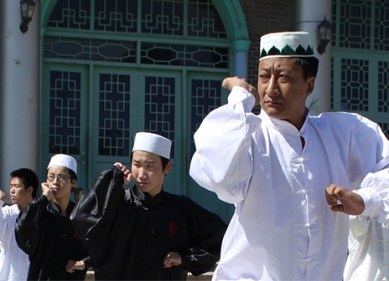
school imageThe Bajiquan International Training Center is school dedicated to teaching students the art of Baji Quan. Located in the Muslim autonomous county of Mengcun, Cangzhou City in Hebei province in the historical home of Baji Quan (Eight extremes fist). The school lineage is steeped in Wu family history and prestige, boasting a long line of family masters. At the school you can learn Bajiquan, Pigua, Sanda, Liu He Fist, Tantui, Cha Fist and Taizu Fist.

Facilities: Impressive training facilities both indoor and outdoor as well as excellent student living conditions.

Training at the Baji Quan International Training Center focuses on Baji Quan.  At the school you will train in Baji Quan basics, theory and the history of Baji, “assault methods of Bajiquan” as well as tactics for Baji competition. You will learn a comprehensive system of attack, defense and wrestling and be exposed to Dazhuang and Kaozhuang as well as the school’s Qigong and traditional Chinese medicine.

Additional styles taught to supplement your Bajiquan include the following Piguazhang, Liu He Fist, Tantui, Cha Fist and Taizu Changquan.

Each day students will train for at least 6 hours, 6 days per week with a Monday off as a day of rest. And all students have access to the excellent school facilities, training and conditioning equipment.

Typical Training Schedule: 

Morning Training – 9am – 11am
Afternoon Training – 3pm – 5pm
Evening Training – 7pm – 9pm

The Curriculum:

1. Theory & Philosophy
2. Stance Training
3. Explosive Power Training
4. Internal Training
5. Fighting Techniques
6. Fighting Tactics
7. Forms
8. Weapons

Prices: Prices per month start from 6000 RMB / $900 USD for food, accommodation and tuition. You can learn more about the school here.

Header1

Cangzhou Technical College

Cangzhou Technical College is a full-time state run vocational college where you can study wushu in China. Students can chose to study for either a full semester or on a monthly basis. Both options are the cheapest I have seen to date in China.

The course includes an introduction to wushu, taiji, baduanjin, wuxinggong and wushu culture. Along side the martial arts studies participants of this course can expect to learn the Chinese language, Calligraphy and also take part in local tours to kung fu schools and visits to various local martial arts masters of interest.

Prices: Tuition and Accommodation for a semester 4600 RMB / $695 USD or for a month 1500 RMB / $226 USD.

Full details of this Wushu Course with Cangzhou Technical College as well as full details on the Bajiquan International Training Center can be provided on request when you visit StudyMartialArts.Org or email info@studymartialarts.org.
BOARDS DON’T HIT BACK…?

by Phillip Starr

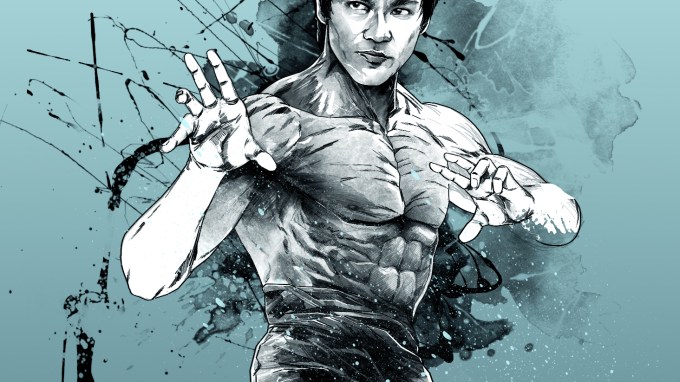
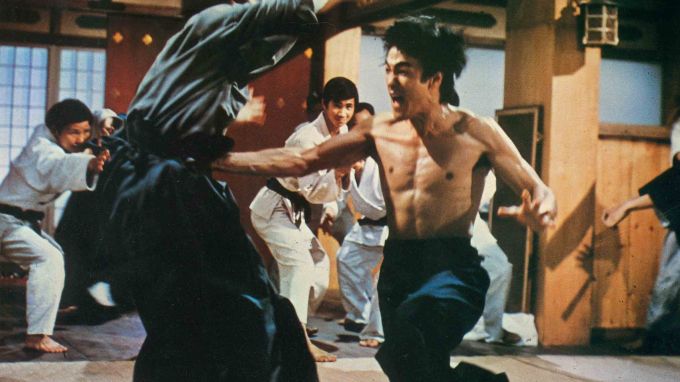
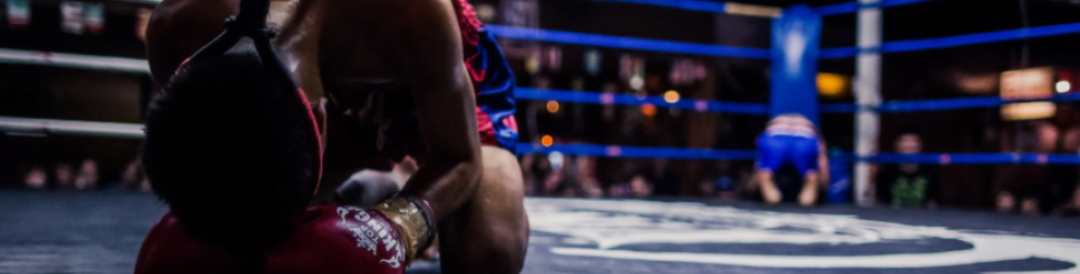
In the classic martial arts movie, “Enter the Dragon”, the famous martial arts actor of the day, Bruce Lee, faced off against the opposition’s main axe-man who began the match by tossing a board into the air and breaking it with a quick thrust. “Boards don’t hit back”, Lee sneered…and then went on to pummel his foe into the ground. Another well-known martial arts figure once stated that, “Bricks and boards give a resounding thwack, but bricks and boards don’t hit back.”

True enough. I’ve heard the same thing from numerous martial arts teachers over the years but I always wondered if they’d ever considered that heavy bags and striking posts don’t back, either. I realize that they were saying simply that the ability to break various objects with the bare hands and feet are not necessarily indicative of one’s martial skill in so far as fighting is concerned, but then…neither is striking the heavy bag. I think that people who makes such statements are missing the point. After all, silhouette targets that are used by firearms enthusiasts don’t shoot back, either…

They would likely argue that hitting the heavy bag fosters the development of strong technique (if it’s done correctly… and a great many people use it incorrectly). I think I would counter with the same argument regarding board and brick breaking. More importantly, the breaking techniques promote the development of a strong spirit and teach practitioners how to extend their yi (mind, intention, will…), which isn’t always the case with using pieces of equipment like the heavy bag. Different training devices assist in the development of different aspects of a chosen martial discipline; there is no single piece of equipment that helps to develop all of them.

The legendary Masutatsu (“Mas”) Oyama, founder of the Kyokushin style of Japanese karate, emphasized the importance of the breaking techniques because he regarded them as invaluable aids in the promotion of a strong spirit. Although he said that they can be used as a sort of barometer by which we can measure the power of a given technique, the main idea was the development of an indomitable spirit and it is this point that so many contemporary practitioners miss.

If you fail to make a particular break, it’s because:
Your technique is flawed one way or another
You failed to extend your yi properly, or
Your spirit is weak

Or any combination thereof. All of these things are necessary for the development of real fighting skill. At the same time, you can hit the heavy bag incorrectly (which is something that many people do everyday without knowing it), you can strike it without extending your yi (ditto), and it does not necessarily reflect a lack of spirit. So there.

The breaking techniques were not intended to be used as a form of showmanship. Back in the old days it was practiced primarily in the training hall, out of sight of the public at large. It was when the martial arts were brought to the West that these practice routines were used to enthrall audiences. The idea snowballed and before long, we had people performing all kinds of breaking techniques that had little to no value as far as training goes, but the public loved them! Of course, the same happened with freestyle sparring and the demonstrations of forms.

So, to those who say that breaking techniques are without value, I say, “take a closer look.” You’ll be surprised at what you find…

The ultimate guide to the guillotine choke — The Tai Chi Notebook

Just look at those two guys and tell me they aren’t having fun! Nothing says “macho martial artist” quite like standing on one leg and having a guys head wrapped under your armpit in a guillotine choke while he’s pulling your leg into his groin. But seriously, I think every martial artist should know how […]

via The ultimate guide to the guillotine choke — The Tai Chi Notebook

Chinese Martial Arts in the News: August 27, 2018: The Back to School Edition! — Kung Fu Tea

Introduction Welcome to “Chinese Martial Arts in the News.” The nights are getting chilly and the new semester is just getting under way. That means it is time for our “Back to School” news update. While we have been vacationing the world of the Chinese martial arts has been busy, so lets catch up. […]

via Chinese Martial Arts in the News: August 27, 2018: The Back to School Edition! — Kung Fu Tea

General Zhang Zhijiang: Mixing Christianity and Kung Fu — Kung Fu Tea

A Different Take on an Old Debate If you study the traditional Chinese martial arts and have spent any time on the internet, you will have heard some variant of these debates before. Do I need to study Buddhism or Daoism to really understand Wing Chun? Are the foundational principals of Taijiquan […]

via General Zhang Zhijiang: Mixing Christianity and Kung Fu — Kung Fu Tea

Through a Lens Darkly (54): Preserving a Fading China — Kung Fu Tea

Introduction You may not know her name, but if you have any interest in modern Chinese history, it is almost certain that you have seen her photographs. Hedda Morrison (1908-1991), while not acknowledged as a leading artistic photographer during the prime of her career, had almost unprecedent opportunities to explore and photograph what she […]

via Through a Lens Darkly (54): Preserving a Fading China — Kung Fu Tea

Health Qigong – The Eight Silken Movements (VI):Eliminate Diseases, Breathe from your Dan Tian — Interact China

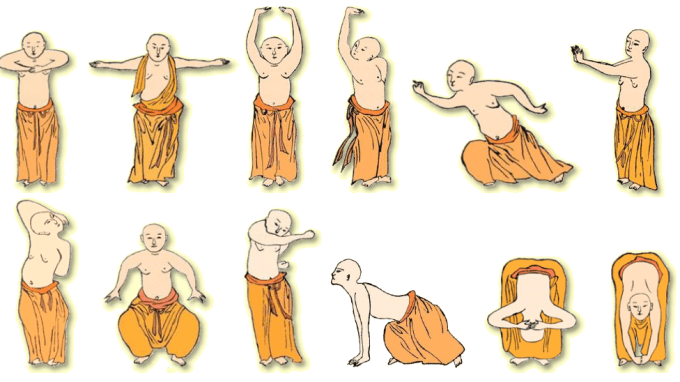
Written by Gioia Zhang Translated by Yuqing Yang The Eighth Section:Stand on your Toes and stretch seven times to get rid of an Illness This action can improve your calf strength and your ability to balance. The slight vibration caused by the heel lowering helps to relax and reset the muscles and relieve muscle […]

via Health Qigong – The Eight Silken Movements (VI):Eliminate Diseases, Breathe from your Dan Tian — Interact China

16 Facts You (Probably) Didn’t Know About the Chinese Martial Arts, Part II — Kung Fu Tea

Welcome to the second half of our discussion of 16 facts about the Chinese martial arts that you probably don’t know. If you are just joining us for the first time this list is a playful attempt to highlight some popular misconceptions about the Chinese martial arts while subverting a popular genre of (generally […]

via 16 Facts You (Probably) Didn’t Know About the Chinese Martial Arts, Part II — Kung Fu Tea