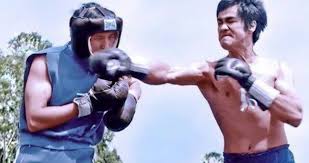
The Psychology of Martial Arts | Mastering Mindset for Peak Performance

Tick, tick, tick—time’s ticking down and the match is about to start. Don’t let the nerves take over; take control of your mind! It’s time to focus, breathe, and remember: the hardest punch you’ll throw today might just be at your own thoughts.

But are you here to fight your opponent or wrestle with your inner chatter?

It’s the final round of a tournament, and your opponent is strong—stronger than you expected. You’re exhausted, sweat dripping, lungs burning. The crowd cheers, but it’s all a distant hum. For a moment, you hesitate. Doubt creeps in. Can I do this? Am I good enough?

Then you remember your training—not just the drills, but the mental preparation.

In that moment, you tap into the psychological techniques that have been ingrained in your routine, the strategies that help you stay calm, focused, and resilient. This is where the true power of martial arts comes from: mastering the mind.

5 Psychological Techniques to Master Your Mindset and Achieve Peak Performance

Your mind is your most powerful weapon in martial arts. When your mind is sharp, even the toughest opponent can’t break your focus.or your confidence. These techniques help sharpen focus, build resilience, and prepare you for any challenge.

1. Visualization for Mental Rehearsal

What it is: Visualization makes you practice the action, movements, and results you want to acquire in the martial art.

Why it works: Neuroscience proves that thinking through an action develops the same neural structures as if one would perform the said action physically. It boosts confidence, promotes the development of muscle memory, and prepares the body for unpredictable challenges.

How to do it:

  • Find a quiet space where you won’t be distracted.
  • Close your eyes and vividly picture yourself doing the technique perfectly, whether it’s executing a pinpoint kick, dodging an attack, or landing a clean strike.
  • Focus on all senses. Listen to the crowd, feel your uniform, and even imagine how your muscles are tight.
  • Practice for 5–15 minutes daily, especially before competitions.
  • Visualize overcoming obstacles, like recovering from a mistake mid-fight, to build mental toughness and be resilient.

2. Mindfulness and Present-Moment Awareness

What it is: Mindfulness is the state of being completely present in the now, without being distracted by the past or future. It makes a martial artist live free from influences of thoughts and emotions under pressure.

Why it works: By being mindful, there is the improvement of reaction time, overthinking reduction, and entering a state of “flow,” where movements become automatic and seamless.

How to do it:

  • Start with 10 minutes of mindful breathing. Settle in a comfortable position and breathe deeply, focusing solely on the sensation of air entering and leaving your body.
  • In training, use the body scan technique. Bring your attention to how your feet feel on the mat, the tension of your hands, or the rhythm of your breathing
  • While sparring or in matches, practice “micro-mindfulness” by bringing attention back to your breath between exchanges to remain grounded.
  • Regular mindfulness practice off the mat builds your ability to remain calm and adaptable during extremely stressful periods.

3. Positive Self-Talk and Affirmations

What it is: This requires one to notice self-defeating thoughts and replace them with empowering positive language.

Why it works: Negative thoughts drain your energy and focus. Positive self-talk keeps your mindset strong, boosts motivation, and helps you recover quickly from setbacks.

How to do it:

  • Make a list of affirmations having to do with martial arts, such as: “I am ready and able.” “Every strike strengthens me.””I learn with every challenge that comes my way.”
  • Write them down so you see them each day in the mirror or in your training journal.
  • When you find yourself having negative thoughts during training, interrupt that thought with a positive phrase. For example, Negative, “I’m bad at grappling.” I just come here every session and learn and improve my grappling techniques.”
  • Make self-talk a habit, so it becomes your default mode during matches and tough training sessions.

4. Goal Setting with a Growth Mindset

What it is: Goal setting is about creating structured, measurable objectives that focus on progress rather than perfection.

Why it works: Clear goals provide direction, motivate consistent effort, and foster resilience when faced with adversity. A growth mindset ensures that you use mistakes as opportunities to improve.

How to do it:

  • Use the SMART framework. Define exactly what you want to achieve (e.g., “Improve my spinning backkick accuracy”).
  • Attach a metric to track progress (e.g., “Land it successfully 8 out of 10 times in practice”).
  • Set goals that stretch but don’t overwhelm you.
  • Tie goals to your martial arts journey (e.g., mastering moves for an upcoming tournament).
  • Set a deadline to track improvement (e.g., “In 4 weeks”)
  • Break down larger goals into smaller ones to avoid feeling overwhelmed and to celebrate accomplishments. Example:

Week 1: Focus on positioning

Week 2: Perfect the timing

Week 3: Train in sparring conditions.

5. Controlled Breathing to Manage Stress

What it is: Breathing techniques help regulate your nervous system, lowering anxiety and maintaining focus. They are important in managing adrenaline spikes during competitions.

Why it works: Slow, controlled breathing activates the parasympathetic nervous system, counteracting the fight-or-flight response. This ensures clarity of mind and better endurance.

How to do it:

  • Practice the 4-7-8 technique: Inhale through your nose for 4 seconds.Hold your breath for 7 seconds.Exhale slowly through your mouth for 8 seconds.
  • Implement this technique prior to matches, in between rounds, or after an intense round to collect oneself.
  • Box breathing is another strategy. Breathe in for 4 counts, hold for 4, exhale for 4 counts, and pause for 4 before repeating
  • Combine breathing with visualization to enhance its calming effects.Envision whatever’s causing stress leaving your body with every exhalation.

These techniques work wonders for mastering your mindset, but wait, have you tried this specific yoga?

“Warrior’s Focus Yoga” A super-short yoga flow to enhance mental clarity and calm for martial arts.
Steps Mountain Pose (Tadasana)How: Stand tall, feet together, arms relaxed by your sides.“Stand like a mountain, steady and strong,
Your focus is sharp, where you belong.”
Warrior II (Virabhadrasana II)How: Step one foot back, front knee bent, arms stretched wide. Gaze over your front hand.“Stretch like a warrior, balance in sight,
Grounded in calm, ready to fight.”
Reverse WarriorHow: Tilt your back hand to your thigh, lift the front arm high. Open your chest as you inhale deeply.“Rise like a champion, heart open wide,
Breathe in your strength, with the world on your side.”
Child’s Pose (Balasana)How: Kneel, stretch your arms forward, forehead to the mat. Breathe deeply.“Rest like a river, peaceful and still,
Let go of the chaos; embrace your will.”
Time: Just 3 minutes! Repeat the flow twice for added focus and peace. Perfect for prepping your mindset before training or competition. 🥋

Conclusion

Successfully mastering the psychology of martial arts doesn’t merely depend on physical strength or perfect technique; instead, it requires mentally training oneself to remain calm, focused, and resilient in intensifying situations. Through all these mental strategies—visualization, mindfulness, positive self-talk, goal setting, controlled breathing, and even a quick session of Warrior’s Focus Yoga-you will be placed in an optimum position to handle all the pieces of the challenge of combat sports in and out of the ring.

If you are seasoned or just getting started in martial arts training, it is the right mindset that sets you on the path to overcoming the many obstacles coming your way. But remember, tools also matter. Being a partner with wholesale MMA gear manufacturers ensures you get the finest gear to accompany all your preparation, whether it is mental or physical. The psychological impact this has can also help you master your mind for peak performance.

Discovering China in the Post-Pandemic Era

By David Kelly
July 19, 2024

As the world emerges from the shadow of COVID-19, China has reopened its borders to international travelers, beckoning visitors to explore its storied landscapes, rich cultural heritage, and timeless martial arts traditions. For those eager to experience the Middle Kingdom in this new chapter, the time is ripe to plan a journey that delves into the heart of this dynamic and ever-evolving nation.

Travel to China

The resumption of overseas travel to China has been carefully orchestrated, with stringent health and safety protocols in place to ensure the well-being of both visitors and local communities. Travelers must obtain a valid visa, which can be secured through the Chinese embassy or authorized agencies. Even better news is that for the following six countries Switzerland, Ireland, Hungary, Austria, Belgium, and Luxembourg nationals will have up to 15 days of visa-free travel to China.

Upon arrival, visitors are no longer subject to temperature checks or are required to undergo testing, depending on the prevailing public health guidelines. Masking requirements and other preventive measures are more of a courtesy to other travelers.

One of the most significant changes in the post-pandemic landscape is the increased reliance on digital platforms for travel planning and bookings. Savvy travelers would do well to familiarize themselves with popular Chinese apps like Ctrip and WeChat, which offer a wealth of information and seamless booking capabilities for flights, accommodations, and transportation within the country.

Navigating the Cultural Landscape

China’s rich cultural tapestry is a tapestry that has been woven over millennia, and the post-pandemic era presents an opportune time to delve into its timeless traditions and customs. From the awe-inspiring grandeur of the Great Wall to the serene tranquility of ancient water towns, the country offers a boundless array of iconic sights and immersive experiences.

For first-time visitors, it’s advisable to start with perennial favorites, such as the Forbidden City in Beijing, the Terracotta Warriors in Xi’an, and the picturesque water towns of Zhejiang province. These quintessential destinations not only provide a captivating glimpse into China’s storied past but also serve as gateways to deeper cultural engagement.

Beyond the well-trodden tourist trails, travelers can venture off the beaten path to discover the unique regional identities that contribute to the country’s multifaceted cultural fabric. In the southern reaches of Guangxi, for instance, the enchanting landscape of karst formations and the vibrant ethnic minority communities offer a refreshing alternative to the more crowded metropolises.

Martial Arts Immersion

Perhaps one of the most alluring aspects of a post-pandemic visit to China is the opportunity to immerse oneself in the country’s renowned martial arts traditions. From the iconic Shaolin Temple in Henan to the bustling streets of Foshan in Guangdong, China remains the epicenter of various schools of martial arts, each with its own distinct philosophy and technique. During COVID-19, many of these were hit hard, went into hibernation, or left the country for pastures new.

For those seeking a more immersive experience, numerous martial arts academies and training centers across China welcome international students, offering intensive programs that delve into the physical, mental, and spiritual dimensions of these ancient fighting arts. Whether it’s the fluid grace of Taichi, the explosive power of Sanda, or the disciplined precision of Wushu, visitors can embark on a journey of self-discovery and physical transformation under the tutelage of seasoned masters.

Beyond the dojo, the cultural exploration of martial arts can extend to the realms of traditional Chinese medicine, calligraphy, and the philosophical underpinnings that have shaped these practices over the centuries. By immersing themselves in this multifaceted world, travelers can gain a deeper understanding of the holistic approach to well-being that is deeply rooted in Chinese culture. More on this later.

Culinary Adventures

No visit to China would be complete without a culinary adventure that tantalizes the senses and expands the palate. The country’s diverse regional cuisines, each with their own distinct flavors and cooking techniques, offer a veritable feast for the senses.

From the fiery Sichuan peppercorns of the southwest to the delicate seafood dishes of the coastal provinces, China’s culinary landscape is a kaleidoscope of tastes and textures. Travelers can embark on guided food tours, participate in hands-on cooking classes, or simply wander the bustling night markets to savor the myriad of street food delicacies.

Beyond the well-known favorites like Peking duck and dim sum, the post-pandemic era presents an opportunity to explore the lesser-known regional specialties that have long been cherished by local communities. The preservation of traditional foodways and the rise of farm-to-table movements in China offer a glimpse into the country’s rich gastronomic heritage and its evolving culinary landscape.

Planning Your Journey

As the world emerges from the COVID-19 pandemic, China stands ready to welcome travelers with open arms, inviting them to rediscover the country’s timeless wonders and immerse themselves in its vibrant cultural tapestry. Whether you’re drawn to the iconic landmarks, the captivating martial arts traditions, or the culinary delights, a journey to the Middle Kingdom in the post-pandemic era promises to be a transformative and unforgettable experience.

As you plan your trip, be sure to stay up-to-date on the latest travel guidelines and health protocols, and consider working with a reputable travel agency or tour operator to ensure a seamless and hassle-free journey. With careful preparation and an open mind, you’ll be well on your way to discovering the hidden gems and timeless treasures that make China such a captivating destination.

Adding Exercise to Your Training – The Martial Artist’s Greatest Conundrum…Solved

by Steve Grogan

Many martial artists have a long way to go when it comes to physical fitness. This is due to the following:

  1. They are looking at exercise in the wrong way.
  2. They think that, with all the time they devote to martial arts training, there is no way they could fit an exercise routine into their schedule.

Their opinions on both of these fronts is misinformed. The goal of this article is to set the record straight.

First, you will be given an alternate way to look at exercise.

Second, you will learn about a method of exercise that not many people know about: High-Intensity Resistance Training.

CHANGING YOUR PERSPECTIVE ON EXERCISE

There are many martial arts students who don’t see any benefit in strength training. This is because martial arts styles sell the promise that if a person knows more about body mechanics and the proper way to generate power, they will be able to hit harder than a bigger, stronger opponent.

This is true to a certain extent. However, this statement reveals that martial artists are missing the point of the exercise. Its purpose is not mainly to gain muscle (that is just a byproduct); its purpose is to make you healthy.

Many martial arts teachers look down on strength training because they believe in the myth that lifting weights will somehow make you tense all the time. (Nothing could be further from the truth, although that is a subject for another article.)

Lifting weights will not make you a muscle-bound oaf. That is an incorrect assumption for two reasons:

  1. Not everyone even has the genetic potential to gain as much muscle as the guys in bodybuilder competitions.
  2. Having more muscle is not a bad thing.

Stronger muscles allow you to perform your techniques with more explosiveness, which means more hitting power. Since hitting harder than your adversary is the name of the game, it is obvious how being stronger is ideal.

With that covered, we must now answer every martial artist’s greatest conundrum: “How could I possibly fit an exercise program into my schedule when I already spend so much time going to class, practicing forms, sparring, etc.?”

THE ANSWER – HIGH-INTENSITY RESISTANCE TRAINING

Most gyms and personal trainers push programs where you need to work out five to six days per week, for an hour or longer. Given the amount of time that a martial artist spends on going to class and training on their own, this is a tall order.

Plus, we cannot ignore the fact that martial artists have more in their lives than just their art. They have full-time jobs (complete with commute time), romantic partners, kids, friends, and errands. In other words, they are just as busy as everyone else.

Another problem with these programs is that there is not a lot of downtime between workouts and/or martial arts classes. If you go to a Gut-Busting Boot Camp on Monday night and then go spar on Tuesday night, you are more likely to get injured.

The more you exercise, the more wear and tear you put on your body. With each opening and closing of your joints, you run the risk of injury, not just in the form of hurting the joints themselves, but also of muscle pulls and the like.

Therefore, the answer must be the opposite of what the “experts” say: we need less exercise. This sounds counterintuitive, but if you change how you think about exercise, it will make sense.

Here is how you look at exercise: think of it as medicine.

Let’s say someone is diagnosed with some physical ailment that will require them to constantly take medicine for the rest of their lives. The doctor puts them on Medication A at a dosage of 10mg and says, “Take this twice a day.”

There is no effect.

The doctor says, “Try Medication B at 15mg, once per day.”

Still no change in the patient’s condition.

The doctor says, “Hmmm…you felt a little better on Medication A, right? Just not completely better. So…let’s put you back on that one at a dosage of 20mg, three times per day.”

The patient winds up in the ER. Feeling guilty over his error, the Doctor looks over the charts once more and says, “Okay, same medication, but 15mg twice per day.”

Suddenly, the patient is doing wonderful. In fact, they rebound so dramatically that no one suspects anything was ever wrong!

What is the lesson we can learn from this?

To paraphrase Dr. Doug McGuff (author of the book that got me interested in this method: Body by Science), it needs to be the right medication, the right dosage, and the right frequency.

The same holds true of exercise. Do too much, and you might overtrain. However, if you do too little, your muscles will atrophy (break down), and you’ll lose whatever gains you had.

WHAT IS THE HIGH-INTENSITY RESISTANCE TRAINING DIFFERENCE?

Executive Decision: I am going to abbreviate this as “HIRT” going forward to save some space.

Go to the gym, and what do you see? There’s some guy in the corner doing bicep curls, making the weights go up and down as fast as he can so he can bang out some arbitrary number of repetitions within a certain time limit.

Not only is this dangerous (swinging super-heavy weights in a fast manner can definitely lead to ligament tears, muscle pulls, etc.), but it isn’t even really a workout because he’s making the weight go up and down via momentum instead of muscular work!

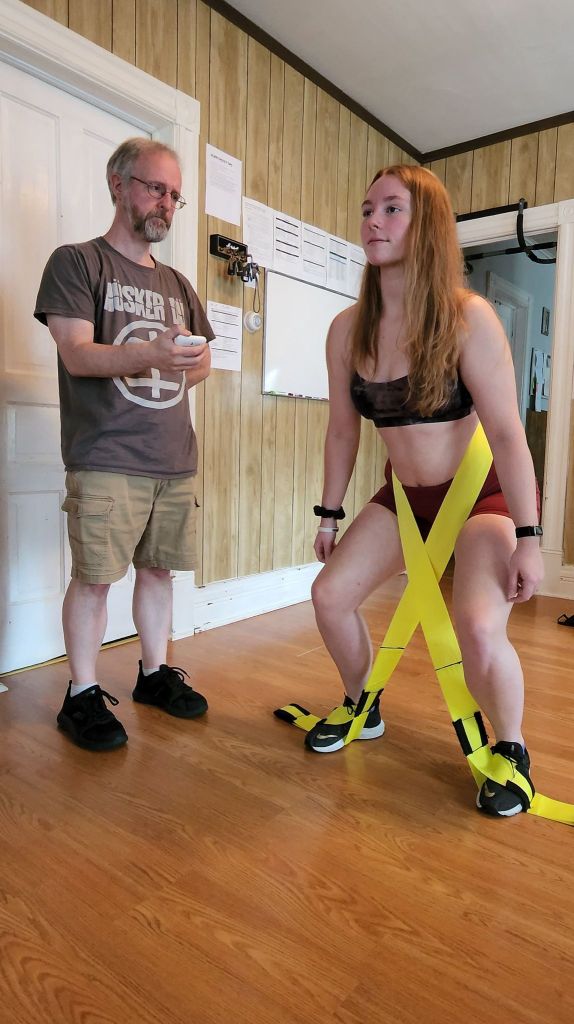
HIRT workouts consist of a series of anywhere from 5-12 moves. Usually, there is one exercise per muscle group. These are performed in a slow and controlled manner; ideally, you want to move the weight for at least five seconds in both directions. When your limbs are at their fullest extension, you do not lock them out. (Otherwise, this means your skeleton is supporting the load, and there is no tension on the muscle.)

Conversely, when you bring the limbs back, you do not set the weight all the way down. This is because your muscles are in their weakest position at that point, and it will be harder for you to get the weight moving again.

You do this for one set. Then you move to the next exercise. Keep going until you are done, and that is it.

Yes, you read that right. With HIRT, there is:

  • No warm-up. You move so slowly that there is no need.
  • No stretching. In fact, stretching can do more harm than good. (That would be best explored in another article.)
  • No cooldown. Actually, that isn’t 100% true: there is a cooldown portion: when you walk from the gym to your car.
  • Also, no need for a separation of strength training and cardio days. You will find that, aside from getting stronger, the HIRT method gives you cardio improvements.

HOW DOES HIRT BENEFIT A MARTIAL ARTIST?

Now that we’ve outlined the way to do a HIRT workout, let’s look at the reasons why this is perfect for martial artists.

  1. It is time-efficient. When you are doing only a half hour once a week, it should be easy to figure out how to fit martial arts training and exercise into your schedule.
  2. No risk of injury. Due to the slow and controlled manner of the exercises, there is no way you are going to pull or tear something. In fact, you won’t even need a warm-up!
  3. No risk of overtraining. The danger of the 6-days-per-week routines is that, when combined with martial arts training, the odds increase that you could hurt yourself. If you’re working out only once a week, that is nearly impossible.

The reason I say “nearly” impossible is because that depends on how strenuous your martial art training is.

The main concern here revolves around the activity of sparring. If your school has sparring, you’ll want to skip that activity for at least two days after your workout.

You can still practice forms and techniques, as well as run through some self-defense scenarios, but you will be far too drained to do anything as intense as sparring.

WHAT DO HIRT WORKOUTS LOOK LIKE?

I am not asking anyone to watch this entire video. (It is 41 minutes.) However, it is here for those who want to know more.

Follow Me Through My High-Intensity Resistance Training Workout

CAN THIS BE DONE AT HOME?

After seeing all the fancy equipment in that video, you might wonder, “Can I do it if I don’t have access to all that gear?”

The answer: YES! In fact, here is another video where I show you how little gear you’d need to do this at home:

Gear Needed to Do HIRT at Home (Plus a Cat)

CONCLUSION & ONE FINAL RESOURCE – THE AUTHOR HIMSELF

Hopefully, this article has presented a clear picture, showing why this training methodology is perfect for a martial artist.

Before leaving, I want to extend one final resource to you: namely, myself. If no facilities near you teach this exercise, and you really want to try it, you can contact me. (All contact information and links are in my Bio at the end of this article.)

Here’s to a fitter, happier, healthier you.

BIO: Steve Grogan has been a practitioner of Wing Chun Kung Fu since early 1995. He started doing High-Intensity Resistance Training in January 2020. At that time, he weighed 241 pounds. By July 2020, he was down to 175.

His passion for the effectiveness of this training method inspired Steve to become a Certified Personal Trainer, which he achieved in August 2022. If you are interested in learning more about High-Intensity Resistance Training and maybe even want to try a complementary lesson (Steve can do them in person or remotely), visit his site: https://cdhirt.com/

You can also reach him in the following ways:

EMAIL          –    stevegrogan@stevegrogansbf.com

TIKTOK         –    https://www.tiktok.com/@stevegrogansbf

INSTAGRAM      –    https://www.instagram.com/stevegrogansbf/

What Should You Expect from Your First Month of BJJ Training?

Beginning your journey in Brazilian Jiu-Jitsu can be a daunting task. There are so many things to learn and remember, and it can be easy to get overwhelmed. Here are a few things that you can expect during your first month of training. If you’re thinking about starting Carlson Gracie Jiu-Jitsu (Brazilian Jiu-Jitsu (BJJ)) training, you may be wondering what to expect from your first month of training. BJJ is a challenging and rewarding martial art that offers many benefits for practitioners of all levels. In this blog post, we’ll give you a glimpse of what you can expect from your first month of BJJ training.

In your first month of BJJ training, you should expect to learn the basic techniques and principles of Brazilian Jiu-Jitsu. You will likely be introduced to a variety of different guard positions, such as the closed guard, half guard, and butterfly guard. You will also learn how to perform common submissions, such as the arm bar, triangle choke, and heel hook. In addition, you should expect to develop a better understanding of leverage and how to use your opponent’s weight to your advantage

1. Month One is About Showing Up

Leverage is a key element of Jiu-Jitsu. It is the use of your opponent’s weight and momentum to your advantage. By using leverage, you can force your opponent to tap out or submit.

There are many different ways to use leverage in Jiu-Jitsu. For example, you can use your opponent’s weight to your advantage when you are on their guard.

In addition, you should expect to develop a better understanding of leverage and how to use your opponent’s weight to your advantage as you progress in your Jiu-Jitsu training program. With time and practice, you will become a master of leveraging your opponent’s weight and momentum to your advantage.

2. Month One is About the Basics of BJJ

In month one of your BJJ journey, you will focus on the basics. You will learn the fundamental techniques and principles of Brazilian Jiu-Jitsu. This will give you a strong foundation on which to build your BJJ game.

During this month, you will learn the following BJJ techniques:

– The fundamental guard positions (closed guard, open guard, half guard, side control, full mount, and back control)

– The fundamental escapes from bad positions (closed guard, open guard, half guard, side control, full mount, and back control)

The fundamental submissions, sweeps, and take-downs are the building blocks of Brazilian Jiu-Jitsu. They are the techniques that all practitioners must learn in order to be effective in this martial art.

While there are many different submissions, sweeps, and takedowns, there are a few that are considered to be the most fundamental.

The fundamental submissions are the chokes, arm locks, and leg locks. These are the techniques that are most effective in submitting an opponent. Chokes are used to restrict the flow of blood to the brain, causing the opponent to lose consciousness.

Arm locks are used to hyperextend the elbow, causing the opponent to submit. Leg locks are used to hyperextend the knee, causing the opponent to submit.

Submission or choke hold is the technique that involves grabbing a neck of an opponent and squeezing the throat to prevent breathing.

Choke holds are simple to perform but can be very effective in forcing an opponent to submit.

The Dojo Kun

by Phillip Starr

The training hall oath…recited at the beginning of class by many martial arts schools worldwide.  The oath is a reflection of the values and spirit of the martial discipline which they practice.  When I trained in Kyokushin karate many, many moons ago, we all recited it before every class and to this day, I remember it; “We will train our hearts and minds for a firm, unshaking spirit….”

We were told that we should focus on the meaning of every line and recite the oath with reverence and spirit.  Nowadays, fewer and fewer martial arts schools utilize a dojo kun, even if their particular style has one (some styles don’t) and of those who do, the students tend to repeat the lines of the oath robotically; like a parrot.

The oath is there to remind us of what we are striving to accomplish and why we leave sweat and blood on the training hall floor.  It’s our fault as instructors that this particular aspect of training has fallen by the wayside and been forgotten.  But we can readily find it again and put it to the use for which it was originally intended.  Shall we re-trace our steps back a little distance and retrieve it?

How to Piss off Your Martial Arts Teacher

by Yang Shuangxing

Ever wonder what seemingly small, inoffensive things might very well annoy or even genuinely cause your instructor to get fairly steamed?  It’s well to have a good idea regarding these ostensibly innocent things for many reasons…

SHOW  UP LATE FOR CLASS

Showing up a couple of minutes late isn’t too bad, although you’re clearly not interested in warming up or you’re avoiding it.  Fifteen minutes will almost certainly upset your teacher, even if he says nothing.

SHOW  UP  LATE FOR CLASS AND WALK ONTO THE FLOOR

It’s bad enough that you’re late but in a traditional school, it’s customary to stand or kneel (in seiza) at the outer edge of the training area and wait for the teacher to acknowledge you and indicate that you are to join the class.

COME  TO CLASS IN A DIRTY OR WRINKLED UNIFORM

The condition of your training uniform is a clear indication of how you regard your school, your training, your teacher, and yourself.  If it looks like it was on the losing end of an Asian land war, your teacher will certainly take note of it.

DON’T  PRACTICE AT HOME

Didn’t practice at home?  Can’t remember your form?  Believe me, your teacher will notice your lack of personal training within the first 10 seconds of class.  Failure to put in personal training time shows that your training in very low on your list of priorities (if it’s even on the list at all)…AND it shows that you have little regard for your teacher and the efforts he’s made to teach you.

CORRECT  THE TEACHER

NEVER, EVER correct the teacher.  Period.

SIT DOWN TO REST OR GET WATER WITHOUT PERMISSION

NEVER do this without the instructors’ permission.  And never leave the training floor without his/her explicit permission.

TELL THE INSTRUCTOR  THAT YOU THINK YOU’RE READY FOR PROMOTION

Not Ever.  NEVER.

There are easily dozens more ways to tick off your instructor and I’m sure my friends here who are instructors can add many more to this basic list.  I just jotted down a few things that you, as a student, should avoid doing if you plan to survive very long in your martial arts class.

DON’T SIT IN YOUR STANCE!

By Phillip Starr

The legendary Tadashi Yamashita (10th dan, Kobayashi Shorin-ryu karate) once said that one of the great “secrets” of karate was in the correct training of stance, but very few people do it anymore. And he is 100% right.

First, we must determine just what is the purpose(s) of a given stance? Think about it for a second, I’ll wait……

First and foremost, a stance is a stable platform from which we can deliver powerful blows (bearing in mind that the platform must be capable of withstanding the force of said blows). Secondly, some stances are stable positions from which we can move quickly and easily in a firm, contolled manner. And that’s it. They do not exist for purposes of aesthetic appeal.

In so far as issuing power is concerned, we must consider the proper (leg) tension that is to be used and there are only two; inside tension and outside tension. Inside tension involves contracting the adductors (muscles of the inner thighs) to “lock” you into place. Styles such as Goju-ryu and Uechi-ryu karate as well as Chinese forms such as Wing Chun (should) utilize this principle a great deal; they are “in-fighting” styles and as such, they must be able to lock themselves into place when delivering close-quarters techniques.

Footwork is what happens in between stances, moving from one to another in various ways. It must be balanced and controlled. But footwork and stances are two separate subjects…

Additionally, stances such as the empty-leg stance (aka., cat stance), the sancai stance found in internal forms of gong-fu, the pigeon-toe stance, and hook stance use inward tension to stabilize the stance.

Outward tension involved tension in the legs in opposite directions. This is used for longer strikes and thrusts. For instance, in the forward stance (aka., zenkutsu-dachi, bow and arrow stance) the front leg presses forward while the rear leg thrusts down and back – opposite directions. This helps stabilize the position and even adds some impetus to the blow.

The only stances that don’t use either inward or outward tension are those that involve standing on one leg only. To create inward or outward tension in a stance, it’s necessary to have BOTH feet planted on the ground.

In any case, you must not simply “sit” in your stance, leaving it devoid of proper tension. I call this a “dead stance” because once you assume such a position, you can neither move as quickly nor strike as powerfully as you could from a properly “loaded” stance. And in a life and death struggle, that can mean the difference between life and death.

Teach or Train

By Phillip Starr

    Over the years, I’ve heard several martial arts instructors remark that they like to “work out” in the classes that they teach and/or that they use the classes as their own workouts. I think this is a very bad idea for two reasons…

     First, it cheapens the instruction received by the students.  If the teacher is focused on himself and his own workout, he is not able to closely observe what his students are doing.  If he had to stop periodically to make corrections here and give encouragement there, or explain a particular principle or concept, his workout would be constantly interrupted.  If he really intends to work out, he must be wholly attending to what HE is doing rather than on what the students are doing.

    Secondly, if the instructor allows his personal workout to be constantly interrupted, he isn’t able to focus completely on what he’s doing.  It’s really not much of a personal workout at all.

     Using class as his own training time takes away from the quality of instruction received by the students and also ruins the teacher’s workout as well.

     I have told teachers (who informed me proudly that they simultaneously utilize class time as their own workout time) that they really must stop doing so.  I told them that in class, they should devote themselves to TEACHING and pay attention to the students.  Their own workouts must be conducted separately, on their own time.  Class time is intended for the students.  Period.

Rome wasn’t built in a day

TIME AND TIME AGAIN…

by Phillip Starr

The cathedral at Chartres, France took more than a hundred years to build. A whole century! That means that the stonemasons who laid the foundation did so knowing full well that they’d likely never see their work completed. In fact, I’m quite certain that the architects who designed and supervised the work must have realized that they wouldn’t live to see it finished. I like to consider things like this while I’m standing in the checkout line at the supermarket… I understand that the difference between me and these builders from long ago is considerable – not just in terms of the times that’s elapsed between the age in which they lived and the one in which I now live, but also by our vastly disparate concepts of time.

Prior to our modern age, people measured time differently than we do. As little as a hundred years ago, consider the time it’d take you to get a loaf of freshly baked bread (if you’re planning on having it with tonight’s dinner). It’s probably just a matter of minutes to the nearest bakery from which you can buy bread that’s come from mechanically processed grain, machine milling and mixing, kneading, baking, and packaging. As little as a hundred years ago, this all had to be done by hand! So when I say, “I need to get some bread”, I mean something different than what my ancestors meant when they spoke those same words.

We tend to think in terms of hours when we speak of segments of time. For instance, travel is measured in terms of hours. Even our educational system is based on credit hours needed… But the generations before us thought of time in different terms; travel could take weeks or even months! Education back then was generally based on apprenticeships; students of Rembrandt, for example, were required to spend three years just learning how to grind pigments for the paint that was to be used in his studio!

It’s tempting to think that one way of looking at time is better than another; that the “old, slower way” is superior to the “new, instant” way but that’s an oversimplification. Each generation finds what works best for their kinds of lives. Problems occur when we try to impose our concept of time to things of another age. Contractors can now construct a new church in a matter of weeks and that’s fine; what is NOT fine is if they try to convince everyone that it’s as well-built as the Chartres Cathedral. And students of art can graduate after a few hours of instruction but they’re nowhere near being on the artistic level that the old masters were. And martial arts students often feel that after a matter of several hours they can grasp the skills of arts that really require more than a lifetime to fully understand.

Too often, people approach the martial arts with what I call a “modern sense of time.” They feel that after a few months or years of practice, they’re qualified to pass judgement on what works and what doesn’t, and so on. It should be borne in mind that the martial arts that we practice are just that; arts. To “absorb what is useful” requires at least a decade of practice before you can make that determination. At least a decade. If that amount of time seems excessive, it’s likely because you’re applying modern time frames to things that are not modern. Would you expect to be able to paint like a fifteenth-century Flemish master after attending a couple of semesters in his class? Could you even hope to tap into the most basic of his techniques such as mixing paints, preparing a canvas, or applying finishes? And these are just minor aspects…

We’re not even considering the acquisition of his genius for composition, lighting, and so on. Only the most boorish would suppose that they could even come close to the master’s level without decades of training. And martial arts are just like that. Their basics and secrets and subtleties are no less complex than those of fine arts. Yet, many people approach them as if they could be completely understood and appreciated in a few hours.

Ours is the age of high-speed, instant, and “I want it now.” Often, the beginner’s first step in starting training is directed towards restructuring his sense of time. He must work to adapt himself to the constructs of the martial arts and meet them on THEIR unique terms, rather than trying to force them into his own. He may well discover what those that have gone before him discovered – if something worth doing is worth doing well, time is not important.

3 Reasons Why Chinese Martial Arts Degraded Over Centuries

by Adeniyi Makinde

If one reads or hears the classics, history, or even stories of the martial arts and the martial artists of old, one would conclude that, when compared with those of nowadays, there is a huge gap in the authenticity.

From the heroics of Shaolin Warrior monks in defending the Shaolin Temple from bandits around the year 610 and helping Li Shimin defeat Wang  Shichong at the Battle of Hualao around 621 to the time of the Boxers’ Rebellion, one would know that martial arts was way beyond feeble and fancy movements aimed to show off acrobatic skills and flair.

Here are my three reasons as to why Chinese Martial arts degraded over the years…

  1. Back In The Day, Martial Arts Were Mainly practiced to Protect Lives And Properties

Just like most present-day practitioners, many martial artists learned for self-defense in the streets. However, In the imperial days of China, robberies, raping and killings by bandits were common so most people sought after learning martial arts and those who could not practice sought for protection in monasteries protected by warrior monks. Moreover, they knew that they could get killed if they weren’t proficient enough so they learned with absolute dedication.

Wars, back in the day, were fought in close combat positions which made most generals fierce martial artists. Men fought for land, power and even women, but in the absence of these dire situations, the sense of dedication will be lacking.

What happens if these dire occasions are absent?

  1. Changes in cultural practices

Martial arts students of old worshipped the masters, they were lords and fathers to their students. Masters take them as their children and even sometimes go as far as changing the student’s last name to his’; we can see this in Jackie Chan’s case in paying homage to his master, Yu Jim Yuen, during his days in Peking Opera, although he had the name Chan Kong Sang, he took stage name, Yuen Lo. Although he later changed back to his biological last name, some of his fellow students didn’t e.g. Yuen Biao and Yuen Wah.

This happened because students took martial arts like life. They didn’t have many ambitions, the martial art was everything.

Nowadays, no student can stand being a puppet to someone all for the sake of martial arts.

  1. Lack of Patience in Learning

Nowadays, most martial arts students want to become masters overnight and martial art teachers are not helping matters. They want to learn quickly thereby creating bunches of “half-baked” martial arts practitioners. Martial art takes time and intense practice. To learn and perfect a form may take more than a year before moving to the next as this is the ethic of martial arts but patience is lacking in most learners of today.

A Chinese martial art classic says, ”Shoulders match hips, elbows match knees, and hands match feet. Capturing is rigid, seizing is flexible. One moves onto weapons after forms. A weapon is an extension of the limbs. When man merges with the weapon, the heart merges with the mind, the mind merges with energy and energy merges with strength. Yin on the inside, yang on the outside. Energy is created from the inside out. You can’t move on without mastering the previous form.”

Take note of the last line in the quote above…

Note: These are reasons that occurred to me. You can add yours in the comment section.

by Adeniyi Makinde, freelance writer

”Adeniyi is both a martial artist and a writer. He was influenced by Jet Li, and grew up loving Chinese martial arts though he didn’t get the chance and opportunity to learn from childhood. He luckily met a kindhearted teacher who saw his passion and love for the art and has been teaching him for the past seven years till date.”