Kung Fu in Thailand Days 8, 9, 10: Bits of Gold

It’s Wednesday, our rest day, and lots has happened: Sum Chien, Shuan Yang and sword. Every day I feel like I making gains, training harder with greater awareness. I’m starting to self-correct on a lot of little but important details. I love the lifestyle here and find myself thriving, waking up early and training all day constantly trying to better oneself. Yesterday I trained for 9 hours! I’m learning so much and it’s just grand! The more I learn the more I realize how little I know and it feels good.
IMG_0906

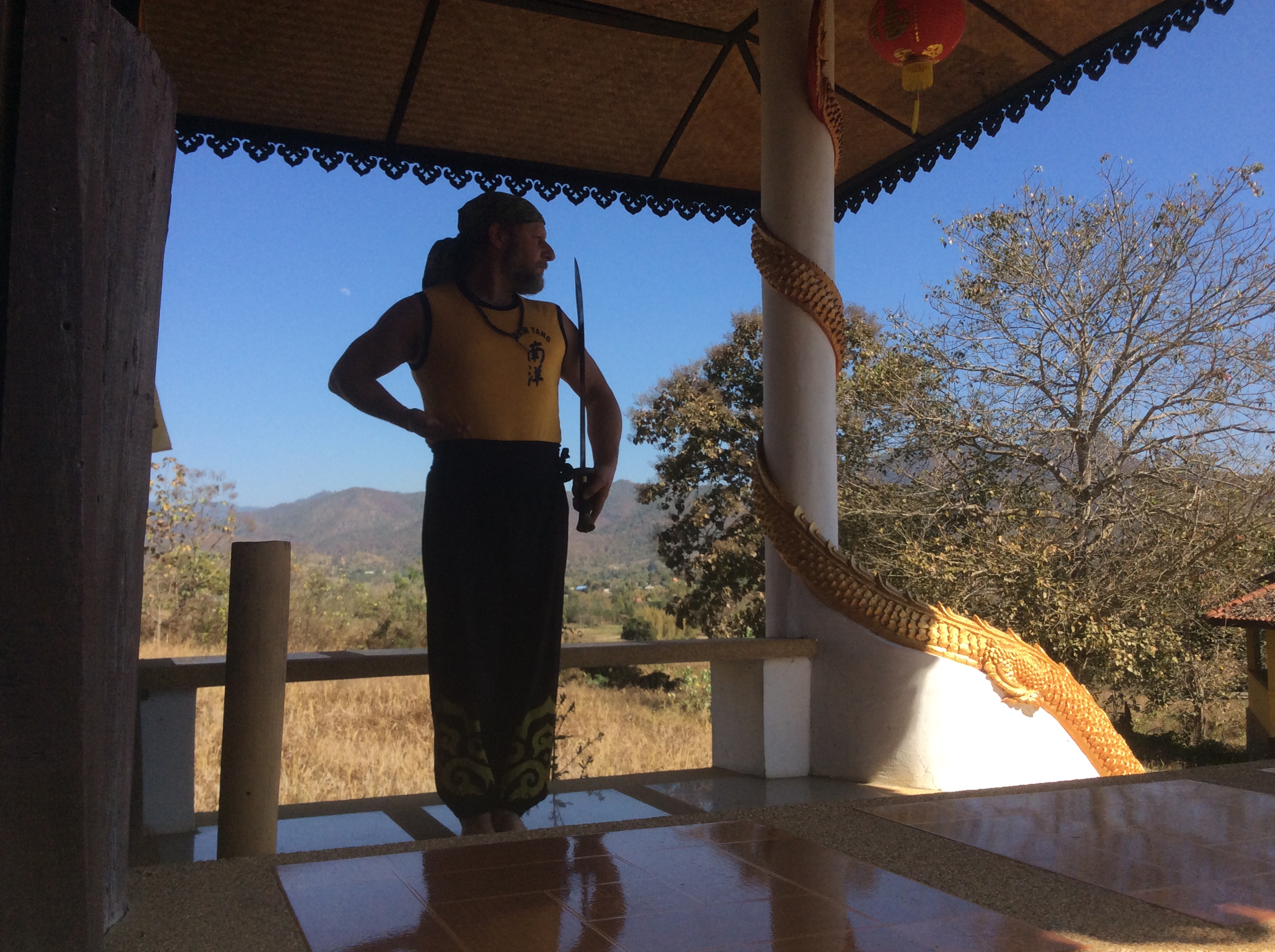
We had a great sword workshop with Sifu. Watching Master Iain move with the sword is an honour and beautiful to behold. Listening to him speak is enlightening: picking up the bits of gold dropping from his mouth. I’ll share a couple examples related to sword, one which is more about technique and the other more about life. For example, teaching a slash with the Tan Dao broadsword using a stick, Sifu demonstrated the technique for getting power using the whole body. People launched into it using their sticks to practice the technique. After a couple of minutes he stopped us. “Right, ok people love the Nunchakus, why?”. Everybody agreed but did not provide the answer he was looking for. “It’s because you can get lots of power”, he explained, “but it’s hard to control.” He then told the story from years ago of a friend who had practiced with the Nunchakus. Nunchaku is a weapon with two pieces of wood attached by a chain popularized by Bruce Lee in his famous movie, “Fists of Fury”. So his friend had brought his Nunchakus to a party to show off. After having a few he went at the demonstration which involves spinning the Nunchakus rapidly through the air then wrapping them around the body and catching the end of the stick under one’s arm. When people who have not achieved mastery do this they invariably wind up hitting themselves in the back of the head, which is exactly what is friend did almost nocking himself out. “Very hard to control”. Master Iain explained that you can do the same thing using your body; even with a stick one can generate great power but it’s much easier to control. He then demonstrated drawing the stick across his torso using his whole body to slash with the stick in a mighty whiplike fashion. “So imagine that the stick is like the end of the Nunchaku and your joint is the chain, but you can still control it.” Furthermore, you have more than one joint to swing off: wrist, elbow, shoulder. Each joint that you can bring into play generates more power. Sifu then demonstrated further how one can bring into play the lower body for the slash as well, drawing up Chi from the ground through one’s whole body and out the stick, or sword.

We had further sword instruction the next morning. It’s amazing to watch Master Iain move; it’s beautiful and terrifying when he holds the sword and always inspiring. He gave us a combination to practice rolling the sword around the back and drawing it over the shoulder in a whole body slashing motion followed by a step with the right foot coming up on the cat stance with most of the weight on our back foot drawing the sword and front leg close in tight to the body then springing outwards in an explosive lunge. I was doing it over and over losing myself in this awesome series of moves and the full body feeling elicited when he stopped us again. “Right”, he said, “everyone come round.” The he spoke about putting one’s character in the moves. Perhaps he had not quite seen what he wanted to in observing us practice, perhaps he was just taking it to the next level; however, this theme had come up in other sessions and not just from Master Iain. Eddie has often commented that people really needing to their whole being into the move, the punch, the hand position, the step, whatever Kung Fu move one is doing, really put your full force, your Chi into it, DO IT! There is an obvious life lesson here that can be applied to anything in life. Of course, there is a place when learning something like a position for the foot in a certain step or stance, a sequence of moves or transition, a certain placement or position of the hands. When it comes to doing actually doing the move, you really have to put your spirit into it. Master Iain continued with the teaching saying that when you do it this way you can change your life, change who you are. He then demonstrated a half hearted, somewhat awkward version of the short sword sequence we had been given to practice. “This is the movement of a clumsy person”, he stated. You may think of yourself as a clumsy person and behave as a clumsy person. When you really apply yourself to the moves, to learning and practicing them properly putting your character into it with the full force of your spirit, you will no longer be a clumsy person. You can change who you are.

In reflecting on the above teaching it comes to me that one must do this authentically. If you one doesn’t really know the move, then how can you fully infuse the movements with your character? Clearly one has to have something into which to put one’s spirit. Yet, it also seems to me that my ego could come into play. I may want to see myself as a great swordsman, a Kung Fu master. Well, at my age and with all my commitments this is unlikely to happen. So somewhere between authentically aspiring to become something I’m not and my self-deluded ego, there must be some kind of truth. To me, this is where having a master comes into play, having a proper role model. So my next question would be, what do I do? I will have been here for two weeks and have only begun to scratch the surface, yet even still what I know is precious to me. So now I must practice what I have learned, and I must develop and listen to the Inner Master. I raised this new found wisdom with Master Iain who provided supportive affirmation and added, “Right, well of course there the internet.” He has a website and many YouTube videos which run through various sequences. Plus, there is a memory stick made available for free copy to students training at Nam Yang which contains numerous instructional videos and various articles by Masters Iain and Tan along with other supplemental materials. I intend to use these to continue my training back home in Canada.
IMG_0887
Another powerful experience with some deep teachings occurred when Eddie was helping another student who had sustained serious abdominal injuries. Without going into any detail on the circumstances, I will try to convey what I learned. We were discussing bringing awareness to one’s centre. The term often used in Kung Fu is Dantien. There are three major Dantiens: the lower Dantien, about three finger widths below the navel; next is the middle Dantien associated with the thymus gland at the level of the heart; and the upper Dantien located at the brow, the “third eye” associated with the pineal gland. Dantien is “a like sea of energy” and often called an “energy centre”. When people refer to, “the Dantien”, “your Dantien”, or “your centre”, they’re usually referring to the lower Dantien. This is one’s physical centre from where one finds balance and movements occur. We are constantly reminded to be aware of this place, holding our centre, moving from it and bringing down our Chi grounding into it. Eddie shared that one’s “true centre” is actually inside at the very centre of your being. “Your centre is where your first cell originated inside your mother; that point from which you come, this is your centre. It doesn’t matter whether you can feel it or not, or where you move your mind; your centre is your centre.” He added that for a woman who has had a baby it’s easier to go back to that place. This was a profound idea for me and ties into what may be the biggest lesson I will take away from this retreat. This will be the subject for an upcoming post but starts with what I share below.

For the first time in a couple years I have been experiencing sciatic pain down my right leg. I know this well having struggled with disc injuries for years. The first episode was a ruptured disc in my early forties. The radiology report was dramatic, “disc material extruded and mobile” accompanied by some minor stenosis and a bulging disc. With physio, active release chiropractic and lots of core strength it cleared up in about a year. After some years I let go of the core strength, got macho and wound up with a major disc herniation. This episode lasted 3-4 years and never fully went away. The first year and a half was brutal; constant pain, I couldn’t stand up longer than a minute past noon. It started to settle down but I was physically and emotionally vulnerable. Far less active I became depressed and gained about 25 pounds. It seemed never ending. I got back into Chi Kung having practiced it throughout my late 20s and 30’s and combined with meditative walking began a slow crawl of the hole. I showed up to the Kung Fu Retreat with my back in the best shape it’s been in years. Sometimes I get a little bit of sciatic pain if I’ve been up for a long time, like when travelling long distances or teaching my Wilderness Retreat for long hours but it usually goes away when I wake up.

I experienced the sciatic back pain as a major set-back. I told Eddie that I had been doing so well. I was feeling so much stronger and more flexible, I was really getting into the training and starting to make real gains. He stopped me. “No”, he said, “you are stronger and more flexible, and you are making gains. Now you have to figure out how to adapt to this changing situation”. That’s the kind of thing I tell my students. It was masterfully done and had a big impact. Eddie suggested I inform Master Iain who directed me to adjust any of the moves I was doing or simply not do anything I felt would aggravate the symptoms. I thanked him and explained that when I introduce new exercises or physical activities I try to do so one at a time and systematically gage the impact. Here I have introduced so many new activities from stretching to strength training to kicking that it’s hard to say whether it would be due to a specific move or just all of it together. I told him I intended to keep training but that I would monitor it closely and make any major or minor adjustment I felt necessary. I believe the cumulative effect of everything together is impacting my back; however, more specifically I felt it must be related to flexion, of which we do quite a bit, particularly in the stretching and some of the Chi Kung activities. Thus I need to modify all such movements and generally take everything down a notch. One thing I did notice was that applying some of the Kung Fu training directions I had been given from Master Iain, particularly sinking my tailbone and holding my centre, seemed to ease some of the pulling from back down my leg. I practiced this and it seemed to help.

That night we had a special activity. The full moon is considered the height of the moon’s yin phase so at midnight on the full moon the practitioners at Nam Yang go out to the training ground to do the Chi Kung sequence usually done every morning at 6 am followed by the Shuang Yang. It’s not yet ful moon but Master Iain is leaving on Friday for some months so we did the activity together. I only did a mild version of the Chi Kung without flexion. The high point was after most people went to bed. I was privileged to see for the first time Master Iain perform all 66 movements of the Shuang Yang. Recall the Shuang Yang is the Shaolin soft martial art which some believe to be the origin of Tai Chi. It took him abut 15-20 minutes. It was so beautiful; in the sleepy late evening light beneath the stays with the half moon glowing above the Shuang Yang sequence had a remarkably dreamy quality to it. I went to bed with a sore back and bruised ego trying very hard to stay positive and see what I would be able to accomplish the next day. I have more to share on this and how the healing process unfolds, but this will have to be in my next entry.

For now I bid everyone a very wonderful goodnight, or good morning for those on the other side of Mother Earth.

Love and Blessings,

by David Lertzman

David Lertzman Ph.D. is the Assistant Professor of Environmental Management and Sustainable Development PI: Energy Indigenous Environment Interface Research Program, Haskayne School of Business, University of Calgary.

This blog entry is part of a series of blogs David Lertzman wrote for StudyMartialArts.Org detailing his experiences training at Nam Yang Shaolin Kung Fu Retreat. If you’re interested in visiting this school book your place here and get an exclusive discount  Nam Yang Shaolin Kung Fu Retreat.

Training At Kunyu Mountain Shaolin Kung Fu School

‘The following is a short diary from a student who studied at Kunyu Mountain Shaolin Kung Fu Academy during the October holidays. In this short blog he breaks down each days training. ‘

At Kunyu Shan you have a choice of doing one of the Shaolin martial arts styles, Wing Chun or Bagua. I chose Shaolin with Shifu Gao.

Kunyu Mountain
Monday:

Tai Chi starting at 6.00am, this is optional but highly recommended. Afterwards you do Qi Gong for 20 minutes followed by breakfast.

Breakfast consists of rice / sweet rice porridge, rice bread, bread, and eggs. You can take your pick of everything. I recommend bringing (or buying once you’ve arrived) some honey / jam / peanut butter to put on the bread. As this bread is served with every meal so you can always eat this.

After breakfast you have about hour to relax, then “Line up”. You meet with your master, then go on the morning run with your group, around 1km at a pretty decent pace. You loop back to the compound and begin training immediately.

You’ll warm up, then start learning shaolin basics for 1.5 hours (kicks, punches, stances, flying elbows, the lot). This is reasonably intense.

30 minutes break.

After the break you’ll go straight into learning “forms” for 1.5 hours. This is reasonably relaxed.

Lunch – this consists of a buffet of 2 vegetable based dishes, and one meat based dish. You can take the amount you want of each. The food isn’t too great, but it’s not too bad either. Some days are better than other, for example one day you get steamed meat dumplings, and another chicken on a stick and potato wedges.

I normally took a nap after lunch until 14.00. Second line up is at 14.30.

Finally, run the same 1km, then straight into Sanda training for 1.5 hours. This generally involves reasonably high intensity drills, basics, and pad work. There is very little practise sparring, so if you’re into competitive fighting, I recommend Muay Thai or somewhere else.

Finally you’ll have dinner, which is extremely similar to the lunch. Again, I recommend bringing something to put on bread for afterwards.

After this you can do what you like, some extra training, table tennis, watch a movie, take a shower, etc. (There is no time to shower in the morning, and hot water is only turned on in the evening for 3-4 hours.)

The structure of the rest of the week is the same, the only difference being what you studying during the three lesson periods of the day.

Tuesday:

Tai Chi

Conditioning – Partner up and get punched in the stomach, pectorals, shoulders, lats, floating ribs, kicks to the inside and outside of the thighs. Then high intensity punch bag work without gloves, which absolutely shredded my knuckles and they’re only just starting to heal now 1.5 weeks later.

Power training – Reasonably standard anaerobic training, sprints, bear crawls, bunny hops, hopping, planking, v-sits, etc.

Wednesday:

Tai Chi

Acrobatics – Jumping kicks, forward rolls, backward rolls, forward break-falls, backward break-falls, side break-falls, etc. Some of the backward break-falls are very difficult at first, and if you mess them up you will end up hitting your head / winding yourself. But once you get them, they’re relatively painless. This whole lesson is conducted on top of large reasonably firm padded matts. (The same matts used in the Sanda ring).

Forms.

Sanda.

Thursday:10599536_1557778751112613_2335631134442809634_n

Tai Chi

Shaolin Basics.

Rest

Power Stretching – some risk of getting injured during this, but it seems that the Shifu’s are starting to understand this now, and they were reasonably nice about it. Apparently they used to push people way too far during power stretching, but I found this to be okay. But I’m also reasonably flexible to start with from years of Tae Kwon Do training. The worst part was holding a specific shoulder stretch for 3 minutes, for two sets, with threats if anyone failed of whole group punishment.

Friday:

Tai Chi

Shaolin Basics

Ring Sparring – During this period everyone gets together to watch people sparring in the Sanda ring. If your Shifu has given you permission you may seek someone to spar against and get into the ring. Generally, with the exception of a couple individuals who have cleared sparred before, the level of sparring was quite poor. I believe this is because as I previously stated, there is a lack of any practise sparring. You learn all the techniques, but this is not enough in my opinion.

Mountain Stair Climb – This involves a leisurely walk up one of the mountains to a temple. You then have to run up and down it as many times as you can in 1.5 hours. Make sure you don’t overdo it on this, running down 300 odd stairs will literally destroy your knees – so at the very least take it very slow on the way down, then power on the way up.

Conclusion

The training was very physically intensive, from what I’ve written it may not sound it, but even lessons like “Shaolin basic’s” is relentless – constant jumping, shouting, powerful techniques, etc. My main advice is that the fitter you are before you come to Kunyu the more you’ll be able to enjoy it!

P.s. The Shifu’s dish out punishment with large 5-6 foot staffs. I didn’t see it happen whilst I was there, but if you break the rules you will get staffed. And they don’t hold back.

by Steve Hoult

Steve Hoult was a StudyMartialArts.Org student who went to Kunyu Shan for a week during October. For a full and more independent reviews of the school visit the StudyMartialArts.Org website. When you book your training do it through the StudyMartialArts.Org for discounts, extra service and a welcome pack full of language learning materials and martial arts information.

The Origins and Lineage of Shaolin Wugulun Kung fu

Shaolin ChanWuYi and Wugulun Heritage

The origins of Shaolin ChanWuYi and Wugulun Kung Fu date back to the sixth century. When Bodhidharma, who is credited with bringing Buddhism from India to China, settled in Shaolin there was already a Buddhist temple there.

While sitting for nine years in a cave behind the temple, Bodhidharma developed Zen Buddhism which he introduced to China and which later spread to Japan and the rest of the world. Needing some form of exercise to maintain the health of his own and his disciples’ bodies, he developed a series of movements or exercises designed to promote health and fitness – based often on the movements of birds and animals they observed around them — and at the same time to deepen the practice of meditation. Herbs from the mountainside were collected and used for healing.

Master Wu Gulun

Due to China’s turbulent history, the Shaolin Temple, with its highly skilled fighting monks, was sometimes in favour with ruling dynasties, sometimes not. It was destroyed and rebuilt a number of times. Around 1870 it was again in disfavour with the rulers of the Qing dynasty and the temple was in imminent danger of being destroyed yet again. The Temple Master instructed one of his foremost monks, Wu Gulun, to leave the temple and carry the traditions of the Shaolin culture with him to preserve them. He had, however, first to fulfill a rule of the Temple: that anyone leaving the temple should fight and vanquish all the monks to prove his strength and suitability to cope with the secular world he was entering. As the top Kung fu student, Wu Gulun easily achieved this feat and disappeared into the mountains to live in an isolated village, Bai Yu Gou, where he continued to practice and preserve the secrets of the Shaolin heritage.

c8df10f3-cf64-4f99-9a69-367091de563e-orgMaster Wu Shanlin

As he needed to be able to pass on this knowledge he married and had a son, Wu Shanlin, to whom he taught all the ancient secrets. Master Wu Shanlin became the second Grandmaster of the Wugulun lineage. Continuing to live in the small village, Wu Shanlin married and had two sons, Wu You De and Wu Tian You. To them and also his nephew, Qiao Hei Bao, and a young orphaned student, Zhang Qing He, he passed on the traditions.

Wu Tian You had a son who sadly died when he was quite young. This son was Master Wu Nanfang’s father. From an early age Wu Nanfang studied with his great grandfather, Wu Shanlin, then with Qiao Hei Bao and Wu You De and later Zhang Qing He. He is thus the direct descendent and inheritor of the Shaolin ChanWuYi and Wugulun tradition.

The 1920’s in China was a period of huge unrest and turmoil. In 1928 a general, Shi You Shan, was looking at the Shaolin temple as a possible source of resistance and danger so he sent one of his underlings there to try to gauge just what kind of a threat the fighting monks posed. The underling asked who the best fighter was as he wanted to fight him and see how strong he was. He was told that actually the best fighter, Wu Shanlin, was not in the Temple but in an isolated village in the mountains. The underling found Wu Shanlin and challenged him to fight with his sword. So powerful was Wu Shanlin’s qi that he paralyzed the man’s sword arm with just a look and a shout, causing the sword to fall uselessly to the ground.

Within two days of Shi You Shan hearing about this incident, he decided the Temple was indeed a threat and destroyed it almost totally.

As Master Wu Gulun’s greatest desire was that the Shaolin tradition should be returned to the Shaolin Temple when the time was right, Wu Shanlin returned to the devastated Temple with his son, Wu Tian You, with the intention of helping to rebuild it and restore the traditions and heritage which he had been preserving. He found to his dismay, however, that the monks were demoralized by the defeat, and most decided to either return to a secular life or join the army. The remaining few were men of poor character and Wu Shanlin felt he could not pass on his knowledge to them as it might be used wrongly, maybe to hurt people rather than to rebuild the Temple. He stayed for three years, teaching a few basic Wugulun kung fu moves, but then returned to his village to wait for a more auspicious time. Many current kung fu teachers claim that they know the original kung fu forms from their teachers who had practiced under Wu Shanlin. In reality they know only a few very basic forms.

Master Zhang Qing He

Zhang Qing He, the third Grandmaster, was an orphan who was rescued and looked after by the monk, Chun Quan, in a small temple on the Luoyang side of Song Mountain. Chun Quan sent him to study with Master Wu Shanlin when he was about twenty years old. Zhang Qing He also qualified as a doctor and was in fact better known for his medical skills than for his kung fu.

In about 1988 Master Zhang Qinghe came to live at the Shaolin Temple to treat his beloved Buddhist Master who was very ill. There he came into contact with a young monk, Dejian, who was studying and teaching at the Temple. Dejian started training in the Wugulun Kung fu style with him. In 1990,Master Zhang Qing He requested Wu Nanfang, who was teaching Wugulun Kung fu nearby to come and introduce Dejian to Wu Nanfang. They are brothers, because they are fellow apprentices of one and the same master.

img_51241Master Wu Nanfang and Master Dejian

This was an historic meeting as it is these two masters, Wu Nanfang and Dejian who, after the death of Master Zhang Qing He in 2004, are currently concerned with the preserving and passing on of the Shaolin Wugulun Kung Fu tradition — Master Dejian from the San Huang Zhai Monastery and Master Wu Nanfang from the Shaolin Wugulun Kung fu Academy.

Information courtesy of the Shaolin Wugulun Kung fu Academy.

_______________________________________________

“If you would like to study at the Shaolin Wugulun Kung Fu Academy or would like to find out more information about the kind of training you can expect at the school click the link above. It is my opinion that this school is one of the very few authentic Shaolin Schools left in China and is definitely worth considering if you wish to study authentic Shaolin martial arts. Lately, I’ve been somewhat disillusioned with some of the training and also the managerial practices I’ve witnessed at some of the other more popular Shaolin International Kung Fu Schools in China. Maybe its time for a change a return to the roots of Shaolin with more focus on self discipline and quiet meditation rather than the flash and high flying kicks of the modern perversion we see so often. A perversion that turns poor young ambitions Shaolin masters into business men who scramble over westerners for money with little thought to the detriment they are doing to the name of Shaolin and China as a destination for martial arts.” – David Kelly

Kung Fu in Thailand Day 3: A Day of Rest

Greetings everyone,

Yesterday, Wednesday, was a rest day, as is Saturday. We bundled up in Sifu’s truck and drove north to Mae Hong Son close to Burma. We visited some hill tribe markets and two principal Temples, one in front of a small lake and another on a hill overlooking the town. The hill tribes women’s hand weaving is exceptional and they sell the most delicious wild honey by the side of road. One of the highlights of the day was when we picked up four Buddhist monks walking up the winding mountain road who piled in the truck with us. Not only is Sifu Iain extremely knowledgeable in Kung Fu and martial arts in general, he has also a deep knowledge and experience of the local area and its peoples. Thus, our journey was one through the historical, cultural and philosophical landscapes of the region. Being so close to Burma there is a very strong influence from the Shan people. Indeed, the whole area has been flooded with various ethnic groups, in particular hill tribes fleeing conflict in Burma. I finally had the current political situation in Thailand explained effectively over lunch by Sifu Iain and the day ended at the Temple on the Hill in Mae Hong Son, Wat Phra That Mae Yen. It is hard to describe how extraordinary are these temples. The view from the mountain top on which the temple sits was spectacular as the jungle stretched out below with its forested hills and mountains, limestone spires and the blazing sun setting behind.
IMG_0868

Today we followed the same training schedule from 6 am to a little after 9 a.m., and 3:30 p.m. to about 6:15 p.m. Along with my extra 2 hours in the middle I also received a real Thai Massage. It was as much ordeal as it was massage but the lady hired for the massage was very good natured. She is a strong and gifted traditional massage therapist. She laughed at the noises I made with her elbows in my back and foot in my leg and told me to say, “Sooo, sooo!”. She tweaked my nose and invited me to the discotheque tonight in Pai but I told her I couldn’t go. I learned later from Sifu that men with big noses are considered extremely handsome in this part of Thailand; I’ve finally found somewhere that values my natural good looks and charm! We did a lot of Chi Kung, stretching and meditation today. We also continued with the Tigre-Crane Sum Chien and another sequence I have not yet described called Shuan Yang, which in English is called Sun Frost White Crane. Shuan Yang is a kind soft or gentle martial art that looks a lot like Tai Chi, but more martial. Indeed, some believe it to be the origins of Tai Chi. We did some great punching drills with the suspended sand filled cloth sacks and had a marvellously vigorous kicking session. Today on weapons I got to take up the actual bladed sabre, the Tan Dao or Chinese Broadsword. Wow, that was a gas training with sword in the open outdoor training ground my traditional black and gold Kung Fu pants billowing wet chest bared to northern Thailand’s blazing afternoon sun.

IMG_0856At tea Sifu spoke of the history of Nam Yang’s Tigre-Crane lineage. His Master’s Master, Master Ang, was the one I mentioned earlier who brought the art out of China and passed it eventually to Master Tan Soh Tin who then passed it to Iain Armstrong, the man I call Sifu. What an amazing history. Master Ang started Kung Fu as a boy and had three different masters. His first master was known as “the secretive old man” who introduced him to Tigre-Crane at 8 years old. His second master was an herbal medicine peddler who specialized in the Shaolin weapons system and Tiger form. The third was a Shaolin monk. I was amazed to learn that Master Ang eventually fought in Sun Yat-Sen’s army with the Koumintang, which was subsequently taken up by Chian Kai-Shek. As the Communists became victorious and began executing the Shaolin Kung Fu martial artists Master Ang emigrated to Singapore and later started Nam Yang in 1957. He ran the club until his death in the mid 1980s and the leadership passed to Master Tan who trained Sifu Iain. Iain now has schools here in Thailand, in the UK, in Russia and another about to open in Italy. It is very special to be a part of this lineage and I hope to bring home some foundational skills I can practice on my own. I’ve taken to playing flute under the stars while the others arrive to the outdoor training area for the morning session. Thus, I must sign off as 5 a.m. comes early!

by David Lertzman

David Lertzman Ph.D. is the Assistant Professor of Environmental Management and Sustainable Development PI: Energy Indigenous Environment Interface Research Program, Haskayne School of Business, University of Calgary.

This blog entry is part of a series of blogs David Lertzman wrote for StudyMartialArts.Org detailing his experiences training at Nam Yang Shaolin Kung Fu Retreat. If you’re interested in visiting this school book your place here and get an exclusive discount  Nam Yang Shaolin Kung Fu Retreat.

Kung Fu in Thailand Day Two: The Training Begins!

Today was an awesome day! I was up about 5:30 a.m. and we started a little before sunrise with Chi Kung and Sam Chien, crescent moon shining with mist hanging off the jungle. We trained with the group this morning from 6-9 am and in the afternoon session from 3:30 until a little after 6 p.m. I did 2 hours of solo instruction focussing on Chi Kung and Sum Chien. Sum Chien is a series of moves that forms a basis for the Southern Shaolin Tigre-Crane form we are learning. I also got to begin weapons training with staff and starting on Chinese Sabre using a stick. I thought staff would come more easily to me than sword but I probably did better with the sword technique. I worked on weapons with the head student who is also an instructor. The hardest part is probably the footwork. All in all I would say we spent about 2.5 hours today in stretching and conditioning, lots of stretching.

IMG_0864

In the evening we focused on special breathing techniques that apply to Chi Kung and Sum Chien, which Sifu said were actually quite advanced. I did well with my prior yoga and Chi Kung training. Then we worked on punching drills into heavy cloth sacks filled with sand hung from the rafters. It makes your knuckles pretty red but is very instructive on technique and really fun!! The idea is not to swing the sack but to be able to dent it by sending your chi into the target. One of my favourite times of day is the break in training when Sifu call us up to the veranda where we sit on teak stools and he pours special tea in all our cups on a table shaped like a dragon. He then delivers teachings about technique principles, tells stories and dispenses wisdom. Like I said, you can tell a lot about Sifu by how his chief students treat him: with utmost respect and admiration, hanging off every word with the rest of us. Sifu spoke about Kung Fu as a way of life; the martial aspect is part of a bigger picture and no one part is more or less than the other. Kung Fu prepares us for meditation and the pathway to enlightenment.

At afternoon tea Sifu spoke about the tendons. I had mentioned that I felt where an injury in my shoulder was really being stretched when being corrected in some technique for practicing one of the slow punch forms early in the morning. At first it hurt but I stayed with it and then it started to open. Sifu said that such body awareness is the first step to Kung Fu. He said one’s tendons have a grain like wood. When you get injured it forms a pattern in the tendon, like a knot. As you develop your awareness you can use the Kung Fu forms to go into the tendon and open it up taking out some of the scar tissue and re-patterning the tendon. He said something else that was very profound which reminded me of Sequoyah. Speaking about training and repetition, for example of a simple movement like a step or the most basic punch over and over again, Sifu said that you could never get board of anything that is done with deep intention and full awareness.

Life here has a rather monastic feeling. We train before sunrise and retire a little after sunset. Two meals a day are wholesome yet simple, rice with vegetables and a clear, tangy vegetable soup, prepared by our cook who is mostly blind and comes from one the tribes originally on the Burmese side. Accommodations are comfortable yet spartan, the bed being a heavy, handcut bamboo cot. It is surprisingly quite chilly in the morning and I really missed my fleece pants for the first couple hours but had to put on a good showing as a Canadian while everyone else was quite bundled up.

There are several people training, all male from young to old: two other Canadians, a Dutch fellow, a Belgian and a Brit. The Belgian and Brit are senior students. One is already a teacher and the other well on his way, very dedicated, lovely young men. Tomorrow we have a rest day and are going to see some remote hill tribes with whom Sifu is connected. I’m pretty sore in many places with a nice, large bruise on my arm from yesterday’s push-hands activity, and very happy.

Love and Blessings
David

David Lertzman Ph.D. is the Assistant Professor of Environmental Management and Sustainable Development PI: Energy Indigenous Environment Interface Research Program, Haskayne School of Business, University of Calgary.

This blog entry is part of a series of blogs David Lertzman wrote for StudyMartialArts.Org detailing his experiences training at Nam Yang Shaolin Kung Fu Retreat. If you’re interested in visiting this school book your place here and get an exclusive discount  Nam Yang Shaolin Kung Fu Retreat.
Kung Fu in Thailand Day One: Arrival

Steve-Website-Photo1I have arrived in Pai, Mae Hong Son Province for two weeks of traditional Shaolin Kung Fu training in northern Thailand. After a flight delayed by fog we flew a short but spectacular journey over forested mountains and I’m now at Nam Yang Mountain Retreat, International Martial Arts Kung Fu and Meditation Training Centre. Although my work contract allows for 6 weeks of holiday, this is the first real vacation I’ve had since our honeymoon 8 years ago. I really need it.

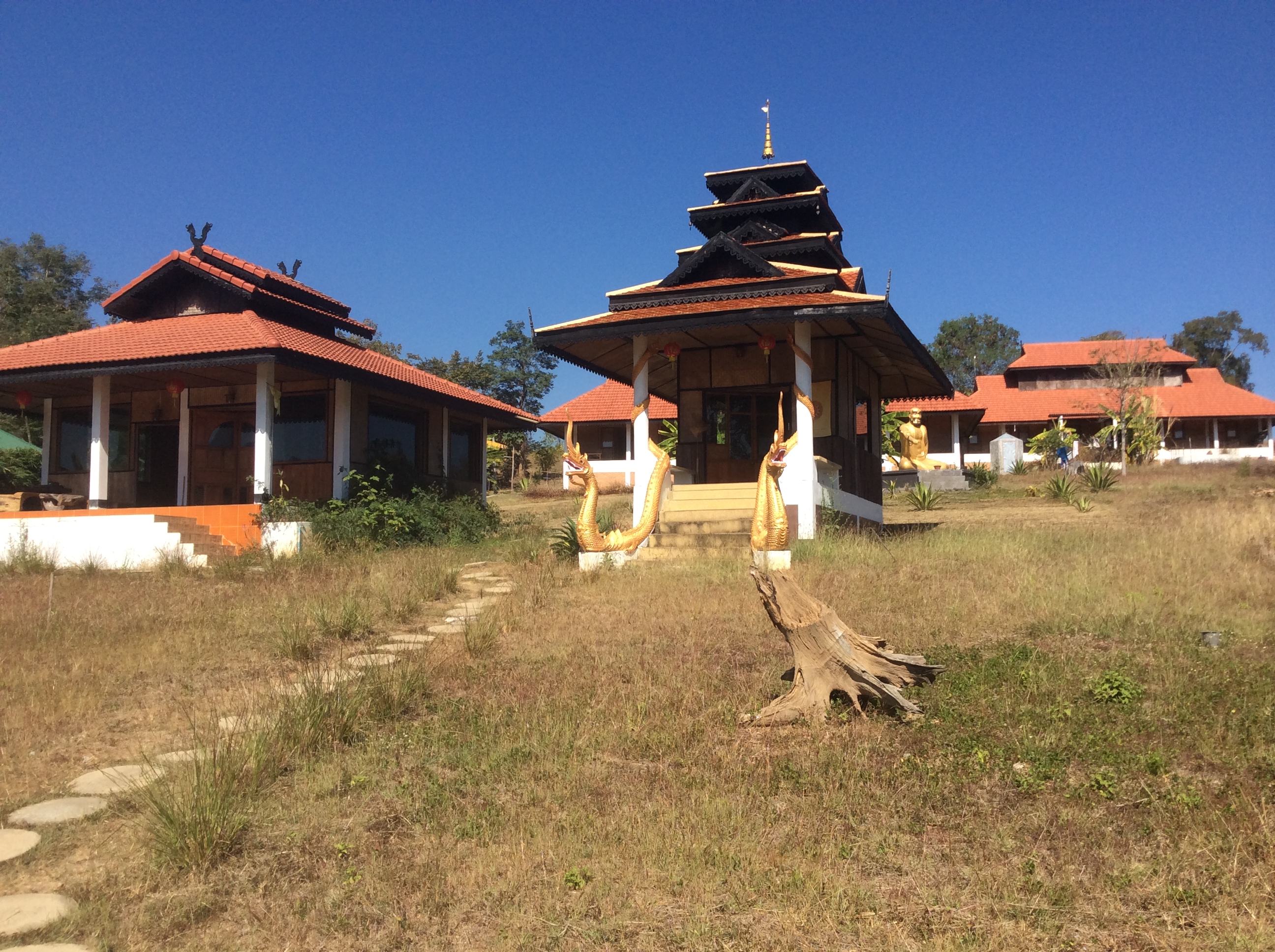
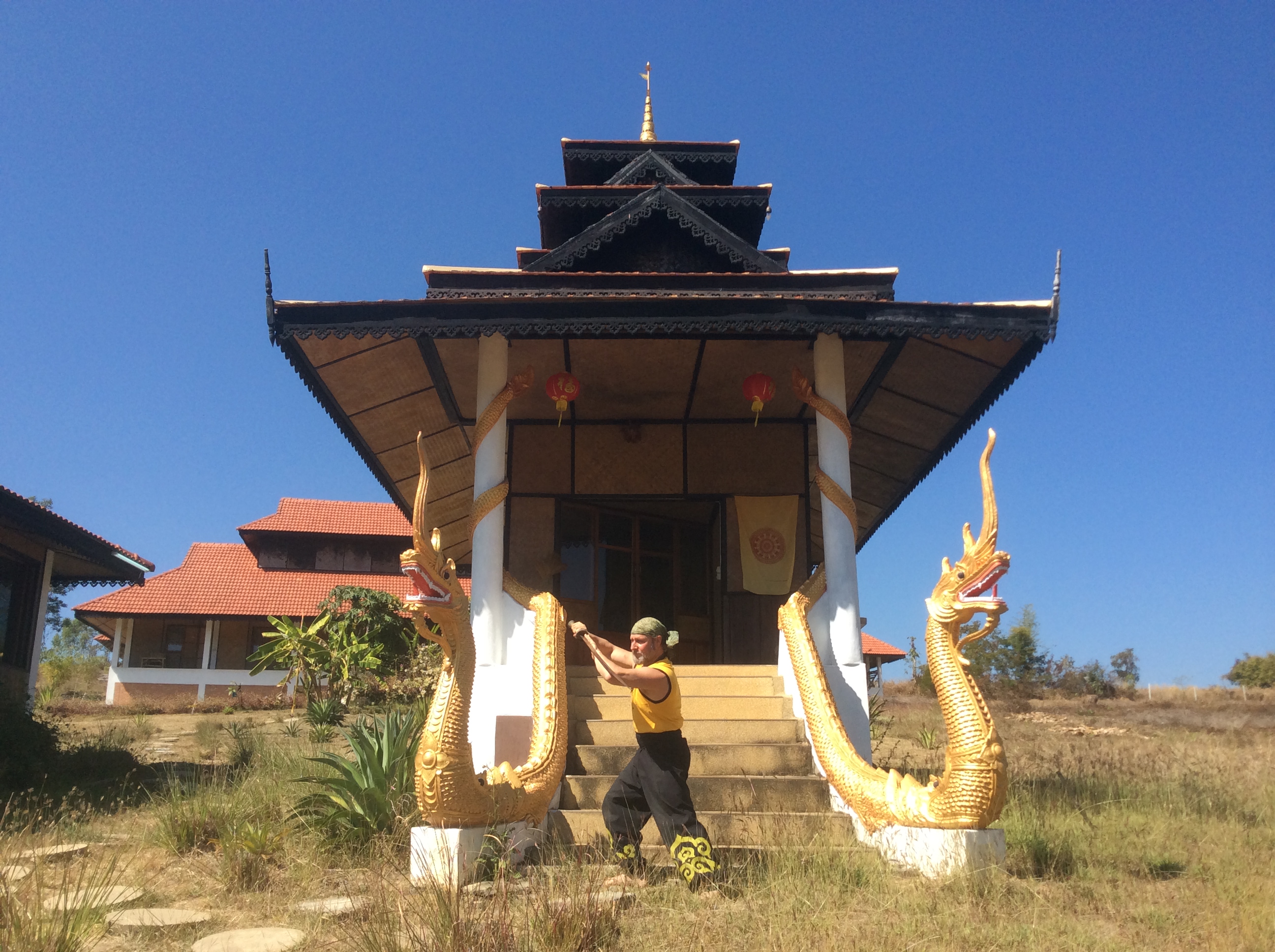
It is very special here. Nam Yang was created by Sifu Iain Armstrong and his wonderful Thai wife under the guidance of Grandmaster Tan Soh Tin with whom he has studied 30 years. Grandmaster Tan’s master brought southern Shaolin (Tigre-Crane) Kung Fu out of China after Mao’s ascendancy when the Shaolin martial artists were being executed. Nam Yang is near the town of Pai in northern Thailand about 30 km from the Burmese border. They grow most of their own food, including the rice, pineapples and bananas. The architecture is beautiful in the local traditional style giving the whole place a Shaolin Temple like quality. It is an extraordinary achievement! They have a large kitchen and open eating area, an office, Buddha House for meditation with two great Nagas (Dragons) descending the stairs, two training octagons, one which is covered and one open-area, plus the living quarters. Accommodations are simple, almost spartan, but we have what we need to get by and it is lovely!

I had a great sit with Sifu Iain over a special tea to review my training goals surrounded by the beautiful landscape and sprawling grounds of Nam Yang Retreat Centre. Afterwards I joined in the evening’s training. We did about 1.5 hours stretching and prep before doing push-hands and some basic drills. Sifu Iain is so authentic. You can tell a lot about Sifu by how his chief students treat him; that says it all. There are several people training, all male from young to old. Two other Canadians, a Dutch fellow, a Belgian and a Brit. The Belgian and Brit are senior students. One is already a teacher and the other well on his way, lovely dedicated young men. We went to Pai for supper tonight as one is leaving tomorrow after having been here some months. The other pretty much lives here training every day all day and sometimes teaching. Tomorrow we start at 6:00 am with Chi Kung for the sunrise. Wednesday is a rest day and we will go to town of Mae Hong Son on the Burmese border visiting remote hill tribes with whom Sifu is connected.

Kap Kuhn Kap (Thank you in Thai),
David

David Lertzman Ph.D. is the Assistant Professor of Environmental Management and Sustainable Development PI: Energy Indigenous Environment Interface Research Program, Haskayne School of Business, University of Calgary.

This blog entry is part of a series of blogs David Lertzman wrote for StudyMartialArts.Org detailing his experiences training at Nam Yang Shaolin Kung Fu Retreat. If you’re interested in visiting this school book your place here and get an exclusive discount  Nam Yang Shaolin Kung Fu Retreat.
Training with Master Zhou

SMA – Baji Zhandao UK training camp visit to Tianjin to train with Master Zhou.

Master Zhou Jingxuan teaches in Xi Gu park in Hong Qiao District. Historically this park continues to attract many of Tianjin’s famous martial arts masters and students. The park is a hive of activity throughout the day.

Master Zhou teaches the rare inner courtyard Shaolin martial art of Jin Gang Ba Shi. In addition to that he also teaches Piguazhang, Xingyi quan, Baji quan, Li style Taichi and Chou Jiao. As our trip to visit with Master Zhou was relatively short we focused our learning on the basics of two specific styles Piguazhang and Bajiquan.

After a warm welcome in Tainjin and some photos we enjoyed two hours of great training in Xi Gu park with Master Zhou. After the training we were invited for dinner with Master Zhou his senior students and a number of representatives from the Tianjin Martial Arts Association.

The following is an assortment of clips from the two day seminar as well as a short clip from a discussion on the evolvement of Bajiquan in Tainjin.

All the training you see in the video took place in Xigu Park where Master Zhou regularly teaches.

For further information on studying with Master Zhou, the Shang Wu Zhai Academy as well as a host of other masters in China and Thailand check out the http://www.StudyMartialArts.Org website.

The Life of Pai

IMG_0905

Stepping of the plane in Chiangmai, I instantly liked the place. The warmth of the air was somewhat different to the dry February cold of Beijing.

Rather unwisely though I failed to print of the directions and contact number for where I would spend the next 3 weeks training. “Mai Pen Rai” with a single step I’d quickly adopted the Thai go with the flow attitude like a natural, after all I was in Thailand and what better why to honor my hosts.

I’d only just touched down in Thailand and the journey was already exceeding my expectations and I felt completely relaxed about the weeks ahead. What I love about traveling is meeting people. My experiences to date have shown me that people vibrate on different frequencies depending on their state of mind. When people are on similar frequencies it’s natural for them to attract and connect. With my mind on exploration, discovery and anticipation for the journey ahead it would be this energetic principle that had drawn me to meet a fellow martial arts traveler.

Energetic principle or fait I met Dr David Lertzman at the boarding gate at Hong Kong international airport heading for Chiangmai. Both of us where surveying the room for a suitable plug socket to charge our respective apple products.

David a professor from Calgary University in Canada was a man who’d spent the last 7 years working with indigenous tribes in the Amazon rainforest. He was traveling to a place called Pai for 3 weeks of Shaolin training in order to follow a passion for martial arts that remained with him from his youth.

We rearranged our seats on the plane and from Hong Kong to Chiangmai the professor and I swapped stories and enjoyed the back and forth of good conversation.

IMG_0856
Walking Street

An instantly likeable and approachable man he had a way of making people around him feel comfortable. I pondered the thought of how this character trait would be one that would serve him well in the rain forests of the Amazon where he would have to communicate with numerous indigenous peoples. I pictured him bounding through the rain forests like Sean Connery from the medicine man.

We parted company in Chiang Mai with the intension of staying in touch to share our separate training experiences. He set off for the Nam Yang Shaolin Kung Fu Retreat in Pi and I to meet and train with Sifu Mark Rasmus.

Arriving late at Susan Pailomn it was dark but with a warm welcome and smile I was greeted by Sifu Rasmus. I could feel I was in a good place geographically, mentally and spiritually. Mark showed me to my chalet and we headed out to grab some food.

We talked about our respective martial arts journeys, about the training ahead, about life in Chiangmai, places to eat and places to visit. I new I was in the right place studying with the right master. When we finished it was late.

My first night in Chiangmai my plan ahead of arrival had been to make it to base camp familurize myself with the area and get a good nights rest. Mission accomplished.

Nestled among bamboo groves and trees I woke up from my first nights sleep to the morning chants of Buddhist monks and bell chimes, refreshed and ready to begin my training.The days ahead in Chiang Mai would be filled with excellent tuition under the supervision of Sifu Rasmus.

In addition to this there would be amazing temple visits and location based training, delicious local food and one or two healing Thai massages.Each evening as part of my training regime I would journal my progress. Likewise Professor David Lertzman had also been chronicling his training experience in Pai and was emailing the details of what would become a great blog for those thinking about training at Nam Yang Shaolin Kung Fu School. This is a blog I will post at a later date on the SMA bloggers wordpress site.


IMG_0866
The School

Before we parted company in Chiangmai I’d told David about the Study Martial Arts project, about our mission statement and company ethos. I also explained how I was always on the lookout for quality schools and masters to work with, so any insight he had about the school would be much appreciated.

With David’s regular up dates and emails filling my inbox with detailed accounts of his experience I knew that if an opportunity presented itself I would head to Pai, visit the school and catch up with my fellow martial arts adventurer.

On the second week of training a Thai national holiday fell on the Friday. Intuitively, Sifu Rasmus a keen motorcyclist proposed the idea of a road trip to Pai. With his help I rented a scotter and followed Sifu Rasmus along the beautiful, and somewhat infamous winding road from Chiangmai to Pai. We arrived in Pai dropped off our bags then headed out to explore Walking Street.

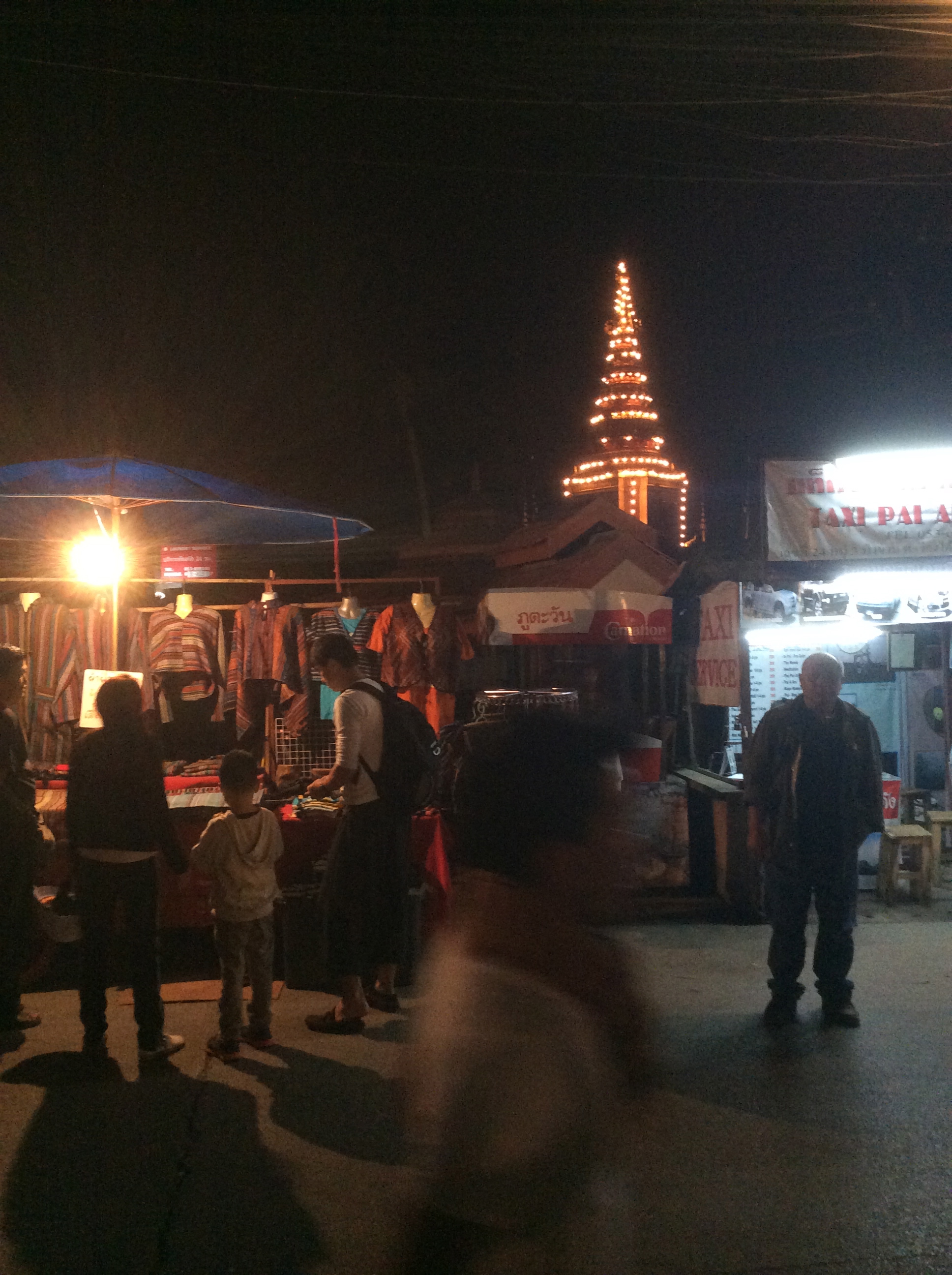
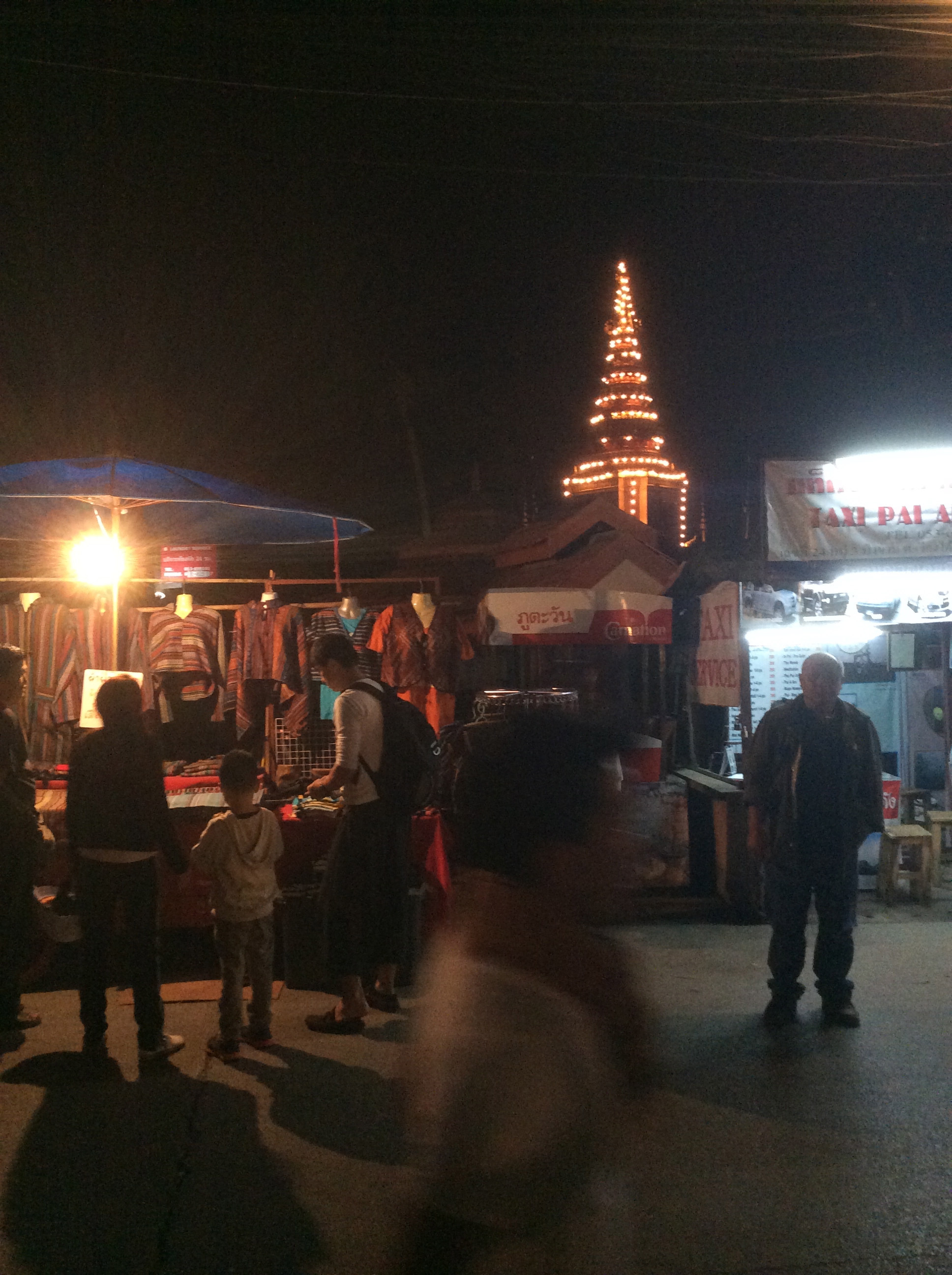
Walking Street Market in Pai is located on Rungsiyanon Road. It is a shopper’s paradise offering a wide range of souvenirs big and small, unique handicrafts, lacquerware and hand-made clothes some of which come direct from highland villages or local artists. Along with these gift stalls and shops I delighted in the sights smells and tastes of the authentic street food. Thai, Chinese, Western in such variety all fresh and delicious. The Thai street food experience was living up to the hype. The following day a Saturday would be a day off from training for the students at Nam Yang, so I explored Pai a little soaking in the Friday night before returning to my hotel. After breakfast I headed out to the school to meet David and also one of the instructors Eddie.

The school a ten minute bike ride away from my hotel is on the outskirts of Pai close to its small airport. David met me and showed me around the school and introduced me to some of his fellow students.

Mork Fa Waterfall
Mork Fa Waterfall

Some of these students were beginners studying martial arts for the first time, others had been students who had studied in China and were somewhat jaded of the experience and some were seasoned and experienced martial artists. After David showed me around he demonstrated one of the forms he’d been working on, then we sat and took tea with Eddie who at the time was one of the schools instructors.”Out door training areas”Normally the journey from Chiangmai to Pai takes 3-5 hours depending on your pace. I’d recommend taking it slow and taking in the scenery. The road itself is super fun but beware, those that get carried away and go to fast might end up as one of the roads numerous casualties. Both experienced and inexperienced drivers have cut short their holiday on this road which snakes it’s way up and over the mountains to Pai.

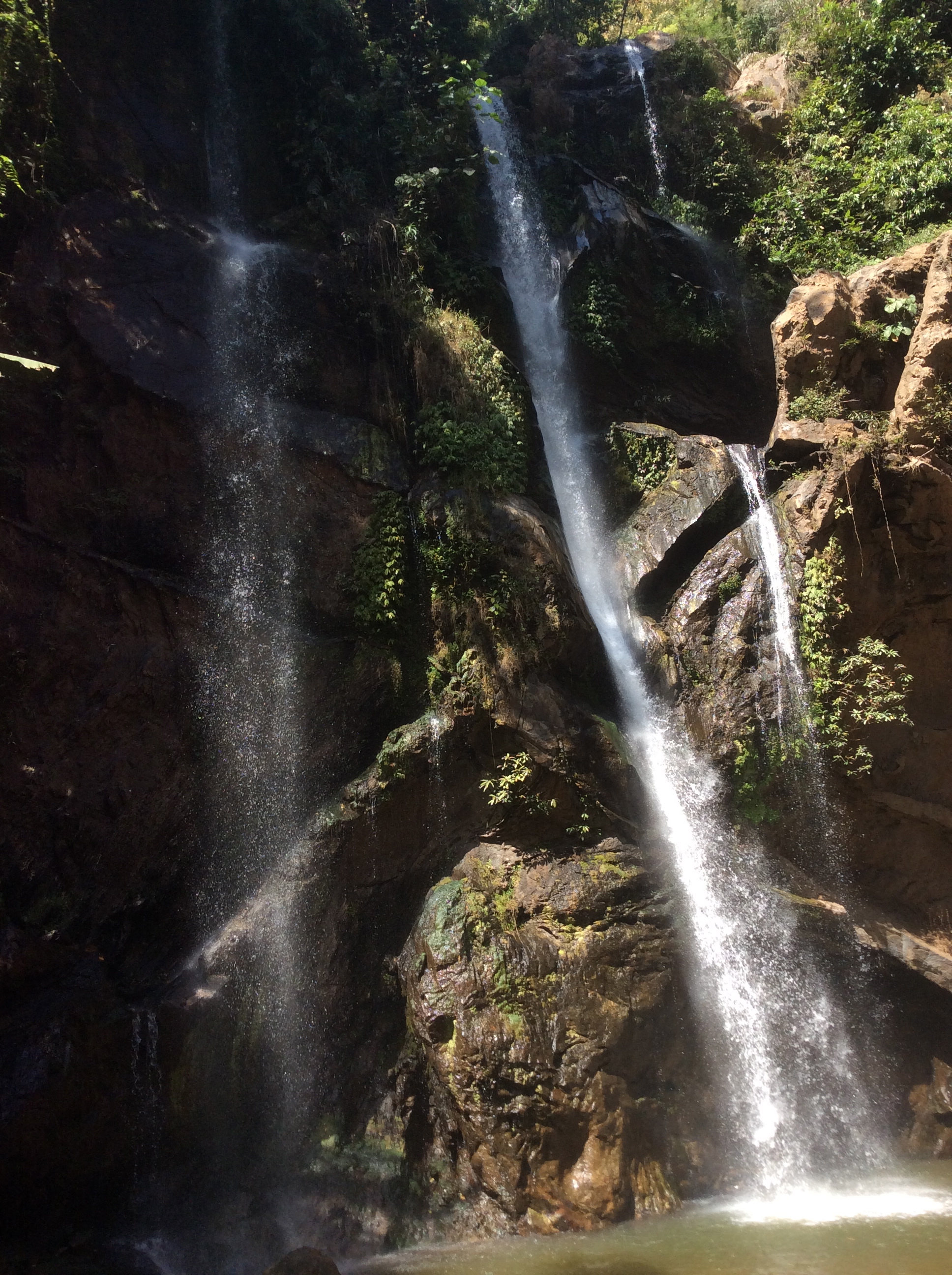
We stopped midway for lunch on the journey up and on the return I cooled down with a swim at this amazing waterfall at Mork Fa. For more information on martial arts training at this school or training experiences throughout China and Thailand visit the http://www.StudyMartialArts.Org website.

The StudyMartialArts.Org website has discounts on martial arts training and travel experiences as well as exclusive offers only available to those who book through SMA.

798 Art District – Exploring Beijing’s Art Scene

798 Art District in the north-east of the city is Beijing’s “SoHo” and is home to a large arts community. Paintings, ceramics, and street art are scattered throughout the area and it’s ex-industrial factories provide artists with flexible open space for arts installations both big and small. The most important of these art galleries include the expansive 798 Space Gallery, Long March Space and UCCA (China’s largest privately funded art museum).
The charm of the area is preserved in its post-industrial feel and the Maoist inspired art slogans and original features scattered throughout the converted factories and shop floors.
As an arts community 798 has both endured and suffered because of its success. Initially development pressures almost saw the district completely redeveloped however, successful campaigning and the growth in tourism resulted in the reclassification of the area as a legitimate art district supported by the government.Nevertheless rising land prices and development pressures remain. As a result many of the original artists of the neighbourhood who set up studios in these former military factories, including Factory 798 which originally produced electronics have been priced out due to increasing rents. Only a handful of the most successful of these artists continue to live and work in the district.

“Creating a unique backdrop to display the art”

“Galleries both big and small sell and display art works”
798 continues to thrive despite the rising prices. Today the district is filled with not only art galleries but also gift shops, book shops, restaurants, cafés, artsy clothing stores and of course street vendors. 798 Art District is one of Beijing’s most popular tourist destinations and certainly China’s largest and most famous arts district.
One of the highlights of the district is its change ability. The installations move, change and evolve. The details, textures and colours of the works of art, the setting and the people offer the viewer new interesting sensory stimuli around every corner.
Taking photos is a must. The street art unique, weird and unusual is accessible and allows you to participate and interact with this very Chinese art experience.
“Reform and Opening Up” (改革开放 – gǎi gé kāi fàng)
798 Art District can be found at Jiuxianquao Road and Jiuxianqiao North Road, Beijing. Entrance is free and it is open each day from 10:00am-6:00pm.

View this article on storehouse – https://www.storehouse.co/stories/g2xa-798-art-district

My Site – http://www.StudyMartialArts.Org

Taiji Fajin, Hermetics & Metaphysics

The following modest wooden house is where I stayed in Chiang Mai, Thailand when I trained with Sifu Rasmus. Sifu Rasmus teaches Taji Fajin, Hermetics and Metaphysics in this idilic setting nestled at the foot of a mountain and within ear shot of a buddhist retreat.
Leaving the cold and smog of Beijing behind I headed to Chiang Mai for 1 month of intensive training.Sifu Rasmus courses run from 1 to 12 weeks or longer depending on the content. His students tend to be instructors or masters who are looking to add greater depth to their knowledge or a more internal flavour to their art.
During the training period Sifu Rasmus would from time to time hold his class in the grounds of some of Chiang Mai’s most spectacular temples. In this visual blog I share three of my favorite. Below you will see a picture of an impressive nagga (Nāga, a group of serpent deities in Hindu and Buddhist mythology).

Wat Umong

A place were I began training the air element, metaphysics and meditation.

Wat Umong was built in 1927 by King Manglai of the LAN dynasty underneath the stupa above there are caves and shrines, and in the grounds you can find a garden of broken sculptures and a fasting bodhisvista. A place of tranquility where resident monks provide willing students a meditation retreat.
“Where talking trees have words of wisdom”
The hidden jungle temple of Wat Palad below has a special energy and was overall my favorite temple in Chiang Mai.
“The monastery at the sloping rock, visited by the God of the Earth”

3 transformations at Wat Chedi Luang.

“Please, come to the monk chat”
The ancient temple of Wat Chedi Luang in the centre of Chiang Mai’s walled city is one of the most important temples in Chiang Mai. It houses the ashes of the 14th century King Saen Muang Ma’s father. The big stupa is guarded on each of its four sides by two mythical serpent naga’s at the base and further up by rows of elephants. Peaceful in the evening the stupa vibrates with energy. Monks and nuns chant sutras and welcome conversation with travelers.

Climbing to the top of Wat Phra That Doi Suthep.

“Wat Phra That Doi Suthep’s Emerald Buddha overlooking Chiang Mai”
I visited this temple on the festival of Makhachkala Bucha. The festival honours the event when 1,250 of Buddha’s disciples congregated to hear an important sermon.Buddhists carry flowers, lightened candles and joss sticks while walking around the stupa three times on the day and night of the full moon in February.
Although this visual bog focuses on the temples I visited while training in Chiang Mai. It would be a miss of me not to say something of my training time with Sifu Rasmus. So I’ll keep it short and simply say that training with Sifu Rasmus was an excellent decision that helped demystify some of the secrets of Taichi fajin, as well as principles and themes explored in hermetics and metaphysics. Overall the course has been a great help for my own practice and I’d like to say a big personal thank you for Sifu Rasmus, guidance, welcome, coffee and of course friendship. Sifu Rasmus’s YouTube Channel – http://www.youtube.com/user/SifuMarkRasmus