Things Chinese People Say

Once you arrive in China and meet a few locals it won’t be long before this clip from TMD Shanghai make all too much sense. It’s a light hearted look at some of things I guarantee you who find yourself hearing when you visit the Middle Kingdom. During my 6 years in China I’ve heard and witnessed a lot. Here are some of my favorite questions I’ve been asked during that time. Where are you from?Ài’ěrlán. Ah, Yīngguó! Do you know how to use chopsticks? What’s your favorite color? Do you like Chinese food? How much do they pay you?

“When in China the Chinese inquisition will get you and won’t give up.”

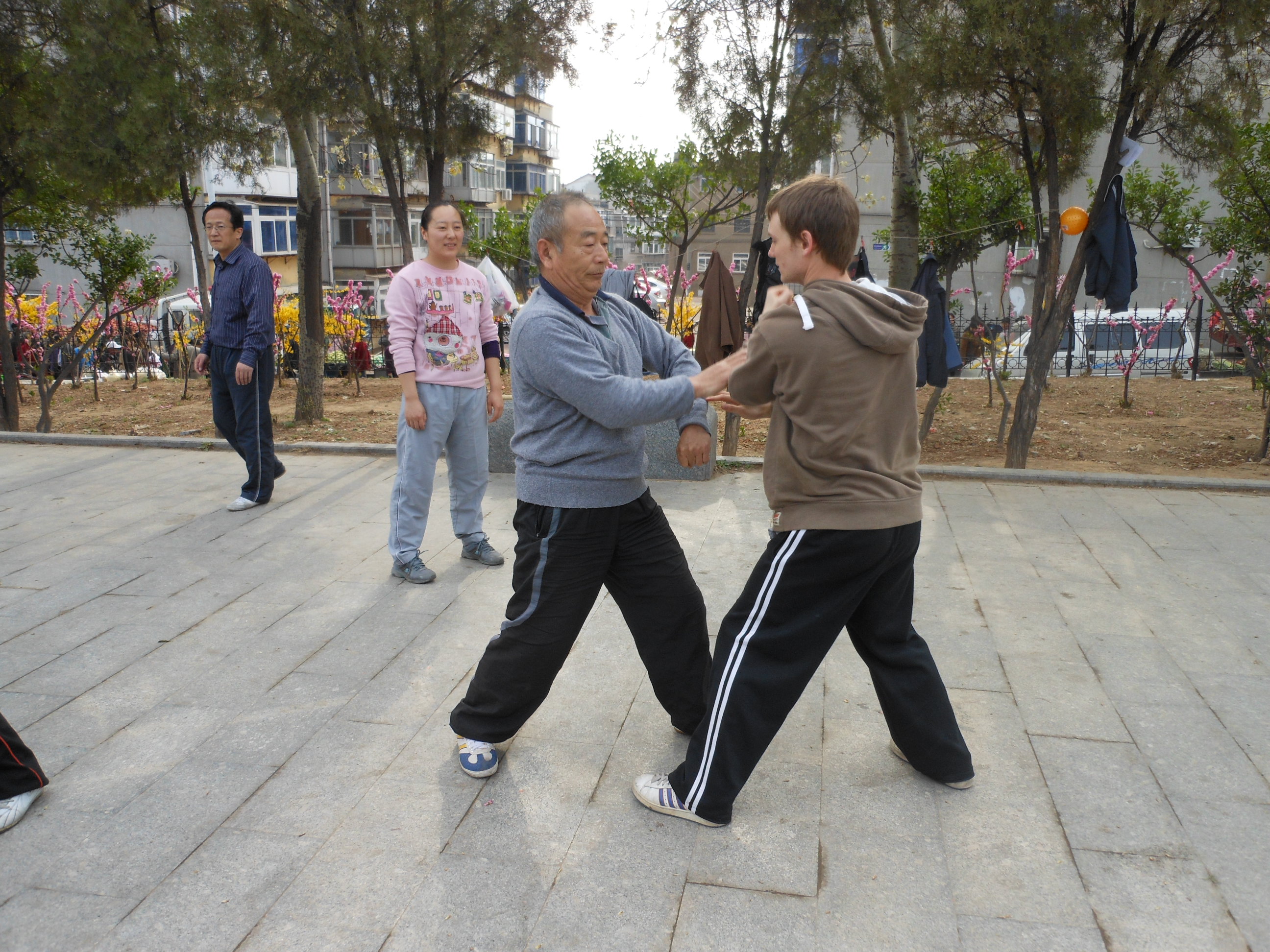
Do you play tai chi? Do you like KTV? Why you not married? Do you like Chinese girl? Whatever you do embrace the inquisitiveness and have fun.

_________________________________________________

This is a fun post inspired by TMD Shanghai and onlinethatsmag.com by David Kelly CEO and Director of www.StudyMartialArts.Org – An adventure travel company specializing in Martial Arts.

Training At Kunyu Mountain Shaolin Kung Fu School

‘The following is a short diary from a student who studied at Kunyu Mountain Shaolin Kung Fu Academy during the October holidays. In this short blog he breaks down each days training. ‘

At Kunyu Shan you have a choice of doing one of the Shaolin martial arts styles, Wing Chun or Bagua. I chose Shaolin with Shifu Gao.

Kunyu Mountain
Monday:

Tai Chi starting at 6.00am, this is optional but highly recommended. Afterwards you do Qi Gong for 20 minutes followed by breakfast.

Breakfast consists of rice / sweet rice porridge, rice bread, bread, and eggs. You can take your pick of everything. I recommend bringing (or buying once you’ve arrived) some honey / jam / peanut butter to put on the bread. As this bread is served with every meal so you can always eat this.

After breakfast you have about hour to relax, then “Line up”. You meet with your master, then go on the morning run with your group, around 1km at a pretty decent pace. You loop back to the compound and begin training immediately.

You’ll warm up, then start learning shaolin basics for 1.5 hours (kicks, punches, stances, flying elbows, the lot). This is reasonably intense.

30 minutes break.

After the break you’ll go straight into learning “forms” for 1.5 hours. This is reasonably relaxed.

Lunch – this consists of a buffet of 2 vegetable based dishes, and one meat based dish. You can take the amount you want of each. The food isn’t too great, but it’s not too bad either. Some days are better than other, for example one day you get steamed meat dumplings, and another chicken on a stick and potato wedges.

I normally took a nap after lunch until 14.00. Second line up is at 14.30.

Finally, run the same 1km, then straight into Sanda training for 1.5 hours. This generally involves reasonably high intensity drills, basics, and pad work. There is very little practise sparring, so if you’re into competitive fighting, I recommend Muay Thai or somewhere else.

Finally you’ll have dinner, which is extremely similar to the lunch. Again, I recommend bringing something to put on bread for afterwards.

After this you can do what you like, some extra training, table tennis, watch a movie, take a shower, etc. (There is no time to shower in the morning, and hot water is only turned on in the evening for 3-4 hours.)

The structure of the rest of the week is the same, the only difference being what you studying during the three lesson periods of the day.

Tuesday:

Tai Chi

Conditioning – Partner up and get punched in the stomach, pectorals, shoulders, lats, floating ribs, kicks to the inside and outside of the thighs. Then high intensity punch bag work without gloves, which absolutely shredded my knuckles and they’re only just starting to heal now 1.5 weeks later.

Power training – Reasonably standard anaerobic training, sprints, bear crawls, bunny hops, hopping, planking, v-sits, etc.

Wednesday:

Tai Chi

Acrobatics – Jumping kicks, forward rolls, backward rolls, forward break-falls, backward break-falls, side break-falls, etc. Some of the backward break-falls are very difficult at first, and if you mess them up you will end up hitting your head / winding yourself. But once you get them, they’re relatively painless. This whole lesson is conducted on top of large reasonably firm padded matts. (The same matts used in the Sanda ring).

Forms.

Sanda.

Thursday:10599536_1557778751112613_2335631134442809634_n

Tai Chi

Shaolin Basics.

Rest

Power Stretching – some risk of getting injured during this, but it seems that the Shifu’s are starting to understand this now, and they were reasonably nice about it. Apparently they used to push people way too far during power stretching, but I found this to be okay. But I’m also reasonably flexible to start with from years of Tae Kwon Do training. The worst part was holding a specific shoulder stretch for 3 minutes, for two sets, with threats if anyone failed of whole group punishment.

Friday:

Tai Chi

Shaolin Basics

Ring Sparring – During this period everyone gets together to watch people sparring in the Sanda ring. If your Shifu has given you permission you may seek someone to spar against and get into the ring. Generally, with the exception of a couple individuals who have cleared sparred before, the level of sparring was quite poor. I believe this is because as I previously stated, there is a lack of any practise sparring. You learn all the techniques, but this is not enough in my opinion.

Mountain Stair Climb – This involves a leisurely walk up one of the mountains to a temple. You then have to run up and down it as many times as you can in 1.5 hours. Make sure you don’t overdo it on this, running down 300 odd stairs will literally destroy your knees – so at the very least take it very slow on the way down, then power on the way up.

Conclusion

The training was very physically intensive, from what I’ve written it may not sound it, but even lessons like “Shaolin basic’s” is relentless – constant jumping, shouting, powerful techniques, etc. My main advice is that the fitter you are before you come to Kunyu the more you’ll be able to enjoy it!

P.s. The Shifu’s dish out punishment with large 5-6 foot staffs. I didn’t see it happen whilst I was there, but if you break the rules you will get staffed. And they don’t hold back.

by Steve Hoult

Steve Hoult was a StudyMartialArts.Org student who went to Kunyu Shan for a week during October. For a full and more independent reviews of the school visit the StudyMartialArts.Org website. When you book your training do it through the StudyMartialArts.Org for discounts, extra service and a welcome pack full of language learning materials and martial arts information.

The Origins and Lineage of Shaolin Wugulun Kung fu

Shaolin ChanWuYi and Wugulun Heritage

The origins of Shaolin ChanWuYi and Wugulun Kung Fu date back to the sixth century. When Bodhidharma, who is credited with bringing Buddhism from India to China, settled in Shaolin there was already a Buddhist temple there.

While sitting for nine years in a cave behind the temple, Bodhidharma developed Zen Buddhism which he introduced to China and which later spread to Japan and the rest of the world. Needing some form of exercise to maintain the health of his own and his disciples’ bodies, he developed a series of movements or exercises designed to promote health and fitness – based often on the movements of birds and animals they observed around them — and at the same time to deepen the practice of meditation. Herbs from the mountainside were collected and used for healing.

Master Wu Gulun

Due to China’s turbulent history, the Shaolin Temple, with its highly skilled fighting monks, was sometimes in favour with ruling dynasties, sometimes not. It was destroyed and rebuilt a number of times. Around 1870 it was again in disfavour with the rulers of the Qing dynasty and the temple was in imminent danger of being destroyed yet again. The Temple Master instructed one of his foremost monks, Wu Gulun, to leave the temple and carry the traditions of the Shaolin culture with him to preserve them. He had, however, first to fulfill a rule of the Temple: that anyone leaving the temple should fight and vanquish all the monks to prove his strength and suitability to cope with the secular world he was entering. As the top Kung fu student, Wu Gulun easily achieved this feat and disappeared into the mountains to live in an isolated village, Bai Yu Gou, where he continued to practice and preserve the secrets of the Shaolin heritage.

c8df10f3-cf64-4f99-9a69-367091de563e-orgMaster Wu Shanlin

As he needed to be able to pass on this knowledge he married and had a son, Wu Shanlin, to whom he taught all the ancient secrets. Master Wu Shanlin became the second Grandmaster of the Wugulun lineage. Continuing to live in the small village, Wu Shanlin married and had two sons, Wu You De and Wu Tian You. To them and also his nephew, Qiao Hei Bao, and a young orphaned student, Zhang Qing He, he passed on the traditions.

Wu Tian You had a son who sadly died when he was quite young. This son was Master Wu Nanfang’s father. From an early age Wu Nanfang studied with his great grandfather, Wu Shanlin, then with Qiao Hei Bao and Wu You De and later Zhang Qing He. He is thus the direct descendent and inheritor of the Shaolin ChanWuYi and Wugulun tradition.

The 1920’s in China was a period of huge unrest and turmoil. In 1928 a general, Shi You Shan, was looking at the Shaolin temple as a possible source of resistance and danger so he sent one of his underlings there to try to gauge just what kind of a threat the fighting monks posed. The underling asked who the best fighter was as he wanted to fight him and see how strong he was. He was told that actually the best fighter, Wu Shanlin, was not in the Temple but in an isolated village in the mountains. The underling found Wu Shanlin and challenged him to fight with his sword. So powerful was Wu Shanlin’s qi that he paralyzed the man’s sword arm with just a look and a shout, causing the sword to fall uselessly to the ground.

Within two days of Shi You Shan hearing about this incident, he decided the Temple was indeed a threat and destroyed it almost totally.

As Master Wu Gulun’s greatest desire was that the Shaolin tradition should be returned to the Shaolin Temple when the time was right, Wu Shanlin returned to the devastated Temple with his son, Wu Tian You, with the intention of helping to rebuild it and restore the traditions and heritage which he had been preserving. He found to his dismay, however, that the monks were demoralized by the defeat, and most decided to either return to a secular life or join the army. The remaining few were men of poor character and Wu Shanlin felt he could not pass on his knowledge to them as it might be used wrongly, maybe to hurt people rather than to rebuild the Temple. He stayed for three years, teaching a few basic Wugulun kung fu moves, but then returned to his village to wait for a more auspicious time. Many current kung fu teachers claim that they know the original kung fu forms from their teachers who had practiced under Wu Shanlin. In reality they know only a few very basic forms.

Master Zhang Qing He

Zhang Qing He, the third Grandmaster, was an orphan who was rescued and looked after by the monk, Chun Quan, in a small temple on the Luoyang side of Song Mountain. Chun Quan sent him to study with Master Wu Shanlin when he was about twenty years old. Zhang Qing He also qualified as a doctor and was in fact better known for his medical skills than for his kung fu.

In about 1988 Master Zhang Qinghe came to live at the Shaolin Temple to treat his beloved Buddhist Master who was very ill. There he came into contact with a young monk, Dejian, who was studying and teaching at the Temple. Dejian started training in the Wugulun Kung fu style with him. In 1990,Master Zhang Qing He requested Wu Nanfang, who was teaching Wugulun Kung fu nearby to come and introduce Dejian to Wu Nanfang. They are brothers, because they are fellow apprentices of one and the same master.

img_51241Master Wu Nanfang and Master Dejian

This was an historic meeting as it is these two masters, Wu Nanfang and Dejian who, after the death of Master Zhang Qing He in 2004, are currently concerned with the preserving and passing on of the Shaolin Wugulun Kung Fu tradition — Master Dejian from the San Huang Zhai Monastery and Master Wu Nanfang from the Shaolin Wugulun Kung fu Academy.

Information courtesy of the Shaolin Wugulun Kung fu Academy.

_______________________________________________

“If you would like to study at the Shaolin Wugulun Kung Fu Academy or would like to find out more information about the kind of training you can expect at the school click the link above. It is my opinion that this school is one of the very few authentic Shaolin Schools left in China and is definitely worth considering if you wish to study authentic Shaolin martial arts. Lately, I’ve been somewhat disillusioned with some of the training and also the managerial practices I’ve witnessed at some of the other more popular Shaolin International Kung Fu Schools in China. Maybe its time for a change a return to the roots of Shaolin with more focus on self discipline and quiet meditation rather than the flash and high flying kicks of the modern perversion we see so often. A perversion that turns poor young ambitions Shaolin masters into business men who scramble over westerners for money with little thought to the detriment they are doing to the name of Shaolin and China as a destination for martial arts.” – David Kelly

Training with Master Zhou

SMA – Baji Zhandao UK training camp visit to Tianjin to train with Master Zhou.

Master Zhou Jingxuan teaches in Xi Gu park in Hong Qiao District. Historically this park continues to attract many of Tianjin’s famous martial arts masters and students. The park is a hive of activity throughout the day.

Master Zhou teaches the rare inner courtyard Shaolin martial art of Jin Gang Ba Shi. In addition to that he also teaches Piguazhang, Xingyi quan, Baji quan, Li style Taichi and Chou Jiao. As our trip to visit with Master Zhou was relatively short we focused our learning on the basics of two specific styles Piguazhang and Bajiquan.

After a warm welcome in Tainjin and some photos we enjoyed two hours of great training in Xi Gu park with Master Zhou. After the training we were invited for dinner with Master Zhou his senior students and a number of representatives from the Tianjin Martial Arts Association.

The following is an assortment of clips from the two day seminar as well as a short clip from a discussion on the evolvement of Bajiquan in Tainjin.

All the training you see in the video took place in Xigu Park where Master Zhou regularly teaches.

For further information on studying with Master Zhou, the Shang Wu Zhai Academy as well as a host of other masters in China and Thailand check out the http://www.StudyMartialArts.Org website.

Bajiquan International Training Center

maxresdefaultEarlier this week we announced the addition of a new full-time martial arts school to the StudyMartialArts.Org site.

The Bajiquan International Training Center is one of the best places in China to learn the martial art of Bajiquan. All the masters at this school are dedicated and trainined primarily in this art. The Masters skills, the Wu family lineage and knowledge plus the teaching focus on the practical use of the art, the standardized comprehensive curriculum and the Mengcun facility itself are all huge draws.  9461051

The Bajiquan International Training Center simply put is one of the biggest and most famous Bajiquan schools in the world. How students will learn Bajiquan at this school as opposed to some other Shaolin or Wudang based schools which teach to a smorgasboard of styles is very different.

The location of the school in Mengcun on the outskirts of Cangzhou City firmly puts the focus on training. Site seeing opportunities in Mengcun and Cangzhou City are limited. With so few distractions for students it makes the 6 day training regime easy to stick to. This is one reason why the facilities at the school are so good.

Additionally, another benefit of the school is that it can easily cater to both western and muslim cultures, this makes the Bajiquan International Training Center an attractive multicultural choice.

To see our full review plus prices click the link below. http://www.studymartialarts.org/school/bajiquan-international-training-center/71.html Remember though you must book through us to access our special discounts and additional resources for your training adventure at the school.

Message us privately for our full free school and travel consultation. StudyMartialArts@gmail.com

798 Art District – Exploring Beijing’s Art Scene

798 Art District in the north-east of the city is Beijing’s “SoHo” and is home to a large arts community. Paintings, ceramics, and street art are scattered throughout the area and it’s ex-industrial factories provide artists with flexible open space for arts installations both big and small. The most important of these art galleries include the expansive 798 Space Gallery, Long March Space and UCCA (China’s largest privately funded art museum).
The charm of the area is preserved in its post-industrial feel and the Maoist inspired art slogans and original features scattered throughout the converted factories and shop floors.
As an arts community 798 has both endured and suffered because of its success. Initially development pressures almost saw the district completely redeveloped however, successful campaigning and the growth in tourism resulted in the reclassification of the area as a legitimate art district supported by the government.Nevertheless rising land prices and development pressures remain. As a result many of the original artists of the neighbourhood who set up studios in these former military factories, including Factory 798 which originally produced electronics have been priced out due to increasing rents. Only a handful of the most successful of these artists continue to live and work in the district.

“Creating a unique backdrop to display the art”

“Galleries both big and small sell and display art works”
798 continues to thrive despite the rising prices. Today the district is filled with not only art galleries but also gift shops, book shops, restaurants, cafés, artsy clothing stores and of course street vendors. 798 Art District is one of Beijing’s most popular tourist destinations and certainly China’s largest and most famous arts district.
One of the highlights of the district is its change ability. The installations move, change and evolve. The details, textures and colours of the works of art, the setting and the people offer the viewer new interesting sensory stimuli around every corner.
Taking photos is a must. The street art unique, weird and unusual is accessible and allows you to participate and interact with this very Chinese art experience.
“Reform and Opening Up” (改革开放 – gǎi gé kāi fàng)
798 Art District can be found at Jiuxianquao Road and Jiuxianqiao North Road, Beijing. Entrance is free and it is open each day from 10:00am-6:00pm.

View this article on storehouse – https://www.storehouse.co/stories/g2xa-798-art-district

My Site – http://www.StudyMartialArts.Org

Brief Introduction to Praying Mantis Kung Fu

Praying Mantis kung fu is a very well known but little understood art. Contrary to popular belief it is not about mimicking the insect, and has very little direct relation to Shaolin Temple. There is a well known myth about a man called Wang Lang who, after losing a fight, witnessed a mantis catching a cicada and became inspired to create a new style. However, outside of this myth, there is almost no historical record of a man named Wang Lang actually existing.

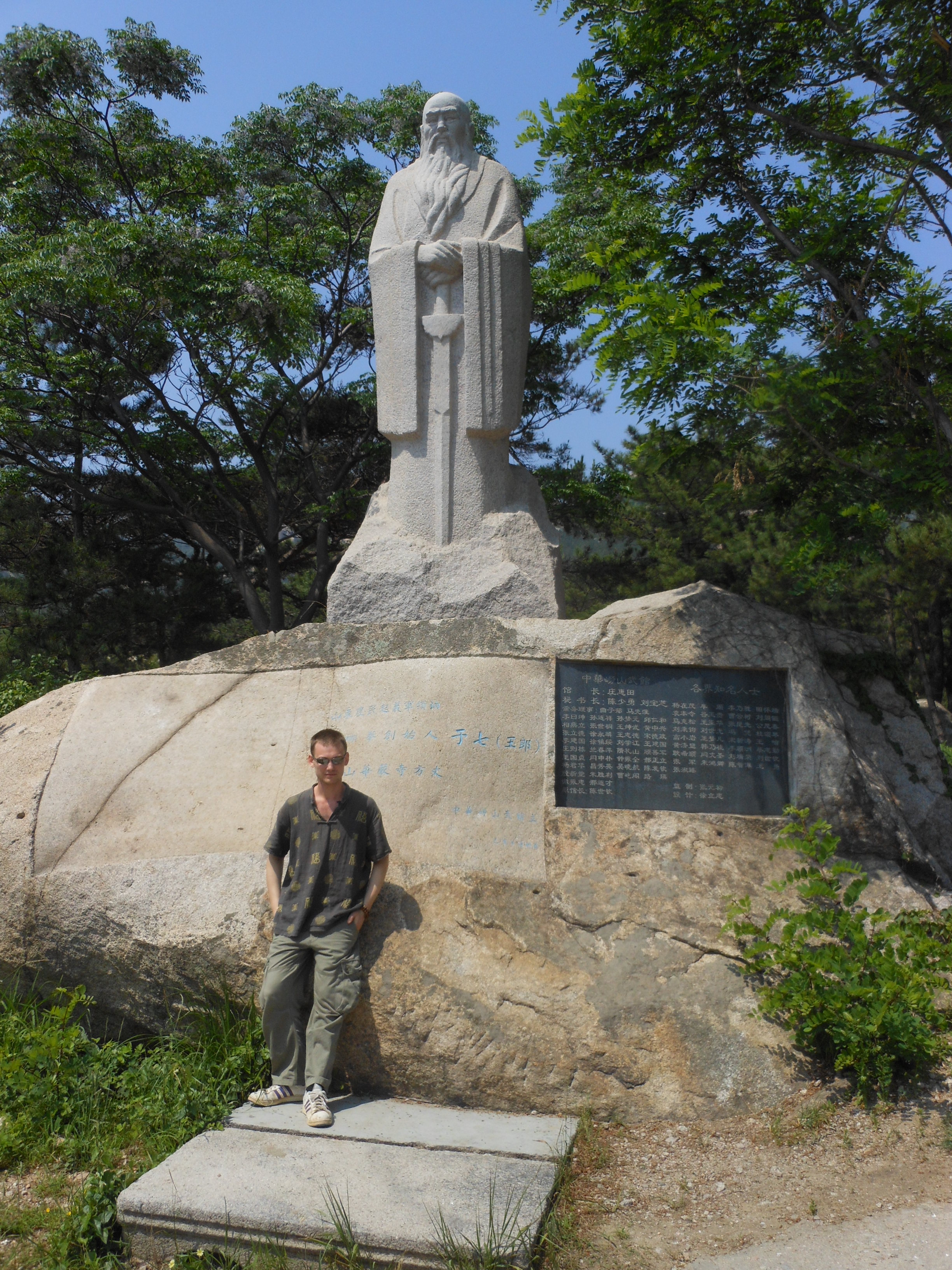
Wang Lang statue at Hua Yan temple, Laoshan

In fact, what is more likely is that Praying Mantis is a collection of styles indigenous to the Shandong region, which has been a hotbed of conflict and strife throughout Chinese history. The oldest texts of Praying Mantis have a list of 18 styles, the last one being Praying Mantis, which it comments “absorbed and equalised the previous 17”. (Actually this list is the only mention of Wang Lang as far as I know).

At some unknown point, somebody condensed the fighting techniques of Praying Mantis into three form: Beng Bu 崩补, Luan Jie 乱接 and Ba Zhou 八肘. Beng Bu contains the basic techniques and steps, Luan Jie is made up of 36 mother techniques and Ba Zhou is 64 close range techniques. While Ba Zhou is generally translated as “eight elbows”, technically the Chinese word “zhou” refers to a joint of the body, so it is using the eight joints as weapons – fist, wrist, elbow, shoulder, head, hip, knee, foot.

A huge development came, when Liang Xue Xiang, during the 19th century, created the series of Zhai Yao 摘要. After a

my teacher, Zhou Zhen Dong, with his teacher, Zhang Kai Tang

lifetime of work in the armed escort agencies, escorting goods through bandit infested areas of Shandong and Hebei to Beijing, he created a series of 6 forms called “the essentials”, Zhai Yao. He took the basis from the Mi Shou 秘手 , or secret hands, combined with knowledge he had picked up on his travels and during his many fights to create these new forms.

Liang Xue Xiang’s most famous student was Jiang Hua Long. He is the figure responsible for popularising Praying Mantis. It was said he was fond of fighting, and challenged every school and master he met. While this made him a lot of enemies, it also brought him a lot of students, and he was often invited to stay in villages and teach the local people. Because of this, many new styles started to spring up, after people combined their own local village styles with the knowledge Jiang gave them. During his travels, Jiang met a man named Li Dan Bai, who was just as fond of fighting as him. In fact, Li was so fond of fighting, he was banned from entering any schools in Yantai. This left him teacherless, and his only option was to master the little he knew, which was a set of long range arm wheeling techniques called Fan Che 翻车. It seemed when the two met, they had finally met their match, and being so impressed with each other, exchanged their skills. After Fan Che was added into Praying Mantis, it more-or-less became the complete system we find today.

Zhou shifu applying "feng" or sealing to my elbow. one of the 12 keywords
Zhou shifu applying “feng” or sealing to my elbow. one of the 12 keywords

Praying Mantis kung fu is based around 12 keywords (which I will write about later). In a nutshell, these 12 keywords deal with methods of provoking, sticking, trapping, striking and taking down the opponent. The style also places emphasis on deception, in a similar way to a boxer with his feints. For example, feinting high then striking low, feinting with punches to open up for a kick, deliberately provoking the opponent to block and then using the contact as set up for a lock or throw. Emphasis is placed on a method of power known as Hulun Jin 囫囵劲, a local Yantai slang word meaning something like “whole” or “complete”; the analogy my teacher uses is after a mule rolls in the grass it will stand up and suddenly shake it’s whole body (basically like how a dog shakes itself dry after swimming in a river). The power bursts out from the body in a sudden, complete explosion concentrated into one point, be it the fist, elbow, shoulder or any other part.

This here is a brief introduction to the style of Praying Mantis, my understanding comes primarily from my own lineage of Taiji Mantis. Please check back regularly, as I will be writing more on the various aspects of our style, including the history, weapons and other training methods. You can find out more about Praying Mantis kung fu, and about me and my training at www.monkeystealspeach.co.uk.

Kung Fu & Dreams

Master Lu

An opportunity for those that are daring enough to make the leap and change there lives!

I’m flying to Beijing on Jan the 15th for intensive martial arts studies.

I’m looking for 2 people to join me on this journey, if your interested read on…

I will be training with Master Lu Sheng li who is the author of quite a few martial arts books in Chinese, English and Spanish. He is one of Wang Pei Shengs (WPS) top students and was selected by WPS to travel around America to help him conduct seminars while he was alive.

Grand master WPS was considered one of the greatest Taichi masters of his time and was the last master of the last martial arts golden age. He was a master in many Chinese internal and external systems such as Bagua, Xingyi, Tongbei, Tantui and Baji. WPS comes from very impressive lineages of great masters, who passed on their skills to WPS intensely over many years from a young age.

Master WPS also wrote what is said to be one of the best books on Taichi out there. You can read about who WPS was, his life and his achievements here in this Article Titled Remembering WPS. It’s a great read for any one who loves martial arts, culture or just the back ground story of a highly accomplished individual…

http://ycgf.org/WPS_Eulogy/WPS_Eulogy.html

The training we will under go will be under the Yin Chen Gong Fa association training methods, styles and principles. The best information available I can find in English about this group and what they train can be found on this site (ycgf.org) read the opening page, click English and scroll down, the information is quite informative and vast and will give you an idea of what you could expect if you join us and train.

The base of the training will be in Taichi but the training will be customized to each individual’s personal level to insure a proper foundation is built and a higher potential or mastery is reached in your time.

The training period is 100 days and is “everyday” for a minimum of 6 hours a day. (Ill be training a minimum 10 hours a day including Chinese language learning and theory) Master Lu’s students are movie stars, CEO’s of large companies, like the CEO of Intel and Lenova. He charges in some cases $450 an hour. Master Lu has earned a great reputation among masters with in the Beijing martial arts community and worldwide.

The 100 days of training for those who qualify to join me will be at a location Master Lu has rented in Beijing.

This is not an opportunity I would normally make public but the chosen 2 people who were aiming to come with me, now can’t make it, due to changing circumstances in there life. Everything happens for a reason, so now there is a chance for 2 lucky individuals to join us.

This will be a very transformational journey for who ever is up for the challenge.

This could also be an amazing start for a martial artist or a great way for a former martial artist to deepen their skills in real internal training and practices.

It’s short notice but I feel it’s important to put this opportunity out there. Maybe it’s a possibility for one of my friends here to join us. When I started my martial arts journey a chance like this would have been something I would have only dreamed of finding!

Master Lu has set aside this time to be committed purely to transmitting his kungfu skills and knowledge by setting up the ideal environment for us to grow and train. He has cancelled all of his commitments in this period to train other students and will be focusing purely on my self and the other students who join the group. He has rented a house that we will all live in, including master Lu for the 100-day period.

This really is a lucky opportunity and is not something you would find advertised publicly. The reason I am looking for other students to join is as follows.

1. Two spots are now available and since master Lu has put on hold all his training and teaching commitments to his other students over the 100 day period, I want to insure master Lu regains his cost for the commitment he is making, renting a house, providing food and training etc. Since the other 2 guys can’t make it there is an opportunity for 2 other students to join.

2. Although one on one is great with a master, for long term training it’s better to have others students to train with on the journey, so we can push each other, practice techniques 1000 of times to refine our skill level and discus the principles and ideas to gain a more broader perspective.

That’s my main two reasons. The last one is simply having another person in the world who gets affected by the attributes of internal martial arts training I believe sincerely and firmly, is a huge benefit to his/her family and friends and the world in general.

To qualify for this opportunity will come down to work ethic, and good character/personality. If you’re interested, send me a PM or comment below and Ill get in contact with you to arrange a call. You may also add me on Skype just msg me for my details.

I will be helping those who come advance out side in personal training time to insure we all grow together. Master Lu will be with us 6 hours a day daily and is Renowned for his attention to detail and his focus on transmitting skills to his students.

Since the date of commencement is literally right around the corner, those who can make it for a minimum of 1 week and up to 3 months may apply. Although preference will be given to those who wish to train more long term, as well as those who express a keen interest in training hard and pushing them selves to create a positive training environment. So from Jan the 15th through to April the 25th there is a chance to live and train with a world class Kungfu master.

Included in the cost is nourishing food, which is designed for the hard training and long days, accommodation and personal instruction from a world-class internal martial artist.

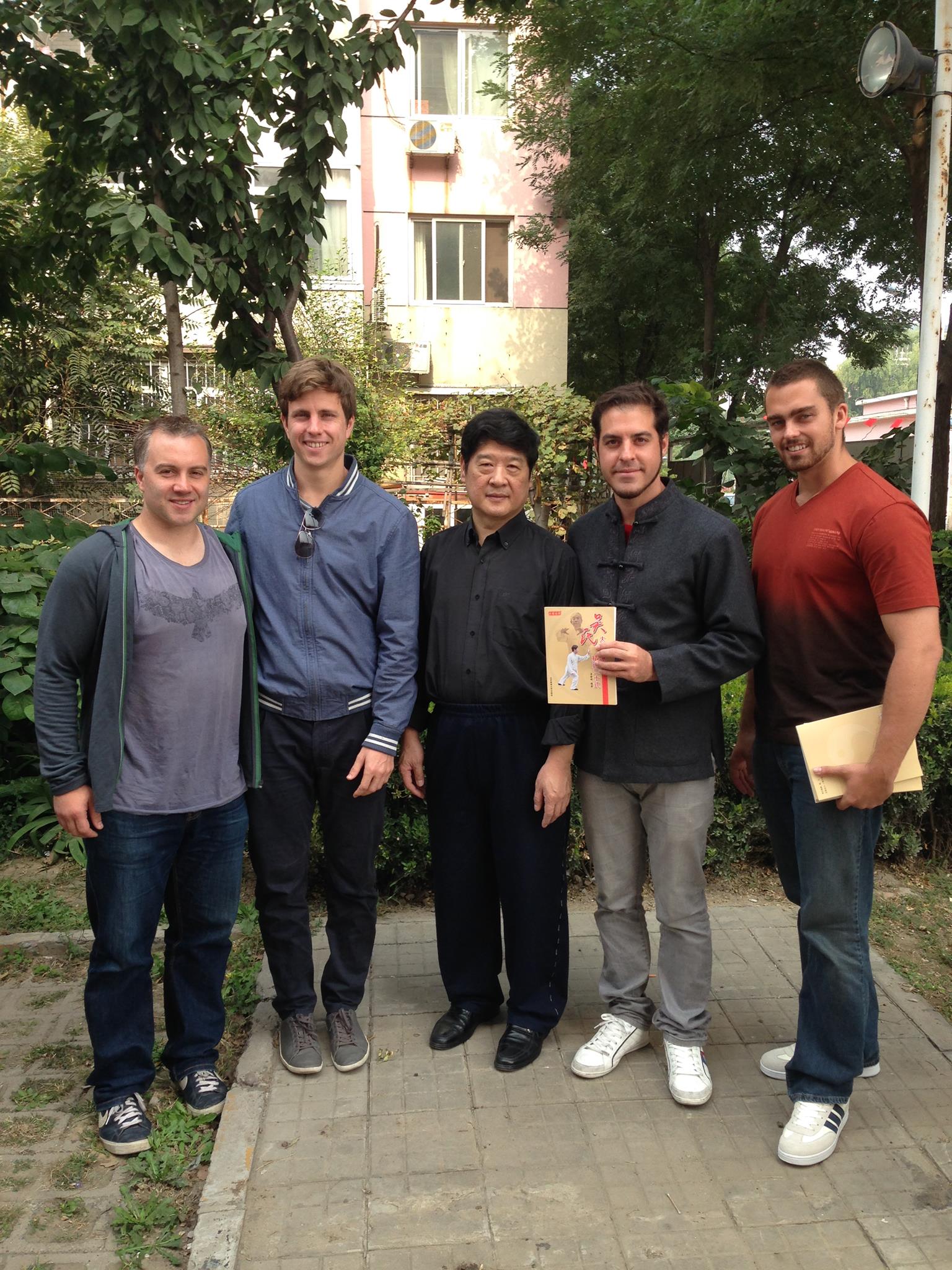
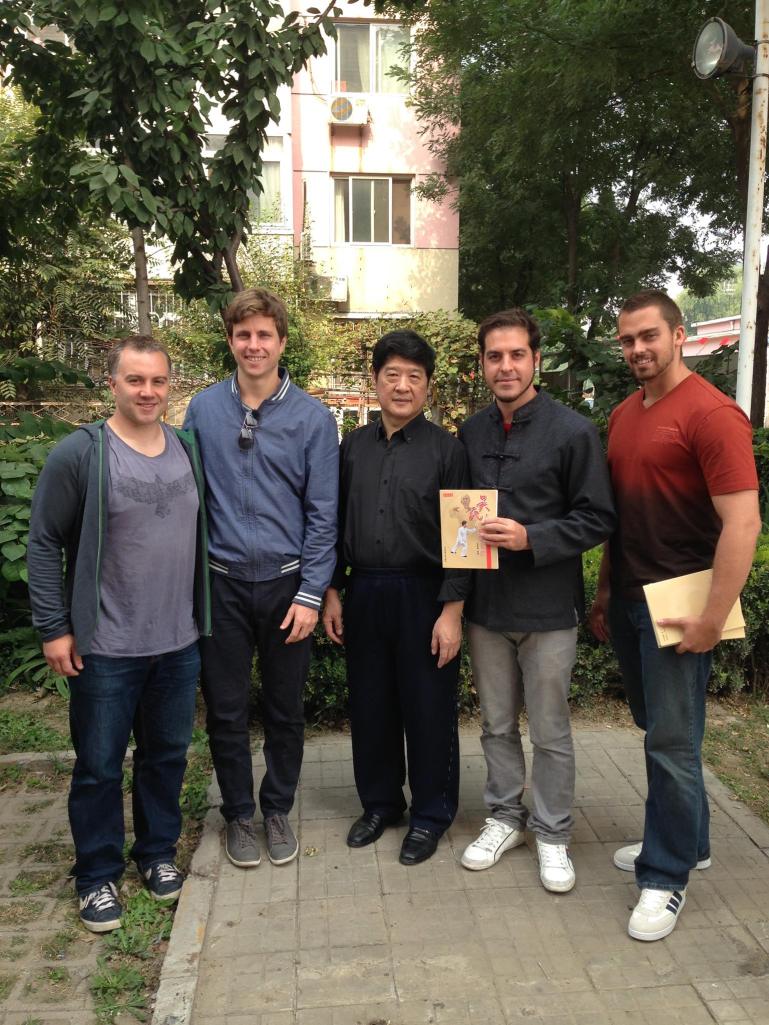
Below is photo of master Lu and some of my students and friends that joined me in Beijing late last year on a StudyMartialArt.Org tour.

I’m holding his recently publicised book on Wu style Taichi. (Currently in Chinese Only)

Over the 100 days there will be a focus on Wu style Taichi but also students may start to practice, Xing Yi, Bagua, Tong Bei, Baji, Qigong or Tantui depending on master Lu’s development plan. What ever the path is we will be heavily involved in the principles and philosophy, which lead to high-level practice.

This opportunity is not for the light hearted but beginners are welcome to apply. Personally I would rather people more experienced to push my self but that’s just my personal preference, Ill be pushing my self on my own to new heights with who ever joins me and I expect the same of them.

Other then the benefits of self defense, confidence, knowing one self and the spiritual attributes that arise from this style of training, that make you relaxed and cheerful. The health and longevity benefits are of the hook and have been well proven by the masters before us and explored and backed by scientific research.

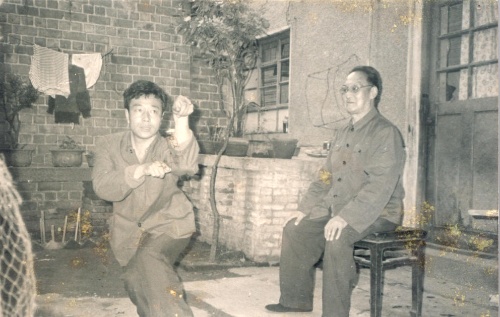
Master Lu is 62 or 63 in this photo his movements are graceful, powerful and very precise in there attention to detail!

If any one would like me to elaborate in more detail about the lineage, the training, Wu style Taichi, WPS or master Lu please feel free to ask. I certainly don’t have all the answers, many I will discover on the path for my self but I have been studying all the above a couple of hours a day, most days over the past 3 months and have lived in China for many years, training martial arts full time. Since I’m investing allot of time and money I wanted to insure everything was what I truly wanted. I looked at it objectivity and tried to find faults to make sure I made the right decision. It passed my test and I’m sincerely looking forward to 100 days of intensive training with Master Lu Sheng li and training in the Yin Chen Gong Fa family!

The food, training, accommodation and the personal instruction 6 hours a day from master Lu will cost 100 USD per day which when you look at the time you get with a great master alone, it’s a pretty small asking price since we will be living with him also. This is something I did well to negotiate.

Master Lu is sincere in seeing that the Internal arts of China get passed on to dedicated practitioners, in the Yin Cheng Gong Fa association founded by WPS. They hold nothing back, there interested in the true and proper passing on of the skills and training methods as the generations have before them so the arts stay alive in full expression.

Other systems and masters do hold things back unfortunately this is why Chinese kungfu is dying or in some aspects have been lost and only held by a few, its different with the YCGF family.

Thank you for your time and tuning in!

If you have any questions, please feel free to ask.

I will have my personal Site/Blog up very soon which Ill be writing in and giving updates to my progress over the 100 days training and living in Beijing.

When I return I will teach a one-week intensive seminar and open my first official martial arts school in Australia!

Best wishes for the New Year everyone and if your interested in this opportunity dive in, make it happen for your self and don’t waste time, it may never happen again!

You can read about Master Lu on this links

http://ycgf.org/Articles/Lu16/arti_Lu16.htm

and here is one of his books on amazon. Note most of his books are in Chinese.
http://books.google.com.au/books?id=dkPTM3IzeawC&printsec=frontcover&dq=Wang+Pei+Sheng+taichi+book&hl=en&sa=X&ei=MyvOUpmpNo7QkQXuuoHYAQ&ved=0CD0Q6AEwAg#v=onepage&q=Wang%20Pei%20Sheng%20taichi%20book&f=false

You can check out Grand Master WPS book here which is considered one of the best books on Taichihttp://www.plumpub.com/sales/taichi/collbk_wuTC1.htm
.
You can read about Wu style taichi in this book also,
note that master WPS was the successor of the Northen Wu style Taichi group passed down from the founder Quan you. This book was written by WPS younger Kungfu brothers female disciple, who is a champion in her field. It gives a great introduction to the lineage, the style, the founder etc as well as other famous masters. This will give some idea on what Wu Style Taichi is about and an idea of some of the training.

http://books.google.com.au/books?id=nu3jRBsgv6gC&pg=PA21&dq=Northern++wu+style+Taichi+beijing&hl=en&sa=X&ei=nirOUunTOoiXkwXyg4GwDA&ved=0CDAQ6AEwAA#v=onepage&q=Northern%20%20wu%20style%20Taichi%20beijing&f=false

Please feel free to share this if you think there is someone in your network that would be interested in joining me for this amazing training experience. Maybe you yourself are interested? if so email me at Rhynsma@gmail.com to find out more.

Kind regards

Rhyn

___________________________________________________________________________________

Rhyn Nasser is a partner in StudyMartialArts.Org and has been traveling the world teaching and studying  martial arts with some of the best martial arts masters on the planet.

www.StudyMartialArts.Org

Martial Arts & Language Learning in China

If you’ve ever wanted to Study Martial Arts in China, an awesome way to do that would be with one of these combined Martial Arts and University Language Courses.

The benefit of one of these programs will be the practical skills you can learn throughout the experience that can actually legitimately add value to your CV and future employability. These programs allow participants to develop their martial arts and also their understanding of Chinese culture and also importantly the language. It’s a unique way to study with a high level master outside the normal international kung fu school route as that all important Chinese visa will be got through the University.

This video clip above was taken in Yantai, Shandong province. Yantai is a small second tier Chinese City on the northeast coast of China. It has cheap housing and has a good environment. Yantai is famous for a number of kung fu styles including Taichi Mantis, Tongbei quan, Baguazhang and more.

The city itself is a little hot bed of kung fu schools and masters and is well worth a look.

For details of our Traditional Martial Arts and Language Learning programs contact us now! Study Mandarin and Traditional Chinese Martial Arts in China – http://www.StudyMartialArts.Org
Check out Master Sui’s full biography and training schedule here – http://www.studymartialarts.org/master/master-sui-peng-fei/49.html — with Bernard De Premonville in Yantai, Shandong.

A Guide to Teaching English Abroad & Studying Martial Arts

Do you have friends or classmates that have taught English in China, Japan, or Thailand and wondered to yourself, “How can I get paid to live in China,  Japan or Thailand and follow my passion for Studying Martial Arts?”  With millions and millions of people learning English in Asia, the demand for native English-speaking teachers is insatiable and virtually any native or fluent English speaker can gain employment teaching English abroad.  But like any great endeavor in life, moving to a foreign country to teach English and follow your martial arts path requires research, planning, initiative – plus a few tips from teaching abroad experts like those at StudyMartialArts.Org who have experience of combining English teaching with Martial Arts studies.  Take a peak at these 12 crucial tips and pointers for teaching English abroad to help you get started.
teach-english-in-china1. Know that virtually anybody can teach English abroad

With approximately 1 billion people learning English worldwide, the demand for native English-speaking teachers is insatiable and virtually any native or fluent English speaker can gain employment teaching English abroad. Remember this:

  • A background in education or professional teaching experience is not required to teach English abroad.
  • You do not need to speak a foreign language to teach English abroad.
  • Prior international travel experience is not a prerequisite to teach English abroad.
  • A college degree is not required to teach English abroad. But it certainly will help. As more and more people take the English teaching route to discover Asia the market is becoming increasingly flooded with job seekers. With this increase tighter controls are being applied. Visas require more often now those with experience and so a TEFL certificate is becoming more handy. Ultimately, the more qualified and well connected you are the better employment opportunities you will get. Because after all you are here for the most part to study kung fu so the last thing you need is to be stuck in a job that requires too much travel, too little work to make ends meet or too many hours.

Remember that hiring standards will certainly vary from country to country, so remember to consider what countries you are qualified to teach in.

2. Research your tail off

If you plan to move halfway around the world to teach English and Study Martial Arts, you owe it to yourself to research all aspects of your great international adventure to make it as rewarding and successful as possible. To start, focus on the martial aspect. Where is that Shifu you have dreamed of learning from?What styles are you interested in? Also check out this country chart which compares salaries, hiring requirements, interview procedures and visa information for teaching English abroad in more than 50 countries around the world. Also, check out our other articles for more information about teaching English abroad. When you’re ready to start diving into program options, be sure to read reviews and weigh all of the possibilities. Salary, livability, conditions, benefits, time commitments, and the potential for an incredible and positive experience will all play major factors in your decision.

05.brucelee3. Make sure to earn your TEFL certification

Even though you don’t need a degree or professional teaching experience, if you want to teach English abroad professionally, you need to take an accredited TEFL certification course, especially if you have no background in teaching English as a foreign language (our guide to TEFL helps lay this all out for you). An accredited TEFL certification course will provide you with the skills you need to competently run 4-6 classes a day, and will outline the best ESL teaching tools. TEFL certification will also provide you with a recognized qualification that most schools and language schools around the world seek when hiring new teachers. Remember, most schools around the world will not hire you off the street to teach English professionally simply because you are a native or fluent English speaker! One of the biggest difficulties that new teachers face is the challenge of creating fun, engaging, and plenty of activities for the ESL classroom. TEFL courses will give you insight on the types of games and lessons that are successful with different age groups. Get a head start by reading our tips for lesson planning or take notes of the 10 best games for ESL teachers.

4. Consider whether to go with an organized program or independently

Many TEFL training schools do provide job placement assistance and it’s definitely something to check for when researching your options, because quality assistance should insure that you don’t have to pay for a job placement. Many top programs provide it for free with the course tuition. Others may charge additional fees for placement or assistance. Teaching abroad through an organized program is a great option for first-time travelers to a new region, especially if the local language is one you’re less-than-absolutely-fluent-in. For most people looking to go abroad, there are enough jobs and plenty of resources in the way of free job boards, recruiters, and other resources, that there really should not be a need to pay hundreds or thousands of dollars for a placement. Also, programs that guarantee or receive payment for placements will limit you to job options offered by the program, which are a drop in the ocean of the thousands of job opportunities worldwide that you may be qualified for. If you are looking to teach English in Asia, Russia or the Middle East, you may consider working with recruiters that interview and hire English teachers from the U.S., Canada and elsewhere on behalf of schools in these countries. Typically you should not pay such recruiters for placement. Working with recruiters can make the process of interviewing and lining up a position abroad easier though as they can provide assistance and guidance with matters like setting up interviews and arranging documents for your visa. The key, as always, is to research and work with reputable, well-established recruiters. But be aware, most recruiters who do this will then get paid by the school you work for so their payment could be coming out from your potential monthly wage.

5. Remember: hiring and interview procedures vary from country to country

Be flexible and open to new experiences

Remember demand is high in Asia so schools hire all year-around, nevertheless elementary and high schools recruit primarily during the spring, summer and winter for positions beginning in Jan/Feb and September. Many Asian schools will hire new teachers directly from their home country, this is good for a number of reasons one being securing that all important visa and having the right papers from day one. This means that if you want the security of having a job waiting for you when you hop on a plane to your teaching destination, you should concentrate your efforts here.

6. Plan to break even

This means that even as a first-time English teacher teaching you can expect to earn enough to pay your bills – rent, food, daily transportation, etc. – and live comfortably, though modestly. This means that you’ll be able to travel and go out on the weekends and engage in other personal pursuits like taking language lessons and martial arts. However, this will often be very dependent on luck, your color and whether you are a native speaker. You shouldn’t expect, at least at first, to be making enough salary to put money in the bank at the end of every month. This can take time and it is often 6-12 months before you start earning back on your initial investment, the money you spent on settling in job, hunting and securing accommodation and finding with the right kung fu master.

640x450_thai_boxing7. If you want to make more money, this is possible but very dependent on your qualifications and experience

Most people don’t go into teaching for the money, but if you’re looking to make enough to save for extra travel it is possible with the right qualifications and connections. English teachers can typically make enough to save 30%-50% of their income after expenses, and often receive benefits like free airfare and housing. Monthly savings typically range from about $400 a month in a nation like Thailand up to $1000 or more in South Korea. However, be realistic. More and more these opportunities are limited to those with experience, the right papers and longer term commitment.

8. Consider using a Martial Arts School as a springboard

The growing number of martial arts schools in both China and Thailand offer a great opportunity for the savvy martial arts adventurer to use the schools as a base from which to explore teaching opportunities and of course training with other masters outside the international kung fu school system. To make the most out of these opportunities your current school location or planned schools location will be the key.

Rural schools in the depths of the Chinese, or Thai countryside will not be the most suitable if you’re limited to weekend for finding a school or another master. The good news is that StudyMartialArts.Org offers a great Free consultation service. They can easily help advise you both on potential schools, masters near by and that all important teaching job or employment contact.

9. Set a realistic timeline and plan ahead

Getting a job and moving half-way around the world to teach English or Study is not like choosing which parties you’re going to hit this weekend or selecting what you’re going to wear to the gym – it’s not a spur of the moment sort of deal. While hiring cycles and procedures vary worldwide, you should usually plan on taking 3-6 months from the point when you begin your TEFL certification and job search to actually getting on a plane and taking off to go abroad and begin your teaching job. In some cases, as when applying for government public school programs like JET in Japan. Remember the process of applying, interviewing and making travel arrangements may take 6-9 months or even longer.

10. Be prepared for start-up costs

Teaching English abroad may be the most cost-effective way to live and travel overseas for an extended period, but like most major undertakings in life, it requires a degree of financial planning. Major start-up costs typically include:

  • TEFL Certification: $1,000 – $2,500 for a fully accredited online or in-person class – trust me, it’s worth it.
  • Transportation to your destination country: typically $300-$1000 for North Americans traveling to other continents.
  • Support in your new country until you start getting paid: even if you have a job waiting for you when you arrive, you won’t typically get paid on your first day of work. These expenses can range from $500, if your housing is provided and your job is pre-arranged, to even higher while you interview for a position, wait for the right job, rent an apartment or find a conveniently placed master that you want to study with.

Although start-up costs for teaching English abroad in Asia are typically lower because in many cases you can line up your job in advance, and many schools, particularly in South Korea and China, cover airfare and housing costs. But more than often these are not paid until a trial period has been complete or certain part of your contract. In addition to this as your purpose is not just to teach but also to study kung fu extra complications and few choices may be available to you. This is why some managed programs with initial costs are worth considering.

11. Engage your friends and family

You will need their love and support, and in some cases, their advice and financial assistance. At the same time, don’t let their fear of losing you stop you from going abroad – Mom will just have to understand that you’re going to miss a Thanksgiving or two. The good news is that thanks to technology, it’s easier than ever to stay in touch from all corners of the globe. Email, Facebook and other social media make conversing and sharing photos a cinch, and with Skype, you can enjoy video calls with friends and family as often as you like, for free.

Guilin12. Be open-minded and flexible

If you won’t even consider teaching anywhere but places that are just like the home, you’re only cheating yourself. The fact is that you are unlikely to get a job just like at home. This should not stop you from experiencing the adventure of living and traveling abroad, whether it be in China, Thailand, Japan or anywhere else. Also, bear in mind that you are not limited to one destination – you can always teach in one country or region and then move on to another and as in any field, the more experience you gain, the more opportunities will come your way.


Essentially the only way that you can’t teach English abroad is if you don’t have the initiative to make it happen – so let’s go! That means researching your options, getting a TEFL certification and putting together a timeline. Be realistic and organized, but don’t hesitate to broaden your horizons and take chances either. Moving abroad is meant to be adventure, so embrace it! Inspired by – Go overseas.