The Path of Mindfulness

Image

The oldest evidence for walking on two legs comes from one of the earliest humans known, Sahelanthropus. Walking upright may have helped this species survive in the diverse habitats near where it lived—including forests and grasslands. Today the habitat of the modern humans are urban areas and walking no-longer is matter of life and death but quality of life.

As a low impact exercise over 10,000 steps are recommend each day so its not an exercise that will help you loose pounds like running will. However, the benefits of walking can not simply be measured in weight loss or even fitness gains. Walking is much more than that. Walking is about the maintenance of overall physical and mental health. A evolutionary leap that is one of the most natural parts of our lives.

As a child our first steps are greeted with joy and as an adult our last with sadness. Walking is central to our being whether as a means of movement, a health exercise, a de-stresser, a way to clear your mind, think or connect to your own body or nature. As a result it’s a natural choice for an active meditative exercise that everyone can do.

Here’s a simple set of instructions for one form of walking meditation that focuses on connecting you to your own body and your surroundings.

1. Be aware of your posture, reduce your speed, relax and regulate your breathing with long slow deep breaths .

2. Using your five senses, listen to your surroundings and take a moment to become aware of them. Turn your attention to smells and touch, smile and explore your surroundings with wonder.

3. Become aware of your body, its movements its sway and connect to the sensation of walking. Observe how your body feels during the process of walking and enjoy these sensations for short periods of relaxed mindfulness.

So if you’re in Beijing here are my top three parks in Beijing for mindful walking:

1. The Temple of Heaven

2. Beihai Park

3. The Temple of Earth

Check out this app that is designed to help you integrate mindfulness into your daily routines. https://itunes.apple.com/hk/app/gps-for-the-soul/id586099254?mt=8 or alternatively. Leave your phone behind and get rid of all technological attachments for a mindful walk.

Check out www.StudyMartialArts.Org for martial arts adventure travel and training options in Beijing and World Wide.

A Lesson on Breathing

From Zen Mind, Beginner’s Mind

by Shunryu Suzuki

A path between a bamboo forrest.

When we inhale, the air comes into the inner world.  When we exhale, the air goes out to the outer world.  The inner world is limitless, and the outer world is also limitless.  We say “inner world” or “outer world,” but actually there is just one whole world.  In this limitless world, our throat is like a swinging door.  The air comes in and goes out like a swinging door.  The air comes in and goes out like someone passing through a swinging door.  If you think, “I breathe,” the “I” is extra.  There is no you to say “I.”  What we call “I” is just a swinging door which moves when we inhale and when we exhale.  It just moves; that is all.  When your mind is pure and calm enough to follow this movement, there is nothing:  no “I,” no world, no mind nor body; just a swinging door….

Tozan, a famous Zen master, said,

“The blue mountain is the father of the white cloud.  The white cloud is the son of the blue mountain.  All day long they depend on each other, without being dependent on each other.  The white cloud is always the white cloud.  The blue mountain is always the blue mountain.”

This is a pure, clear interpretation of life.  There may be many things like the white cloud and blue mountain:  man and woman, teacher and disciple.  They depend on each other.  But the white cloud should not be bothered by the blue mountain.  The blue mountain should not be bothered by the white cloud.  They are quite independent, but yet dependent.  This is how we live….

When we become truly ourselves, we just become a swinging door, and we are purely independent of, and at the same time, dependent upon everything.  Without air, we cannot breathe.  Each of us is in the midst of myriads of worlds.  We are in the center of the world always, moment after moment.  So we are completely dependent and independent.  If you have this kind of experience, this kind of existence, you have absolute independence; you will not be bothered by anything.

BOOK LINK – http://www.amazon.com/Zen-Mind-Beginners-Informal-Meditation/dp/0834800799

www.StudyMartialArts.Org

The Way Of Nature in Beijing

Capture

Bringing the way of nature into polluted Beijing from the inside out.

Living in Beijing, China’s capital has lots of benefits. In China’s annual 2012 expat survey, Beijing was voted in the top 3 of China’s most attractive cities for expats to live in.
Beijing’s Parks and open spaces are beautiful and full of life no matter what time of day you might visit them. Literally any open space buzzes with life. The old talk, play, stretch, sway, practice qigong or dance while the young chillout, cuddle or keep fit.

For foodies Beijing has an abundance of cheap and delicious eateries. There are traditional and exotic offerings available that are either local or from further afield. All of which can be easily obtained and many of which can be obtained without even leaving the house. Thanks to the numerous delivery services like Jinshisong, sherpa and many more. Yet, of course, food and parks aren’t the only thing on offer: Beijing also has a rich history and culture, as well as a maze of hutongs and hidden gems, all there for you to explore should you wish to leave your house. For many Beijing’s cultural scene is a legitimate draw and, for many, has more substance than Shanghai.

Beijing is a City of parks, restaurants, historic sites and culture, knitted together by an ever expanding subway system that allows its 20 million plus residents easy access around the city for as little as 2 rmb.

Beijing it seems has everything and in abundance. However, this abundance does not come without a cost. Air pollution, traffic and overcrowding are the biggest challenges that the city faces.

However, whether you’re a Chinese citizen or expat the truth is that we can do very little about these three things individually, without sweeping local and national policy changes and the time for them to take place. At present, too many of us continue to enjoy the convenience of cars, whether it’s our own or a cab, and quite frankly, even the most unsociable of us enjoy congregating from time to time. So what can we do individually to improve our environment?
Consider for a second the saying ‘charity starts at home’. Now why not replace the word ‘charity’ with this phrase; ‘Environmental change’. Maybe for the Beijinger, ‘Environmental change can and should start at home also’, rather than wait for local and national policy changes. Its up to us individually to be more proactive, by having more awareness and connection to our surroundings. We can do this very simply and cheaply by improving our own personal environments.  You can create your own personal oasis of peace and quiet away from the air pollution, traffic and overcrowding by introducing the following key elements (because no matter how peaceful, softly lit or less crowded your home is, it is unlikely that it will be untainted by Beijing’s air pollution).

The surprising and unhealthy truth is that almost all of the contaminants present in outdoor pollution can be found in indoor pollution! These pollutants include PAHs, solvents, organics, heavy metals, particulates, benzene, carcinogens and fecal material. As a result classrooms, offices and homes are introducing more and more air purifiers. But does the introduction of another impersonal home or workplace utility make any real difference without a very personal and natural mental shift? Does the introduction of yet another machine send the right message to students, workers or homeowners? What other measure can we take to protect our little oasis’s and improve our personal environments? Well the answer might just be in creating an oasis.

Below you will find my answer for the practical Beijinger who wants to avoid Beijing’s air pollution, traffic and overcrowding. Here is my list of air cleaning plants that you can order from taobao to create your own oasis without even leaving your home:

Bamboo Palm

 Bamboo Palm: Also known as the reed palm, this small palm thrives in shady indoor spaces and often produces flowers and small berries. It tops the list of plants best for filtering out both benzene and trichloroethylene. They’re also a good choice for placing around furniture that could be off-gassing formaldehyde. ://s.taobao.com/search?initiative_id=staobaoz_20130414&q=%D7%D8%D6%F1%C5%E8%D4%D4

Snake Plant

Snake plant: (Sansevieria trifasciata ‘Laurentii’) Also known as mother-in-law’s tongue, this plant is one of the best for filtering out formaldehyde, which is common in cleaning products, toilet paper, tissues and personal care products. Put one in your bathroom — it’ll thrive with low light and steamy humid conditions while helping filter out air pollutants. http://s.taobao.com/search?%20initiative_id=staobaoz_20130414&q=%BB%A2%CE%B2%C0%BC%C5%E8%D4%D4&cat=0

Areca Palm

Areca Palm: The top air purifying plant as ranked by NASA’s study is the Areca palm tree. The palm has been dubbed as one of the most efficient humidifiers and can be counted on to keep your home or office moist during dry times and continuously remove chemical toxins from the air. During winter time, it can literally replace the use of electric humidifiers altogether! http://s.taobao.com/search?initiative_id=staobaoz_20130414&q=%C9%A2%CE%B2%BF%FB%C5%E8%D4%D4&cat=0

Spider Plant

Spider Plant: A beautiful houseplant with long grassy leaves, the spider plant also grows rapidly. This elegant plant is great at removing poisonous gases as well as other impurities like formaldehyde and xylene. For better effect, it should be kept in the kitchen or near the fireplace, as these are the places where carbon monoxide accumulates a lot.

http://s.taobao.com/search?initiative_id=staobaoz_20130414&q=%B5%F5%C0%BC%C5%E8%D4%D4&cat=0

Peace Lily

Peace Lily: One of the best plants you can get that reduces harmful indoor toxins that may cause cancer is the Peace Lily. An easy-to-care-for houseplant, the peace lily is a great pollution fighter and air-purifier. It helps in removing benzene and formaldehyde present in the house. http://s.taobao.com/search?spm=a230r.1.4.1.VT1G0W&q=%C2%ED%CC%E3%C1%AB%C5%E8%D4%D4&rsclick=1

Gerbera Daisy

Gerbera Daisy: This bright, flowering plant is effective at removing trichloroethylene, which you may bring home with your dry cleaning. It’s also good for filtering out the benzene that comes with inks. A great place to have this little plant is either in your laundry room or bedroom provided it can get plenty of light there.  

http://s.taobao.com/search?initiative_id=staobaoz_20130414&q=%B7%C7%D6%DE%BE%D5%B3%FB%BE%D5%C5%E8%D4%D4&cat=0

Marginata

Marginata (Dracaena marginata): This plant is stunningly beautiful with glossy thin leaves with red edges. It is a famously slow-growing flowering houseplant with very few growing requirements. It also not only removes formaldehyde and benzene from the air, but is also capable of filtering out other toxins present. However, proper care should be taken while placing the plant inside, as it is poisonous to dogs.

http://s.taobao.com/search?initiative_id=staobaoz_20130526&jc=1&q=Marginata+%28Dracaena+marginata%29&stats_click=search_radio_all%3A1

Aloe Vera

Aloe vera: We all know that aloe vera is present in many skin care products. Not only does it help with skin burns but also with filtering various gas emissions from dangerously toxic materials. Claimed to possess tons of medicinal properties, this incredible succulent can also be grown as an ornamental plant and can easily be picked up anywhere there are plants being sold.

http://s.taobao.com/search?initiative_id=staobaoz_20130526&jc=1&q=%C2%AB%DC%F6%D6%B2%CE%EF&stats_click=search_radio_all%3A1

Chrysantheium morifolium

Chrysantheium morifolium:  The colorful flowers of these plants can do a lot more than brighten a home office or living room; the blooms which come in a mixture of different shades and colors also help filter out benzene, which is commonly found in glue, paint, plastics and detergent. This plant loves bright light, and to encourage buds to open, you’ll need to find a spot near an open window with direct sunlight.

STEPS TO EFFICIENT RUNNING

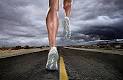
Man Jogging on Open Road

  • Run tall. Gravity and weak core muscles cause many runners to “fold” in the middle when their feet land. This sitting-down movement wastes energy. Imagine that wires are attached to your shoulders, pulling you up slightly. Thrust your hips forward a bit and think “stability” when your foot hits. It’s easier to run tall if you’ve worked your core properly.
  • Relax. Tension in your arms, shoulders, neck, and face reduces efficiency. Arms and fingers should be loose. Unclench your hands and let your jaw jiggle.
  • Breathe right. Your breathing should be rhythmic and deep, and you should feel your diaphragm, not your chest, doing the work. Exhale with controlled force. When you pick up the pace, don’t let your breathing get shallow.
  • Land on the midfoot. A heel-first landing is a brake. It means you’re extending your leg out too far in front of your center of gravity, so it takes more energy to move forward. And it’s shaky, so your muscles are working on stabilization instead of forward motion. Shorten your stride. It’ll feel odd at first, like shuffling, but once you get used to it, focus on thrusting backward with force.
  • Run softly. The louder your footfalls, the less efficiently you’re running. Try running more quietly; you’ll be unconsciously switching to a midfoot strike and a shorter, quicker stride.
  • Swing symmetrically. Check your form on a treadmill in front of a mirror. If one arm is bent more than the other or swings more, you have a musculo-skeletal imbalance that can slow you down. Target the weaker side with strength and flexibility exercises.

WARNINGS

  • Always stretch after you run. It may not seem like you need to stretch after, but it helps you get ridimages of lactic acid, which is what makes your muscles ache! In addition, stretching your muscles will allow them to become stronger/faster. Also, by stretching after your run, you need not worry that you are stretching cold muscles. Pre-run stretching, while not inherently unsafe, is more likely to cause injury if not preceded by a warm-up.
  • Don’t feel pressured to continue faster than you’re able. Repeat weeks and move ahead only when you feel you’re ready.
  • Don’t skip the warm-up, and be sure to walk for a bit when you’ve finished, to allow your body time to cool down gradually.
  • Always consume adequate amounts of fluids before, after, and during (if runs last more than 45 minutes or so) your runs, especially in the heat. If you feel at all thirsty, you are already dehydrated.

Running truly requires the least equipment and planning of all exercise. Grab your shoes, a couple of running buddies, and head outside. You’ll be looking and feeling better in no time.

http://ririanproject.com/2007/10/22/10-benefits-of-running-and-how-to-do-it/

Fighting Fit: Jeet Kune Do Ideals of Overall Fitness

by David Quigley

He was a shooting star – brilliant, breathtaking, rare, and gone too soon.  But in his 32 years, Bruce Lee practiced what he preached, reaching a near-perfect physical and mental state few can even fathom.  Obviously this took him his entire life to reach; there are ways that we can learn from Bruce’s lessons and mishaps so that we can reach our own self-perfection.

Bruce Lee’s life reads like mythology.  There are magnificent stories within his overall story that made him into the legend he has become.  The same can be said about fitness; there are lessons within the overall model (we call these lessons “attributes”).  But one must start with the overall story – the overall attribute – before one can break things down and focus on the small stories.  I am going to call the overall attribute “the Jeet Kune Do fitness ideal”; that is, what makes a JKD practitioner fighting fit overall

I think to set this in context, we need a story from Bruce Lee’s life and I can think of no better one than the catalyst for Bruce Lee’s split with traditional Wing Chun Gung Fu and the beginnings of Jeet Kune Do.  The year is 1964 and the place is Oakland.  Bruce Lee is in trouble for teaching non-Chinese gung fu, so he is challenged to a fight with Wong Jak Man, supposedly one of San Francisco’s gung fu champions of the time.  The fight begins, Bruce hits Wong, and Wong begins to run around the room with Bruce in hot pursuit.  Eventually Bruce catches him, jumps on him and hits him a few times, and forces him to conceded defeat.  What was the problem here?  There were two main ones, actually.  First, Bruce could not apply his techniques adequately to end the fight in any acceptable amount of time, thus the beginnings of his search for better ways (JKD).  Second, and most important for this entry, Bruce was exhausted from chasing Wong around the room.  It suddenly became very obvious that he needed to improve his fitness level, and fast.

From that point onward, Bruce upped his conditioning routines and the results can be readily seen in any of his movies (notice, too, that his physique improves from one movie to the next, until you see his ultimate physical perfection in Enter the Dragon).  Bruce was meticulous in recording his routines, so we are lucky to have many of them still.  One will notice while looking through them, though, that his routines evolved over time.  The being said, he always had a few exercises he stuck with until his death in 1973, the main one being running (usually with his dog, Bobo).  Bruce ran not just for conditioning, but for mental clarity, which was needed more and more as he approached the end of his life.  The point here is three-fold: 1. Jeet Kune Do has a focus on conditioning, 2. conditioning is important for both mental clarity and fighting ability, and 3. the forms of conditioning evolved over time.

Fast forward to today and my personal routines, in and out of class, for my overall attribute-building.  I always begin class with conditioning routines, usually involving rounds of running with interval exercises mixed in (I will cover this more in a later entry).  Personally, I have turned to plyometrics (jump training) for my fitness needs and the results have been astounding.  I combine these exercises into intervals, so I may do a set of 3-5 plyometric exercises for 4-5 minutes, take a 30-45 second break, and repeat.  I have found this has not only drastically improved my conditioning attributes, but it has also improved my overall physique.  That is not to say I don’t run.  I still run 3-5 miles (more than that is excessive, in my opinion) once or twice a week if I can.  I combine this with bag work and calisthenics and I am currently in the best shape of my life.  I can train longer and harder, spar more effectively, and perform techniques with more ease than ever before.  Bruce Lee was onto something, but there is no surprise there.

To sum up, overall conditioning is very important in Jeet Kune Do.  It should be key in every martial art and to martial artist.  Too often martial artists rely on nothing but their training to carry them through, but Bruce Lee found out the hard way that sometimes pure training isn’t enough.  We have to supplement and constantly improve and evolve.  That is one of the core essences of Jeet Kune Do.  Stay fit and fight longer.

The Art of Expressing the Human Body

Bruce Lee’s Jeet Kune Do: A Philosophy of Physical Self-Perfection

by David Quigley

It is a safe assumption that almost everyone has heard of Bruce Lee.  He was and remains arguably the most famous Asian-American star in the history of film (sorry, Jackie Chan).  And anyone who has seen any of his films cannot help but notice his amazing physique, speed, agility, and flexibility.  However, what a lot of people do not realize – especially those outside the martial arts world – is that Bruce Lee was a philosopher obsessed with fitness, or what he called, the art of expressing the human body.  Indeed, Bruce Lee was a philosopher in every aspect of his life, and focused a lot of his writings on honest self-expression and self-perfection.  Even the martial art he developed, Jeet Kune Do (or, the Way of the Intercepting Fist), is in itself a philosophy.

Bruce lee Hd Wallpapers_8

JKD is not ‘Martial Art’; It is a Philosophy

First thing is first, though, and I need to make a clarification, so please bear with me.  Jeet Kune Do is not a martial art, per se.  It is, as I stated above, a philosophy.  Jeet Kune Do evolved over time – from the days of the original Jun Fan Gung Fu Institute in Seattle to his final Los Angeles/Chinatown school – into a fighting system centered on personal expression, simplicity, and personal liberation.  The techniques Bruce taught his students changed constantly as he researched different ideas.  Therefore the “Jeet Kune Do” of 1968 looked different than the “Jeet Kune Do” of 1970.  Jeet Kune Do, therefore, is not a style, but an evolving philosophy, which is important to keep in mind.

Jun Fan Gung Fu (Bruce Lee’s Cantonese name is Lee Jun Fan) is a system developed by Lee, taking aspects from myriad martial arts, but focusing on Wing Chun Gung Fu, western boxing, fencing, Savate, and kickboxing.  I am not trying to split hairs here, but I want to make it clear that JKD has techniques in Jun Fan Gung Fu.  In fact, Bruce Lee developed an amazing curriculum he handed down to Dan Inosanto at the L.A. school, which shows the depth to which Bruce had developed his fighting philosophy.

That being said and on top of all of his martial creativity, Bruce Lee was obsessed with self-perfection in all aspects, including the physical.  Fitness was (obviously) very important to Bruce.  What records we have of his regiments show his amazing fitness level, understanding of the human body, and his desire to be physically capable in every aspect.  He even had very specific equipment pieces built to develop power and speed for specific techniques.  One needs only to talk to a few of his students to hear stories of his almost super-human strength and speed to know that his constant training and development paid off.  This is a lesson every martial artist should heed.

the-art-of-expressing-the-human-body

Nevertheless, I frequently see massively overweight martial artists who are unable to execute their techniques correctly.  Too often these martial artists rely solely on their training (whatever that may be) for their physical fitness, and the results are often dismal.  For this reason, fitness is an important aspect of JKD training.  The art itself requires a certain level of physical fitness to be able to perform many of the techniques.  In other words, training the art is not enough; one must develop the physical attributes necessary to be able to pull off the techniques in real-time, with speed, strength, and accuracy.  In testing my students, I require a physical fitness portion, which consists mostly of pushups, pull-ups, bag work, and plyometrics in addition to the rigors of the test itself.  I have noticed that this addition to my tests has not only improved my students’ fitness level, it has also increased their ability to perform the techniques more fluidly, with more power and speed.  In effect, it has increased their ability to honestly express themselves.

In this article I’ve focused on the most basic of introductions to Bruce Lee’s amazing martial art and its relation to fitness.

enter-the-six-pack-7


I love Lemons..here are some different reasons why…

The Incredible health benefits and uses for lemons.

  • If you are a lemon lover and use it daily, be happy! The juice of one lemon gives you one-third of your day’s total quota of Vitamin C.
  • Olive oil + lemon juice = strong nails! Rub the concoction on your nails for a few days and see the results—your nails will shine with good health.
  • Rub the cut half of a lemon on your lips at night, and wash off in the morning. No more chapped lips!
  • Squeeze lemon juice into plain yogurt and massage the back of your hands and your arms with it for a smoother, brighter complexion. Lemon is also a natural cleanser, so it gets rid of bacteria and germs lurking on the surface of the skin.
  • Lemon juice mixed with rose water and a little honey can be applied to acne-affected skin twice daily. The solution clears up acne and brings radiance to skin.
  • Feeling anxious or unhappy? Sprinkle a few drops of lemon oil on to a clean handkerchief, and inhale. The oil will quickly replace the negative energy with positive feelings and fresh focus.
  • Got a sore in your mouth? Squeeze some lemon juice into a glass of warm water and swirl this around in your mouth for about a minute. Repeat twice daily for at least three to four days. The antibacterial properties of lemon will heal the sore.  You can also use this water for gargling if you have a sore throat.
  • Lemon’s incredible benefits for your oral health don’t end here! If you have garlic or spicy breath, drink lemon-spiked water for instant fresh breath.
  • Lemon tea calms an upset stomach, flushes out toxins, and rejuvenates body and mind.

Top 10 Benefits of Running

??????????????????????????????????????????????????????????????????

Top 10 Benefits of Running

In this article I lay out  some of the top 10 Benefits of Running.

But before you read any further or dust off those brand new trainers lying in the back of your closet, maybe you should also consider if these benefits are worth sharing with those closest to home.

“With the top benefits of running including; Improved Health, Disease Prevention, Confidence, Stress Relief, as well as Mind  Development and Co-ordination development don’t you think they are worth sharing with your children?”

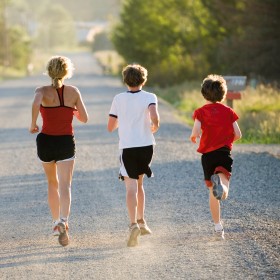
Today both parents and children are living fast passed busy lifestyles. Muchof the family budget is spent on gyms or fitness classes such as pilates, yoga, aerobics and more for the parents or clubs and extra sporting activities for the kids. When running together as a family could be an easy affordable way to both save some money, hang out and share the undoubted healthy fun that running can provide.

So when you get ready for your next run and are preparing your favorite energizing and feel good tunes on your ipod. Why not allow your son or daughter to do the same? So you can head out together and run!

Set a date, do it together help motivate each other, reward each other. Maybe you could make this a fun part of your weekly routine. Be healthy as a family and share the following benefits with your children.

1. Win the battle of the bulge.

Many people start running in order to win the battle of the bulge. Whether they are obese or just want to lose that last ten pounds, or even if they just want to stay at the weight they are at, approximately 60 percent of runners start running to manage their weight. Running is one of the top activities for burning fat. In fact, with the exception of cross country skiing, running burns more calories per minute than any other form of cardiovascular exercise.

2. Prevent muscle and bone loss.

Our bones are made to accommodate the demands placed upon them. By sitting in front of the monitor all day many of us allow our bones to grow weaker, but by running regularly our skeleton gets the demand it needs to stay healthy. In addition to keeping our insides from aging quickly, regular, high-intensity exercise, like running, has also been proven to promote the human growth hormone, which celebrities have taken injections of for years to keep them looking young.

3. Fight disease.

Running reduces the risk of stroke and breast cancer. Regular running has become a treatment option for doctors to prescribe to patients who are at a high risk, or early stages, of osteoporosis, diabetes, and hypertension. It reduces the risk of heart attacks, by strengthening the heart and lowering blood pressure. Running maintains the elasticity of arteries incredibly well because as you run your arteries expand and contract nearly three times as much as usual.

4. Maintain and improve general health.

Running is one of the best activities most people can do to improve their health. It raises HDL (or “good”) cholesterol, reduces the risk of blood clots, and encourages use of the 50 percent of your lungs that usually go unused. Running also boost the immune system by creating a higher concentration of lymphocytes (white blood cells that attack disease).

5. Get confident.

Jogging builds confidence and self-esteem like few other individual sports can. It allows the runner to defeat trial after trial, growing stronger and more sure of themselves with each footstrike. It allows you to truly climb hills and clear obstacles. It provides a feeling of empowerment and freedom that comes with knowing that your legs and body are strong and capable. Confidence is even more a product of running for those who lose weight and gain a better self-image through running.

6. Stress relief.

This is another huge benefit of jogging. Whether by allowing you the time to think about life’s problems or time to escape them for awhile, tension easily flies by the wayside as you fly over the miles. Distance runs are great for solving headaches and problems that are nagging at you. What could be better than a three hour run all by yourself to clear your mind and allow you to pin down an answer? Speed runs are great for tearing through aggression and anger. Focus all that emotion into a few sprints and you’ll feel better in no time.

7. The famous “Runner’s high.”

Aside from just the stress relief, jogging has also been proven to improve attitude. Running, especially outside and on trails, creates a release of endorphins that can cause euphoria (runner’s high) or just a general sense of happiness. Running has been used for years to treat clinical depression and addictions of all kinds. Less tension, less depression, less fatigue, and less confusion are just a few of the changes that patients have seen after beginning a regular running program. Running gives something for them to focus on, allowing them to see something besides their depressed state or addiction.

8. Train your mind.

Along that line, running can help train the mind as much as it trains the body. By making yourself overcome the obstacles that running brings, you learn focus and determination. The will and strength that gets your body through long runs or those runs you’d much rather skip is what in turn strengthens your mind and gives you focus and determination in other areas of your life.

9. Improve coordination.

Another worthwhile benefit which may be gained from running. This may seem surprising to many who assume it is not possible to gain these types of benefits from running simply because it is such a simple sport. However, there is some coordination involved in running. Trail running which involves running on unpaved trails especially requires a great deal of coordination. The uneven surface combined with obstacles such as rocks and tree roots can make trail running quite difficult. However, runners who regularly run on these types of services, quickly learn to maintain better control over their bodies to prevent tripping and stumbling while running.

10. Versatility.

Not many sports can be done almost anywhere with almost no gear. I’m sure the ancient Greeks would argue that even shoes and clothes aren’t required, as their Olympians were quite the minimalists. Today, we just need a good pair of running shoes and off we go. From urban sidewalks to rural trails and all the real estate in between, the world is loaded with places for runners to explore. Travel a lot? There’s always room in your suitcase for a pair of sneakers. The world is your gym, go re-discover it.

http://ririanproject.com/2007/10/22/10-benefits-of-running-and-how-to-do-it/

www.StudyMartialArts.Org
Summer Supplements

With Beijing’s hottest summer months, July and August upon us I thought I’d devote this blog entry to getting the most out of training during the summer.

Two things I’ll focus on that will help you to reach optimum performance during this time are the following.

  • Magnesium
  • Digestive Enzymes

These supplements are great for those spending long hours out in the sun training and who wish to improve their performance as well as aid their digestion. The perfect combination for kungfu students that will be susceptible to tummy bugs and long rigours training schedules.

So here’s why:

1. Magnesium

Magnesium is important for maintaining and improving sports performance, as magnesium plays a pivotal role in energy production and the maintenance of health. This mineral is often poorly supplied by diet. And you will especially find this when your diet is mostly made up of cabbage, conge, rice, tofu and a few other vegetables which make up the average kung fu school meal here in China.

There are a selection of these products that you can choose from. – Other ways you can get magnesium into the body include effervescent tablets. There are plenty of products on the market to choose from.

Modern research actually suggests that even small shortfalls in magnesium intake can seriously impair athletic performance. This mineral should become your new friend as a supplement or by naturally adding magnesium rich foods to your diet.

So why is magnesium important?

Magnesium is important because it is required for the activation of crucial enzymes known as ATPases, which are required for the generation of ATP, the body’s ‘energy currency’ used for all muscular contraction. It reduces heart rate, ventilation rate, oxygen uptake and carbon dioxide production. Where there is a magnesium shortfall the efficiency of muscle relaxation is reduced, which accounts for an important fraction of total energy needs during exercise. Additionally, magnesium reduces the accumulation of fatiguing lactic acid during intense exercise. Don’t take my word for it click the link to find out more. http://wwww.pponline.co.uk/encyc/using-magnesium-to-improve-your-exercise-performance-39415

2. Digestive Enzymes

Digestive enzymes help with: Allergies by minimizing the absorption of allergy-triggering, incompletely digested “foreign proteins” (antigens) in foods that cause allergies. Back Pain, as the enzymes chymotrypsin and trypsin have been found to successfully treat the sciatica (leg pain) that occurs in some patients with back pain. Digestion and flatulence, as they add to your body’s natural digestive enzymes reserves. This little benefit maybe much needed for students practicing qigong. The combination qigong and poorly digested food leads to the release of more than a little how shall we say bad qi into the training environment. Other benefits of these enzymes include gallbladder health, as one of the enzymes in digestive enzyme supplements (named lipase) facilitates the digestion of dietary fats in the gallbladder so take a little strain of this organ. Rosacea patients have been found to have lower than normal levels of pancreatic lipase (an enzyme involved in the digestion of fat). Therefore, insufficient lipase production could be responsible, at least partly, for the symptoms of rosacea.  If this is the case, supplemental lipases may be useful for rosacea patients while sciatica may also be alleviated as a combination of the enzymes chymotrypsin and trypsin have been found to successfully treat the sciatica (leg pain) that occurs in some patients with back pain. 

Look into which product best suits you. I’ve not looked into every product but whatever supplement go for trusted and quality brands.

Finally, and maybe more relevantly to most sports injuries can be helped by taking this supplement as certain digestive enzymes (either alone or in combination) have been demonstrated in several clinical trials to accelerate the healing of sports injuries that involve soft tissue damage (sprains and strains), leading them to heal up to twice as fast as normal. This is a great benefit for those with knocks and niggling injuries. This benefit has been studied in injuries from karate, ice hockey, soccer, football, boxing, judo, running and more. The most noticeable effects of enzyme therapy include reduced pain, blood clotting, swelling, heat, edema and inflammation.  These effects occur via improved blood circulation, accelerated tissue repair, delivery of nutrients to damaged areas, removal of debris from the injured area and direct anti-inflammatory effects.

For the month of June to July I studied at Master Chen Fusheng’s Traditional Martial Arts School on the outskirts of Beijng. Here’s a link www.Bajizhandao.com. The usual training day began at 5am with standing meditation followed by drills and basics. After breakfast forms and applications. Then lunch and conditioning, qigong and applications. After dinner we then practice forms, do various workouts for strength, power and conditioning, finishing the evening training with more standing meditation. During this time I took magnesium and enzyme supplements and felt the benefits in my training for doing so.

The Power of the Conscious Breath

yoga-breathing

Later today I’m heading over to the Zajia Lab at the rear of Beijing’s landmark Bell Tower for a breathing workshop. Yes, indeed a breathing workshop and, in Beijing of all places! I am going there to learn how to breath.

Breathing as know is essential for human life, without oxygen we die, therefore it stands to reason that if we can do this better our body functions and internal workings will be better and therefore our health will be better. Breathing habits and posture are considered to be essential components of health. The breath alone is one of the most important tools at an athlete’s disposal. How an athlete breaths is directly associated with performance. It seems obvious but it is often overlooked.

For the martial artists the breath is also important. It is used to focus and deliver power or alternatively protect the body, while for others it has become a spiritual practice and one that is practiced by Buddhist monks, Taoist monks and holy men the world over, allowing the creation of space, mental peace and balance. The cultivation of spirit.

The fact is that the conscious practice of breathing is capable of producing dramatic and life changing results, its free, limitless and can be practiced anywhere and at any time. My personal experience of the power of breathing has been through my own practice of standing and moving neigong’s and meditations.  Since arriving in China to study traditional combat Martial Arts this aspect of breathing and meditation training continues to grow in importance for me personally. This is due more to the amazing all-round benefits I receive from this practice in terms of health, stress management, balance, building qi even to the ability of visualizing and manifesting the results I desire than changing importance’s as I get older. But more on that later.

So today I’m heading off to a breathing workshop with an open mind and a desire to take whatever techniques I learn at this workshop and add it to my already growing knowledge of neigong.

So if you read this I hope it inspires you to take a little time out of your day to simply take a few long slow deep conscious breaths. When doing this keep an up right relaxed posture and focus on your internal universe. Listen to the breath moving while you practicing an inner smile.

If you would like to learn more about the power of breathing or future breathing workshops or practices feel free to post below or PM me directly at StudyMartialArts@gmail.com or visit www.StudyMartialArts.Org