In all martial arts, many students will one day ask themselves:
“Is practicing forms important for real fighting? Should I just be performing drills, or sparring?”
The answer to this is not a simple yes or no because it depends on how you practice your forms:
Do you let your mind wander, or are you incredibly focused?
Do you ‘take it easy’ and treat it as a warm-up, or are you challenging yourself each time with deep stances and powerful movements?
Are you just ‘following the motions’, or do you have a specific goal in mind?
At An Wushu, we believe form training done correctly is incredibly important for developing your kung fu:
Forms develop what we call your ‘kung fu body’. Strength and endurance are a very important part of kung fu, but can be developed by many activities; the specific attributes you need for perfecting your kung fu, however – such as flexibility, timing & chi skills – can be best developed through forms
Forms teach movements in a logical sequence (e.g., “Strike… if they block, then you do this”) and create useful muscle memory*
If you practice your forms the way you fight – with spirit, power, and accuracy – then you’ll fight the way you practice your forms
*Many students are also curious about the applicability of ‘grander’ movements, such as flips, spins, kicks and so on. There are a few schools of thought on this:
In years past, it was not uncommon for future masters to be taught incredibly slowly, often learning a single form over five years! If you have practiced a movement 100,000 times or more, you will definitely be able to use it in combat – even if it is perhaps not as efficient as it could be
Many movements are taken to their extreme to better develop the body: e.g., if you train with your horse stance at parallel, spending minutes then hours in this position each day for many years, your legs will become incredibly strong. If you only stand at ‘fighting height’ for these years of training, you will miss out on this strength.
In some styles, there are moves that are simply not meant to be used in combat, e.g., backflips, and are simply there to develop the body of the practitioner. Similar to Point 2, if you spend years training backflips, you will have much more explosive muscles and better co-ordination than if you didn’t. (Note: There are no movements like this in An Wushu, however, as part of a complete training system this is a great way to train.)
Much of the power generated in kung fu is difficult to do in a small way until you can do it in a big way: e.g., even a beginner can sharply twist their body, push off their heel and throw a strong ‘cross’ punch (albeit at the probable cost of their balance). But if they limit their twist to only 1-inch, can they generate power? The answer is no. By starting with an over-exaggerated movement, a beginner is able to gain the internal feeling needed for any movement and gradually refine the movement to its usable form.
So, is practicing forms important for real fighting? As with anything in kung fu and in life, you only get out what you put in.
To learn more about An Wushu or how to study with Master An full-time in China visit www.StudyMartialArts.Org we work exclusively to help dedicated students connect to quality martial arts schools. This includes visa assistance and independent information all at no additional cost to you. Check us out with no obligation.
Introduction Some of the most popular posts at Kung Fu Tea have examined vintage images of traditional martial artists. These are also among my favorites to research. Yet it seems that I have neglected this subject with all of the other projects that have come up this summer. Hopefully this post will go some […]
Today there are so many fitness trackers available for you to choose from various bands, watches and apps. All these gadgets are equipped with accelerometers and sensors to track you all day (and night) long. But do they really work or are they just a gimmick? Here are 3 reasons why if used correctly they can help you become fitter and healthier.
1. You can see your fitness goals: It’s one thing to have a sense of how healthy you are, but it’s another thing to see the numbers. Many fitness trackers can record your steps, calories burned, and sleep, so if you’re not meeting your goals in one or more of those categories, you’ll be able to see it in no time. Fitness trackers force you to be aware of your fitness shortcomings so you can modify habits as necessary.
2. You can track your progress: Investing in a fitness tracker forces you to think about what you’d like to get out of your workout routine. Many trackers allow you to add goals — like steps per day or calories burned — so you can keep tabs on whether or not you are progressing. It’s nice to have numbers backing up just how much more fit and active you’ve been feeling and to use as a basis for future goals.
3. You can push yourself safely: Listening to your body is the best way to know your limits, but having extra help doesn’t hurt. Many fitness trackers compile the data they collect from your daily habits to show you trends over time. That means that if you find that you’re being too sedentary on your non-workout days or that you aren’t burning as many calories as you thought in yoga class, you’ll be armed with the information you need to modify your workout routine or your daily activity habits.
Source: Instagram User supertall007
The Fitbit Surge is a sophisticated touch-screen wristwatch. It not only tracks your steps and sleep, but also alerts you to incoming phone calls and text messages, keeps tabs on your heart rate with a built-in optical heart rate monitor, uses GPS to track outdoor activity, and has much more functionality especially for runners.
PROS
Continuous heart rate monitoring. Built-in GPS. Comfortable, secure fit. Tracks new activities like hiking, yoga, and weight-lifting workouts. Excellent app and easy syncing. Supports incoming texts and call notifications. Accurate.
CONS
Limited push notifications. Moderately large. Not waterproof for swimming. Below average battery life with GPS enabled. Charger not interchangeable with other Fitbits.
BOTTOM LINE
With continuous heart rate monitoring, GPS, and broad appeal, the Fitbit Surge is the best all-day fitness tracker to date.
The Garmin Forerunner series blends the best fitness trackers with all the features you expect from running watches. Additionally it offers a 24/7 activity and sleep tracker with continuous heart rate monitoring, GPS, push notifications, and special features for triathletes. It’s not cheap but it manages to be both lightweight and excellent battery life. If you’re a hardcore martial artist who love to compete in triathlons this is the one for you.
PROS
Excellent for triathletes. GPS. Optical heart rate monitor. Tracks steps, sleep, heart rate, and an array of activities. Supports push notifications. Waterproof. Lightweight. Top-notch battery life.
CONS
Expensive. Not comfortable to wear while sleeping. More sporty than elegant.
BOTTOM LINE
The Garmin Forerunner 735XT fitness tracker gives pertinent information to triathletes about their sports, including advice you don’t often see, like recovery time. It’s comprehensive and easy to use but will set you back a pretty penny.
Best for those on a budget and now available outside of China, the Mi Band Pulse is cheap and cheerful, yet somehow manages to pack heart rate monitoring onto the wrist for an astonishing price. Xiaomi has shifted over a million of its bands in China alone, possibly making this the ultimate fitness tracker. On a down side the main body of the tracker does of a tendency to fall out if you are too rough with it. So don’t keep it on when doing pad work. Another down side is that it will does have a tendency to over estimate your steps in most cases.
Is one of the best for getting fit. Geared towards helping you be better at the sports you love, rather than reporting how you did. It’s an easy and compelling sell, and for our money, is what wearable tech should be about. Some of the misgivings remain: the need to carry your smartphone being the biggest downside to the device.
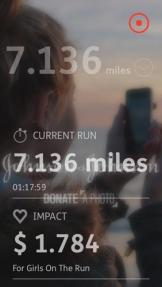
Earn money for charities every time you run, walk, or bicycle by using the free Charity Miles app. Corporate sponsors (whose information you’ll see as a backdrop image in the app) agree to donate a few cents for every mile you complete. Browse the app’s list of charities, find the one that you support, and then hit the road. When a lot of people use Charity Miles, those little bits of money add up.
Using this app you can rack up some serious miles. With this app you can get fit while donating to some excellent charities. The new UI is very clean and visually appealing. Both the GPS and indoor tracking are for the most part reliable. On the downside view the history can be annoying. The activity log looks nice and is easy to navigate but needs to also have the ability to see the length of time each run was.
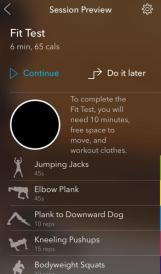
FitStar creates custom workouts for you based on your fitness level. You start by doing a few workouts with the app and you give it feedback as you go about which exercises were too tough, too easy, or just right. The app uses that information to create a routine that challenges you in all the right ways. FitStar was purchased by Fitbit in 2015 and now works with some Fitbit devices. The in-app coach is former NFL player Tony Gonzalez, a beefy workout buddy who is nothing but a bundle of positive, cheery feedback, and absolutely no excuses.
It is customize to you and after each workout you should feel like you’ve accomplished something. The great thing is it sync with your Fitbit (Fitbit actually recommend this app). You get free sessions but for premium its a steal instead of going to the gym and probably having to pay twice as much. With this app and eating right you will lose weight in no time.
“When the Nanjing Martial Arts Institute was opened, I was in Hankou [in eastern Hubei], where I noticed in a newspaper that they were dividing their curriculum into two schools – Wudang and Shaolin – and appointing specialists for each of them. For “Wudang” to be isolated like this in the promotion of our […]
The statements made here regarding the increasing militarization of the society, the endemic use of violence and the role martial artists played in these developments are confirmed by the historical record for both the Ming and Qing Dynasties. In all likelihood they also applied to earlier periods, there is just a lack of documentation to […]
– 向愷然先生練太極拳之經驗 MY EXPERIENCE OF PRACTICING TAIJI BOXING by Xiang Kairan [written in 1929, published in Wu Zhiqing’s 太極正宗 Orthodox Taiji, 1940] [translation by Paul Brennan, July, 2016] – 前淸丁未年間。我在日本會見一位直隸朋友。就聽他說起北方練拳術的人。有幾個大派別。一派是練八卦拳的。一派是練形意拳的。一派是太極拳的。還有一派練岳氏散手拳的。後來由岳氏散手。又產生一派。謂岳氏連拳。此外雖尚有不少的家數。然練習的比較人少。不能自成一派。我當時聽了這些話。不過知道有這些名目罷了。究竟各派是些什麼手法。彼此分別之點。在什麼地方。因那位直隸朋友。不能一一演給我看。無從知道。直到民國癸卯年。遇見李存義的弟子葉雲表、郝海鵬。纔見着了形意拳。八卦拳也看了一部份。太極拳。仍是不曾見着。不過曾聽得葉、郝二人說起太極拳意義。使我增添了許多向往之心罷了。 In 1907, I was in Japan visiting a friend from Hebei, and I happened to hear him talking about northern practitioners of boxing arts: “There […]
Introduction Welcome to “Chinese Martial Arts in the News.” This is a semi-regular feature here at Kung Fu Tea in which we review media stories that mention or affect the traditional fighting arts. In addition to discussing important events, this column also considers how the Asian hand combat systems are portrayed in […]
Thanks to my wonderful colleagues at StudyMartialArts.Org, I’m able to share this list of full-time Martial Arts School Reviews. Click the link and you’ll be able to compare and contrast Martial arts schools based on student reviews, price and StudyMartialArts.Org’s independent assessment.
Below you’ll find a list of schools that currently have the most reviews on the www.StudyMartialArts.Org website. Please note that after 5 page views you’ll be asked to login to the site. This is easy and nothing to worry about. If you find the site useful and want to learn more contact StudyMartialArts.Org for a full consultation on schools, training and travel. The consultation service is free and there is no obligation. However, to keep the service free, make your booking through them. Booking through SMA is the smart thing to do as it affords students who use there service two essential things that should give you piece of mind.
Firstly, you get extra support!
And secondly schools are less likely to bullshit you or rip you off.
A comprehensive list of martial arts schools and masters reviewed by students and experts.
Here are some links to schools which have either been reviewed by students directly or have been collected to provide site users more information to help you narrowing your choice down.
Tianmeng Shaolin Kung Fu Academy primarily focuses on teaching the traditional Meihua Quan (Plum Blossm Fist) which has both internal and external elements. In addition to Meihua Quan, Shaolin Kung Fu, Qigong, Qin Na, Tai Chi, Xingyi, Bagua, are also taught here. The school itself is relatively new and it has all the facilities that students will require to build a solid foundation in Martial Arts or reach higher levels. The school is unique for Meihua poles and Meihua training methods. These are designed to impove balance, internal power and footwork in a very short time.
Master Chen Fusheng’s Martial Arts Academy is located in Lixian Zhen, Daxing District of Beijing. Here you will learn traditional Bagua, Bajiquan, Pigua, Qi gong, Tai Chi, Tong Bei, Gong Li, Xi Yang Zheng, Hei Hu, Xingyi and Praying Mantis. Master Chen will teach you the best aspects of each of these styles for combat as well as his own Qi gong and fighting style Ba Ji Zhan Dao this is translated as Baji Battle Way. Master Chen has a vast wealth of knowledge in traditional martial arts and also in martial, healing and longevity qigong.
Rising Dragon Martial Arts School is location in Yongping county in Southern Yunnan Province. Yongping County is a very mountainous region which borders Myanmar, Laos, and Vietnam and has an average altitude of 1980m. YongPing has a population of around 170,000. and is located roughly in between the two Cities Dali and BaoShan, which are both no more than an hour’s drive away. The area is steeped in history with numerious temples, senic areas, mountains, lakes and even natural hot springs to visit.
Kunyu Mountain Shaolin Martial Arts Academy is a popular and long running International Kung Fu Schools in Shandong Province. Located in a beautiful rural setting on the edge of the Kunyu Shan National Park the school offers students of all abilities the chance to learn Shaolin Kung Fu, Taichi, Qigong,Wing Chun, Xingyi, Bagua, Baji, Northern Praying Mantis and Sanda.
Kunlun International Martial Arts School is a traditional Chinese kung fu school in rural Yantai. The school adjoins and uses the facilities of an ex-military base so as a result has excellent facilities. The school employes translators and has support staff in Yantai City. The School specialises in Seven Star Praying Mantis Boxing, Plum Blossom Praying Mantis Boxing, and Throwing Hand Praying Mantis Boxing as well as traditional Shaolin Kung Fu, Qi Gong and internal styles such as Bagua, Chen Style, Tai Chi and Xing Yi.
Wudang Hongdao Kung Fu School’s lineage comes from the Xuan Wu Sect of Daoism and is located near Zhong Guan Temple on Wudang Shan. Situated on the Mountain and with training taking place in and around the temple. The school offers a unique experience and the chance to study martial arts as well as study the healing arts of internal alchemy, qigong on herbal studies. Students should have some level of Chinese and knowledge of TCM to get the most out of their healing arts studies. Part of their studies will involve finding and identifying various mountain herbs for the Zhong Guan Temples daoist monks as well as learning about their uses.
Lion Muay Thai is Phuket’s fastest growing Muay Thai camp offering students an opportunity to learn a new martial art, get fit and have fun in the paradise island of Phuket. Nestled amongst lush greenery in an area called Rawai the camp offers seclusion without being too far away from the local amenities. Students who attend this school include seasoned fighters and beginners. This is because the gym caters to every need. As a result students may get a chance to train alongside or rub shoulders with world champion fighters who appear on international fight shows and work with some of the best trainers in Thailand.
The Kung fu School, China offers Sanda, Shaolin Kung fu and Taichi quan intensive martial arts training. All this is provided by an equally intensive master. Master Wang Xinglong is a 32nd generation disciple of the Shaolin Temple. At the age of 12, he joined the Shaolin Temple and studied traditional Shaolin martial arts under the 31st generation disciple, Master Shi DeQian. At the school students should expect to train 8 hours each day, five days per week. All skill levels are welcome at the school and each student gets personalised training where Master Wang Xinglong considers your skills, strengths weaknesses, preferences and goals. Progress is solely determined by the effort you put in and your ability to learn and practice the skills.
The Maling Shaolin Kung Fu Academy is located in Xingyi City in Norther Jiangsu Province. Headmaster Bao founded the school recently, having previously been training international students at other academies. He has set up a fantastic place to train and live, where students can learn 7 different styles of Chinese martial arts. The main style is of course, Shaolin Kung Fu, although you can also learn Baji Quan, Tai Chi, Xingyi, Qigong, Sanda (Chinese kickboxing) and Bagua.
Yangshuo Taichi School was the first registered International Taichi and Kung fu training School in Yangshuo. The school is located in a tranquil and truely stunning location a bike ride from Yangshou. The school headmaster, Master Huang is a National Taichi Champion who is enthusiastic and dedicated to teaching Taichi as a martial art, as a healing art and also a philosophy.
Qufu Shaolin Kung Fu School is a medium sized Shaolin Kung Fu school that has a freindly and welcoming feel. A perfect alternative to the often overly busy and inpersonal Shaolin Kung Fu Schools located in and around Dengfeng. This school is located on the outskirts of Qufu City, the birth place of Confucius and was founded in 2008 by 34th Generation Shaolin Warrior Monk Master Shi Yan Jia. Although the school is not located in and around Dengfeng it is one of only a few that have been given the seal of approval by the venerable Shi Yong Xin Head Abbot of the Songshan Shaolin Temple in Henan. This is a direct result of the Schools links to the Shaolin Temple’s Warrior Monk demonstration team.
Songshan Shaolin Traditional Wushu Academy is located inside the Original Shaolin Temple in Henan Province. The Shaolin Temple is was included in the UNESCO’s World Cultural and Natural Heritage List in 2010. And training at this school will uniquely allow you access to this amazing iconic cultural site. Indeed the training grounds of the school are located in areas where Temple monks train regularly.
The Yuntai Mountain International Culture and Martial Arts School was founded by Shi Yan Lin, a vastly experienced Shaolin Kung Fu master who teaches both Chinese and international students. The Martial Arts training at the school will primarily focus on the various Shaolin fists and weapons as well as Sanda and Taichi. In addition to the Martial Arts training the school also offers students the opportunity to study Chinese in combination with their martial arts training. The school itself is located in the famous Yuntai geological park, which attracts thousands of tourists every year. This area is widely regarded as one of the most beautiful place in Henan Province.
Zen Martial Training is located in Les Mamelles. The school offers authentic Chinese traditional martial arts with traditional Asian healing arts along with the combat sport of Taekwondo. The head instructor of the school has over 20 years of experinece in competitive martial arts and has lived and studied martial arts in China for over 6 years. The Head instructor of the school speaks, Chinese, English, Spanish & French and is certified as a Yue Jia Quan Master, has a 5th degree belt in Mantis Fist, 3rd Dan in Taekwondo and is certified in acupunture and herbalist.
Xilam is a modern Mexican martial art that is inspired by pre-Hispanic warrior cultures of ancient Mesoamerica, namely the Aztecs (Mexica), Maya and Zapotec cultures. It provides a noteworthy case study of a Latin American fighting system that has been recently invented, but aspires to rescue, rediscover and relive the warrior philosophies that existed before the Spanish Conquest and subsequent movements beginning in 1521.
Introduction Greetings! If all has gone according to plan I am now back in the United States, recovering from jet lag, reviewing my notes from the conference and preparing a report on the events of the last week to share with all of the readers of Kung Fu Tea. In the mean time, please […]


 Xiaomi Mi Band Pulse ($19+)