By Dr. Mark Wiley For martial artists, one of the most important themes for developing better quality of life is maintaining a wide perspective on health and fitness, one that is based on connecting mind, body, and spirit with the physical actions of the martial arts. A glance at the local school or gym tells a different story.…
For anyone who uses Zhan Zhuang, Qigong or Tai Chi for Stress Management, here is an interview I did recently which may give you some new or additional methods to increase the effectiveness of ‘decompressing’ and rebalancing. Interview: Zhan Zhuang, Qigong & Tai Chi for Stress Management
Festivals bring people together in affirmations of community. This article looks at two festivals in coastal locations in Indonesia and Brazil with a close inspection of performances of fight-dancing included within both festivals. The improvisatory or choreographed organization of the fight-dancing performances echoes the manner in which the festivals themselves are assembled. As these festivals grow in popularity, the process of inventing tradition is heterogeneously co-constituted by those parties who actively invest in the symbolic capital of the events. Verbal and non-verbal forms of expression reinforce each other in the construction of a multivalent sense of regional traditions. The corporeal engagement of organisers and participants blurs the boundary between embodied remembering and narrative accounts. Based on archival research and ethnographic fieldwork, this article explores the interweaving of fight-dancing with the history, growth, and post-colonial expression of regional festivals.
Do you feel that? Olympic fervor is once again in the air. As we prepare for the 2016 Summer Games in Rio there has been a distinct uptick of Olympic advertising on the TV. Athletes whom we have not seen for four years are once again making regular appearances on the news. Even some […]
Introduction Welcome to the seventh entry in our series of guest posts titled “Doing Research.” If you missed the first essay by D. S. Farrer (which provides a global overview of the subject), the second by Daniel Mroz (how to select a school or teacher for research purposes), the third by Jared Miracle […]
Discipline is one of the most difficult words that I know. No, it isn’t a spelling thing! The difficulty comes from all the aspects that it encompasses. All of the little things that are required to truly have discipline.
The importance of goals will not be included here beyond the point that you NEED goals for your life in order to accomplish anything. How big your goals are will dictate how much discipline you need to develop.
1. If you want to change the world, start off by making your bed. “If you can’t do the little things right, you will never do the big things right.”
It is amazing how something so small and trivial can start you out the right way. It isn’t about being rewarded by your parents for doing your chores. It is about taking responsibility to get things done. As Aristotle said…
There are dozens of everyday things that help develop discipline. These range from following a bedtime and a wake-up time to regular oil changes in your car. Discipline allows you to build on successful and failed activities. It helps in remembering the lessons from everything that you do.
A common example comes from learning any subject. Once you set a goal (earn the next martial arts rank), you must spend the time and effort to learn and perform properly. It is common that students “think” they know their material but fail horribly when tested on it. This is usually from the lack of applying discipline to their training. I use pretests to show students that they aren’t as ready as they think. Once they’ve completed the pretest., I ask them if it was their best performance. Usually, they admit not. My next question becomes “why wasn’t it?” It may take several ranks of repeating this cycle before it sinks in but most eventually recognize that it is discipline that keeps “good enough” from ruining “excellent.”
It is important to utilize discipline in everything you do daily. The benefits of a little discipline changes your whole day just because you know where your car keys are. People also greatly enjoy when you apply discipline to getting things done that you said you would. This is also part of your career. Not completing tasks can lead to unemployment. In your private life, it builds trust and shows respect.
How can you tell if your discipline is lacking? I’ve asked students (in front of their parents) the question “How many times should you be told to do something??” The answer from students is “Once!” How many times did you need to be told to get the last project/chore done?
In China dedicated martial arts students who plan to make the most of their time generally fall into two categories.
Type A – You’re a martial arts student in China and you’ve reached a level where in order to further develop your understanding and skill as well as make your life easier you’ve got no choice but learn the language.
Type B – You’re a Chinese language student who’s always been interested in martial arts but has yet to take the step into training. But things have finally come to a head and you’ve had enough of conversations about where you’re from, how much you earn and whether you like Chinese food, girls or football.
Chances are a few of you reading this post have had at least contemplated at least for a second combining martial arts with language learning.
You might have considered the following options. A university course with a certain amount of martial arts training, finding an elusive badass master and informally studying the language or by joining one of the many international kung fu schools and taking their free classes.
The benefit of combining martial arts and language learning can be found in the practical skills you learn that not only add to the experience but also your CV. Indeed such a step can take many in completely new directions abound with opportunities for the wily foreigner. Overall these programmes allow participants the opportunity to develop their martial arts and deepen their own understanding of Chinese culture and language.
“It’s a unique way to study with a high level master outside the normal international kung fu school route as that all important Chinese visa can be provided relatively cheaply through a University.”
Find a badass kung fu master
This video clip above was taken in Yantai, Shandong province.
Yantai is a small second tier Chinese City on the northeast coast of China. It has cheap housing and has a good environment. Yantai is famous for a number of kung fu styles including Taichi Mantis, Tongbei quan, and Baguazhang. Locally with a little care you can find good masters. The city itself is a hot bed of kung fu schools and is well worth a look.
“Yantai is a hot bed of kung fu schools and masters on the east coast of China”
For details of our Traditional Martial Arts and Language Learning programmes in Yantai email info@studymartialarts.org. You can also check out Master Sui’s full biography and training schedule here. Or you can have a look at this school Kunlun International Kung Fu School which has links to Ludong University in Yantai for long term visas and currently has a very good Shaolin Kung Fu and Mantis Kung Fu master that you can study martial arts with.
Two alternatives that may be more suitable for those who are less independent or would prefer an all-inclusive experience are The Yuntai Mountain International Culture and Martial Arts School founded by Shi Yan Lin, also known as Xie Xu Yong. This school is the only martial arts school currently offering a quality half day martial arts and half day language learning programme. The other option I would recommend is Capital Sport University of Physical Education in Beijing.
Yuntai half and half programme
Master Shi Yan Lin is a master with over 10 year experience in teaching to both Chinese and International students Shaolin Martial Arts. The school is located in the famous Yuntai geological park, which attracts thousands of tourists every year and is fairly close to the fabled Northern Shaolin Temple. The Martial Arts training at the school will primarily focus on the various Shaolin fists and weapons as well as Sanda and Taichi. The school building formally a hotel has been converted into student accommodation, as a result the rooms are comfortable and comparatively of a high standard. The newly built training area and performance hall is five minute walk from the main accommodation area, so everything you need is close at hand.
The Chinese language course organised as part of the half martial arts, half language learning programme is available in partnership with Jiaozuo University. These courses can be specially tailored and intensive. This, makes the school a very real prospect for serious Chinese language learners. This close relationship between the martial arts school and the university means that long term student visas can be obtained for long term International students of the school.
The down side to the programme primarily relates to the schools relative isolation and the management insistence for compulsory school line ups throughout the day. Sometimes this can make students feel like they’re prisoners rather than students.
University Programme
Captial University of Physical Education & Sports is one of Beijing’s premier Martial Arts Training Universities providing top-ranking conditions for international and domestic students. The university is supported by Hanban and Confucius Institute offering Chinese Language Learning Programs, Martial Arts University Programs, TCM, Sports & Health Care Programs.
The University offers the following programs; 4 Year Undergraduate Programs, 3 Year Master Programs, 3 Year Ph.D Programs, 1-2 Year Non-degree Programs and Short-term Programs.
The Universities Featured Programs are:
1. Chinese Language Programs The University employs a special team for teaching Chinese as a Foreign Language. This team is specializes in training international students who want to learn Chinese Culture and speak the Chinese Language. Class sizes are smaller than other universities and attention and help given to students is higher than at other Universities. Thjs helps to ensure that students acquaire the language competences sufficent for their speciality studies in China. Small classes of differnt levels are provided as well as one-to-one teaching to meet students needs.
2. Martial Arts Programs According to the period of study students can expect to study martial arts from martial arts champions who are experienced in both teaching and competitions for performance and also sport.
3. TCM Sports Health Care Programs
The instructor for this program is Ru Kai an assistant professor of Sports Rehabilitiation Department of Schools of Sports Science and Health. He is also the successor and master of Xisui Neigong, Baduanjin and Yijinjing.
One of the main benefits from studying Mandarin at Capital Sports University is obviously the facilities, access to top coaches plus relatively small class size for language learning.
If you would like to learn more about studying martial arts and learning Chinese check out these great articles.
Take a peek at Jesse Encamp’s video about the 2020 Olympic Karate inclusion.
Now, it has been quite a while since Taekwondo was changed from a demonstration sport to a full medal winning event. This was good for Taekwondo in the same way. I think that the inclusion of Karate will benefit Taekwondo schools again, too.
There are still a great many people who don’t recognize there are differences between Taekwondo and Karate. This will bring people into schools of both arts possibly looking for the other. I hope that our industry takes the opportunity here to promote each other!
I have long taken the stance that the different arts and the different schools are not actually competitors for students. Each art appeals to a personality. Those who like to grapple may not like a striking art. They won’t attend striking schools and vice versa. By “playing nice” with other arts, we can make sure that we all have students who are achieving their goals. This goes for schools within the same art that teach different material or aspects of an art. I am not an Olympic Taekwondo person. I don’t care for the sparring and sport aspect. My school could even be labeled more as Korean Karate, than Taekwondo. Now, this doesn’t stop me from referring students to schools, who play nice and have been respectful, when they ask for that version.
Since the new TMNT movie has come out, we may even see an influx from there. All the parents trying to find places for their ninja younglings. It will be common to get calls asking about programs and age requirements. After chatting with the parents and having an idea what they think they want, I won’t hesitate to direct them to schools where I think it’ll match.
A big point here, for those school owners who happen to read my posts, is that I hope that we truly develop our martial arts community more than we do the martial arts industry.
“Because life is so brief and time is a thief when you’re undecided. And like a fistful of sand, it can slip right through your hands.” (Rod Stewart – “Young Turks”)
Being “undecided” is the same as choosing to not do something. At some point the decision MUST be made to take action. This is a highly promoted concept in personal protection. Choosing to do something to protect yourself has a much greater chance of survival than choosing to do nothing.
Now, timing is a key in choosing when to act! Learning to see the timing comes from training (i.e. practicing to make decisions). One of the ways that martial artists train for this is sparring. If you don’t decide on something to do, you get hit. Your first attempts at deciding what to do could also get you hit but you have now learned what variables go into decision making. This leads to better decisions. Since I live in Minnesota, it is inevitable that I’ll drive on icy roads in the winter. It usually takes a slip or slide or two to remember what to pay attention to after the first snow storm but it doesn’t take long to have the decision making for those situations back in good use.
The previous reflected physical and tangible things to make have to make decisions about. The problem is when we can’t take our decision making skills and apply them to non-physical and intangible things. How to chase your dreams is a great illustration here. How long have you hesitated in making a decision about what to do? How many opportunities have passed that would have let you achieve everything you wanted? “And like a fistful of sand, it can slip right through your hands.” This can be anything from finding that perfect job posting and not applying for it because “it’s not the right time” or allowing “I don’t know how” to interfere with moving forward.
These hesitations will cause nothing but resentment. It will build negative thoughts and create insecurity. The further a person goes down this path, the more they criticize others. More time is spent complaining about how badly things are going than about how well things have grown and developed. The only way that accomplishments can be made is through deciding to get them done.
For many years, Tony Robbins has helped motivate people to work for and reach their goals. The idea struck me hard after reading his quote. I recognized the bunch of little things that I’ve been afraid to work on because I couldn’t believe the outcome would be more valuable than what could potentially go wrong. It has left me with more confusion about how to get these things done but that will change as the plan is decided and the work begun. I know that my students have seen some of this occurring but it can’t be helped because I’m not far enough along to have everything smoothed out. It should be seen by them, though, as the journey never ends and the work continues.
If you have enjoyed the posts here, please consider supporting our Kickstarter project, A New Home for White Tiger Martial Arts, with a donation. The project is running through the end of July 2016.
I think that I’ve got a company that has motivated people who have found inspiration in the challenges of my curriculum – official and unofficial. In fact, they can’t get hired into my company without a very long audition that demonstrates their motivation. Their inspiration feeds their motivation to make a wonderful cycle of personal growth. Another quote is to “Hire character. Train skill.” (Peter Schutz) as skill can be taught but character can’t be. I only want people of character to join me in working on these skills.
Yes, I will use this analogy of working for me because my whole brand and success is based upon how my students present themselves in life. The skills that they develop in my martial arts classes are not so much about learning personal protection as they are about learning about themselves.
This is an important distinction. Until recently, the past two years, I hadn’t been presenting my teaching well. The martial arts classes teach a system that has developed over time that focuses on specific techniques taught for a specific purpose (use) with acknowledgement being given to the lineage that created it.
This is not the same as a personal protection program. These focus on violence and how to survive it. They teach things that can keep you safe in an ugly world. My martial arts classes can teach the concepts and, even, some strategies for violence but it isn’t the same thing. The benefit of a martial arts class does come from being able to apply the martial arts principles, strategies and concepts into daily life.
The daily life applications help show these motivated people that there are things bigger than their job to believe in. The students as a group find ways to serve each other and the school, which then leads them to seeing how they can serve within their community (including other special groups that they belong to). I truly believe this as very few people decide to just “quit” our classes. They have life issues that get in the way. Many find their way back but it isn’t as important as them taking these applications with them.
Last year around this time, I received a graduation announcement from a student who hadn’t been in class to five years. It had an extra little handwritten note from both him and his mother asking me to stop during the party. I went without expecting much and learned that he had left class at 13 years old to focus on music and academics. He used the principles and concepts from Taekwondo, which are really the same in all martial arts just with different words, to reach his academic goals. His success had lead him to starting an engineering program.
I also have a student who is gone during the school year as he works on his Bachelor’s degree in physics, which is changed from his original idea of engineering, and returns for the summers. The chaos of life settles for a bit when he gets to train in Taekwondo again. I just don’t think I want to be around when he and my 2nd Dan Haidong Gumdo PhD candidate in Astrophysics have a conversation.
I have students from a wide range of skills and careers. They all come back and continue training because they see how much it helps their world beyond the physical fitness. I greatly enjoy investing in students. They don’t always see it but their effort and development is also their investment in me.


 A common example comes from learning any subject. Once you set a goal (earn the next martial arts rank), you must spend the time and effort to learn and perform properly. It is common that students “think” they know their material but fail horribly when tested on it. This is usually from the lack of applying discipline to their training. I use pretests to show students that they aren’t as ready as they think. Once they’ve completed the pretest., I ask them if it was their best performance. Usually, they admit not. My next question becomes “why wasn’t it?” It may take several ranks of repeating this cycle before it sinks in but most eventually recognize that it is discipline that keeps “good enough” from ruining “excellent.”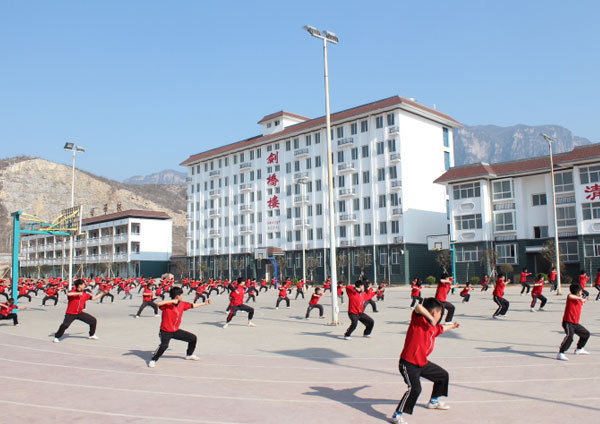



 Being “undecided” is the same as choosing to not do something. At some point the decision MUST be made to take action. This is a highly promoted concept in personal protection. Choosing to do something to protect yourself has a much greater chance of survival than choosing to do nothing.
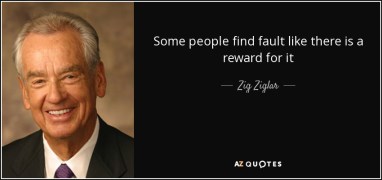 The previous reflected physical and tangible things to make have to make decisions about. The problem is when we can’t take our decision making skills and apply them to non-physical and intangible things. How to chase your dreams is a great illustration here. How long have you hesitated in making a decision about what to do? How many opportunities have passed that would have let you achieve everything you wanted? “And like a fistful of sand, it can slip right through your hands.” This can be anything from finding that perfect job posting and not applying for it because “it’s not the right time” or allowing “I don’t know how” to interfere with moving forward.
 For many years, Tony Robbins has helped motivate people to work for and reach their goals. The idea struck me hard after reading his quote. I recognized the bunch of little things that I’ve been afraid to work on because I couldn’t believe the outcome would be more valuable than what could potentially go wrong. It has left me with more confusion about how to get these things done but that will change as the plan is decided and the work begun. I know that my students have seen some of this occurring but it can’t be helped because I’m not far enough along to have everything smoothed out. It should be seen by them, though, as the journey never ends and the work continues.
 I think that I’ve got a company that has motivated people who have found inspiration in the challenges of my curriculum – official and unofficial. In fact, they can’t get hired into my company without a very long audition that demonstrates their motivation. Their inspiration feeds their motivation to make a wonderful cycle of personal growth. Another quote is to “Hire character. Train skill.” (Peter Schutz) as skill can be taught but character can’t be. I only want people of character to join me in working on these skills.
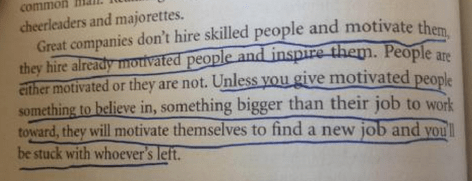 The daily life applications help show these motivated people that there are things bigger than their job to believe in. The students as a group find ways to serve each other and the school, which then leads them to seeing how they can serve within their community (including other special groups that they belong to). I truly believe this as very few people decide to just “quit” our classes. They have life issues that get in the way. Many find their way back but it isn’t as important as them taking these applications with them.
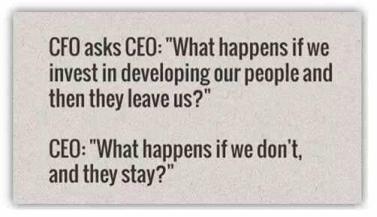 I have students from a wide range of skills and careers. They all come back and continue training because they see how much it helps their world beyond the physical fitness. I greatly enjoy investing in students. They don’t always see it but their effort and development is also their investment in me.
