A Friend of mine has just written and put together his very first martial arts book. The title of the book is Research of Martial Arts. It is a monumental treatise of epic proportions on martial arts theory, practice and culture. 418 pages, 220,000 words. Most of it is dedicated to Chinese martial arts, but a lot is said and written of countless others, and I believe you too will find an interest in it.
More information, as well as 72 whole pages of FREE sample chapters and other interesting articles, are available if you follow this link http://www.researchofmartialarts.com/
Over all the book is very much worth a look if you’re an avid reader martial artist literature. The aim of this book is to present the reader a coherent, clear-cut, and in-depth view of some of the most perplexing and controversial subjects in the world of martial arts, as well as providing a healthy dose of philosophical outlook on these subjects (from various individuals). At its core is the author’s aspiration to build a stronger theoretical foundation for the discussion of martial arts, while addressing matters in innovative ways, which I have come to believe, would help people to better grasp the nature of these arts.
Earlier this week we announced the addition of a new full-time martial arts school to the StudyMartialArts.Org site.
The Bajiquan International Training Center is one of the best places in China to learn the martial art of Bajiquan. All the masters at this school are dedicated and trainined primarily in this art. The Masters skills, the Wu family lineage and knowledge plus the teaching focus on the practical use of the art, the standardized comprehensive curriculum and the Mengcun facility itself are all huge draws.
The Bajiquan International Training Center simply put is one of the biggest and most famous Bajiquan schools in the world. How students will learn Bajiquan at this school as opposed to some other Shaolin or Wudang based schools which teach to a smorgasboard of styles is very different.
The location of the school in Mengcun on the outskirts of Cangzhou City firmly puts the focus on training. Site seeing opportunities in Mengcun and Cangzhou City are limited. With so few distractions for students it makes the 6 day training regime easy to stick to. This is one reason why the facilities at the school are so good.
Additionally, another benefit of the school is that it can easily cater to both western and muslim cultures, this makes the Bajiquan International Training Center an attractive multicultural choice.
Stepping of the plane in Chiangmai, I instantly liked the place. The warmth of the air was somewhat different to the dry February cold of Beijing.
Rather unwisely though I failed to print of the directions and contact number for where I would spend the next 3 weeks training. “Mai Pen Rai” with a single step I’d quickly adopted the Thai go with the flow attitude like a natural, after all I was in Thailand and what better why to honor my hosts.
I’d only just touched down in Thailand and the journey was already exceeding my expectations and I felt completely relaxed about the weeks ahead. What I love about traveling is meeting people. My experiences to date have shown me that people vibrate on different frequencies depending on their state of mind. When people are on similar frequencies it’s natural for them to attract and connect. With my mind on exploration, discovery and anticipation for the journey ahead it would be this energetic principle that had drawn me to meet a fellow martial arts traveler.
Energetic principle or fait I met Dr David Lertzman at the boarding gate at Hong Kong international airport heading for Chiangmai. Both of us where surveying the room for a suitable plug socket to charge our respective apple products.
David a professor from Calgary University in Canada was a man who’d spent the last 7 years working with indigenous tribes in the Amazon rainforest. He was traveling to a place called Pai for 3 weeks of Shaolin training in order to follow a passion for martial arts that remained with him from his youth.
We rearranged our seats on the plane and from Hong Kong to Chiangmai the professor and I swapped stories and enjoyed the back and forth of good conversation.
Walking Street
An instantly likeable and approachable man he had a way of making people around him feel comfortable. I pondered the thought of how this character trait would be one that would serve him well in the rain forests of the Amazon where he would have to communicate with numerous indigenous peoples. I pictured him bounding through the rain forests like Sean Connery from the medicine man.
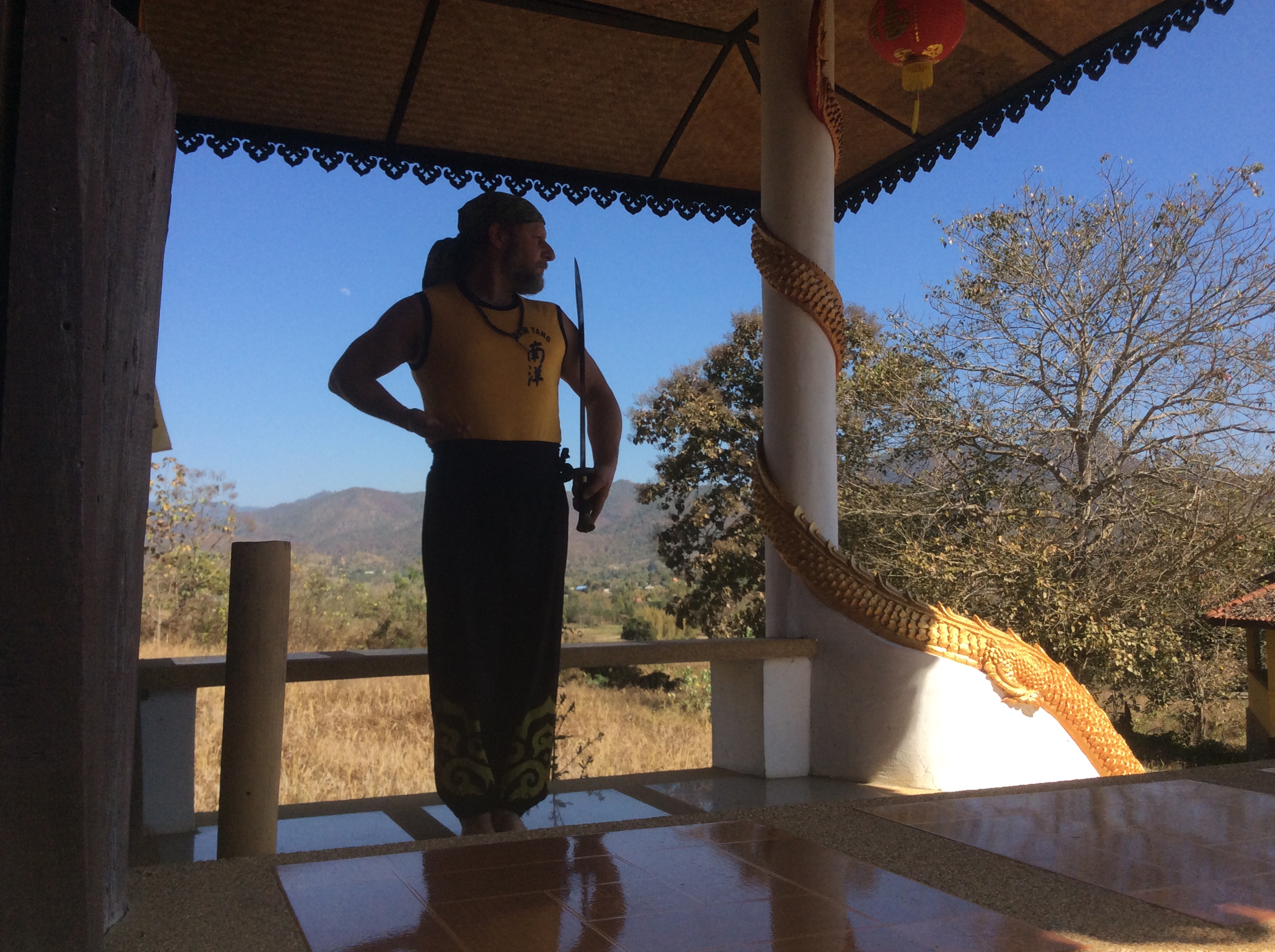
We parted company in Chiang Mai with the intension of staying in touch to share our separate training experiences. He set off for the Nam Yang Shaolin Kung Fu Retreat in Pi and I to meet and train with Sifu Mark Rasmus.
Arriving late at Susan Pailomn it was dark but with a warm welcome and smile I was greeted by Sifu Rasmus. I could feel I was in a good place geographically, mentally and spiritually. Mark showed me to my chalet and we headed out to grab some food.
We talked about our respective martial arts journeys, about the training ahead, about life in Chiangmai, places to eat and places to visit. I new I was in the right place studying with the right master. When we finished it was late.
My first night in Chiangmai my plan ahead of arrival had been to make it to base camp familurize myself with the area and get a good nights rest. Mission accomplished.
Nestled among bamboo groves and trees I woke up from my first nights sleep to the morning chants of Buddhist monks and bell chimes, refreshed and ready to begin my training.The days ahead in Chiang Mai would be filled with excellent tuition under the supervision of Sifu Rasmus.
In addition to this there would be amazing temple visits and location based training, delicious local food and one or two healing Thai massages.Each evening as part of my training regime I would journal my progress. Likewise Professor David Lertzman had also been chronicling his training experience in Pai and was emailing the details of what would become a great blog for those thinking about training at Nam Yang Shaolin Kung Fu School. This is a blog I will post at a later date on the SMA bloggers wordpress site.
The School
Before we parted company in Chiangmai I’d told David about the Study Martial Arts project, about our mission statement and company ethos. I also explained how I was always on the lookout for quality schools and masters to work with, so any insight he had about the school would be much appreciated.
With David’s regular up dates and emails filling my inbox with detailed accounts of his experience I knew that if an opportunity presented itself I would head to Pai, visit the school and catch up with my fellow martial arts adventurer.
On the second week of training a Thai national holiday fell on the Friday. Intuitively, Sifu Rasmus a keen motorcyclist proposed the idea of a road trip to Pai. With his help I rented a scotter and followed Sifu Rasmus along the beautiful, and somewhat infamous winding road from Chiangmai to Pai. We arrived in Pai dropped off our bags then headed out to explore Walking Street.
Walking Street Market in Pai is located on Rungsiyanon Road. It is a shopper’s paradise offering a wide range of souvenirs big and small, unique handicrafts, lacquerware and hand-made clothes some of which come direct from highland villages or local artists. Along with these gift stalls and shops I delighted in the sights smells and tastes of the authentic street food. Thai, Chinese, Western in such variety all fresh and delicious. The Thai street food experience was living up to the hype. The following day a Saturday would be a day off from training for the students at Nam Yang, so I explored Pai a little soaking in the Friday night before returning to my hotel. After breakfast I headed out to the school to meet David and also one of the instructors Eddie.
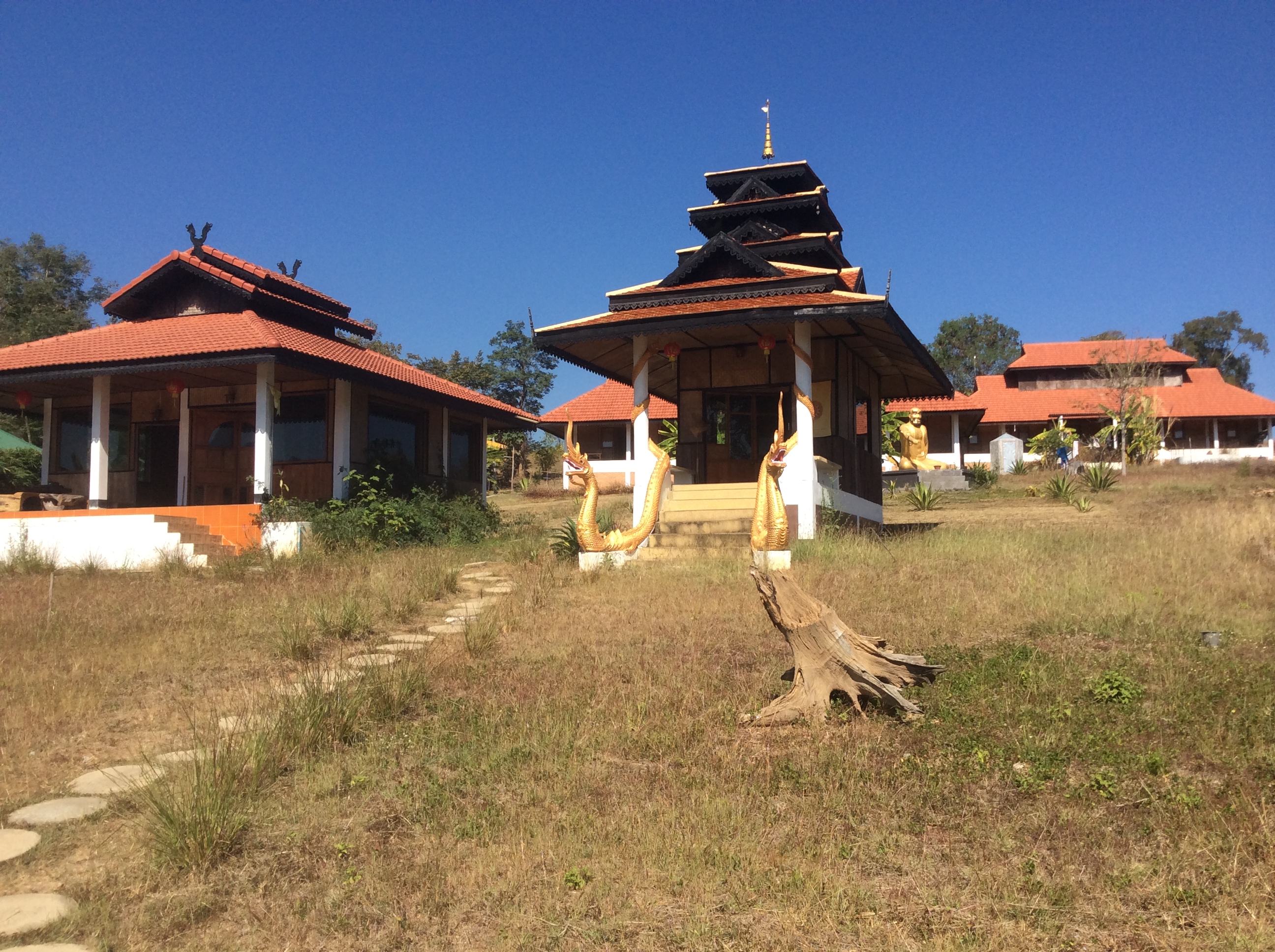
The school a ten minute bike ride away from my hotel is on the outskirts of Pai close to its small airport. David met me and showed me around the school and introduced me to some of his fellow students.
Mork Fa Waterfall
Some of these students were beginners studying martial arts for the first time, others had been students who had studied in China and were somewhat jaded of the experience and some were seasoned and experienced martial artists. After David showed me around he demonstrated one of the forms he’d been working on, then we sat and took tea with Eddie who at the time was one of the schools instructors.”Out door training areas”Normally the journey from Chiangmai to Pai takes 3-5 hours depending on your pace. I’d recommend taking it slow and taking in the scenery. The road itself is super fun but beware, those that get carried away and go to fast might end up as one of the roads numerous casualties. Both experienced and inexperienced drivers have cut short their holiday on this road which snakes it’s way up and over the mountains to Pai.
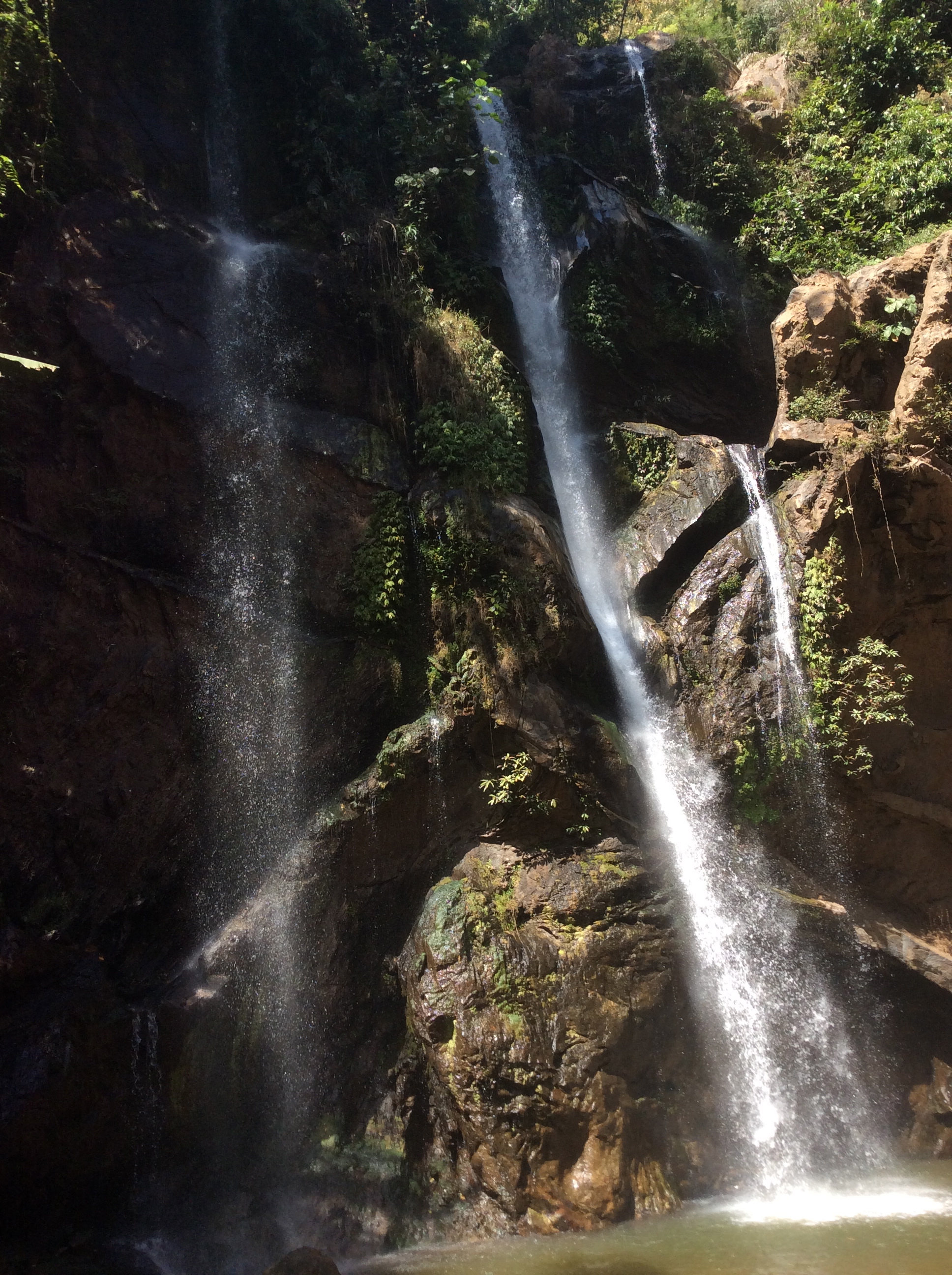
We stopped midway for lunch on the journey up and on the return I cooled down with a swim at this amazing waterfall at Mork Fa. For more information on martial arts training at this school or training experiences throughout China and Thailand visit the http://www.StudyMartialArts.Org website.
The StudyMartialArts.Org website has discounts on martial arts training and travel experiences as well as exclusive offers only available to those who book through SMA.
楊家太極拳各藝要義 武術偶談 THE SKILLS & ESSENTIALS OF YANG STYLE TAIJI BOXING and MARTIAL ARTS DISCUSSIONS 黃文叔先生著 by Huang Wenshu [Yuanxiu] [published by 國術統一月刊社 Martial Arts United Monthly Magazine Society, June 15, 1936]
[translation by Paul Brennan, June, 2014]
–
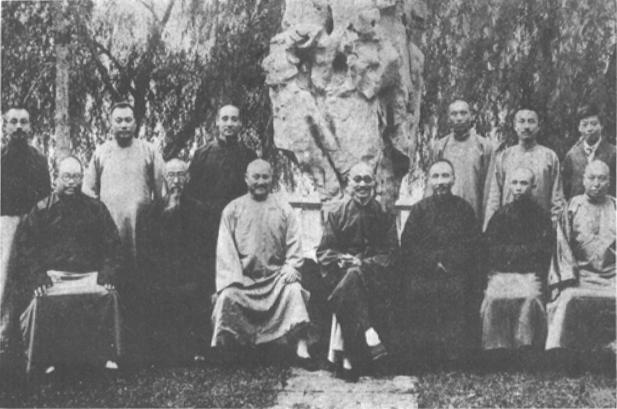
國術界泰斗合影 Group photo of leading figures in Chinese martial arts: 景中人自右而左前列田紹先鄭佐平杜心五李芳辰劉百川孫祿堂楊澄甫後列沈爾喬黃文叔褚桂亭高振東錢西樵蘇景由 The people in this photo are (from right to left): Front row: Tian Shaoxian [Zhaolin], Zheng Zuoping, Du Xinwu, Li Fangchen [Jinglin], Liu Baichuan, Sun Lutang, Yang Chengfu Back row: Shen Erqiao, Huang Wenshu [Yuanxiu], Chu Guiting, Gao Zhendong, Qian Xiqiao, Su Jingyou
–
燕趙國術名人合影 Group photo of famous martial artists from Hebei [from right to left]: 黃文叔 褚桂亭 蘇景由 王向齋 趙道新 張兆東 李星階 高振東 孫汝江 李子揚 Huang Yuanxiu, Chu Guiting, Su Jingyou, Wang Xiangzhai, Zhao Daoxin, Zhang Zhaodong, Li Xingjie, Gao Zhendong, Sun Rujiang, Li Ziyang
–
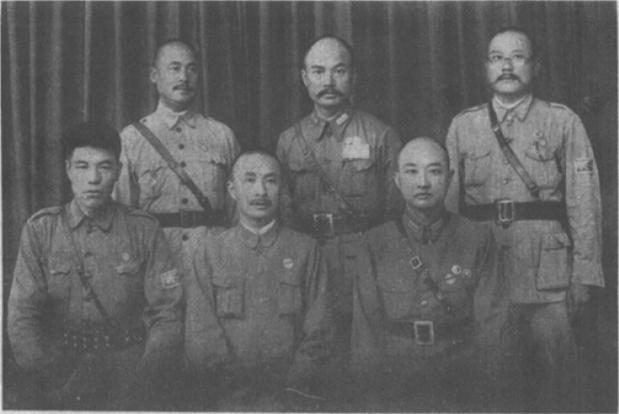
河北國術名人合影 Group photo of famous martial artists from Hebei: [back row, right to left:] 騎兵團國術敎習 方瑞臣 Fang Ruichen, cavalry corps martial arts…
Let’s start this essay, and it is an essay, with a little test. No wait come back, don’t worry, this will be a fun one I promise. Give yourself thirty seconds to read through the following list of words. It’ll help to say them out loud as you read, and visualise items as you go. Ready, set, go:
Finished? Right no cheating, cover up the words and write down as many as you can remember.
How did you get on? If you got 10, 11 or 12, stop reading this and go join Mensa right now, you’re a genius. If you got 1, 2 or 3, maybe try again later when you’re not driving, or fall-down drunk. Really I’m not being funny, there’s probably something wrong with you if you got 1-3. Get help.
If you got anything between 4 and 9, congratulations – you’re average. You’re in the normal range of people who take this test. If you got 6, 7 or 8 then you’re right at the top of the bell curve, in the good company of the vast majority of the population. The most average of the average, if you will. If you were a colour, it would be beige.
Well that was a jolly nice bit of fun. Now that we’ve broken the ice you and I, keeping your score in mind, let me tell you a little tale…
There’s a city in Latin America which bears the lofty accolade, quite literally, of being the highest metropolis in the world – rubbing shoulders with the mountains and the sky at a dizzying 2,800 meters above sea level. It’s so high that if you fly there from a lower locale, you run a very real risk of altitude sickness as soon as you get out of the airplane – not, perhaps, the best way to start a relaxing holiday.
This is why many people choose instead to fly to a nearby city near the coast, where the mountains dip their toes into the cool surf of the Pacific Ocean. There you can catch a train up the mountain, gradually acclimatising to the altitude as you ascend. Well, I say gradually, but the path from coast to crest is nothing of the sort scaling, as it does, the sheer face of the mountain.
To do this, the train has carved tracks out of the very stuff of the mountainside and to make its’ ascent it zig-zags its’ way across the slope, reversing on itself at the end of each section to make the next climb.
This takes time. The flight from city to city takes 50 minutes, the drive five hours, and the train a stately four days to reach its destination. But to dismiss such a journey based on time alone would be to miss out on some astonishing views as the lush, equatorial rainforest that bursts from the coast gradually dissolves into green rolling hills, which in turn give way to purple, jagged mountain tops.
And what a train! We are not talking about some creaking metal worm in whose innards you perch uncomfortably on plastic seats, sipping bad coffee from a polystyrene cup and nibbling a dried, curled egg sandwich. No in this train the stately Victorian carriages are made of the finest carved wood, dripping with luxury and excess. The sound is deadened by the rich, deep carpets and the thick bound curtains whilst tea is served from the finest silverware and china.
All this, and the gentle incline allows the traveller by train to reach the top energised and ready to explore the city, whilst his counterpart alighting an airplane clutches his throat and collapses, vainly clawing the sky as he gasps for oxygen from the thin, mountain air….
I wonder, if we asked these two men as one draws a satisfied breath and takes in the view, and the other takes panicked gasps for oxygen as he drops to his knees, how many words from the list at the start of this story they might recall. One no doubt will breeze through as he gently takes satisfied sips of air whilst the other will stare at you confused, pre-occupied perhaps with the one single dominating thought of his continued survival. I won’t spoil the surprise by telling you which is which.
A man I know, let’s call him Ted, recently made such a trip, which as you can probably guess is why I’m able to wax so lyrically about this little-known attraction. True to form, the gentle ascent meant he positively leaped from the train, ready to explore the beautiful city it took him to backpack on his back, camera at the ready. Eagerly Ted strode forward, and out of the station. Here he paused, taking in the extended views of rooftops vanishing into the distance; the crystal clear air making the distant buildings look like a quilt of Lego, or an over-zealous domino track made by a particularly enthusiastic nine year old.
And then, with but a cursory glance to those asphyxiating at the airport, Ted set off. And immediately into a local man coming the other way, who spilled hot coffee all over our hero’s shirt, trousers and rucksack. Luckily the local was not annoyed, more troubled in fact by the mess he’d made of Ted. He began to help, padding with a hankie as Ted tried to deal with the hot coffee on his shirt and trousers, the fear his camera could be ruined, and this man industriously patting at his clothing. It was at this point that another man arrived on the scene, equally concerned, and began helping Ted off with his rucksack as the coffee was seeping into the pockets, and running down Ted’s back. Off came the rucksack, which the man then appeared to drop on the ground by mistake. Another man appeared, picked up the rucksack, and in the blink of an eye all three dissolved into the crowd.
And Ted was left alone, dazed, and with the growing realisation that he had just been mugged.
Speaking about it afterwards, he told me his strongest memory was just how good the four people who did it were. There was no noise, no violence, no force – just a well rehearsed set of actions that left him on the ground without his rucksack.
“By the time I was off my knees, they had gone. I still have no idea where they went. The hotel doorman saw nothing. There were people in the street but nobody reacted. Everything was normal and quiet, apart from the fact that I was standing on the pavement, without my rucksack and with no idea where it was and these people had gone.”
I should mention here that Ted’s not your average holiday-maker. He’s a seasoned traveller who has seen half the globe over the years; he’s a martial artist of 20 years experience, and he’s an ex-professional rugby player. And all that was for nought because of seven little things.
Seven little things. Spilled coffee. Wet clothes. Wet rucksack. Apologising, fussing man. Second, fussing man. Dropped rucksack. Third man.
The human brain, constantly exposed to thousands of points of stimulus every second of every day, is actually only able to process and retain at any one time, seven simple things. That’s why you could only remember about that many from the list of objects at the beginning; it’s also why it takes three men twenty seconds to relieve a world-wise, very experienced traveller of a rucksack that was securely attached to his back, and vanish.
I had the fortune, the other day, to be walking along the road behind one of those ‘teenagers’ they have these days. It was of what I believe is called the ‘Hip-Hop’ variety; you know, the ones that wear lopsided baseball caps precariously balanced on their lopsided heads; the kind who somehow manage to appear to be constantly walking round in circles, even when they’re going in a straight line, as they saunter from one street corner to the next with their adorable lopsided strides.
I know I’m not the first to draw attention to the peculiar pack-conforming behaviours and fashion choices of the youth of today, and to be fair who am I to judge these attempts to belong – those who have read How Not to Get Hit will be all too aware of my own personal fashion choices from those lost years (it’s too painful to go back over here, buy the book – but if I were to tell you a doorman once exited me from a nightclub using the item he could get the best grip on, which happened to be my pony tail, you’ll begin to get the idea).
Still, even though I’m probably the last person who should be casting linguistic missiles from my cosy glass-pained abode, I can’t help thinking that of all the peculiar attire with which these ‘teenagers’ tend to adorn themselves, their method of wearing trousers is, frankly, witchcraft.
I don’t know if you’ve ever tried to walk down a street with a pair of jeans sitting below your butt cheeks but frankly, it’s impossible. I can only assume that those precariously balanced baseball caps grant these ‘teenagers’ the magical ability to defy the laws of physics. Or perhaps it explains the lopsided walk, as they’re actually clenching their butt-cheeks tighter than a doorman clutching a ponytail in a desperate attempt to keep their hippety-hoppety jeans above their hippety-hoppety knees.
For god’s sake chaps, if you’re reading this, buy a belt. Not only will this free up your butt-cheeks for party tricks such as cracking walnuts, such must be your toning after years of clenching; not only will you discover walking in a straight line isn’t just something other people can do; not only will you be able to wear your comfy old worn-out underwear out of the house since two-thirds won’t constantly be on display; you’ll also learn a valuable lesson in self defence. Honestly.
You see belts aren’t just good for holding up trousers; they’re also a fantastic way of finding out where your centre of gravity is and this, my friends, is the road to the nirvana of combat.
Accessing your maximum power is all about identifying and using your centre of gravity. Taking away someone’s strength is all about destabilising their centre of gravity. Throwing someone is all about destabilising their centre of gravity. Tripping someone over is all about destabilising their centre of gravity. Neutralising an attack is all about destabilising the centre of gravity. Winning fights is all about destabilising the centre of gravity.
Power comes not from your muscles, it comes from your balance. This one’s easy to prove – try hitting a punch-bag as hard as you can whilst standing on one leg. Very little will happen save for an embarrassed cough from the bag and, perhaps, the floor hitting you. This is down to the fact that to realise the force in your skeletal stricture you need to anchor that structure against something. To anchor it, you need to be stable yourself or some of that force will be lost in your own, unplanned movement rather than transferring all the energy into your target. Ideally you would create this using three points of contact with the ground. Sadly most of us only have two, so we use our centre of balance as the third anchor point – moving it in relation to our feet to maintain balance and transfer energy into a target, rather than our own wasted movement. Think about those cool little desk toys from the 80’s, with four suspended metal balls knocking into each other. It’ll help.
Once this is understood in your own body (give it a few years), then it becomes a simple task to understand how an opponent is creating force (give it a few more years) and, through manipulation of their centre of gravity, nullify this force as the energy they would have put into a strike must be redirected into adjusting their balance, or falling over.
Throwing is a simple matter of finding your opponents centre of gravity and using your own as leverage to move it. If you’re big, and they’re small, you can move someone without leverage. The other way round, though, and you’ve got a problem. Have you ever tried to pick up a sack of potatoes? Actually no, you probably haven’t, this isn’t the 19th century after all. Um, modern analogy… ah – got it.
Have you ever been to IKEA and had to pick up a really heavy bag full of home furnishings? Think about how you use your bum as leverage to get the thing over your shoulder – you lift it halfway, and then kind of move your bum under it, yes? Well, that’s it – you’re moving your balance to a point where you can move the weight around through leverage against your core body, rather than trying to use your muscles to shift all those lampshades, picture frames and washing-up brushes (isn’t it odd how you always seem to leave with one of those washing-up brushes from the escalator).
To throw someone, you have to find their centre of gravity, move yours to a position where you can create leverage, and allow your opponent to ‘fall’ around your own, stable centre.
Tripping is similar to throwing, except instead of creating leverage against your opponents centre of gravity, you’re using their imaginary third leg to make them fall. No sniggering at the back – your third leg is actually the shifting point of balance created by your centre of gravity to stop you falling over, and ladies have it too. We all stand on two feet; when we move, we basically start falling over towards our ‘third leg’, or at least where it would be if we had one, and then stick a foot in the way. By placing a foot where our third leg should have been, we get it under our centre of gravity again to stop falling over and repeat (except those hippety-hoppety teenagers – God only knows how they do it).
So, to throw someone, we need to make sure that our own centre of gravity is rooted and stable, find the point where someone’s third leg is / should be, move their body toward this point (you’ll be surprised at how little resistance you encounter in doing this) and stop their leg from moving under their centre of gravity again. Hey presto – they are now falling.
Confused? Yeah me too; nobody said this was going to be easy. But trust me, you can’t go wrong if you start by buying yourself a good sturdy belt.
Cover of Chinese Kung Fu by Wang Guangxi. Cambridge UP, 2012.
Wang Guangxi. 2012. Chinese Kung Fu. Cambridge University Press. 115 pages.
Introduction
The prestigious Cambridge University Press published not one but two books on the topic of the Chinese martial arts in 2012. Most students of martial studies will already be familiar with Peter Lorge’s volume Chinese Martial Arts: From antiquity to the Twenty-First Century. This was the first monograph by a major academic publisher attempting to provide a single volume introduction to the history of the Chinese fighting systems. As one would expect Lorge’s work has been discussed and reviewed in a number of places since its release
Less well known in martial studies is a slim volume by Professor Wang Guangxi titled Chinese Kung Fu. The author of this second study brings impressive credentials to the table. According to his biography on the Cambridge…
The following modest wooden house is where I stayed in Chiang Mai, Thailand when I trained with Sifu Rasmus. Sifu Rasmus teaches Taji Fajin, Hermetics and Metaphysics in this idilic setting nestled at the foot of a mountain and within ear shot of a buddhist retreat.
Leaving the cold and smog of Beijing behind I headed to Chiang Mai for 1 month of intensive training.Sifu Rasmus courses run from 1 to 12 weeks or longer depending on the content. His students tend to be instructors or masters who are looking to add greater depth to their knowledge or a more internal flavour to their art.
During the training period Sifu Rasmus would from time to time hold his class in the grounds of some of Chiang Mai’s most spectacular temples. In this visual blog I share three of my favorite. Below you will see a picture of an impressive nagga (Nāga, a group of serpent deities in Hindu and Buddhist mythology).
Wat Umong
A place were I began training the air element, metaphysics and meditation.
Wat Umong was built in 1927 by King Manglai of the LAN dynasty underneath the stupa above there are caves and shrines, and in the grounds you can find a garden of broken sculptures and a fasting bodhisvista. A place of tranquility where resident monks provide willing students a meditation retreat.
“Where talking trees have words of wisdom”
The hidden jungle temple of Wat Palad below has a special energy and was overall my favorite temple in Chiang Mai.
“The monastery at the sloping rock, visited by the God of the Earth”
3 transformations at Wat Chedi Luang.
“Please, come to the monk chat”
The ancient temple of Wat Chedi Luang in the centre of Chiang Mai’s walled city is one of the most important temples in Chiang Mai. It houses the ashes of the 14th century King Saen Muang Ma’s father. The big stupa is guarded on each of its four sides by two mythical serpent naga’s at the base and further up by rows of elephants. Peaceful in the evening the stupa vibrates with energy. Monks and nuns chant sutras and welcome conversation with travelers.
Climbing to the top of Wat Phra That Doi Suthep.
“Wat Phra That Doi Suthep’s Emerald Buddha overlooking Chiang Mai”
I visited this temple on the festival of Makhachkala Bucha. The festival honours the event when 1,250 of Buddha’s disciples congregated to hear an important sermon.Buddhists carry flowers, lightened candles and joss sticks while walking around the stupa three times on the day and night of the full moon in February.
Although this visual bog focuses on the temples I visited while training in Chiang Mai. It would be a miss of me not to say something of my training time with Sifu Rasmus. So I’ll keep it short and simply say that training with Sifu Rasmus was an excellent decision that helped demystify some of the secrets of Taichi fajin, as well as principles and themes explored in hermetics and metaphysics. Overall the course has been a great help for my own practice and I’d like to say a big personal thank you for Sifu Rasmus, guidance, welcome, coffee and of course friendship. Sifu Rasmus’s YouTube Channel – http://www.youtube.com/user/SifuMarkRasmus
Zhou Zhen Dong is the head of the Yantai branch of Taiji Mantis. The sole inheritor to his teacher, Zhang Kai Tang, he teaches Taiji Mantis as well as Hao family Meihua Mantis. Highly respected both in China and the west, he has taught students from many countries, including UK, USA, Austria, Hungary, Russia and Japan as well as various parts of China.
Zhou Zhen Dong performing “facing the heavens elbow”
Zhou Shifu, please could you tell us how you started your training in Kung Fu
My first teacher was called Yu Zhi Ru. I was around 15 when I started training with him.
Master Yu was a Chinese doctor. He would read people’s pulse and prescribe them herbs for a small fee. He did this secretly. He was very skilled, you didn’t need to tell him what illness you had, he could tell by your pulse. Actually I met him because he was a friend of my grandfather. When I was a child he often came to our home, and sometimes he talked about kung fu, showing us some moves. I was interested, and started learning “sheng yuan men” (saintly ape style) from him. The forms included “bai yuan chu dong” (white ape exits the cave), “bai yuan kui yuan” (white ape spies the orchard), “bai yuan tou tao” (white ape steals a peach), “bai yuan gun” (white ape staff), “bai yuan xian tao” (white ape offers the peach), “bei dou quan” (fist of the north star). These are derived from a Chinese myth.
Could you share the myth for those unfamiliar
There was a white ape. His father died and then his mother got ill from depression. White ape heard there was an orchard on a mountain where the peaches of immortality grew every 500 years. He decided to get his mother a peach. So after leaving his cave he set off on a long journey. When he finally arrived on the slopes of the sacred mountain, he found the orchard, first spying it from afar to see if it was guarded. Seeing the coast was clear he ran right in and stole a peach. However he was caught by Er Lang and the two of them had a staff fight. Bai Yuan begged him to stop attacking. Once Er Lang realised Bai Yuan could talk he asked why he stole the peach. Moved by the story of his mother, he agreed to give him one peach. Bai Yuan returned home and gave the peach to his mother. Surely, his mother was cured, and so they bowed down and paid respects to the god of the north star.
Master Yu had a huge black cat which he really loved. That time China was really poor and people were hungry. One day the cat stole some neighbours dried fish, and they caught it and killed it. My teacher became really depressed and got sick. At that time, Master Yu was over 80 years old, and his wife was 30 years younger than him. He was retired at home, and she was still working. Everyday after school I helped to look after my teacher. He told me to go out and buy ginger, leek and radish, and then cook it and put it in a cloth. He then put the cloth on his body to sweat out the sickness. After doing that for a while he started to get better. But then after a year or two, he got sick again, this time more serious. He stopped teaching me kung fu as he got weaker, and taught me pulse reading and Chinese medicine, making me read a lot of old books I didn’t really understand. His wife and I looked after him until he passed away at 85. Me and his wife carried his body to be cremated.
How did you come to meet Zhang Kai Tang
Zhang Kai Tang was my neighbour. My sister was engaged to his son and she introduced me. Master Zhang asked me to show him what I learnt, so I performed “bai yuan tou tao”. I used all my power. That time, everybody said I was really good. But he wasnt impressed at all. He said I was just using my arms, and had no body power. He offered to teach me the form “beng bu”. Before, I never imagined kung fu could be so difficult! Also, at that time, I didn’t understand much, what was Taiji Mantis, what was Meihua Mantis. Slowly Master Zhang explained. Bengbu is Taiji Mantis, which comes from Cui Shou Shan. He didn’t plan on teaching me anything more. But I kept hanging around, determined to learn more. So he asked me what do I want to learn, Meihua Lu or Chuan Zhi? He showed me a few moves. I thought Chuan Zhi looked nice, so I said Chuan Zhi. He explained Chuan Zhi was Meihua Mantis, from the Hao family. Chuan Zhi was 4 forms, 20 roads in total.
Zhang Kai Tang
Can you tell us something about Zhang Kai Tang
Zhang Kai Tang studied with Hao Heng Xin for six years. Hao Heng Xin was one of six brothers who were the masters of the Hao family Meihua Mantis. After that, his uncle invited Cui Shou Shan to be his live in teacher for another 6 years. That time was very strict, a private teacher who ate and slept with them. In the morning, they did iron body training, trained kung fu all day, then at 11pm every night did meditation. Zhang Kai Tang had 2 brothers, but they couldn’t take the harsh training and dropped out.
So first he learnt under Hao Heng Xin, later under Cui Shou Shan. Can you tell us something about these great masters
Hao Heng Xin was famous for his iron palm. It was said he could strike a match on his hand. Zhang Kai Tang learnt this skill from him. One time, during sparring, he hit his partner in the face. It made a cut on his eye which made his whole face swollen. This was due to the medicine they soaked their hands in before and after iron palm training. Hao Heng Xin had a student called Su Shi Chang. He was really strong, as he pulled the rickshaws for a living. He was out fighting one day and beat his opponent. He came back really happy to brag to his master. Hao Heng Xin was meditating, and got annoyed by his disturbance. Master Hao slipped his shoes half on and stood up with his eyes closed, offering to show the student some real skill. His left hand behind his back he held out his right hand softly and told the student to attack him. As soon as the student moved in, Master Hao palmed him in the face, cutting his eye. The next day it was swollen so bad he couldn’t even open it.
After 6 years, he learnt everything from Hao Heng Xin. His uncle offered to find him “a top level master from Laiyang, the home of mantis”. So he brought Cui Shou Shan to his home to teach the 3 brothers. As soon as he met Master Cui, he was really impressed by his depth of knowledge. His first teacher was really angry, and got his brothers together to beat Master Cui. My teacher went to Master Hao and explained, “You are always my shifu, I learnt everything from you. But I want to keep learning and developing, Master Cui has a lot to teach me.” My teacher always sent gifts to Master Hao during festivals. All his life he said “I have two masters, Master Hao and Master Cui.”
Cui Shou Shan
After 6 years, Master Cui left at the invitation of Sun Xiang Ting to teach in a school there. Hao Heng Lu (elder brother of Hao Heng Xin) approached him saying “your boxing is great, really great, but you still haven’t mastered all the weapons yet.” He then asked my teacher to teach Master Cui’s style in his school and taught him Damo Jian (bodhidharma sword), Baxian Jian (eight immortals sword), Qixing Jian (seven star sword) and Meihua Qiang (plum blossom spear) in return. Master Cui was really angry by this and forbid my teacher to continue doing this.
Could you explain about your training during the Cultural Revolution
During the Cultural Revolution, traditional martial arts were classed under the “four olds”. Any kind of old culture or antiques were forbidden and destroyed. All you were allowed to do was study “Mao Ze Dong thought”, sing “socialism is great” etc.
As far as traditional arts, they were replaced with modern wushu. “first level fist” “second level fist” “first level sabre” “second level sabre” etc. national regulated forms. This included the 24 posture form of taiji. You had to learn all the different Mao Ze Dong books and quotes, life were really boring. There was nothing you could do to enjoy yourself, no happiness. On top of that, life was harsh. Everything was planned and provided by the state. How much meat and grain you could eat every day was regulated.
So if you were engaged in traditional activities, people would condemn you, persecute you. So that time we had to train in secret. In my teacher’s home, or at night after dinner, I would find a dark place with no people to train. I was seen by people from time to time, if people saw me, they would leave immediately, didn’t dare to get involved. Actually, not many people really went outside at night, they were so poor, so after eating, normally they just slept. And there was no lighting outside anyway.
During the Cultural Revolution, the red guards just came into everyone’s homes, and took away anything old. Nobody could say or do anything, they took what they wanted and left. If you refused, they put a hat on your head and beat you in public. Called you a “right winger”, “bad element”, “counter revolutionary” etc. After Deng Xiao Ping came to power, these words were banned from use, and the hats were all burnt. He said we are all equal, nobody can persecute anyone else.
When the Japanese invaded China they banned martial arts training, calling it “iron man training”. That time my teacher buried his weapons and iron palm urn under the ground. After several years, the Japanese were defeated, he dug them up. But they were all rusted. The iron palm urn was totally wrecked, but he restored the weapons. He taught his oldest son with his sabre, and they would cut bricks with it. Then during the Cultural Revolution, this sabre was taken away again.
What about your view on the present state of martial arts in China
Nowadays, a lot of westerners like kung fu. In the beginning, westerners didn’t know what kung fu really is, and went to universities, or other places like shaolin temple, to learn kung fu. Cartwheels, flying kicks, actually that’s the same as gymnastics. Real kung fu is “among the people”. Slowly, westerners started to realise this, and are now looking among the people, rather than learning “flowery fists and embroidered kicks”, in the old days it was called “chou gong fu” “jun bashi”. Running around the hall leaping around, that isn’t martial arts, it’s gymastics or “yishu”. So after Deng Xiao Ping made the “open door policy” China realised the treasure of traditional culture and is trying to revive it. Tanglang quan has been included in the list of “intangeible cultural heritage”.
Nowadays due to higher living standards and especially the “one child policy”, Chinese people are afraid of “eating bitter”. This means to endure hardship. This is especially the case in the cities. If you look in the big kung fu schools, the kids are all from poor rural areas. City kids will learn piano, English, dance etc. a lot of old masters have nobody to teach, their arts die with them. A lot of westerners come to China, train hard, respect and love the art; of course a teacher will want to pass their art onto them. Before, a lot of old masters were persecuted, killed, we learnt in secret, we couldn’t open a school or openly teach people.
Zhou shifu with students, Chinese and western
Anyway, a lot of old styles are being lost. In fact, I believe, in 20-30 years, if Chinese want to revive our arts; we will have to go to the west to learn kung fu. Kids aren’t interested, parents don’t want their kids to learn.
Thank you for your time, Zhou Shifu
This interview was conducted by Will Wain-Williams. For more information on his teacher, and on praying mantis kung fu, you can visit his website here. http://www.monkeystealspeach.co.uk
You know, sometimes it’s easy to write a blog. Sometimes you’ll be walking along the street and you’ll see something, or something will happen, and you’ll think “that’s it!” and suddenly you’ll have a topic, or good entry into a point, or both and some deep insightful point about personal safety would be just around the corner.
A couple of years ago that kind of thing used to happen to me all the time, travelling around China for a year it’d be a strange day if I didn’t find something I could write about. These days, sadly, my experiences are not such blog fodder – my horizons have shrunk to England, a regular 9-5 job, a mortgage, a dog.
Well, no dog.
But I like the image.
And I want a dog.
Such a sedentary lifestyle also comes with its own problems – you don’t realise how much you moved in a day until it’s gone, and your commute consists of stumbling downstairs into the spare room (I work from home). If you’re over 30, this takes its toll – stiffness, low energy, short breath. If you’re under 30, you bastard, don’t worry you may not understand yet – but you will…
So, to try and defend against my creeping atrophy, I dedicated my early mornings to stretching, and breathing. Self defence against sloth, if you will. For me it was Qi Gong, a series of Chinese stretches and diaphragmatic breathing techniques using dynamic tension.
If that sounds a bit confusing, don’t worry it sounds harder than it is but you’re not alone – almost nobody I know knows how to breathe. Oh sure they think they do, and they manage to do it well enough to not collapse in a dying heap on the floor every 20 seconds, but trust me they don’t. No offence but there’s a pretty good chance that you, reading this, don’t know how to either.
And you know what, I’m not sure why. Babies know how to breathe – you watch the wee nappy wearing tykes as they trot along; you can see their belly thrusting in and out as their lungs remain pretty still. That’s because they’re breathing with their diaphragm. In fact you watch a running horse or dog, even an angry gorilla – diaphragm, diaphragm, diaphragm. (although if you are watching an angry Gorilla to be fair the fact that there is an angry Gorilla at close proximity is probably the main thought that’ll be running through your head. Rather than ‘ooh, look at how he uses his diaphragm to do such a fancy roar’).
Somehow, along the way, we forget on our path to adulthood and replace the correct muscle memory for breathing with a shallow, chest-led breathing that only accesses about 60% of our total lung capacity.
Now this is fine for our modern aged sedentary lifestyle of sitting at home, sitting in a car, sitting on the train then sitting at a desk. You don’t need much oxygen for that, and you’re not getting much. Job done.
The problem is, when you’re suddenly put into a high-stress situation like, say, being attacked, you’re not going to be able to cope. As soon as the adrenal response kicks in, your blood vessels dilate so that more blood can be pumped around the body, giving more oxygen to your limbs and organs to function at a much higher rate for short periods of time – to fight back, run swiftly in the opposite direction, or both. Any which way, you’re going to need oxygen, and lots of it.
The problem is that with all that shallow breathing you’ve spend all that time training your body to do that’s what you’re going to do in a pickle, and your body is making much higher demands of your oxygen supply, you’re just not going to get enough fuel to get the job done. It’d be like trying to drive a race car with half the sparkplugs, or running a steam train with half the coal. Or an angry Gorilla with half the bananas. Or something.
My advice, for what it’s worth, is to learn to breathe properly and then do it – all the time. This is easier than you might think. Qi Gong does it for me, but you can also get it from most traditional martial arts (with a good instructor), Tai Chi, Yoga, Pilates, a good fitness instructor or even an actor or speech coach
Through QiGong and martial arts I learnt how to access breathing and use it to add power to movement, but I actually learned most about how to actively engage the diaphragm through a speech coach.
Whatever the source they key is to do it. As much as you can. When sitting, walking, exercising, everywhere. Because you need to turn it into a muscle memory, make it normal, replace that horrible shallow lung-breathing I see everywhere with some lovely, deep, diaphragmatic breathing.
Then, and only then, in a high-stress situation, will you will the correct muscle memory response kick in and get your enough of the 02 good stuff to do what you need to do. Your body will be primed to squeeze every last drop of goodness from the air and turning it to energy to fight back, escape, survive.
It’ll also help you sleep, and concentrate, and reduce stress, and increase energy and if you’re really luck, tenuously link a dull life of lethargy to a fundamental lesson on self defence for a blog promoting an awesome book.
 A Friend of mine has just written and put together his very first martial arts book. The title of the book is Research of Martial Arts. It is a monumental treatise of epic proportions on martial arts theory, practice and culture. 418 pages, 220,000 words. Most of it is dedicated to Chinese martial arts, but a lot is said and written of countless others, and I believe you too will find an interest in it.





 Leaving the cold and smog of Beijing behind I headed to Chiang Mai for 1 month of intensive training.Sifu Rasmus courses run from 1 to 12 weeks or longer depending on the content. His students tend to be instructors or masters who are looking to add greater depth to their knowledge or a more internal flavour to their art.


