The history of Jiujitsu and Kempo. Part 4

Wabi-Sabi: Martial Arts in a Warming World — Kung Fu Tea

Martial Arts and Politics: The Big Picture The latest (dire) global warming report produced by US government scientists is inspiring conversations everywhere. I overheard a particularly interesting discussion between two colleagues earlier this week which focused not so much on the technological or policy measures that would be necessary to deal with […]

via Wabi-Sabi: Martial Arts in a Warming World — Kung Fu Tea

2018 Christmas Shopping List: Martial Arts Equipment and Long Reads to Get You Through the Winter Months

benjudkins's avatarKung Fu Tea

Bernard the Kung Fu Elf riding Shotgun with Santa. (Source: Vintage American Postcard, authors personal collection.)

I am not going to lie. The annual Christmas list is my favorite post of the year. So welcome to Kung Fu Tea’s seventh annual holiday shopping list!  Not only are we going to find some cool gift ideas, but hopefully this post will inspire you to make time for martial arts practice during the festive season.  Training is a great way to deal with the various stresses that holidays always bring.  And Christmas is the perfect excuse to stock up on that gear that you have been needing all year.

This year’s shopping list is split into four categories: books, training equipment, weapons, and (for the first time) “gifts for the martial artist who has everything”. This last category will focus on experiences rather than objects. I have tried to select items at…

View original post 3,282 more words

The Hero with a Thousand Holds — The Tai Chi Notebook

A quick shout out to this new podcast from Ruadhán MacFadden. Inspired by a mapping project he created on various historical and cultural aspects of grappling arts. The map contains 74 different folk wrestling styles and shows their location in the world. The podcast focusses on all the different styles, starting with Irish Collar and […]

via The Hero with a Thousand Holds — The Tai Chi Notebook

Why Every Nurse Should Learn Martial Arts

When you think of qualifications that a nurse should possess, the ability to throw a good punch is probably at the bottom of the list. Nurses, however, can greatly benefit from learning martial arts. According to a survey by the American Nurses Association, over a fifth of nurses and nursing students surveyed reported being physically assaulted by patients. Learning a martial art can give nurses the skills and the confidence to protect themselves and their coworkers while on the job. What’s more, it’s also good for the mind, the body, and the soul. Here are just a few of the ways that martial arts can benefit members of the nursing community.

Keep Physically Fit

Physical fitness is especially important for nurses due to the nature of their job. Rushing around the hospital, standing on their feet all day, and lifting heavy patients and equipment requires nurses to be in peak form. Practicing a martial art is a great way to get fit, as it offers both strength training and cardiovascular benefits. It can lower your blood pressure and heart rate while reducing the risk of stroke. Martial arts are also designed to help you improve your flexibility, your coordination, and your speed, all of which are essential traits for a nurse.

Sharpen Your Mind

In addition to being beneficial for the body, practicing martial arts is also good for the mind. Most martial arts stem from ancient Eastern practices and place as much of an emphasis on training the brain as the body. Mental focus and self-discipline are a cornerstone of many widely practiced martial arts. As a nurse, you can work on finding your center, helping you to concentrate and improve your performance at work. Martial arts have also been shown to enhance your mental wellness, lower stress, and even improve decision-making skills, which can make all the difference in a split-second environment such as an emergency room.

Defend Yourself

It’s an unfortunate truth that nursing isn’t the safest profession to go into, especially for those who are petite. Nurses face threats on a near daily basis, from patients seizing to withdrawal victims acting out. ER nurses in particular, tend to see a lot of violent or intoxicated patients that may pose a danger to them or other staff members.

Learning a martial art teaches you how to defend yourself against attack in the safest possible way. While most martial arts emphasize peace over violence, if talking down a patient fails to work or if they lunge, you may be forced to act. In this case, a keep grasp of practices such as Judo or Krav Maga may help you to defend yourself without risking heavy damage to your patient.

While some may balk at the idea, learning a martial art would be a skill that would benefit just about any nurse. It has long-lasting mental, physical, and emotional benefits that can help medical staff to keep calm and perform better while on the job. Martial arts also give nurses the option to defend themselves if they find themselves in a dangerous situation.

Wuji; The State of Potential

by Phillip Starr

At the very beginning of any form, there is a brief period where you just stand still in a “natural” stance and relax. You’re not “damp-rag” relaxed but you’re not like a wooden soldier, either. In the internal schools of China (Taijichuan, Xingyichuan, and Baguazhang) this is known as the state of “wuji” (also, “wu-shi”) and although most contemporary practitioners tend to ignore it, it’s really a very important part of the fo…rm. In fact, it’s so important that if you don’t do it right, your entire form is wong Other martial arts – from aikido to karate to iaido – also use this concept and “positioning” but they call it by different names.

To understand how to stand correctly in wuji, you have to dig into the fundamental concepts of Chinese cosmology. You’re all familiar with the double-fish diagram of the Taiji (“Tai-Chi”). Yin and Yang. Yin represents the negative polarity and Yang is positive, although each one contains an element of the other – the potential to turn into the other. Extreme Yin eventually becomes Yang and extreme Yang turns into Yin.

It is said that when the universe was created, that’s when Yin and Yang were created (the stage of Taiji was created) and gave birth to the “ten thousand thing” – which, in ancient Chinese terminology – means “everything.”

But what existed before the creation of Yin and Yang? What was there before the Big Bang?

Wuji.

The kung-fu teachers who first tried to teach their arts to Americans in a second language (Engrish) had a tough time trying to find the right word(s) to define the state of wuji. Many of them settled on “nothingness” or even “vacuum.” But using those words only created more confusion.

Their students would stand in the position/condition of wuji and just be “blank.” Like a wet rag. No-thing. And that’s not wuji at all.

Before the creation of Yin and Yang there was the condition of wuji but it wasn’t “nothing.” It wasn’t a vacuum. You can’t get “something” out of “nothing.” And yet, what wuji is, is neither Yin nor Yang.

It is Potential. That is, it has the potential to expand outward and become something. It has the potential to explode into Yin and Yang.

I know this sounds like so much Oriental mumbo-jumb but listen up, Buckwheat.

When you stand at the beginning of your form you must be neither Yin nor Yang. You must be in (an imitation of) the state known as wuji. You aren’t “empty.” You have the potential to move and become something…

When an iaido practitioner kneels (in seiza) and prepares to execute a particular kata (form), he/she begins by relaxing and breathing down to the tanden (dantien). He/She makes three calm breaths before performing the first movement. During this time, he/she is not yet “performing the kata.” There is the potential for movement but movement has not yet occurred. It is the stage of wuji.

If you think about the first movement (or any movement at all), if you think about what you’re doing…it’s not wuji because you’re moving. Internally. And that’s going to affect the way you begin – and finish – your entire form. Your body will be too tense or tensed in the wrong places, your mind is distracted and running ahead of where the body is, and your spirit is scattered. So is you chi. Remember that where your yi goes, your chi goes.

So reflect on this concept for a while and try to get a feel for what it is. Then apply it to your forms and the rest of your practice.

Potential.

Bruce Lee: Memory, Philosophy and the Tao of Gung Fu

benjudkins's avatarKung Fu Tea

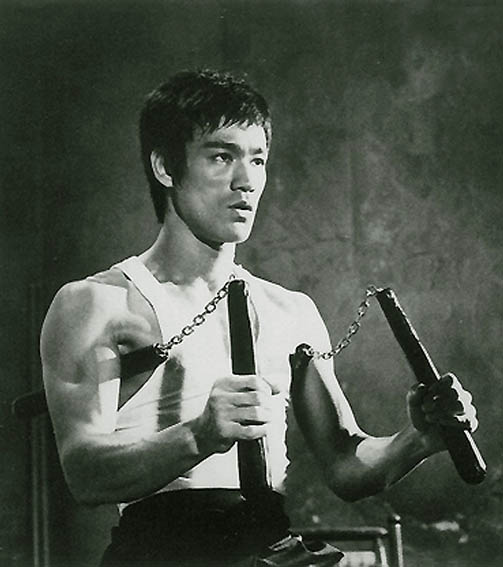
Bruce Lee with his favorite onscreen weapon. Bruce Lee with his favorite onscreen weapon.

***I am off visiting family over the holiday weekend, so we are headed back to the archives. Since our (American) readers have just celebrated Thanksgiving, I though it would be appropriate to revisit an essay that asks what we should be grateful for as martial artists and students of martial arts studies.  Spoiler alert, the answer is Bruce Lee.***


Introduction: Bruce Lee at 75

Yesterday I celebrated Thanksgiving with my family. As is customary on this day of remembrance I took a few moments to think about the last year and review the many things that I had to be grateful for. The year has been an eventful one.

In the professional realm I had a book published on the social history of the southern Chinese martial arts. I also delivered a keynote address at the first annual martial arts studies…

View original post 4,013 more words

5 Reasons to Start a Martial Art

by James Davis from MMAstation.com

Although I may not have agreed with all my parents’ decisions, sending me off to my first Judo class at the age of 5 was one of the best things they could have ever done for me. Not only was I one of the most athletic kids at school, I made a ton of friends who I got to travel around the world with, attending various training camps and competitions.

By the age of 12 I was Nation Schools Champion of Great Britain and was a member of the “World Class Start Programme”, a programme designed for kids under the age of 16 to train and compete with the GB team. Since then, I’ve studied various martial arts and combat sports such as Muay Thai, BJJ, wrestling and boxing. Today I want to share with you my 5 top reasons to start a martial art, no matter where you live, your age, or your gender.

Martial Arts are suitable for everybody, and have something unique to offer anyone willing to attend a class, even if that’s once or twice a week.

Ok, lets take a look at why you should pick up a martial art.

Learn to Defend Yourself

First, and perhaps foremost, martial arts provide you with the knowledge and ability to defend yourself, should that unfortunate situation ever arise. Admittedly, the best way to prevent such a situation is to avoid confrontation at all costs, however that may not always be possible.

With that in mind, knowing a form of self-defence is an invaluable skill, one in which the vast majority of people do not spend the time learning. Considering the vast array of different styles and disciplines, you’re almost certainly going to find a martial art that suits you.

That being said, defensive martial arts such as Judo, or even BJJ are perhaps better designed for self-defence. This is due to the fact that their techniques involve leveraging skill and your aggressors’ momentum into your favour.

Get in Shape

Getting into shape is definitely a popular bi-product of training a martial art. Martial arts classes tend to be very physically intensive, often involving long periods of sparing alongside drills of different techniques.

The physical benefits you’ll receive from training a martial art will depend on the discipline that you decide to take up. If it’s a grappling based martial art, you’ll more than likely notice improved muscular strength and endurance in your core, arms and legs.

Whereas striking based martial arts will likely focus more the endurance of your arms and legs, as these are what you use to throw a strike. That being said, your overall fitness level is sure to improve as you continue to attend a martial arts class, and if you follow a somewhat healthy diet, you’re bound to see a few pounds shed here and there.

Make new Friends

I feel that this is often an overlooked aspect of training a martial art, however for me personally, it’s very important. The bond you create with other members of your club is an incredibly strong one, as you both learn from each other and continue to improve together.

Of course, there’s a good chance you’ll end up sparring against one another, but a bit of friendly competition never hurt anyone right?

Ultimately, there’s something special about the bond you create with your fellow martial arts practitioners, that until you experience it, you may never fully understand.

Discover Your Potential

One of the best aspects of learning a martial art is unlocking potential you never knew you had. There’s nothing more satisfying than tapping someone out for the first time, or seeing your hand-speed progressively increase with each class.

Similarly, a lot of the more traditional disciplines follow a belt system in which you progress to the next color as your skill level improves, often with black being the highest. Ever wondered if you could be a black belt martial artist? Well, there’s only one way to find out!

Who knows, you could even decide to take things to the next level and enter some competitions. Here you can put your newly acquired skills to the ultimate test and see how you match up against other martial art practitioners. With a bit of training, who knows, you could be wearing that gold around your neck from atop the podium.
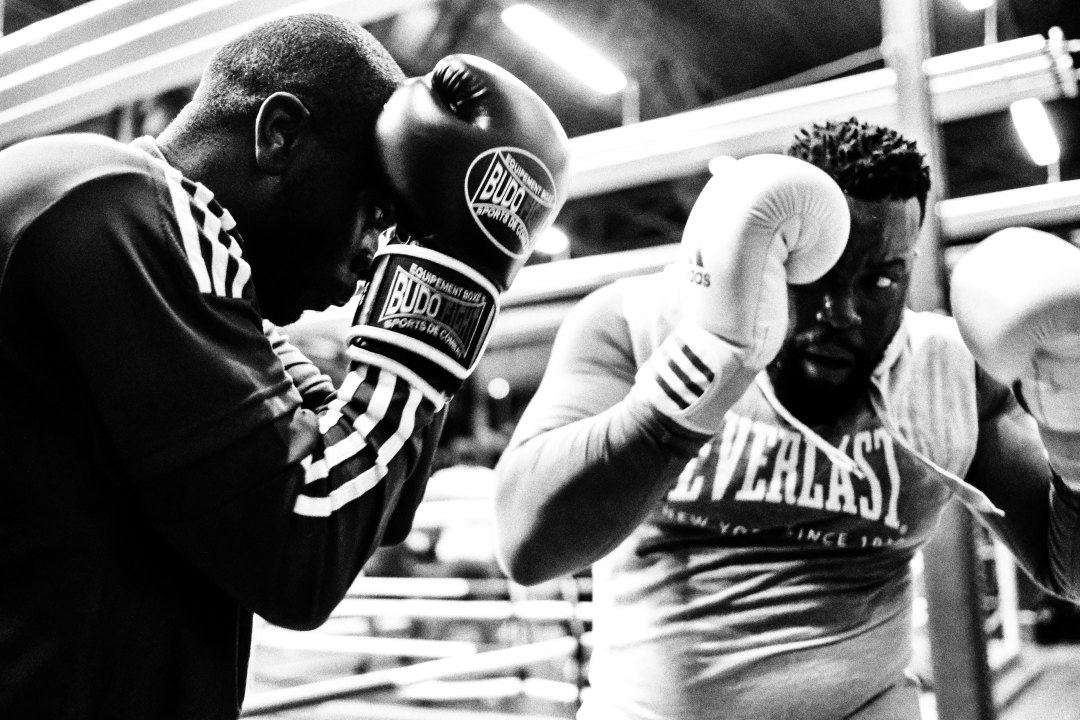
johann-walter-bantz-198023-unsplash (1)

Learn to Overcome Adversity

There’s no denying that life consists of both highs and lows, with the high points flying by in a flash and the lows seeming to linger.

Martial arts in that respect teaches you how to deal with adversity and to find a way to power through to the other side. World champions, UFC fights, any martial artist will have experienced defeat, whether that’s in competition or training in the gym.

Take for example BJJ, you’re sparring (often referred to as rolling) and find yourself being submitted. You’re seconds away from tapping, but you find that slight gap that you can utilize to your advantage. While there is no shame at all in tapping, voluntarily putting yourself into these situations can get you comfortable being out of your comfort zone. This allows you to fully comprehend that you’re capable of overcoming these low points, which can very well translate into everyday life.

By dealing with such adversity on the mat, or in the gym, you provide yourself with the knowledge that no matter what situation you’re in, there’s a way to overcome it.

Final Thoughts

All in all, martial arts provide a ton of different benefits, physically, mentally and even spiritually. Considering that most martial arts gyms offer a free trial lesson, why not give it a go?

You’ll get in the shape of your life, learn to defend yourself and even make some life long friends.

Thanks for reading.

About the Author:

James is a martial arts fanatic who became National Judo Champion at the age of 12 and a member of the Great British Judo Team, competing at an international level. Since then, James has studied various different disciplines such as BJJ, Muay Thai, wrestling and MMA. He spends his time blogging about different martial arts on his website MMAStation.com and obsessing over the UFC.
Showing the Truth

by Phillip Starr

I believe that it is through the assiduous practice of martial arts that we see our true selves as we really are; martial arts act like a mirror, which reflects our egos, fears, and shortcomings. This is, I think, why many people give up training. Not only do they see their image and deficiencies…so does everyone else. Our flaws are laid bare for all (our classmates and instructors) to see. And for many people, that’s simply unbearable.

Training tests us in many ways. Sometimes, breaking through one particular barrier isn’t terribly difficult but others appear larger and stronger. We grit our teeth and give it all we think we’ve got but sometimes, that just doesn’t seem to be enough. So we endure and it’s all we can do to hang by by our fingernails until the storm passes. These “storms” expose our “shadow side”; that part(s) of us that we normally hide from everyone else as well as ourselves.

We may try to keep them under wraps (which we normally do), but any attempt to do so only reveals what we’re trying to do! Weaknesses such as poor attitudes, envy, self-pity, criticism (of self or others), insecurities, and anger bubble to the surface where they’re readily seen.

The fact is that we’ve lived with these “shadows” for so long that we’ve developed our own personal ways of handling them. They’ve become a part of us – habits, if you will – and we’ve become so accustomed to carrying them around that we don’t even notice them until we get involved in martial arts training, which is really very different from most other physical activities because we’re dealing with the basest form of human relationships…a punch in the mouth. We have to learn to respond appropriately to physical attack while we must simultaneously “be with ourselves” under gradually increasing levels of physical and emotional pressure.

Before long we must face the ways in which we typically handle this and other forms of stress; how we armor ourselves against them, how we withdraw (into ourselves) or attack aggressively and what we see may not be pleasant. We’re exposed not only to ourselves but to all of our classmates as well. The way we defend ourselves under great pressure (as when a partner tries to punch us in the face) shows us how we work to survive in daily life.

shutterstock_3924130-e1365185256360

As Wilhelm Reich said, your body acts as a “prison” that holds “you” (or what you perceive as “you”) in place. Although you can see an open door before you, you are held back in your “prison” by your limiting beliefs, attitudes, and so forth.

A skilled and caring instructor will see immediately what you see but he cannot present you with an instant “cure.” All he can do is encourage and guide you and you must listen. He’s been where you are. Your chosen martial art can be used as a vehicle to explore those things that you find undesirable in yourself – your fears, what threatens you, feelings of inadequacy and inferiority, and so on.

You face your opponent (your training partner) and he becomes you. You project your fears, your weaknesses, and even your strengths onto him and confront them as you practice fighting. And as you strive to “not lose”, it isn’t really your opponent who you are trying to defeat. It’s your “shadow side.” This is why practice fighting is so very important because in actual combat it’s the same thing. Your opponent, whether he’s just a training partner or a real assailant, is a mirror.

I believe that the willingness to face our “dark side” and striving to understand and eventually overcome our weaknesses, fears, and the many things about ourselves that we would rather keep stashed away is what makes a true warrior. You must begin by being bold enough to admit the truth of what you see about yourself. Then you must be strong enough to resolve those aspects of yourself that you find undesirable. This can be accomplished through correct martial arts training but it isn’t easy and many students will quit training in order to avoid having to face themselves although many of them, perhaps even the majority of them, are unaware that this is the reason they’re quitting.

Facing your shadow side is a necessary part of martial arts training and progress. It isn’t easy to do but don’t shrink from it…break through!

Cheap, Reliable and Fast VPN for China

A sweet black Friday deal for those planning on visiting China for martial arts training and who still want to connect to social media or access gmail.

ExpressVPN

Screen Shot 2018-11-20 at 10.54.39 PM