Wuji; The State of Potential

by Phillip Starr

At the very beginning of any form, there is a brief period where you just stand still in a “natural” stance and relax. You’re not “damp-rag” relaxed but you’re not like a wooden soldier, either. In the internal schools of China (Taijichuan, Xingyichuan, and Baguazhang) this is known as the state of “wuji” (also, “wu-shi”) and although most contemporary practitioners tend to ignore it, it’s really a very important part of the fo…rm. In fact, it’s so important that if you don’t do it right, your entire form is wong Other martial arts – from aikido to karate to iaido – also use this concept and “positioning” but they call it by different names.

To understand how to stand correctly in wuji, you have to dig into the fundamental concepts of Chinese cosmology. You’re all familiar with the double-fish diagram of the Taiji (“Tai-Chi”). Yin and Yang. Yin represents the negative polarity and Yang is positive, although each one contains an element of the other – the potential to turn into the other. Extreme Yin eventually becomes Yang and extreme Yang turns into Yin.

It is said that when the universe was created, that’s when Yin and Yang were created (the stage of Taiji was created) and gave birth to the “ten thousand thing” – which, in ancient Chinese terminology – means “everything.”

But what existed before the creation of Yin and Yang? What was there before the Big Bang?

Wuji.

The kung-fu teachers who first tried to teach their arts to Americans in a second language (Engrish) had a tough time trying to find the right word(s) to define the state of wuji. Many of them settled on “nothingness” or even “vacuum.” But using those words only created more confusion.

Their students would stand in the position/condition of wuji and just be “blank.” Like a wet rag. No-thing. And that’s not wuji at all.

Before the creation of Yin and Yang there was the condition of wuji but it wasn’t “nothing.” It wasn’t a vacuum. You can’t get “something” out of “nothing.” And yet, what wuji is, is neither Yin nor Yang.

It is Potential. That is, it has the potential to expand outward and become something. It has the potential to explode into Yin and Yang.

I know this sounds like so much Oriental mumbo-jumb but listen up, Buckwheat.

When you stand at the beginning of your form you must be neither Yin nor Yang. You must be in (an imitation of) the state known as wuji. You aren’t “empty.” You have the potential to move and become something…

When an iaido practitioner kneels (in seiza) and prepares to execute a particular kata (form), he/she begins by relaxing and breathing down to the tanden (dantien). He/She makes three calm breaths before performing the first movement. During this time, he/she is not yet “performing the kata.” There is the potential for movement but movement has not yet occurred. It is the stage of wuji.

If you think about the first movement (or any movement at all), if you think about what you’re doing…it’s not wuji because you’re moving. Internally. And that’s going to affect the way you begin – and finish – your entire form. Your body will be too tense or tensed in the wrong places, your mind is distracted and running ahead of where the body is, and your spirit is scattered. So is you chi. Remember that where your yi goes, your chi goes.

So reflect on this concept for a while and try to get a feel for what it is. Then apply it to your forms and the rest of your practice.

Potential.

Bruce Lee: Memory, Philosophy and the Tao of Gung Fu

benjudkins's avatarKung Fu Tea

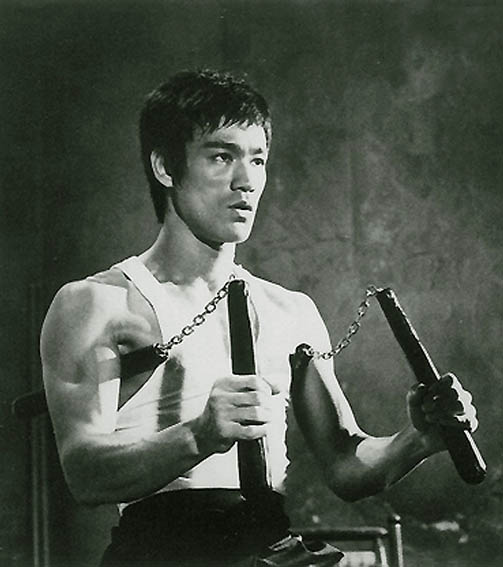
Bruce Lee with his favorite onscreen weapon. Bruce Lee with his favorite onscreen weapon.

***I am off visiting family over the holiday weekend, so we are headed back to the archives. Since our (American) readers have just celebrated Thanksgiving, I though it would be appropriate to revisit an essay that asks what we should be grateful for as martial artists and students of martial arts studies.  Spoiler alert, the answer is Bruce Lee.***


Introduction: Bruce Lee at 75

Yesterday I celebrated Thanksgiving with my family. As is customary on this day of remembrance I took a few moments to think about the last year and review the many things that I had to be grateful for. The year has been an eventful one.

In the professional realm I had a book published on the social history of the southern Chinese martial arts. I also delivered a keynote address at the first annual martial arts studiesâ€Ĥ

View original post 4,013 more words

5 Reasons to Start a Martial Art

by James Davis from MMAstation.com

Although I may not have agreed with all my parents’ decisions, sending me off to my first Judo class at the age of 5 was one of the best things they could have ever done for me. Not only was I one of the most athletic kids at school, I made a ton of friends who I got to travel around the world with, attending various training camps and competitions.

By the age of 12 I was Nation Schools Champion of Great Britain and was a member of the “World Class Start Programme”, a programme designed for kids under the age of 16 to train and compete with the GB team. Since then, I’ve studied various martial arts and combat sports such as Muay Thai, BJJ, wrestling and boxing. Today I want to share with you my 5 top reasons to start a martial art, no matter where you live, your age, or your gender.

Martial Arts are suitable for everybody, and have something unique to offer anyone willing to attend a class, even if that’s once or twice a week.

Ok, lets take a look at why you should pick up a martial art.

Learn to Defend Yourself

First, and perhaps foremost, martial arts provide you with the knowledge and ability to defend yourself, should that unfortunate situation ever arise. Admittedly, the best way to prevent such a situation is to avoid confrontation at all costs, however that may not always be possible.

With that in mind, knowing a form of self-defence is an invaluable skill, one in which the vast majority of people do not spend the time learning. Considering the vast array of different styles and disciplines, you’re almost certainly going to find a martial art that suits you.

That being said, defensive martial arts such as Judo, or even BJJ are perhaps better designed for self-defence. This is due to the fact that their techniques involve leveraging skill and your aggressors’ momentum into your favour.

Get in Shape

Getting into shape is definitely a popular bi-product of training a martial art. Martial arts classes tend to be very physically intensive, often involving long periods of sparing alongside drills of different techniques.

The physical benefits you’ll receive from training a martial art will depend on the discipline that you decide to take up. If it’s a grappling based martial art, you’ll more than likely notice improved muscular strength and endurance in your core, arms and legs.

Whereas striking based martial arts will likely focus more the endurance of your arms and legs, as these are what you use to throw a strike. That being said, your overall fitness level is sure to improve as you continue to attend a martial arts class, and if you follow a somewhat healthy diet, you’re bound to see a few pounds shed here and there.

Make new Friends

I feel that this is often an overlooked aspect of training a martial art, however for me personally, it’s very important. The bond you create with other members of your club is an incredibly strong one, as you both learn from each other and continue to improve together.

Of course, there’s a good chance you’ll end up sparring against one another, but a bit of friendly competition never hurt anyone right?

Ultimately, there’s something special about the bond you create with your fellow martial arts practitioners, that until you experience it, you may never fully understand.

Discover Your Potential

One of the best aspects of learning a martial art is unlocking potential you never knew you had. There’s nothing more satisfying than tapping someone out for the first time, or seeing your hand-speed progressively increase with each class.

Similarly, a lot of the more traditional disciplines follow a belt system in which you progress to the next color as your skill level improves, often with black being the highest. Ever wondered if you could be a black belt martial artist? Well, there’s only one way to find out!

Who knows, you could even decide to take things to the next level and enter some competitions. Here you can put your newly acquired skills to the ultimate test and see how you match up against other martial art practitioners. With a bit of training, who knows, you could be wearing that gold around your neck from atop the podium.

johann-walter-bantz-198023-unsplash (1)

Learn to Overcome Adversity

There’s no denying that life consists of both highs and lows, with the high points flying by in a flash and the lows seeming to linger.

Martial arts in that respect teaches you how to deal with adversity and to find a way to power through to the other side. World champions, UFC fights, any martial artist will have experienced defeat, whether that’s in competition or training in the gym.

Take for example BJJ, you’re sparring (often referred to as rolling) and find yourself being submitted. You’re seconds away from tapping, but you find that slight gap that you can utilize to your advantage. While there is no shame at all in tapping, voluntarily putting yourself into these situations can get you comfortable being out of your comfort zone. This allows you to fully comprehend that you’re capable of overcoming these low points, which can very well translate into everyday life.

By dealing with such adversity on the mat, or in the gym, you provide yourself with the knowledge that no matter what situation you’re in, there’s a way to overcome it.

Final Thoughts

All in all, martial arts provide a ton of different benefits, physically, mentally and even spiritually. Considering that most martial arts gyms offer a free trial lesson, why not give it a go?

You’ll get in the shape of your life, learn to defend yourself and even make some life long friends.

Thanks for reading.

About the Author:

James is a martial arts fanatic who became National Judo Champion at the age of 12 and a member of the Great British Judo Team, competing at an international level. Since then, James has studied various different disciplines such as BJJ, Muay Thai, wrestling and MMA. He spends his time blogging about different martial arts on his website MMAStation.com and obsessing over the UFC.

Showing the Truth

by Phillip Starr

I believe that it is through the assiduous practice of martial arts that we see our true selves as we really are; martial arts act like a mirror, which reflects our egos, fears, and shortcomings. This is, I think, why many people give up training. Not only do they see their image and deficiencies…so does everyone else. Our flaws are laid bare for all (our classmates and instructors) to see. And for many people, that’s simply unbearable.

Training tests us in many ways. Sometimes, breaking through one particular barrier isn’t terribly difficult but others appear larger and stronger. We grit our teeth and give it all we think we’ve got but sometimes, that just doesn’t seem to be enough. So we endure and it’s all we can do to hang by by our fingernails until the storm passes. These “storms” expose our “shadow side”; that part(s) of us that we normally hide from everyone else as well as ourselves.

We may try to keep them under wraps (which we normally do), but any attempt to do so only reveals what we’re trying to do! Weaknesses such as poor attitudes, envy, self-pity, criticism (of self or others), insecurities, and anger bubble to the surface where they’re readily seen.

The fact is that we’ve lived with these “shadows” for so long that we’ve developed our own personal ways of handling them. They’ve become a part of us – habits, if you will – and we’ve become so accustomed to carrying them around that we don’t even notice them until we get involved in martial arts training, which is really very different from most other physical activities because we’re dealing with the basest form of human relationships…a punch in the mouth. We have to learn to respond appropriately to physical attack while we must simultaneously “be with ourselves” under gradually increasing levels of physical and emotional pressure.

Before long we must face the ways in which we typically handle this and other forms of stress; how we armor ourselves against them, how we withdraw (into ourselves) or attack aggressively and what we see may not be pleasant. We’re exposed not only to ourselves but to all of our classmates as well. The way we defend ourselves under great pressure (as when a partner tries to punch us in the face) shows us how we work to survive in daily life.

shutterstock_3924130-e1365185256360

As Wilhelm Reich said, your body acts as a “prison” that holds “you” (or what you perceive as “you”) in place. Although you can see an open door before you, you are held back in your “prison” by your limiting beliefs, attitudes, and so forth.

A skilled and caring instructor will see immediately what you see but he cannot present you with an instant “cure.” All he can do is encourage and guide you and you must listen. He’s been where you are. Your chosen martial art can be used as a vehicle to explore those things that you find undesirable in yourself – your fears, what threatens you, feelings of inadequacy and inferiority, and so on.

You face your opponent (your training partner) and he becomes you. You project your fears, your weaknesses, and even your strengths onto him and confront them as you practice fighting. And as you strive to “not lose”, it isn’t really your opponent who you are trying to defeat. It’s your “shadow side.” This is why practice fighting is so very important because in actual combat it’s the same thing. Your opponent, whether he’s just a training partner or a real assailant, is a mirror.

I believe that the willingness to face our “dark side” and striving to understand and eventually overcome our weaknesses, fears, and the many things about ourselves that we would rather keep stashed away is what makes a true warrior. You must begin by being bold enough to admit the truth of what you see about yourself. Then you must be strong enough to resolve those aspects of yourself that you find undesirable. This can be accomplished through correct martial arts training but it isn’t easy and many students will quit training in order to avoid having to face themselves although many of them, perhaps even the majority of them, are unaware that this is the reason they’re quitting.

Facing your shadow side is a necessary part of martial arts training and progress. It isn’t easy to do but don’t shrink from it…break through!

Cheap, Reliable and Fast VPN for China

A sweet black Friday deal for those planning on visiting China for martial arts training and who still want to connect to social media or access gmail.

ExpressVPN

Screen Shot 2018-11-20 at 10.54.39 PM

5 Kung fu Schools in Amazing Locations in China

Check out this article I wrote for the site China Whisper. We all know China is famous for martial arts, whether kung fu movies or the amazing feats displayed by Shaolin Warrior Monks. As a result ever increasing numbers of foreigners from all over the world flock to China to combine Chinese culture, travel, and learning martial arts. Not only is this style of travel more accessible than ever it is extremely affordable and rewarding.

As the number of kung fu schools in China increases it has become increasingly difficult to choose the right school. But where are the best places to learn these arts? For my part I have spent over 10 years traveling and studying martial arts in China and this is my list of some of the best kung fu schools in China based on location and environment.

Read the full article.

36591821_10156167172862787_2013097196504743936_n

Swords, Visuality and the Construction of China

benjudkins's avatarKung Fu Tea

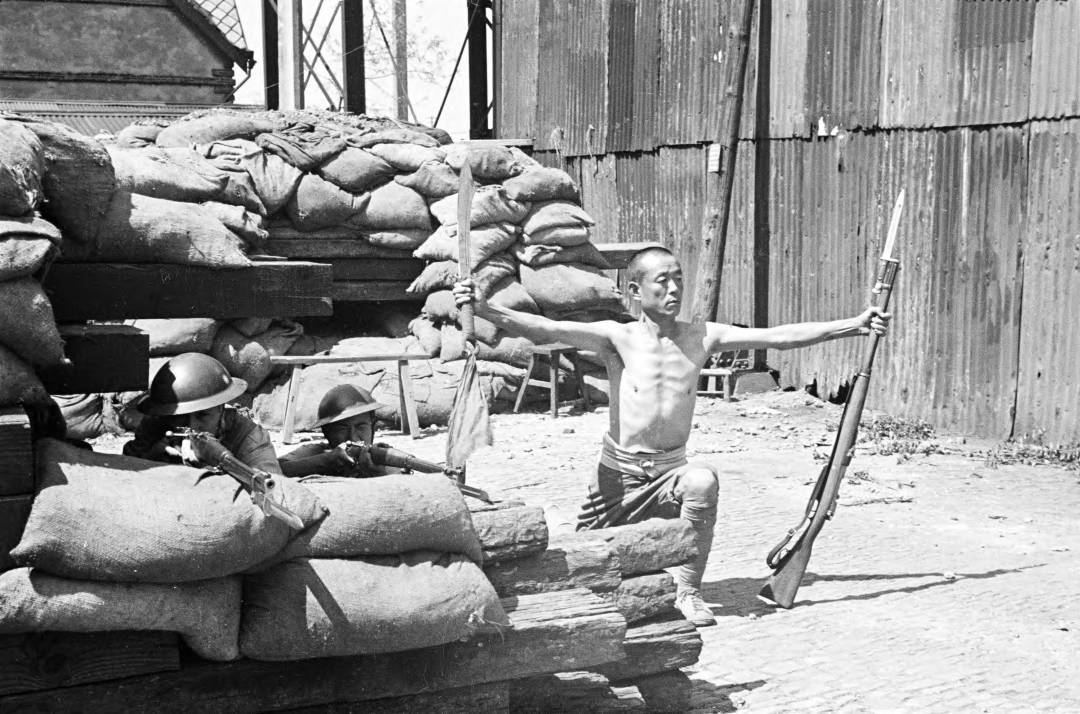
Chinese soldier photographed by Harrison Forman. While part of a series of issues distributed in 1938 captions indicate that these images were probably taken in the early 1930s. Source: The Forman Collection in the University of Wisconsin Milwaukee Digital Archives.

Deciphering an Icon

Recently I came across a few of Harrison Forman’s wartime photos, probably taken in the early 1930s, but circulated to newspapers and (re)published in 1938.  While his photos of militia groups following the 8th Route Army (discussed here) remain less well known, these particular images have gained a quasi-iconic status. I suspect that they, and other similar images, helped to define popular Western notions of China’s struggle during the late 1930s. This also makes them of interest to students of Martial Arts Studies as they prominently feature swords and what appears to be a display of China’s traditional military culture.

Still, as I reviewed these photosâ€Ĥ

View original post 3,565 more words

The Last Shall be First: Finding Meaning in the Martial Arts

benjudkins's avatarKung Fu Tea

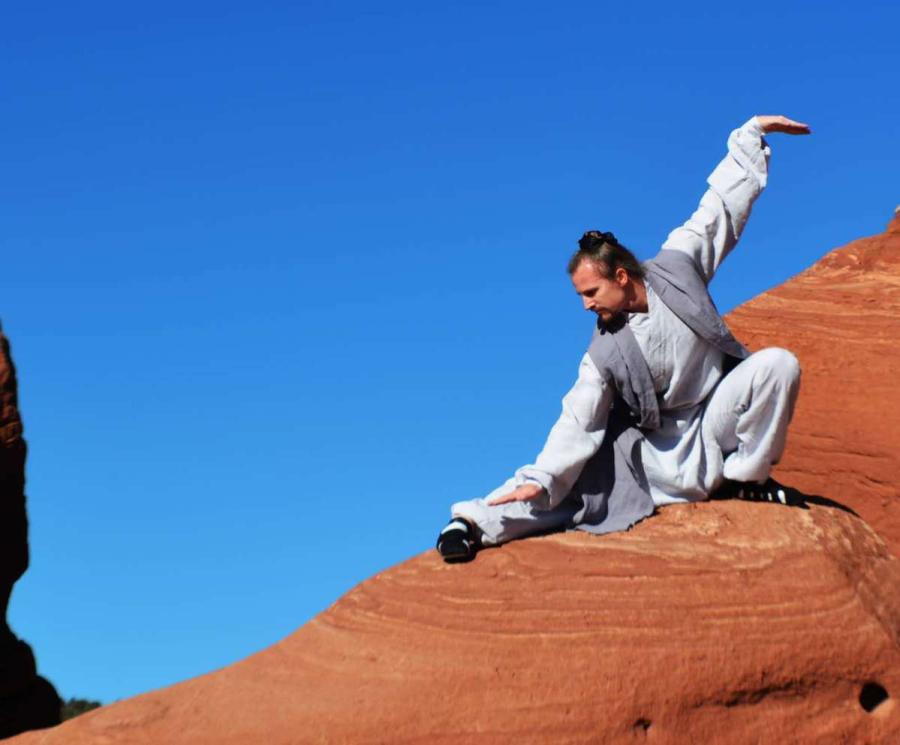
A foreign martial arts teacher practices at Wudang. Source:

Barnum’s Daughter

I was recently watching the news when I saw a brief segment on “the last” Japanese swordsmith.  The whole things is a little overwrought as there are lots of individuals making swords in Japan today, and (multiple) government offices in place to make sure that they will continue to do so for the foreseeable future. While alarmist, I am no longer surprised by this sort of rhetoric. For better or worse, it has become a defining feature of the modern martial arts and all of the other cultural practices that are associated with them. I usually just brush it off. Yet it can be jarring to those who have less experience with it.

By any metric Heather* is a pretty worldly individual.  A Hollywood veteran and longtime producer of reality TV shows (touching on everything from home improvement toâ€Ĥ

View original post 3,798 more words

Performance Ethnography and the Martial Arts Studies Reader — Kung Fu Tea

As the indomitable Professor Farnsworth would say, good news everyone! The long anticipated Martial Arts Studies Reader (Rowman & Littlefield, 2018) is now shipping. Weighing in at 244 pages, and featuring articles by over a dozen of the most respected names in the field, this volume is sure to be referenced for years to [â€Ĥ]

via Performance Ethnography and the Martial Arts Studies Reader — Kung Fu Tea

The Legendary Iron Palm

by Phillip Starr

The legendary “iron palm” (called “tieh-shou” in Chinese, which literally means “iron hand”) is often very different from what many people think it is. Masutatsu Oyama, founder of the Kyokushin style of Japanese karate, had very heavily calloused hands with which he would split 25 lb. stones, paving bricks (the old kind that were used to “pave some old streets and they’re as hard as iron), and other such objects, had “conditioned hands” and feet, but not the ancient “iron palm.” The same thing holds true for Master Higashionna of Goju-ryu karate in Okinawa. He has heavily conditioned many of the striking surfaces of his hands and feet but this is a far cry from the Chinese iron palm.

2a7zv9t

The iron palm has little to do with developing heavy callouses or breaking coconuts. It is a special technique that enables the practitioner to transmit most of the force of his blow to an area beneath (or quite a distance from) the target that he strikes. For instance, a blow to the abdomen would leave no external evidence of a blow but the strike or punch could rupture internal organs without leaving any bruising on the surface of the flesh…or a blow to the arm may result in a ruptured liver (the target is a considerable distance from the point of impact) and again, no bruising is caused on the arm!

There is a famous photo of iron palm and Shao-lin Master Gu Yu Cheong, who practiced a form of northern Shao-lin gong-fu. The photo depicts him breaking a very large stack of bricks. You’ll notice that he’s no heavily-muscled hulk, nor were his hands calloused. When I was in China back in 1982, I walked past a construction site on a Sunday (no workers were present) and noticed a pile of bricks. I decided to break one so that I could determine if they were much different from bricks made in the U.S. I was shocked when I picked one up and it was light as a feather! I struck one and it virtually exploded…and I realized that the bricks were simple baked clay; U.S. And European bricks have a lot of filler in them, making them very strong and hard. Not so in China at that time. Although the experience didn’t do much for my sense of security as we visited many brick buildings, I understood that there was a considerable difference in the quality of bricks made in the West and those in China (this has now changed; in 2013 I did the same thing and found that the current bricks produced in China are now properly mixed with fillers and very strong).

What many people don’t know about Master Gu is that HE COULD SELECTIVELY BREAK ANY BRICK IN THE STACK while leaving the others intact. If you asked him to split the 5th brick from the bottom, he could do just that… and THAT is a true “iron palm.”

At that time (the early 1900’s), China traded with numerous nations, including Russia. Now, several European boxers had had matches with local gong-fu adepts and oftentimes, beat them soundly. Gu stepped up to the plate and trounced several foreign boxers. On one occasion, Russian sailors were teasing him because they wanted another match.

Gu knew that the Russians often brought some fine race-horses with them and they would race them against Chinese steeds. Not wishing to waste any more time crossing fists with the foreigners, he asked them to bring out their finest horse.

A confused ship’s captain complied and had his men bring out a large Russian race-horse. Gu said he would provide a good example of gong-fu for them and he placed one hand on the horse’s back. He suddenly slapped the horse’s back (some say that he simply pressed on it) and the animal immediately collapsed, dead on the spot. The captain ordered an autopsy and it was found that most of the horse’s viscera had been severely ruptured! Gu wasn’t challenged to any more boxing bouts.

DSC00449

Iron palm training is tedious and often painful. Contrary to what many gong-fu enthusiasts may think, it involves much more than repeatedly slapping a small cloth sack full of beans or iron shot (the old-timers never used iron pellets because it was too expensive and some said it might adversely affect one’s health). There’s much, much more to it and training must be done at least six days a week (a training session might last for more than 90 minutes). Special form(s) of qigong are also practiced and special medicine(s) is applied to the hands after each session. Many, if not most, of the current commercially made “iron palm” medicines available today are actually watered-down forms of what is known as “bruise linament.” However, there are some herbalists who still produce the traditional brew (one of them is my good friend, Miles Coleman, who owns Black Belt Herbs, and I understand that Mr. Dale Dugas also produces a high-quality iron-palm medicine…they’re both on Facebook).

There are training exercises that are intended to strengthen the legs and hips, build power in the grip, and several of them are directed at teaching the practitioner to transmit energy far beneath the surface of the blow (although the exercises don’t appear to foster such skill, they do so without the students necessarily being consciously aware of it). To develop this rare skill requires courage, determination, and the tutelage of a good teacher who has walked the same path.