Tibetan Sky Burial

by Kerrie Henderson

“Separation of the body and soul”

photo 1(2)This morning, in the hostel in Kangding a Chinese guy asked me whether I’d been to Sida or not. For a lot of young Chinese people it seems to be this years ‘In’ destination… “and did you see the ‘tianzang’ (i guess he didn’t know the right words in English…) ?… I really want to see…” I did, but at Sida I wasn’t that comfortable with it.

I’ve seen one before, 2-3 years ago whilst biking through Gansu province. A body was carried up a hill and a gathering of Tibetan relatives and lamas stood or sat watching. There were a few foreigners there too, but we all knew that our cameras were to be kept inside our bags. We stood watching for around an hour or so… in awe of the birds, their size, their grace and the way they sat on the hill silently, waiting for their turn to pick at the remains….

In Sida its very different. Around 12.00 a handful of drivers stood outside the hilltop hotel yell ‘去天葬吗 ?and Chinese tourists haggle over prices or ask around to find others to fill up their cars. Around 12.30 most of the cars have made their way down to the bottom of the monastery complex and are beeping at each other as they negotiate their way through the muddy bumpy truckstop village at the bottom. The beeping and racing continues as the cars go down the road, turn and go up a smaller narrower mountain road. Its raining but the car park is already half full and its hard to see the end of the line of cars still making their way up the mountain. There are already around a hundred or so tourists, all Chinese stood behind a rope when I arrive. A couple of lamas and nuns (maybe real… maybe tour guides dressed up… I’m really not sure now…) were telling people to stay behind the line and not to take photos of the body or of the people surrounding it. I pointed my camera at the birds, as awesome as I remembered sat waiting patiently on the top of the hillside, looking for the right moment to make their way further down.photo 2(2)

I have no idea when the ceremony started. There was a nun singing ‘o-mani…’ and lots of Chinese people talking. I guess the ceremony wasn’t quite what the Chinese were expecting as most had left within 1/2 an hour or so. I stayed watching the crowd thin, and staring at the line of vultures sat on the hill above me. I couldn’t help wondering why the the vultures were more interested in watching their friends than eating lunch, and then realised I was doing the same thing, not really watching the ceremony and the proceedings but the behaviour of the crowd, and the way the Chinese people reacted to what they were watching. There were a lot of ‘i’m very cold’ and ‘I’m hungry’ ‘s… There were people taking pictures of the birds squabbling over the body (the very thing the monks told them not too…. and, yeah I know I shouldn’t have taken 2 of the pics. here but my iPad doesnt have the same super sized zoom lenses that many of the Chinese photographers cameras do…) A few Tibetan people were gathered around the monument at the bottom, near the pit where the body and vultures were and a few more groups were scattered around the hillside sat quietly. I wondered what they thought about what they were seeing… their relatives death being turned into a macabre tourist attraction, and how westerners would react if a group of Chinese tourists turned up at a church burial wanting to watch when and how the coffin was lowered into the ground and to take pictures of it.  photo 3

I can’t help thinking that death and the ceremonies that surround it are a personal thing, for the families and friends of the person that died. In western culture funerals are usually sad events, but in other cultures (and sometimes in the west, but not often), they are happier occasions, a celebration of the deceased’s life… and that being invited to watch the ceremonies associated with it is a privilege, not something that people should expect to see when they go to a Tibetan tourist place.

photo 4

I wonder whether the monastery is deliberately encouraging the tourist crowds. The sky burial site has a large white monument and construction is underway to make it and the car park alongside it bigger. In Gansu, the ceremony and the place where it took place was simple, the surroundings natural. There was a weird beauty to the proceedings. In Sida there was nothing ‘natural’ about it. 10 minutes or so later when a young boy took my ipad off me to look at my photos I realised that the tour guide/nun had stopped singing and had disappeared. A few minutes later I saw her lead a group of people across the grass, one of the places where were told not to go. The people in her group were pointing their cameras at the vultures and the body below and no one was stopping them. By this time the crowd had thinned out. Horns were beeping as the cars were pushing past each other to make their way out of the car park. The vultures were still picking away or watching and waiting. I stayed a while longer, watching the birds, the snake of cars slowly making its way down the hillside and the small groups of Tibetans sitting in the distance. I couldn’t help wondering who were the vultures. I don’t think the monastery intended to promote this type of tourism, but now that seeing a 49 day old corpse being pulled apart by vultures is one of the latest ‘in’ things for Chinese tourists heading to Sida to see I don’t think it will be easy for them to control.

photo 2(3)

But back to the story… I asked the guy why he wanted to go and see one. ‘because… because everybody talks about it. It sounds good. I really want to see. People say Sida is the best place to see it.’ ‘Maybe you should see it.’ I told him ‘It might make you think…’ but, judging by the group of tourists I watched 4 days ago… I doubt it.

The Tibetan sky-burials appear to have evolved from ancient practices of defleshing corpses as discovered in archeological finds in the region. These practices most likely came out of practical considerations, but they could also be related to more ceremonial practices similar to the suspected sky burial evidence found at Göbekli Tepe (11,500 years before present) and Stonehenge (4,500 years BP).[citation needed] Most of Tibet is above the tree line, and the scarcity of timber makes cremation economically unfeasible. Additionally, subsurface interment is difficult since the active layer is not more than a few centimetres deep, with solid rock or permafrost beneath the surface. (Wikipedia)

Screen Shot 2015-08-19 at 22.04.55

Wudang Gong Fu & Health Academy

For sometime I’ve been looking to connect to the best Wudang Kung Fu schools located on Wudang Shan. Using the StudyMartialArts.Org network of respected fellow martial artists, friends and kung fu brothers I’ve researched visited and connected to a number of schools over the years.

One of the best on Wudang Shan that we have recently connected to is Master Tang’s academy close to Taichi Lake.

The Wudang Gong Fu & Health Academy is a small school with a detailed and structured education program.

Students who wish to enter and be accepted onto one of their special education programs covering the essential training of Wudang Xuan Wu Pai have the chance of becoming a Wudang Disciple and genuine linage holder of Wudang Internal Martial arts. Pending suitable performance and dedication of course.

The headmaster Tang Li Long is one of the main disciples of Grand Master You Xuan De. Master Tang has years of experience teaching Internal Wudang Martial Arts. He has created a system that teaches the essence effectively and under his guidance students will learn the tradition preserved on the mountain.

Tang Li Long’s vision is to spread the Wudang Daoist knowledge around the world in order to preserve the traditional teachings of dào fǎ zìrán ”the natural way” (道法自然) and the 10 Taoist principles of Wudang Pai. His school has a family feel to it where kung fu brothers and sisters from different countries, backgrounds and experiences can all share their knowledge in order to better understand the way of the Dao.

tll-200415

ABOUT MASTER TANG LI LONG

Master Tang Li Long is a 15th generation Wudang Daoist Martial Arts Master of the Xuan Wu Pai. Encouraged by his father he started training Martial Arts in his home town at a young age. Later, after studying Wudang Taiji Quan in Wuhan for a well known master he was told to go to Wudang Mountain to become a Wudang Disciple. He’s master sent a mail to the Wudang Shool of Martial Arts and some time later he was invited to come and study for 14th generation Wudang Master You Xuande, who was the Abbot of the Wudang Temples and the keeper of the Wudang Martial Arts.

Wudang Disciple 1994 he arrived at Wudang Mountain and started to learn from Grand Master You. After a long time of hard training Master Tang became one of the main diciples of You Xuande. With a genuine background with in Taiji Quan his skills and understanding where different from other students. He worked close to Master You and helped him write down ideas about Martial Arts and Daoism. Tang Li Long is now one of the “5 Dragons of Wudang” and a linage holder of the Wudang Xuan Wu Pai. 1998 he won a Medal in the 1st World Traditional Wushu Championships and 1999 he was awarded as a outstanding Master in a big Wudang Taiji Quan gathering.
p505_d20120809161424
Tang Laoshi, Master Tang Li Long, or “Tang Laoshi” as most people call him, has almost 20 years of experience of Wudang Martial Arts and have a system of teaching that is different from other schools on the mountain. He teaches the foundations of the style and focus on Basics, Qi Gong and Applications. His long time students has won many competitions and gained high skills in Wudang Wushu. His main skill is his ability to bring out good quality of the training and the students and teach the essence of Wudang Internal Martial Arts. He holds a position as secretery of the International Wudang Mountain Taiji Gongfu Association and have done performances in China, Korea and Germany. He has publiced articles in the Chinese Martial Arts Wudang Wind Magazine and Hubei Daily Newspaper. He was mentioned in a book about famous Gongfu Masters in 2010 (“Chinese Folk/Unofficial Gongfu Masters” – “Zhongguo Mingjian Wushu Mingjia”). In 2010 set up the school and the present location in Wudangshan, same year his student Jakob Isaksson, Sweden, won a Silver and Brons Medal in the 4th World Traditional Wushu Championships.

Tang Li Longs philosophy is to wholeheartedly train the disciples and carry on the tradition.

Learn more about Master Tang’s Academy including full training curriculum and prices. 

The Best VPN’s for China

The Internet & VPNs

Why can’t I access some websites in China?

Google services (e.g. Gmail, Google Maps), Wikipedia, Facebook, Youtube, Twitter and other social media website are either blocked while many other sites are accessible but they may be censored or their performance compromised in Mainland China by the governments famous “Great Firewall of China”. Normal Internet habits are often more difficult in China, so you may find it more difficult to keep in touch with friends and family in the usual way. Don’t worry though, all’s not lost, a VPN can help you jump over the great fire wall of China.chinawordpressSo what is a VPN anyway? And how can I access these sites? Well, a VPN is a Virtual Private Network.

Many travelers and students purchase these VPN’s in order to circumvent the Great Firewall by making your location and Internet content invisible, thereby allowing you to access blocked websites. Hide_My_Ass_405042Below is a selection of some of the best VPNs for China in terms of price and reliability.

  1. Hide My Ass

Hide my ass is a UK based service, it has a 30 day money back guarantee, lots of server choice, no bandwith restrictions, lots of freebies, and has a great VPN client and website. In terms of the set up this VPN is very easy to instal on your computer and its one of the World’s leading VPN’s.

  1. Astrill

Astrill is fairly reliable and one of the most popular VPN service commonly used in China. It has unlimited download bandwidth and is among one of the cheaper services available hence its popularity. However, their help and support could definitely be better and recently its performance has been patchy.

  1. ExpressVPN

Express VPN is very fast safe and has a money back guarantee. Its dedicated customer service support is excellent and it has unlimited downloads. The only downside is that it’s a bit more expensive than the others, but more on that later.

  1. Hide.me

I’ve included Hide.me as an option here as it offers a free basic service with limited functions. As it’s basic option is free there are a limited amount of servers available and downloads are restricted to 2GB. However, if you’re just looking to check your emails or Facebook every now and again it might just save you some money and would be a much safer option than other free services like Vtunnel or Freegate.

IPVanish_VPN_420944_i0

  1. StrongVPN

A large US based VPN provider, StrongVPN is both high-profile, and popular. However, despite this reviewers have been unimpressed with its overall attitude to privacy, and performance. If the service was a budget offering it wouldn’t be so bad, but StrongVPN is also one of the most expensive providers. Despite this in terms of its performance in China, it does pretty well but when compared to other premium services it doesn’t always feel premium.

  1. IPvanish

IPVanish is a relatively new VPN provider that was created by specialists with more than a decade of experience in network management, IP and content delivery services. The company was founded with the goal of providing excellent customer service and extremely affordable prices. The company has a large staff to help clients as they configure their products, and is widely considered one of the VPNs with the fastest Internet speeds in the US. IPvanish was vote by top10best websites to be the best VPN 2014. This new kid on the block has got potential and serious kick for the price.

So why not just use a free services to access blocked sites?

There are a number of free portals or proxy sites to access blocked websites in China however, they often come with restricted downloads or functions. For example, a proxy such as Vtunnel, can let you access the mobile version of Facebook, but it rarely downloads it all.

Freegate is also an option however, free service have also been known to open your computer up to viruses and hacking. If you must go for a free service, go with the safe option Hide.me above.

So what VPN service do I recommend based on reliability service and price? 

At present for StudyMartialArts.Org purposes we use ExpressVPN. ExpressVPN has consistently been the fastest VPN provider with excellent support for all our devices. To date it has also been best-in-class for security features. Therefore ExpressVPN is our top choice. With a speed-optimized server network spanning 78 countries, ExpressVPN is one of the most trusted in the market. Setting up and using this VPN is super easy. Their apps for Windows, Mac, Android and iOS connect you with a single click to any server location you choose. ExpressVPN is ultra-secure and anonymizes your online identity behind powerful encryption and multiple VPN protocols and has 24/7 tech support. Because of this they aren’t the cheapest provider. ExpressVPN includes a 30 day money back guarantee on all purchases.

Here’s my top 3 in no particular order:

Hide My Ass

IPvanish

ExpressVPN

expressvpn-logo

Training with Master Chu Yucheng by Nikolaus Klinger

I had training with Chu Yucheng one on one for about a month (besides my tuina studies in shanghai). Master Chu is a very nice and friendly person and often corrects you with a smile.

I already have experience with baguazhang and I wanted to learn something new, additional or use my time in shanghai to see what other masters are doing. So Master Chu had a look at my bagua in the beginning and made a schedule according to my basics. He can only speak Chinese, so a bit of Chinese language skills would be good in order to study with him. Otherwise its sometimes too difficult for him to correct or explain things. We learned the 8 palm changes of his “Kiang” stye baguazhang, which is actually a mix of Li CunYis and Liang Zhenpu’s style. Not like the Liang style I have seen from Ma Chuanxu or Li ZiMing.

Master Chu’s baguazhang is very practical and straight with lots of strikes and sometimes Xingyi stepping. We also learned Li CunYis basic form called bagua wuxing san pan zhang, bagua five elements 3 levels palm. 3 forms with xingyi stepping and bagua techniques, which reminded me a lot about the famous bagua 64 hands form.

Master chu likes to show applications and keeps his forms simple and very practical. He will show you the use of each technique and how to perform it correctly. I joined one of his group classes, where partner work was a big part of his teachings.

Most people were doing xingyi quan and two of his disciples were practicing a Wudang two person form. That was absolutely interesting for me because I have been in Wudang. His two people sword form come from Li Jinglin a highlevel famous Wudang swordsman from days gone by. I would definitely like to learn this next time…

The only downside which I would mention is, that he seems to keep forgetting parts of his bagua forms and important movements which he showed a day earlier. Probably because his love is for xingyiquan and so is his teaching focus.

You can learn more about Master Chu Yu Cheng here.

Other People’s Rules: Martial-Arts Diplomacy

cmrmurray's avatarThe Wandering Fist

A story goes that Chee Kim Thong was challenged to push hands by a visiting Taijiquan practitioner. Master Chee agreed and, when the two made physical contact, he controlled his opponent deftly so that the Taijiquan man fell over.

The visitor was very angry. “Why did you do that?” he said. “That’s not how we push hands in Taijiquan.”

Master Chee replied, “This is how we push hands in Wuzuquan. Why should I follow your Taiji rules?”

He was right. Why on earth would he push hands like a Taijiquan player?

It was silly for the visitor to assume that push hands would follow his expectations (or to use that as an excuse when he found he couldn’t control Master Chee).

Push hands is a developmental exercise, so it is also foolish to challenge a reputable master openly, and stake one’s reputation on overcoming him/her, as though that would…

View original post 48 more words

9 Mistakes to Avoid when Learning Chinese at a Kung fu School in China

If you’re studying martial arts in China whether north or South, the chances are you might also be learning the language or at least have it as one of your goals. Whether your motivation is a deeper understanding of your Shifu and the various martial arts concepts he or she is teaching you or whether it is simply to make living in China easier, learning the language makes your experience more colorful and opens greater possibilities. And yes and those possibilities also improve your chances of success with the opposite sex.

This article is specifically tailored to highlight the common mistakes that martial arts students and adventure travelers often make when attempting to learn the language.
71martialarts-clanofthewhitelotus (Custom)

Mistake #1: Assuming the language learning classes at the kung fu school of your choice will be enough to give you a basic understanding of Chinese

Over the past 10 years many kungfu schools in China have developed specifically to cater to international kung fu students. Many of these have divided and sub divided over the years. The result has been many schools are hard to tell apart except for their locations. The heads of these schools through their shared experiences have caught onto the fact that many of their potential students are looking for a total experience. They are not just after expert kung fu tuition from ‘Shaolin masters’ they want language learning classes, buddhism classes, calligraphy and even TCM (Traditional Chinese Medicine). So with one school offering this the rest attempt to follow suit. Promising to over deliver on value for money with these optional evening classes.

The truth is however, that the optional evening classes most schools offer are generally very basic and only meant to be introductory at best and at worst are poorly structured, and a total waste of time. For the purpose of this article I am going to concentrate on the mandarin classes.

Generally, these are taught by inexperienced translators working at the schools who often have little or no teaching experience. This makes the class itself, structure and content rather random. Another additional challenge you will face is that these classes are often open to all school new comers who have a varying degree of seriousness about learning the language. The result is that every few sessions you might be back to learning, ‘

'Ni hao'
你好

And listening to your new class mates ask questions such as, ‘how do I say you are beautiful in Chinese?’ or ‘how do I say this is too expensive!’

The solution is to not expect too much from the free language learning classes and instead to take control of your own learning.  I recommend you buy structured Hanban HSK Chinese language learning books, Practical Chinese Reader. And work toward completing the HSK exams. This will help you set achievable incremental goals. HSK books generally have a text book, workbook and audio files/cd’s, dvd’s. These books start from beginner level and work up to advanced. HSK Level 1-6.

Using these books as the main foundation for your course material will give your Chinese class structure and provide the teacher with set lessons to help you complete the books.

NOTE: If you would like us to send you any of these books please let us know and we will order them and send them direct to your school so they are either ready for you on your arrival or soon after.

So the language classes at the kung fu schools might not be the best. However, they are great value for money and with the right attitude and some dedication they can still get you the basic Chinese and the foundational level you want.

26BBAE0C00000578-3000324-image-a-13_1426675428565Mistake #2: Not mastering tones

If you speak Chinese without proper tones you might as well be half deaf and dumb. The tones are the foundation of the language so time spent here and reviewing this will really help you get your learning off on the right track. If you don’t almost no one is going to understand you. No one except your classmates and your, teacher, the same teacher that’s used to students mangling his or her language. Once you step outside the warm cocoon of the classroom, everything changes.

But Chinese people can guess what you’re trying to say, right? Wrong.

The reason why is simple but hard to fathom for people who didn’t grow up speaking a highly tonal language — to a native speaker of Chinese, the different between tones is just as pronounced as that between consonants — perhaps even greater. Now, I’m sure you will debate time and time again with your fellow foreign friends but surely the context makes it clear! Trust me save yourself some pain, embarrassment and frustration. Master the tones early on.

Here are some articles that might help speed up the process: Master the Tones and Mandarin Tone Tricks.

In addition to this in the SMA Welcome Pack provided to students who book their training through www.StudyMartialArts.Org we’ll provide you with a Michelle Thomas Audio that will help you distinguish the tones and make you familiar with them in quite a unique way. Green Thumb Up!
Kung Fu Hustle_5

Mistake #3: Not learning characters

What about characters — won’t leaping over them help you reach conversational fluency faster? Sure, in the beginning, Pinyin is easier, after all, and you’ll free up time to practice conversation. But characters are nothing if not an aid to your learning at the higher levels. They help you watch TV, get around town, and do pretty much everything you need to live in China without assistance. The other thing is that visual learners find learning characters re-enforces their existing learning.

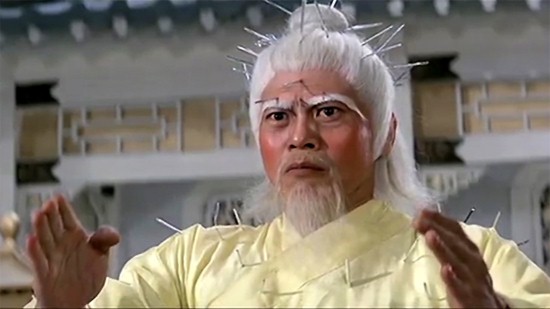
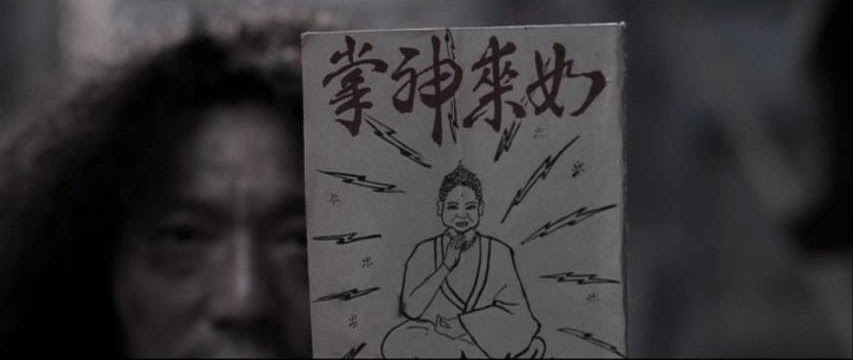
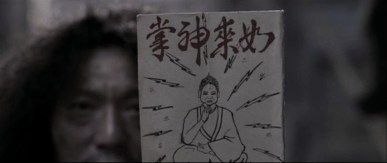
Wouldn’t living in China be even better if you could read those old kung fu manuals. What price would you put on learning the ancient buddha palm? Like in the movie ‘kung fu hustle’?

It is true however that not everyone is interested in characters. Maybe your goal is just simple conversations for the heck of it. In that case you don’t need to learn characters. If you want to get any further, characters will help you when you want to go. And luckily for you there are lots and lots of apps, websites and free materials you can get your hands on to help you learn characters.

Here is a good app for learning how to write Chinese Characters, its called Skritter. Skritter allows you to write Japanese and Chinese characters with a mouse or a tablet and get a score and suggestions on how to improve your handwriting. And here is another app its called Memrise.

Memrise is community based learning app that uses images and science to make learning easy and fun. It does this through connecting audio, imagery, pinyin and character recognition.

Mistake #4: Not being consistent and persevering

Use all the opportunities available to you to learn. Pick a day each week where you force yourself just to use Chinese. The trick is to use the language when the opportunity presents itself. Immerse yourself in the language and the country and enjoy the experience. To do this you must be consistent and persevere. Making a learning plan with set learning goals for each week will definitely help but remember having goals is not the be all and end all.

563373_2994181535231_1282963545_3218727_417877125_n1

Mistake #5: Focusing on progress over process

Having goals for learning Chinese is fine, and can take you a long way on the path to fluency. But you may end up going crazy long before you reach your destination. That’s because a realistic expectation for learning Mandarin to true fluency might be five to twenty years!

It’s easy to get discouraged when you make mistakes or don’t see rapid progress. So what can you do to stay sane?

First, accept that you are not Chinese, and even after years of hard work you’re still going to make stupid mistakes. The more the better, as we’ll talk about in a moment.

Second, enjoy the journey — make your goal using Chinese instead of mastering it. Focus on today, not where you want to be next year. That doesn’t mean abandoning long term goals or not setting them at all. It means focusing on the here and now and being happy with your current level of Chinese and using it. And you can do that by avoiding a common mistake that Chinese language learners make:

Mistake #6: Not making good Chinese friends

If you’re really going to master the language, you need to get out there. That’s because language can’t be completely built within the warm confines of a classroom. You find the missing pieces by getting exposed to real Chinese. A lot of it. Making interesting Chinese friends is one way to get this exposure. If you feel awkward speaking to your Chinese friends in Chinese, you need to make more friends or learn more Chinese, or both. When you find a friend who doesn’t mind speaking Chinese with you, see if you can get them to correct some of your mistakes. This is the advice that Tim Ferris gives best, from Why Language Classes Don’t work: “Make it your goal to screw up as often as possible in uncontrolled environments. Explicitly ask friends to correct you and reward them with thanks and praise when they catch you spouting nonsense, particularly the small understandable mistakes. I was able to pass the Certificatdo de Espanol Avanzado, the most difficult Spanish certification test in South America, in eight weeks, which is said to require near-native fluency and years of immersion. How? By following the above fixes and making more mistakes in eight weeks than most make in eight years.” – Tim Ferris Make as many mistakes as you can, and try to get people to point them out to you. It may be awkward at first, but it’s the best way to improve your speaking. But like you wouldn’t jump into the Amazon without learning how to swim, you need to learn the basics before putting yourself out there. One way to do so better is by avoiding this common mistake:

Mistake #7: Not using the best learning materials available

Most people think that having a great teacher is more important than having a great textbook. Personally, I agree with Tim Ferris and what he says in the article linked above: great textbooks + an average teacher > average textbooks + an great teacher. Whether or not you take formal language classes, the best learning materials will help you learn Chinese better.

Here are three sources I highly recommend:

1. Chinesepod.com — Their podcasts and other audio aides make this the best choice if you can’t attend real classes or get much time with a good tutor / language exchange partner.

2. Integrated Chinese (Princeton University Press)– This is the most thorough textbook introduction to Chinese I know of. If you learn everything in the first two year’s worths of books, you’ll have succeeded in building a good foundation for later learning.

3. Fluentu is a website with the best Mandarin Chinese video content. It’s fun, timely, and ideal for Chinese learners. It has Chinese movie trailers, Chinese music videos, Commercials, and Business Chinese videos. No matter what your interest or level of fluency, we’ve got what you’re looking for.

Learn-Chinese-in-China

Mistake #8: Settling for poor classes

A bad class can sometimes be worse than no class at all — spending time and energy on average classes and with teachers who force feed you the same lessons or that have no imagination or class structure is not something you want to do. So take control of your learning.

The quality of the textbooks — Don’t settle for poor texts use New Practical Chinese Reader to being with.

The size of classes — For the most part will be small. The problem is the numbers are likely to fluctuate throughout the year during peak and quiet times at the school

The levels of classes — Most schools will have only one level it therefore will be up to you to put a case for adding extra levels. The most likely solution will be that you recommend the school has 1 level for beginners and new arrivals and another for students serious about learning Chinese.

If your teachers have experience teaching foreigners — part of the reason these classes can be so frustrating is that its likely your teacher will be totally clueless about teaching foreigners Chinese — by forcing the structure of a text and workbook you can limit this. Finally, don’t make this mistake as you will need it:

Mistake #9: Not using kickass tools for learning Chinese

There’re many tools for learning Chinese online. But these are some of the very best:

1. Google’s Character writing software There’s no better character input system than Google’s Pinyin input system. It reponds fast to your typing, guesses what characters you want incredibly well, and allows you to type out strings as long as you want. All that means a really convenient way of typing Chinese.

2. Chinese Pera-kun Have you ever wished you could hover your mouse over a character or group of characters and see its pinyin and meaning instantly? Well, a plugin for Firefox, and google chrome Chinese Pera-kun, can help you do this. It’s not perfect but it comes close.

3. Anki

This fantastic piece of SRS software”) lets you keep track of everything you’re learning and study it efficiently. If you’re starting out learning Mandarin (or any language), I’d strongly recommend using Anki from the beginning. If you’re already some way into the language, start creating flashcards as soon as possible. Anki’s cool because it’s fairly easy to get up and running, but the more you use it the more you come to realise how deep its features and capabilities go. It can’t do everything for you, but it can make the time you put in much more effective. If you use nothing else from this list, use Anki.

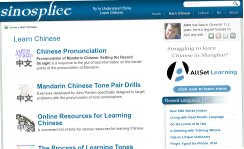
4. Sinosplice John Pasden’s blog Sinosplice has a collection of very clear, accurate guides for learning Mandarin, particularly for the early stages. You can save yourself a lot of time by reading these and getting a few things right from the beginning (particularly tones and pronunciation in general).
5. MDBG & Pleco A good quality free dictionary had to make it on to this list somewhere, and I find MDBG to be the best Chinese dictionary. It’s very fast and reliably online, and it’s also the result of an admirable community project to build a free and open dictionary. I would have put nciku here, but I find it’s either very slow or inaccessible, and when it actually does load, the interface is a overwhelmed by advertising. It has great content but really is hampered by these issues. Pleco is a great free app. It also supports the iPad, while many other iPhone dictionaries don’t. Pleco has an integrated dictionary / document reader / flashcard system with fullscreen handwriting input and live OCR.
6. Tatoeba The Tatoeba project logoDictionaries are useful for quick checks on words, particularly from the target language into your own. But experienced language learners know that to accurately grasp the meaning of a word you need to see it in action. For this you need example sentences, and Tatoeba is quickly becoming the best resource for this. It’s already got a huge database of examples sentences, and more are being added every hour. The thing that makes Tatoeba stand out though is that it’s more than a 1 – 1 list of translations; it’s a web of translations. It’s also a free, community-based project (you might have realised by now that I really like free, community-based projects). This means that if there’s something you don’t know how to express in Mandarin, you can just add it in English and wait for someone to come along and translate it.

Screen Shot 2015-08-19 at 22.44.23

So there you have. Watch out for the mistakes and enjoy your learning. For further information on the best places to learn Chinese, visit StudyMartialArts.Org

Hangovers.

Excellent and honest post from my buddy Joe Gilmore.

coachjoegilmore's avatarResilient Health.

I’m hungover right now.

“You’re hungover!? A fitness coach, on a Thursday!?”

Yep. In all of my fitness superiority, telling others never to drink or eat bad foods or do anything except a strict routine of boredom and workout, I am hungover.

What’s the point of telling you this?

I made the choice last night (also my birthday-eve) to go out and drink with one of my best mates. Completely aware I would wake up feeling like this, completely aware that I have to work a solid 8 hours today as well as hit the gym; completely aware of the effects to my physical and emotional body.

When a person decides, usually on a Monday at work, that on the weekend they will go and drink 3 bottles of red and drown their awareness of the life they live, they usually do so without the awareness of the flow on…

View original post 432 more words

FURTHER WRITINGS OF SUN LUTANG

This is an amazing resource for students of Sun Style Boxing.

Paul Brennan's avatarBrennan Translation

ESSAYS BY SUN LUTANG

[translation by Paul Brennan, May, 2015]

In addition to Sun’s five famous books…

形意拳學 A Study of Xingyi Boxing (1915)
八卦拳學A Study of Bagua Boxing(1917)
太極拳學A Study of Taiji Boxing(1921)
拳意述真Authentic Explanations of Martial Arts Concepts(1924)
八卦劍學 A Study of Bagua Sword (1927)

he also produced several important essays:

論拳術內家外家之別
“Discussing Distinctions Between the Internal & External Schools of Martial Arts” (1929)
拳術述聞
“Some Things I Have Been Told About Martial Arts” (1929)
國術源流之管見
“My Opinions on the Origins of Chinese Martial Arts” (1930)
詳論形意八卦太極之原理
“A Detailed Look at the Theories of Xingyi, Bagua, and Taiji” (1932)

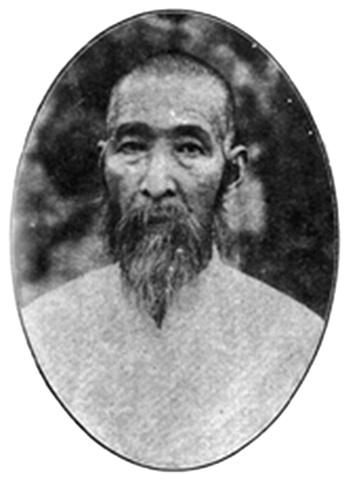
孫祿堂 portrait - 1929

教務長孫福全
Dean of Studies, Sun Fuquan
[photo from 江蘇省國術舘年刊Jiangsu Martial Arts Institute Annual, July 31, 1929]

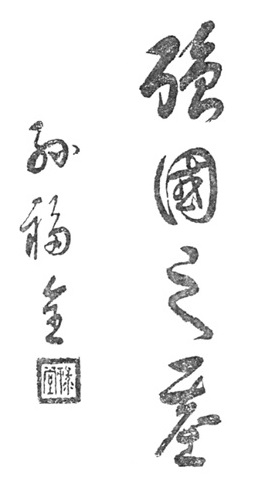
孫祿堂 calligraphy - 1931

強國之基
The basis of strengthening the nation
孫福全
– [calligraphy by] Sun Fuquan
[included in 鄞縣縣國術館一週紀念刋Yin County(in Ningbo, Zhejiang)

View original post 5,917 more words

Jianwu Basic – Fa Jin Prep Stages 1-6

Inside Zhan Zhuang's avatarInside Zhan Zhuang

????????????????????????????????????????

Aloha and Greetings from Maui. Here is a detailed presentation of a basic Jianwu movement trained for health and martial arts. Normally this type of in-depth video is reserved for my private students, but due to the interest and desire of so many to advance from where they are to where they want to be, I have decided to make it public.

View original post

9 Bits of Wisdom from the Dali Lama

1. “Through violence, you may ‘solve’ one problem, but you sow the seeds for another.

2. Love and compassion are necessities, not luxuries. Without them, humanity cannot survive.

3. The universe that we inhabit and our shared perception of it are the results of a common karma. Likewise, the places that we will experience in future rebirths will be the outcome of the karma that we share with the other beings living there. The actions of each of us, human or nonhuman, have contributed to the world in which we live. We all have a common responsibility for our world and are connected with everything in it.

4. It is under the greatest adversity that there exists the greatest potential for doing good, both for oneself and others.

5. The creatures that inhabit this earth-be they human beings or animals-are here to contribute, each in its own particular way, to the beauty and prosperity of the world.

6. To develop genuine devotion, you must know the meaning of teachings. The main emphasis in Buddhism is to transform the mind, and this transformation depends upon meditation. in order to meditate correctly, you must have knowledge.

7. Anything that contradicts experience and logic should be abandoned.

8. We humans have existed in our present form for about a hundred thousand years. I believe that if during this time the human mind had been primarily controlled by anger and hatred, our overall population would have decreased. But today, despite all our wars, we find that the human population is greater than ever. This clearly indicates to me that love and compassion predominate in the world. And this is why unpleasant events are “news”; compassionate activities are so much a part of daily life that they are taken for granted and , therefore, largely ignored.

9. The fundamental philosophical principle of Buddhism is that all our suffering comes about as a result of an undisciplined mind, and this untamed mind itself comes about because of ignorance and negative emotions. For the Buddhist practitioner then, regardless of whether he or she follows the approach of the Fundamental Vehicle, Mahayana or Vajrayana, negative emotions are always the true enemy, a factor that has to be overcome and eliminated. And it is only by applying methods for training the mind that these negative emotions can be dispelled and eliminated. This is why in Buddhist writings and teachings we find such an extensive explanation of the mind and its different processes and functions. Since these negative emotions are states of mind, the method or technique for overcoming them must be developed from within. There is no alternative. They cannot be removed by some external technique, like a surgical operation.”

H.H. The 14th Dalai Lama in ‘Dzogchen: The Heart Essence of the Great Perfection‘, Snow Lion Publications, Ithaca, 2004