But if you ask some kung fu teachers… the answer is yes?
There are many kung fu schools nowadays who practice applications in a slow, controlled way. This is a great strategy for beginners, who are still learning the movements, but it simply won’t turn you into a real fighter who can compete or defend themselves:
The difference between applying a technique slowly to a willing partner and using a technique in a stressful, high-speed situation is like night and day.
At An Wushu, we believe sparring is of critical importance. A student following our standard schedule performs Sanda (Chinese kickboxing, a mixture of punching, kicking, wrestling and takedowns) 5 days a week: 3 long sessions to build skills and 2 shorter ones to refine them. Most sessions include some sparring and reaction drills.
There are 3 primary reasons for this:
There has never been a Grandmaster or Master in the An Family who did not perform true sparring – full speed, full power, trying to overcome an opponent who’s trying to do the same to you
There is a difference between moving fast, which you can develop by (for example) hitting a bag, and reacting fast: your ability to see the micro-movements in your opponent’s body and attack them before they can attack you!
Imagine you are a champion boxer and are put in a fight with a wrestling champion: very likely, you will hit them often, but they will throw you often, because while you both are very skilled, you may not be used to defending that style of attack. In our current age, most opponents you face will be a boxer, MMA fighter or street fighter. If you haven’t trained these attacks yourself, you won’t see them coming.
At the end of the day, it’s scientific fact that the body develops specifically:
If you lift light weights, you won’t be able to lift heavy weights.
If you run slowly, you won’t get better at training fast.
If you don’t stretch, you won’t become more flexible.
And if you don’t spar… you won’t become a real fighter.
This morning, in the hostel in Kangding a Chinese guy asked me whether I’d been to Sida or not. For a lot of young Chinese people it seems to be this years ‘In’ destination… “and did you see the ‘tianzang’ (i guess he didn’t know the right words in English…) ?… I really want to see…” I did, but at Sida I wasn’t that comfortable with it.
I’ve seen one before, 2-3 years ago whilst biking through Gansu province. A body was carried up a hill and a gathering of Tibetan relatives and lamas stood or sat watching. There were a few foreigners there too, but we all knew that our cameras were to be kept inside our bags. We stood watching for around an hour or so… in awe of the birds, their size, their grace and the way they sat on the hill silently, waiting for their turn to pick at the remains….
In Sida its very different. Around 12.00 a handful of drivers stood outside the hilltop hotel yell ‘去天葬吗 ?and Chinese tourists haggle over prices or ask around to find others to fill up their cars. Around 12.30 most of the cars have made their way down to the bottom of the monastery complex and are beeping at each other as they negotiate their way through the muddy bumpy truckstop village at the bottom. The beeping and racing continues as the cars go down the road, turn and go up a smaller narrower mountain road. Its raining but the car park is already half full and its hard to see the end of the line of cars still making their way up the mountain. There are already around a hundred or so tourists, all Chinese stood behind a rope when I arrive. A couple of lamas and nuns (maybe real… maybe tour guides dressed up… I’m really not sure now…) were telling people to stay behind the line and not to take photos of the body or of the people surrounding it. I pointed my camera at the birds, as awesome as I remembered sat waiting patiently on the top of the hillside, looking for the right moment to make their way further down.
I have no idea when the ceremony started. There was a nun singing ‘o-mani…’ and lots of Chinese people talking. I guess the ceremony wasn’t quite what the Chinese were expecting as most had left within 1/2 an hour or so. I stayed watching the crowd thin, and staring at the line of vultures sat on the hill above me. I couldn’t help wondering why the the vultures were more interested in watching their friends than eating lunch, and then realised I was doing the same thing, not really watching the ceremony and the proceedings but the behaviour of the crowd, and the way the Chinese people reacted to what they were watching. There were a lot of ‘i’m very cold’ and ‘I’m hungry’ ‘s… There were people taking pictures of the birds squabbling over the body (the very thing the monks told them not too…. and, yeah I know I shouldn’t have taken 2 of the pics. here but my iPad doesnt have the same super sized zoom lenses that many of the Chinese photographers cameras do…) A few Tibetan people were gathered around the monument at the bottom, near the pit where the body and vultures were and a few more groups were scattered around the hillside sat quietly. I wondered what they thought about what they were seeing… their relatives death being turned into a macabre tourist attraction, and how westerners would react if a group of Chinese tourists turned up at a church burial wanting to watch when and how the coffin was lowered into the ground and to take pictures of it.
I can’t help thinking that death and the ceremonies that surround it are a personal thing, for the families and friends of the person that died. In western culture funerals are usually sad events, but in other cultures (and sometimes in the west, but not often), they are happier occasions, a celebration of the deceased’s life… and that being invited to watch the ceremonies associated with it is a privilege, not something that people should expect to see when they go to a Tibetan tourist place.
I wonder whether the monastery is deliberately encouraging the tourist crowds. The sky burial site has a large white monument and construction is underway to make it and the car park alongside it bigger. In Gansu, the ceremony and the place where it took place was simple, the surroundings natural. There was a weird beauty to the proceedings. In Sida there was nothing ‘natural’ about it. 10 minutes or so later when a young boy took my ipad off me to look at my photos I realised that the tour guide/nun had stopped singing and had disappeared. A few minutes later I saw her lead a group of people across the grass, one of the places where were told not to go. The people in her group were pointing their cameras at the vultures and the body below and no one was stopping them. By this time the crowd had thinned out. Horns were beeping as the cars were pushing past each other to make their way out of the car park. The vultures were still picking away or watching and waiting. I stayed a while longer, watching the birds, the snake of cars slowly making its way down the hillside and the small groups of Tibetans sitting in the distance. I couldn’t help wondering who were the vultures. I don’t think the monastery intended to promote this type of tourism, but now that seeing a 49 day old corpse being pulled apart by vultures is one of the latest ‘in’ things for Chinese tourists heading to Sida to see I don’t think it will be easy for them to control.
But back to the story… I asked the guy why he wanted to go and see one. ‘because… because everybody talks about it. It sounds good. I really want to see. People say Sida is the best place to see it.’ ‘Maybe you should see it.’ I told him ‘It might make you think…’ but, judging by the group of tourists I watched 4 days ago… I doubt it.
The Tibetan sky-burials appear to have evolved from ancient practices of defleshing corpses as discovered in archeological finds in the region. These practices most likely came out of practical considerations, but they could also be related to more ceremonial practices similar to the suspected sky burial evidence found at Göbekli Tepe (11,500 years before present) and Stonehenge (4,500 years BP).[citation needed] Most of Tibet is above the tree line, and the scarcity of timber makes cremation economically unfeasible. Additionally, subsurface interment is difficult since the active layer is not more than a few centimetres deep, with solid rock or permafrost beneath the surface. (Wikipedia)
For sometime I’ve been looking to connect to the best Wudang Kung Fu schools located on Wudang Shan. Using the StudyMartialArts.Org network of respected fellow martial artists, friends and kung fu brothers I’ve researched visited and connected to a number of schools over the years.
One of the best on Wudang Shan that we have recently connected to is Master Tang’s academy close to Taichi Lake.
The Wudang Gong Fu & Health Academy is a small school with a detailed and structured education program.
Students who wish to enter and be accepted onto one of their special education programs covering the essential training of Wudang Xuan Wu Pai have the chance of becoming a Wudang Disciple and genuine linage holder of Wudang Internal Martial arts. Pending suitable performance and dedication of course.
The headmaster Tang Li Long is one of the main disciples of Grand Master You Xuan De. Master Tang has years of experience teaching Internal Wudang Martial Arts. He has created a system that teaches the essence effectively and under his guidance students will learn the tradition preserved on the mountain.
Tang Li Long’s vision is to spread the Wudang Daoist knowledge around the world in order to preserve the traditional teachings of dào fǎ zìrán ”the natural way” (道法自然) and the 10 Taoist principles of Wudang Pai. His school has a family feel to it where kung fu brothers and sisters from different countries, backgrounds and experiences can all share their knowledge in order to better understand the way of the Dao.
ABOUT MASTER TANG LI LONG
Master Tang Li Long is a 15th generation Wudang Daoist Martial Arts Master of the Xuan Wu Pai. Encouraged by his father he started training Martial Arts in his home town at a young age. Later, after studying Wudang Taiji Quan in Wuhan for a well known master he was told to go to Wudang Mountain to become a Wudang Disciple. He’s master sent a mail to the Wudang Shool of Martial Arts and some time later he was invited to come and study for 14th generation Wudang Master You Xuande, who was the Abbot of the Wudang Temples and the keeper of the Wudang Martial Arts.
Wudang Disciple 1994 he arrived at Wudang Mountain and started to learn from Grand Master You. After a long time of hard training Master Tang became one of the main diciples of You Xuande. With a genuine background with in Taiji Quan his skills and understanding where different from other students. He worked close to Master You and helped him write down ideas about Martial Arts and Daoism. Tang Li Long is now one of the “5 Dragons of Wudang” and a linage holder of the Wudang Xuan Wu Pai. 1998 he won a Medal in the 1st World Traditional Wushu Championships and 1999 he was awarded as a outstanding Master in a big Wudang Taiji Quan gathering. Tang Laoshi, Master Tang Li Long, or “Tang Laoshi” as most people call him, has almost 20 years of experience of Wudang Martial Arts and have a system of teaching that is different from other schools on the mountain. He teaches the foundations of the style and focus on Basics, Qi Gong and Applications. His long time students has won many competitions and gained high skills in Wudang Wushu. His main skill is his ability to bring out good quality of the training and the students and teach the essence of Wudang Internal Martial Arts. He holds a position as secretery of the International Wudang Mountain Taiji Gongfu Association and have done performances in China, Korea and Germany. He has publiced articles in the Chinese Martial Arts Wudang Wind Magazine and Hubei Daily Newspaper. He was mentioned in a book about famous Gongfu Masters in 2010 (“Chinese Folk/Unofficial Gongfu Masters” – “Zhongguo Mingjian Wushu Mingjia”). In 2010 set up the school and the present location in Wudangshan, same year his student Jakob Isaksson, Sweden, won a Silver and Brons Medal in the 4th World Traditional Wushu Championships.
Tang Li Longs philosophy is to wholeheartedly train the disciples and carry on the tradition.
If you’re studying martial arts in China whether north or South, the chances are you might also be learning the language or at least have it as one of your goals. Whether your motivation is a deeper understanding of your Shifu and the various martial arts concepts he or she is teaching you or whether it is simply to make living in China easier, learning the language makes your experience more colorful and opens greater possibilities. And yes and those possibilities also improve your chances of success with the opposite sex.
This article is specifically tailored to highlight the common mistakes that martial arts students and adventure travelers often make when attempting to learn the language.
Mistake #1:Assuming the language learning classes at the kung fu school of your choice will be enough to give you a basic understanding of Chinese
Over the past 10 years many kungfu schools in China have developed specifically to cater to international kung fu students. Many of these have divided and sub divided over the years. The result has been many schools are hard to tell apart except for their locations. The heads of these schools through their shared experiences have caught onto the fact that many of their potential students are looking for a total experience. They are not just after expert kung fu tuition from ‘Shaolin masters’ they want language learning classes, buddhism classes, calligraphy and even TCM (Traditional Chinese Medicine). So with one school offering this the rest attempt to follow suit. Promising to over deliver on value for money with these optional evening classes.
The truth is however, that the optional evening classes most schools offer are generally very basic and only meant to be introductory at best and at worst are poorly structured, and a total waste of time. For the purpose of this article I am going to concentrate on the mandarin classes.
Generally, these are taught by inexperienced translators working at the schools who often have little or no teaching experience. This makes the class itself, structure and content rather random. Another additional challenge you will face is that these classes are often open to all school new comers who have a varying degree of seriousness about learning the language. The result is that every few sessions you might be back to learning, ‘
'Ni hao'
你好
And listening to your new class mates ask questions such as, ‘how do I say you are beautiful in Chinese?’ or ‘how do I say this is too expensive!’
The solution is to not expect too much from the free language learning classes and instead to take control of your own learning. I recommend you buy structured Hanban HSK Chinese language learning books, Practical Chinese Reader. And work toward completing the HSK exams. This will help you set achievable incremental goals. HSK books generally have a text book, workbook and audio files/cd’s, dvd’s. These books start from beginner level and work up to advanced. HSK Level 1-6.
Using these books as the main foundation for your course material will give your Chinese class structure and provide the teacher with set lessons to help you complete the books.
NOTE: If you would like us to send you any of these books please let us know and we will order them and send them direct to your school so they are either ready for you on your arrival or soon after.
So the language classes at the kung fu schools might not be the best. However, they are great value for money and with the right attitude and some dedication they can still get you the basic Chinese and the foundational level you want.
Mistake #2: Not mastering tones
If you speak Chinese without proper tones you might as well be half deaf and dumb. The tones are the foundation of the language so time spent here and reviewing this will really help you get your learning off on the right track. If you don’t almost no one is going to understand you. No one except your classmates and your, teacher, the same teacher that’s used to students mangling his or her language. Once you step outside the warm cocoon of the classroom, everything changes.
But Chinese people can guess what you’re trying to say, right? Wrong.
The reason why is simple but hard to fathom for people who didn’t grow up speaking a highly tonal language — to a native speaker of Chinese, the different between tones is just as pronounced as that between consonants — perhaps even greater. Now, I’m sure you will debate time and time again with your fellow foreign friends but surely the context makes it clear! Trust me save yourself some pain, embarrassment and frustration. Master the tones early on.
In addition to this in the SMA Welcome Pack provided to students who book their training through www.StudyMartialArts.Org we’ll provide you with a Michelle Thomas Audio that will help you distinguish the tones and make you familiar with them in quite a unique way. Green Thumb Up!
Mistake #3: Not learning characters
What about characters — won’t leaping over them help you reach conversational fluency faster? Sure, in the beginning, Pinyin is easier, after all, and you’ll free up time to practice conversation. But characters are nothing if not an aid to your learning at the higher levels. They help you watch TV, get around town, and do pretty much everything you need to live in China without assistance. The other thing is that visual learners find learning characters re-enforces their existing learning.
Wouldn’t living in China be even better if you could read those old kung fu manuals. What price would you put on learning the ancient buddha palm? Like in the movie ‘kung fu hustle’?
It is true however that not everyone is interested in characters. Maybe your goal is just simple conversations for the heck of it. In that case you don’t need to learn characters. If you want to get any further, characters will help you when you want to go. And luckily for you there are lots and lots of apps, websites and free materials you can get your hands on to help you learn characters.
Here is a good app for learning how to write Chinese Characters, its called Skritter. Skritter allows you to write Japanese and Chinese characters with a mouse or a tablet and get a score and suggestions on how to improve your handwriting. And here is another app its called Memrise.
Memrise is community based learning app that uses images and science to make learning easy and fun. It does this through connecting audio, imagery, pinyin and character recognition.
Mistake #4: Not being consistent and persevering
Use all the opportunities available to you to learn. Pick a day each week where you force yourself just to use Chinese. The trick is to use the language when the opportunity presents itself. Immerse yourself in the language and the country and enjoy the experience. To do this you must be consistent and persevere. Making a learning plan with set learning goals for each week will definitely help but remember having goals is not the be all and end all.
Mistake #5: Focusing on progress over process
Having goals for learning Chinese is fine, and can take you a long way on the path to fluency. But you may end up going crazy long before you reach your destination. That’s because a realistic expectation for learning Mandarin to true fluency might be five to twenty years!
It’s easy to get discouraged when you make mistakes or don’t see rapid progress. So what can you do to stay sane?
First, accept that you are not Chinese, and even after years of hard work you’re still going to make stupid mistakes. The more the better, as we’ll talk about in a moment.
Second, enjoy the journey — make your goal using Chinese instead of mastering it. Focus on today, not where you want to be next year. That doesn’t mean abandoning long term goals or not setting them at all. It means focusing on the here and now and being happy with your current level of Chinese and using it. And you can do that by avoiding a common mistake that Chinese language learners make:
Mistake #6: Not making good Chinese friends
If you’re really going to master the language, you need to get out there. That’s because language can’t be completely built within the warm confines of a classroom. You find the missing pieces by getting exposed to real Chinese. A lot of it. Making interesting Chinese friends is one way to get this exposure. If you feel awkward speaking to your Chinese friends in Chinese, you need to make more friends or learn more Chinese, or both. When you find a friend who doesn’t mind speaking Chinese with you, see if you can get them to correct some of your mistakes. This is the advice that Tim Ferris gives best, from Why Language Classes Don’t work: “Make it your goal to screw up as often as possible in uncontrolled environments. Explicitly ask friends to correct you and reward them with thanks and praise when they catch you spouting nonsense, particularly the small understandable mistakes. I was able to pass the Certificatdo de Espanol Avanzado, the most difficult Spanish certification test in South America, in eight weeks, which is said to require near-native fluency and years of immersion. How? By following the above fixes and making more mistakes in eight weeks than most make in eight years.” – Tim Ferris Make as many mistakes as you can, and try to get people to point them out to you. It may be awkward at first, but it’s the best way to improve your speaking. But like you wouldn’t jump into the Amazon without learning how to swim, you need to learn the basics before putting yourself out there. One way to do so better is by avoiding this common mistake:
Mistake #7: Not using the best learning materials available
Most people think that having a great teacher is more important than having a great textbook. Personally, I agree with Tim Ferris and what he says in the article linked above: great textbooks + an average teacher > average textbooks + an great teacher. Whether or not you take formal language classes, the best learning materials will help you learn Chinese better.
Here are three sources I highly recommend:
1. Chinesepod.com— Their podcasts and other audio aides make this the best choice if you can’t attend real classes or get much time with a good tutor / language exchange partner.
2. Integrated Chinese (Princeton University Press)– This is the most thorough textbook introduction to Chinese I know of. If you learn everything in the first two year’s worths of books, you’ll have succeeded in building a good foundation for later learning.
3. Fluentuis a website with the best Mandarin Chinese video content. It’s fun, timely, and ideal for Chinese learners. It has Chinese movie trailers, Chinese music videos, Commercials, and Business Chinese videos. No matter what your interest or level of fluency, we’ve got what you’re looking for.
Mistake #8: Settling for poor classes
A bad class can sometimes be worse than no class at all — spending time and energy on average classes and with teachers who force feed you the same lessons or that have no imagination or class structure is not something you want to do. So take control of your learning.
The quality of the textbooks — Don’t settle for poor texts use New Practical Chinese Reader to being with.
The size of classes — For the most part will be small. The problem is the numbers are likely to fluctuate throughout the year during peak and quiet times at the school
The levels of classes — Most schools will have only one level it therefore will be up to you to put a case for adding extra levels. The most likely solution will be that you recommend the school has 1 level for beginners and new arrivals and another for students serious about learning Chinese.
If your teachers have experience teaching foreigners — part of the reason these classes can be so frustrating is that its likely your teacher will be totally clueless about teaching foreigners Chinese — by forcing the structure of a text and workbook you can limit this. Finally, don’t make this mistake as you will need it:
Mistake #9: Not using kickass tools for learning Chinese
There’re many tools for learning Chinese online. But these are some of the very best:
1. Google’s Character writing software There’s no better character input system than Google’s Pinyin input system. It reponds fast to your typing, guesses what characters you want incredibly well, and allows you to type out strings as long as you want. All that means a really convenient way of typing Chinese.
2. Chinese Pera-kun Have you ever wished you could hover your mouse over a character or group of characters and see its pinyin and meaning instantly? Well, a plugin for Firefox, and google chrome Chinese Pera-kun, can help you do this. It’s not perfect but it comes close.
This fantastic piece of SRS software”) lets you keep track of everything you’re learning and study it efficiently. If you’re starting out learning Mandarin (or any language), I’d strongly recommend using Anki from the beginning. If you’re already some way into the language, start creating flashcards as soon as possible. Anki’s cool because it’s fairly easy to get up and running, but the more you use it the more you come to realise how deep its features and capabilities go. It can’t do everything for you, but it can make the time you put in much more effective. If you use nothing else from this list, use Anki.
4. SinospliceJohn Pasden’s blog Sinosplice has a collection of very clear, accurate guides for learning Mandarin, particularly for the early stages. You can save yourself a lot of time by reading these and getting a few things right from the beginning (particularly tones and pronunciation in general).
5. MDBG & PlecoA good quality free dictionary had to make it on to this list somewhere, and I find MDBG to be the best Chinese dictionary. It’s very fast and reliably online, and it’s also the result of an admirable community project to build a free and open dictionary. I would have put nciku here, but I find it’s either very slow or inaccessible, and when it actually does load, the interface is a overwhelmed by advertising. It has great content but really is hampered by these issues. Pleco is a great free app. It also supports the iPad, while many other iPhone dictionaries don’t. Pleco has an integrated dictionary / document reader / flashcard system with fullscreen handwriting input and live OCR.
6. TatoebaDictionaries are useful for quick checks on words, particularly from the target language into your own. But experienced language learners know that to accurately grasp the meaning of a word you need to see it in action. For this you need example sentences, and Tatoeba is quickly becoming the best resource for this. It’s already got a huge database of examples sentences, and more are being added every hour. The thing that makes Tatoeba stand out though is that it’s more than a 1 – 1 list of translations; it’s a web of translations. It’s also a free, community-based project (you might have realised by now that I really like free, community-based projects). This means that if there’s something you don’t know how to express in Mandarin, you can just add it in English and wait for someone to come along and translate it.
So there you have. Watch out for the mistakes and enjoy your learning. For further information on the best places to learn Chinese, visit StudyMartialArts.Org
This is the story of how three men from the US became seventh-generation disciples of Yang Lu Chan, the creator of Imperial Yang style of tai chi.
On the 25th April and until to the 5 of May, Ray Abeyta and Wolf Carter from the Texas School of Tai Chi in El Paso and Michael Paler from Colorado Springs will on the invitation of Dr. John Fung, officially a sixth-generation disciple of Imperial Yang Style will visit Beijing, to spend 10 days learning from his kung fu sister Wei XiLan the daughter of the late GM Wei Shuren. These three men will become the first Americans to be included in this particular linage of tai chi.
The story began when on the request of Ray Abeyta, Dr John Fung a 6th generation lineage holder of Imperial Yang living in Sydney Australia visited El Paso to teach a number of seminars. On seeing the dedication, skills, plus attitudes and personalities of Ray, Wolf and Michael as well as with much reflection Dr Fung decided to ask them if they would like to become disciples and join the Imperial tai chi family.
Dr John Fung’s lineage:
Wei Shuren – Wang Yongquan – Yang Jianhou – Yang Luchan.
Yang Lu Chan
This in itself is a huge deal for the tai chi community in the United States as Ray and his fellow tai chi brothers are all keen to return and share their knowledge with those who attend their classes as well as further afield.
Ray said. “There are other Yang family organizations, but this is the only one considered Imperial Yang style. You have to remember originally, Yang Lu Chan was hired by the emperor to teach his guards how to fight. He was the best fighter in the land back then. That continued in Beijing, where he continued to teach people. We are going to become official disciples of this linage. Very few people are picked. I don’t deserve it, but I’ll take it. I’ve going to do my best to honour the art.”
Knowing what I do of Ray I know this to be true as he is already sharing the information he’s learned from Dr. John Fung not only to the people in his existing classes in El Paso, but also to students in Santa Fe where he teaches every three months, and also with some people up in Colorado Springs. Anywhere people want to learn, Ray will share with them.
Wei Xinlan daughter of the late GM Wei Shuren, Dr John Fung, 6th Generation Lineage holder, Sifu Wolf Carter, Sifu Ray Abeyta, Sifu Michael Paler, 7th Generation Lineage holders.
Catching up with the group on my return to Beijing from Cebu I enjoyed listening to their stories and the whole groups enthusiasm for this rare art which is effectively what Bruce Frantzis calls Old Yang Style Taichi. An art that comes directly from Yang Lu Chan who was said to have only taught the emperor’s guard, the aristocracy and a select few disciples to a high level of excellence. The best of these students were his sons Yang Chien Hou, and Yang Pan Hou and Wu Chuan Yu from which Wu Style Taichi originates and which then subsequently led to the development of Sun Style Taichi.
Over some delicious Yunnan food we discussed taichi and martial arts related topics. Listening to John Fung and Ray I was struck by their genuine openness, kindness, knowledge and of course passion to share this fascinating art.
A delicious dinner of Yunnan food with my new friends, the day before they left Beijing.
If you are ever in Sydney, Australia or Texas, USA and would like to learn more about Imperial Style Taichi. Check out the following links:
At http://www.studymartialarts.org we are keen to support those on their various epic martial arts journeys so please let us know if you have anything you would like to share.
The purpose of this very long article is to familiarize readers with a uniquely Chinese weapon – the Miao Dao. During the 20th century, this sword has been pushed out the spotlight in favour of the much more popular Dao (Broadsword), Da Dao (Huge Broadsword), Guan Dao (a staff with a huge broadsword blade at its end), and the Jian (the Chinese straight, double-edged sword). Historically-speaking however, the Miao Dao was very popular on the Chinese battlefields, and nowadays it is regaining its popularity in various martial arts communities in China, south-east Asia and the West alike. The article shall first discuss the history of the sword, later its structure and utility, and at last its training methods, usage in the martial arts and the characteristics of it in fighting.
The weapon’s history and name
According to my teacher, master Zhou Jingxuan, the first Miao Dao date back to about the 5th century. It emerged around the time when round hilt guards first became widespread in Chinese sword design. It was known by many names throughout history. Originally it was mostly commonly referred to as simply ‘Chang Dao’ (長刀; Longsword). Later in the Ming and Qing dynasties (1368-1644 AD, 1644-1911 AD), it was plainly called ‘two-handed sword’. At that time, it was also commonly known as ‘Mao Dao’ (矛刀; Spear-sword). Another name for it over the centuries (beginning in the Song dynasty, 960 – 1279 AD) had been ‘Zhan Ma Dao’ (斩马刀) – Horse Cutting Sword. An appropriate name for a blade which is big, heavy and fearsome enough to cut down horses’ legs and stab them to death. This may sound archaic, but modern Miao Dao forms still feature movements which can be used for such horrendous purposes, and the weapon can be demonstrated to easily cut through the corpses of large animals (this I saw myself on Chinese documentaries, even when the cutting swords were held by only moderately-skilled individuals). The sword was also wielded by cavalrymen, and when used in that fashion it was most often utilized for stabbing (rather than hacking, cutting or slashing).
The modern name, ‘Miao Dao’ means ‘Sprout Sword’, and refers to the resemblance of a grounded sword (blade in ground and handle facing upwards) to that of some sprouts (such as sunflower sprouts). My teacher has told me that the reason the sword began to be called by this name was confusion in pronunciation, with ‘Miao Dao’ sounding similar to ‘Mao Dao’. This error persisted and the name stuck.
In the Ming Dynasty (1368-1644 AD) there had lived a famous martial artist by the name of Cheng Chongdou (程冲斗 ; Also known as Cheng Zongyou 程宗猷). He was born around 1561 in Anhui province. He is said to have been called by a representative of the Chinese emperor to teach army troops in Tianjin when he was 62 years of age. Skilled with many weapons, he wrote a famous book about the usage of Miao Dao, titled ‘Dān Dāo Fǎ Xuǎn’ (单刀法选) – ‘Selected (most important) Techniques of the Single Sword’. In the book are also notably featured other weapons, such as a crossbow (being carried by the soldiers as he wields the Miao Dao) and a short dagger (which is depicted as been carried passively or thrown at an opponent). The image to the left is from his book.
In the picture: An image from Cheng Chongdou’s book, Dān Dāo Fǎ Xuǎn. The book features a lot of illustrations of soldiers carrying crossbows, together or without a Miao Dao. As seen here, the crossbow took a whole-body effort and quite a lot of time to load, and could not have been used together with the Miao Dao. At the time, a popular tactic would have been to utilize projectile weaponry from a safe position or shelter, and resort to an all-out charge at the enemy once ammunition ran out. It is interesting that in this book, the soldiers are often both archers and infantrymen, while in European Medieval armies there would have been a greater distinction between the two fighting classes. It seems that the crossbow, being easier to shoot with than the bow, allowed for more versatility in its uses among the soldiers.
At around the same period (of Cheng Chongdou) had lived another very famous martial artist – General Qi Jiguang (November 12, 1528 – January 5, 1588). He holds a mythical position in Chinese military history and culture. During his lifetime and career, the Chinese army was busy fighting off Japanese pirates, and it is more than likely that at the time, Miao Dao and Katanas crossed blades on the battlefield. Indeed, in the 14th century painting below, dated before the time of Cheng Chongdou and Qi Jiguang, we already see Japanese pirates (Wokou 倭寇) wielding what appears to be Katanas (this is also evident in other paintings of these pirates), and it is known that many of them were former Samurai (those who wish to read more about these pirates can do so here: http://www.nippon.com/en/features/c00101/ ). In any case, Qi Jiguang had also written a book about the Miao Dao, titled ‘Xīn Yǒu Dāo Fǎ’ (辛酉刀法). The words ‘Xīn Yǒu’ refer to the year the book was released in during the Ming dynasty (58th year of a 60 year cycle), and ‘Dāo Fǎ’ means ‘Sword Methods’. Together – ‘The Sword Methods of the 58th Year’. General Qi Jiguang also famously issued Miao Dao swords to many of his soldiers when fighting the Mongols. The Mongol front was far from that Qi Jiguang had with the Japan, which goes to shows the sword had proven much versatility in usage under different conditions and upon various terrains.
In the beginning of the 20th century, master Guo Chengsheng (1866-1967) combined his extensive knowledge of Pigua Zhang (a Chinese martial art) with that he had of the Miao Dao, and created a second variation for the Miao Dao form (known as ‘Er Lu’ – Second Road), with the aid of his friend, master Ma Yingtu. Both the first (original) and second form are mostly closely associated with the techniques shown in Cheng Chongdou’s book, Dān Dāo Fǎ Xuǎn. Here is a video of my teacher, master Zhou Jingxuan, performing the Er Lu Miao Dao form:
My gongfu has descended from Guo Chensheng’s lineage:
Cheng Chongdou, Qi Jiguang and others in ancient times >>>>>>>>>>>>> Mr. Yang (18th century) >>>> Xie Jinfen (18-19th centuries) >>> Liu Yuchun (19th century; instructor at the Nanking Central Martial Arts Academy. Was a master of Pigua, Tongbei and Miao Dao) >>> Guo Chengsheng (1866-1967) >>> Guo Fengming >>> Pang Zhiqi & Wang Lianhe (20thcentury) >>> Zhou Jingxuan (in the video above) >>> Jonathan Bluestein.
In the picture: Guo Changsheng’s son, Guo Ruixiang (born 1932), himself a famous master. Note the closeness of the blade to the thigh as it passes in a circular fashion near it – a trademark of Miao Dao movements. The Guo family still manufactures and sells their own Miao Dao.
Though Guo Changsheng’s teachings of the Miao Dao had been of traditional battlefield techniques, over time his forms spread across China, with the majority of people practicing them in altered versions, adhering to the mindset and framework of modern sports Wushu. Thus, it came to be that as in the past, relatively few people still practice the Miao Dao as originally intended.
Physical appearance and design
The sword which bears the greatest similarity to the Miao Dao in design is strangely the Japanese Katana. This must be an uncomfortable piece of truth for the Chinese and Japanese, a large percentage of whom had been seriously resenting each-other (for good reasons) over the last few centuries.
Some claim that the Miao Dao is the sword that inspired the creation of the Japanese Katana. This sounds reasonable given the fact that Japan had borrowed significant portions of its culture, art, philosophies and even its entire writing system from China. However, Katanas are evidenced to have existed in Japan already countless generations ago – from at least the 14th century (The abovementioned Ming Dynasty in which the Miao Dao became commonplace, was only established in 1364). This puts into question the former claim of native Chinese influence, and it is possible that there had been cross-influences in the development of both swords. Nonetheless, it is still claimed by some that the Miao Dao influenced the creation of the Katanas before that time, perhaps even as early as the Tang Dynasty (618–907 AD).
I have also encountered claims that Cheng Chongdou, author of the Miao Dao book Dān Dāo Fǎ Xuǎn I mentioned earlier, was influenced by the Samurai school called Shin Kage Ryu (新陰流; ‘New Shadow School’), and that Qi Jiguang, author of the other Miao Dao book, Xīn Yǒu Dāo Fǎ, based his work upon a Japanese swordsmanship manual he acquired in battle. We cannot tell how much of this is true. In modern times, the body mechanics of traditional Koryu styles are extremely different to Chinese Miao Dao methods. Furthermore, the Katanas had always been shorter than the Miao Dao, and the substantial difference in both length and weight, as well as handle size, etc, makes for a very different wielding experience. Such things would be compared more thoroughly later in the article.
Another important point to consider is that Shin Kage Ryu was founded in the middle of the 16thcentury (when Qi Jiguang was already middle-aged and Cheng Chongdou was a child). This means that for this styles to have influenced any of the two, it ought to have become very influential and widespread within less than 30-40 years – so wide spread as to reach the shores of a different continent, wherein it would be used by several people and influence two major military figures in a foreign army.
While possible, this is unlikely. To add to this unlikelihood, Qi Jiguang’s book is said to have been written circa (1560) – around the time Shin Kage Ryu was founded, and at most not long afterwards. The comparisons drawn with Shin Kage Ryu seem to have been based on matching supposed similarities between written manuals, which is often a poor way to make such judgments, especially when the persons involved are self-taught on the art of sword wielding.
I was told, in confidence by a martial arts historian whom I trust, that there is in existence a decent and authentic Japanese drawing of a very (!) notable Japanese samurai, a founder of a known system, wearing Chinese armor of his period. This would be a very clear proof that Samurai warfare was influenced by Chinese methods. Unfortunately, I was sworn to refrain from revealing, in public or private, who is the person in question and what was his style, because this information has been handed out in trust and secrecy. Other records of Chinese influence over Japanese sword arts also exist.
In terms of metalworking, it is important to remember that Japan, unlike China, had always been scarce in natural resources, and especially high quality steel. This had forced Japanese swordsmiths to become more innovative in their art, and also significantly prolonged the time it took them to produce blades. These facts made the Katana a very prized weapon – the weapon of professional warriors (Samurai) and the aristocracy. Blades like the Miao Dao, on the other hand, could have been more readily made in China, and their commonality made them less valuable – financially, culturally, artistically and otherwise.
The entire cultural perception of these weapons varies significantly. This would soon be illustrated when comparing their innate structural attributes and physical form, but can already be witnessed by a keen eye in the pictures presented so far in the article. For instance – above in the first image in this article, we see a soldier throwing the sword in the air and catching it. This type of action is unheard of in Japanese Koryu arts as they are practiced today. Not to mention the fact that Miao Dao forms utilize classic stances from Chinese gong fu – Ma Bu, Gong Bu, Hou Bu, etc – which are not identical to those used in Japanese arts. With regard to the significance of the sword to its owner – the Japanese Samurai often considered the words to be ‘his soul’, and would bow to it before practice. That type of near-religious practice is not something a Chinese warrior would do. At least, it is not something the Chinese have kept in practice into modern times.
In the picture: An image from Cheng Chongdou’s book, Dān Dāo Fǎ Xuǎn.
Historical documents teach us that Miao Dao were always fairly long – so long at times, that some varieties could not have been unsheathed single-handedly with ease when the scabbard is attached to the body, and to speed the process bearers would be aided in this action by their partner before or during combat. We see this in the picture above (though ironically, the swords featured in the image are in fact easily sheathable by a single person). At a greater length this would make sense, as the swords would be too long to be carried at the waist, and would have to be positioned on one’s back.
At that position, having a friend to do the drawing for your saves a lot of time. This was also common practice with Japanese Odachi.
Though Miao Dao lengths can vary greatly, one constant has been that they are always notably longer than most Japanese Katanas, and therefore not suitable for quick drawing and with a tendency for clumsiness at indoor fighting. Unlike the Chinese straight sword (Jian), these swords were not originally intended for dueling – they were first and foremost instruments war. This is important to remember for another reason. The Miao Dao’s greatest enemies on the battlefield were not other Miao Dao, but spears and staffs (AKA cut-off spears), because they had a significantly longer reach. The Miao Dao has the edge to cut through these weapons (and even harder objects), but that requires timing, skill and very specific angles. I shall go more into these things as the article progresses.
The length of the Miao Dao used in my lineage varies proportionally to the height and measurements of the practitioner. The handle should be anywhere between the length of one’s forearm and fist put together, and the distance between one’s elbow and the edge of the pinky finger. That is pretty long compared with a Katana’s handle, and has several purposes. First and most important, to make it easier to switch hand positions. Second, so a wider grip could be used – making for a more effective lever, and allowing for arms and shoulders to open more in movement (this is important for utilizing the structural mechanics of wielding a Miao Dao in the Pigua style). Interestingly, because the length of the handle reflects that of a person’s forearm and palm, and the grip slides along and changes all the time, training with the Miao Dao also coincidentally aids in learning to work with an opponent’s arm when empty-handed, teaching a certain type of sensitivity in this regard.
The height of the blade reflects utility of action. A characteristic Miao Dao technique which we use involves an upwards slashing with the sword, following the drawing of a large circle. To increase effectiveness and partially hide the sword from the opponent’s field of vision, the sword’s circle is drawn as close to one’s body as possible, passing very near to one’s legs (the unskilled can actually cut themselves). Given that the blade is in this sort of action almost perpendicular to the ground in the moment before the upward slashing maneuver, it ought to be short enough to avoid hitting the ground, yet long enough to maximize potential reach. For a person of modest height such as myself, at 170cm (5’7) tall this makes the length of Miao Dao most appropriate for me about 135cm (4’4).
Another member of your gongfu family, Etai, is about 196cm (6’4) tall, and his Miao Dao is proportionally longer. Still, at the more common length of about 135cm (4’4), the Miao Dao is fairly close to the upper-end of longer Medieval Broadswords (~130cm) and is comparable with the length of traditional Claymores (120-140cm), while being smaller than most Greatswords (130-180cm).
Note that unlike their mistakenly stereotyped image, the ‘Chinese’ are not necessarily a short people at all (and respectively, their swords are not necessarily small!). Up north in Tianjin city where my teacher resides, many males exceed the height of 182cm (6’), and northwards to Tianjin people can be even bigger.
The length of the Miao Dao, though suggested as limiting at times in close quarters within walls, has of course the advantage of reach, and the latter is not limited to offense. With a shorter sword, when another weapon is aimed at one’s lower extremities, one is often forced to crouched in order to parry, or jump to avoid being hit or cut (as common in Katori Shinto Ryu). The Miao Dao is long enough to defend these parts without resorting to such methods, and the body can be used for other purposes instead (though forward leaping, as opposed to jumping in place, does exist in the practice of this sword).
In the picture: A samurai with an Odachi.
Interestingly, the length of the Japanese Odachi (大太刀; Greatsword; also ‘O Katana’) tends to be the same as that of Miao Dao (sometimes much longer), though the former has never been nearly as popular as the Katana. In the Heihan period (9th-12th century Japan), the Odachi were rather common, similar in length to the Miao Dao, and was likewise carried on one’s back (rather than at the waist like Katana), and often unsheafed by two people. The handle though always maintained reminiscence to the Katana, with a tight grip.
Despite the similarities in older samples, in many examples today we see that the Odachi’s blade is shorter and often more curved, and its handle longer, than those of the Miao Dao, which would call for significant changes in the way these two weapons are wielded. Both weapons were nonetheless used by cavalry. I speculate that the change in the Odachi’s design, as compared with the Miao Dao, may have been in order to save precious steel, and ease the forging process (which is challenging for extremely long swords using traditional Japanese methods). By lengthening the handle and shortening the blade, the swords still maintained its superior reach while on horseback. Also, a cavalryman has to change the reach of his weapon, but is often limited since when the horse is stationary, he cannot advance or retreat much. A longer handle, such as that of the Odachi, is useful for adjusting one’s fighting range in these conditions. The infantryman would benefit more from the Miao Dao’s design, which gives more blade at the expense of an extended hilt.
Odachi practice is very rare, but still survives among some Koryu schools in Japan. The Kôden Enshin ryu Ken-Pô school, for instace, still has people practicing with this weapon. Their Odachi is much larger than a standard Miao Dao, and its wielding appears vastly different. The length itself justify the different usage, more so than the weight, since it prevents the wielder from passing the blade close to the floor. While Miao Dao could potentially be used indoors at times, despite their clumsiness in such an environment, the Enshin ryu shinken are simply too long.
All that being said, there are Odachi which feature almost identical design to the Miao Dao. By the beginning to middle 17th century though, the Japanese governments forbade the production of blades above a certain length. From that century onwards the Odachi almost became extinct, and endured mostly as a religious artifact in various shrines as a symbolic prayer to gods for gods of war. Most of the original blades were either lost in time, purposely destroyed, or cut to length to fit the new laws.
Japanese Odachi (from therionarms.com – a wonderful weapons shop)Miao Dao.In the picture: A classic old Chang Dao (‘longsword’). Examine the most notable differences: Existence of a large round pommel-ring. Different guard design. Handle cylindrical rather than elliptical. Blade becomes thicker towards the end. The top (unsharpened) part of the blade is thinner than in the Miao Dao.
For the Miao Dao, a greater length also equals a greater weight. It would be a mistake to simply compare the weight of two swords as it appears plainly on scales, though. It tells one nothing of their balance and handling. Most battlefield weapons, even the huge Chinese great spears, do not feel too ‘heavy’ when held in place or in one’s hands for a few moments. The weight of a weapon becomes significant only after one has trained with it for a while in a given session, and especially following its swinging with the true intent of causing harm.
A weight difference of mere 500 grams (17oz) can make for a huge difference when having to swing a weapon for a while with full force (because of the lever and momentum). This any Western Boxer knows well, as even heavy training gloves rarely weigh more than 470 grams (16oz). Katanas do not tend to exceed 900 grams (2.1lbs, 34Oz), while the Miao Dao can easily top 1400 grams (3.1lbs, 49Oz). There is therefore usually more than a 500 gram (17Oz) difference in weight between the two (comparison is for swords without the scabbard). The Japanese Odachi though can weigh as much as a Miao Dao and more.
What the Miao Dao earns in powerful momentum with its weight, it loses in agility to the swift katana. It takes much greater skill and strength to wield the Miao Dao as quickly and accurately as its Japanese counterpart. Knowing this, the Miao Dao is understandably less evasive and more confrontational, as due to its length and weight, it is more challenging for its wielder to bounce the blade around the opponent’s attacks. The latter option exists, but is favoured to a lesser degree.
Unlike its length, the general shape of Miao Dao tends to remain constant. The curve is slight, similar to classical katanas. One does not see overly-curved Miao Dao. Some Chang Dao variations exist which are completely straight. It would have been interesting to see a more curved Miao Dao, as such a novelty may come to combine the strategies of both this weapon and the Chinese Dao.
One interesting design choice for the Miao Dao is the handle material, which is most commonly mildly-smooth wood. This differs greatly from the traditional emphasis in the design of katana handles, which stresses a firm grip, with anti-sliding folds & crevices and usage of materials like leather, woven rope and dried stingray skin.
Here too we are hinted to the differing functionality of these swords. The Katana, which at its later development was mostly thought of as a dueling weapon, is meant to end a fight with one or two blows, requiring a firm grip for a single decisive action.
The Miao Dao, a battlefield weapon, assumes that if you remain alive, you would be fighting for quite some time, and would be changing your grip a lot throughout. It is also possible that in China, given that the greater part of the country does not border the ocean (more common in Japan), something like a stingray was not in the thoughts of many sword designers. But in any case, this is more of a functional choice.
Apart from the length of combat, the Chinese two-handed weapons in general tend to normally show more favour than their Japanese counterparts for a sliding of hands across the gripping surface (a preference also maintained with staffs and spears of all sizes). Our Miao Dao in particular, which is heavily influenced by staff techniques (and vice-versa), is fond of this mechanism. Too rugged a grip is therefore considered a limiting factor, and wood is a more forgiving material in this respect. Anyone who shall get a hold of a traditional, well-made Katana will feel that it is almost impossible to slide the grip like one could do with a staff, which is exactly what the makers of this sword intended. Perhaps, the grip may solve the riddle as to whether there had truly been a Japanese influence on Chinese methods. Wherein ancient Miao Dao techniques and body methods similar to what is being used today, it would have been impossible for it to have a grip like that of the Katana. The opposite is also true – if the grip was identical to that of modern Katanas, then the ancient Miao Dao could not have been used in the same fashion as it is utilized in modern times.
In the picture: Classic Katana hilt designs. All three show a favouring of a firm grip over maneuverability of the palm across the hilt. Notice the beautiful carvings intertwined with the rope. These are never found on traditional Miao Dao, even though the Chinese are no strangers to the art of miniature carving, and such wondrous items are still extremely popular in Chinese markets today.
The blunt upper section of the blade (‘Mune’ in Japanese) is often thicker than in Katanas, and sometimes rounded. This is no arbitrary choice. This part of the sword is commonly used to strike down an enemy, parry his weapon or even break it. When using the Miao Dao in this fashion, it can resemble a medium staff in its mechanics. Unlike with European swords, a pommel at the butt of the handle is uncommon nowadays (attribute shared with Katanas), but may have been more common in the past. Metal rings are sometimes present instead, but are actually detrimental to the appropriate execution of some techniques as they make the gripping of the tip of the hilt more cumbersome.
Generally speaking, the Chinese seem to have not considered their Miao Dao as fine works of art.
Most of them are plain and boring in appearance – nothing like the colorful and alluring Japanese Katanas. The Hada (grain of the blade) is most often absent. The Tsuba (hand guard) is dull and uniform, and has no holes in it or carvings on it. At most it may match in colour the butt of the sheath and that of the handle. The sheath itself is tied with a simple rope and bears little decoration, if any.
Here is not an artistic sculpting in wood and steel or the carbonized soul of the warrior. Here is found a metal instrument for the sole purpose of killing.
From the standpoint of medieval European swordsmanship, the Chinese and Japanese hand guards may seem too small or even poorly designed. But it is their size and circular shape which allows them to support well the top section of the upper gripping palm, and serve as pivoting point to lean against when maneuvering the blade. A cross-shaped guard like that of a Claymore, Greatsword or Broadsword may be more efficient in stopping an incoming blade, but offers less of a pivoting lean, and can possibly interfere with some Miao Dao techniques that require tight angular shifting of the hands and blade. It is therefore a matter of give and take – some functionality is always lost for another useful trait.
Wherein you are enjoying this article, please support its author – take a look at Shifu Bluestein’s ground-breaking book – Research of Martial Arts.
Methods of training
The Miao Dao is primarily practiced either with solo movements and combinations or with a long form. Usually, one would learn the solo drills first, then the form, and after a period of training the form diligently will also carefully practice applications with fellow students. Sparring is exceedingly dangerous to attempt, even with wooden swords. A weapon whose original purpose was to cut through horses with heavy and powerful strikes is not akin in its movements to a Kendo Shinai, which seeks to score points and is constantly probing around like a housefly looking for sugar. I am not familiar with fixed partner drills with the Miao Dao, although with wooden version is it easy to adapt the common staff and spear ‘push-hands-like’ drills to be used with this weapon.
Like other Pigua movement forms (Tau Lu), the Miao Dao form is geared towards the 1 and a half minute mark, when practiced at full speed; emphasizing solid anaerobic endurance and a very rapid pace. The form as demonstrated by master Zhou earlier in the article lasted some 65 seconds, rather than 90, since he purposely omitted a few movements along the way, and had performed it faster than most people can.
The length of this form is characteristic of Chinese martial arts, but not so of Japanese (including Samurai) arts. Its intensity reflects the needs and calling of warfare, while the shorter kata practiced in Japanese Koryu styles mirror the reality of life and death duels with swords, engaged by professionals, in which the victor is usually decided more quickly. These are of course generalizations, and there are many exceptions. However, we still see that the originators and inheritors of the arts had differing fighting concepts in mind.
Though traditionally the way to practice the Miao Dao form is at either ‘walking speed’ or as one would fight in combat (90~ seconds per repetition), I personally believe that the practitioner can greatly benefit from very slow and intentional practice. Because of my background in Xing Yi Quan, I take care to practice almost everything I know at a rate which would put the common turtle to sleep. A long form such as that used with the Miao Dao can easily be stretched to over 4 minutes. Experience has taught me that this is the best method for gaining a deeper understanding and true control of whichever movement in the martial arts one chooses to practice.
The Japanese schools have traditionally been keen on cutting practices for the testing of blades. Once, the Samurai would volunteer to cut the heads and limbs of criminals (dead or alive), or simply find a good opportunity to kill someone. Later, it became more common (to this day) that Japanese schools would test their blades against rolled-up tatami mats or bamboo – both said to mimic well the feeling and difficulty of cutting through human flesh and bone. The cutting in itself is a science in the Japanese schools, which is taught to perfection, and concerns many minute details of execution and post-cutting examination. I am not aware of similarly organized ‘testing protocols’ in the Chinese arts (or with the Miao Dao for that matter), though the Chinese would also occasionally test blades by cutting through bamboo like the Japanese (tatami mats are uncommon in China). I was informed, however, that shifu Scott M. Rodell has written a book on the subject, titled ‘A Practical Guide to Test Cutting for Historical Swordsmanship’, and perhaps he has researched the matter more thoroughly.
Characteristics of practice and application
Generally speaking, the Miao Dao is a distinctly Chinese weapon. The stances used in training and fighting are classical stances from traditional Chinese martial arts, with no exceptions. The basic frontal-cutting stance is neither Gong Bu (Bow Stance) or Ma Bu (Horse Stance), but a stance in which the most of the weight is on the rear leg. Several variations could be used. I favour Xing Yi’s San Ti stance (70% of weigh on rear leg, rear foot at 30-45 degrees, front foot pointing straight ahead). Other use Baji Quan’s 60-40 stance, with both feet on the same line and pointing at 45 degrees. When charging at full speed, the stance is often shifted into Hou Bu (Monkey Stance), with most of the weight on the front leg, and about 10% of it on the rear foot, which is either at the back or should-width apart from the other.
Why are these stances important? Because when charging with the Miao Dao, the front foot would move first, the legs would cross very close to each other, and the stepping would be springy and agile. To allow for this mechanism, which is identical to ‘Chicken Stepping’ in Xing Yi Quan (not to confuse with the same name in XinYi LiuHe Quan), the rear leg should be ‘charged’ with weight, and the front leg ‘empty’ enough to advance comfortably from a stationary position. Then when no longer stationary, it Is easier throwing the weight from leg to leg, using Hou Bu. In other words – charging instantly with the Miao Dao is difficult to do when one has a 50-50 weight distribution between the legs (Ma Bu) or when most of the weight is on the front leg and one is using a long frontal stance (Gong Bu). The same advantage is used for withdrawal of one’s leading foot and evasion when another weapon has targeted one’s front leg.
Nonetheless, from said positions, it is also common to lean the weight forward momentarily in order to increase one’s reach with the sword and be able to stab or cut a retreating or evading opponent.
This would be seen later down the article in the description of the movement ‘Dian’.
Ma Bu is also used, but primarily when the blade is transitioning and slashing from side to side with very specific techniques. I have seen practitioners on internet videos standing in ‘ma bu’ with their toes pointing sideways. That is a Karate ‘Sumo Stance’, or ‘Shiko Dachi’. A correct Ma Bu has both feet parallel. In the case of the Miao Dao, the width of this stance reflects more the needs of the moment – it is less important, in the context of the form itself, how low the stance is (though a lower Ma Bu in training is always favourable in terms of developing good skills).
In the picture: My teacher, master Zhou Jingxuan, in a ‘ready’ stance. He is slightly leaning forward as this is a part of a demonstration for a particular technique which immediately followed.
I once read an article in which a person stated, when comparing Japanese Katana and Western Rapier fencing: “A long lunge (with a rapier) can strike a lethal hit from well outside the effective distance of a man with a long cutting sword”. This is not the case with the Miao Dao, which not only contains in its arsenal the affective combination of the Gong Bu stance and thrusting, also has the advantage of a very long handle to aid these mechanics and drive the blade well into its target. Then again, without solid prior foundations in empty-handed stance work, it would be difficult to hold a low and stable ‘lunge’ position with a weapon as heavy as this.
The Miao Dao’s blade is more flexible than it seems. It takes well to vibration, and those skilled in issuing power from a short range (cun fa jin) can use this skill to an extent with the Miao Dao. This is useful when the Miao Dao clashes and is pressed against another weapon for more than a second. Then after gaining an advantage through sensitivity, a sudden issuing of explosive power, to which is added a small circular movement, would send the opponent’s weapon flying far enough to allow an opening for stabbing, cutting or slashing. The blade can also effectively parry sideways with explosive power issued into it, and those trained with the Chinese large spear would feel at home with such a technique.
The Miao Dao in my lineage has a very close relationship with the eyebrow-level staff (Qi Mei Gun). As the name suggests, the staff is matched to the height of the practitioner’s eyebrows. In Pigua it is better known by the name of its form – Feng Mo Gun – ‘Crazy Demon Staff’. The Miao Dao is nearly as long as this staff, and the height of both is limited just to the extent of preventing them from touching the ground while rotating them next to one’s body, whilst still keeping an effective range.
The two weapons share so many similarities, that after 2 years of practicing Feng Mo Gun well (and quite a few years of practicing Xing Yi spear prior), I was able to learn and practice ‘decently’ the Miao basics and form within a single week. The mechanics are that similar.
Both staff and sword carry the ‘whipping’ flavor of Pigua into their movements. These objects may be solid, but the body which wields them is pliable and agile. It is interestingly easier to ‘whip’ with a weapon than with only one’s body, as the added weight at the edge pulls on one’s limbs, forcing the body to be thrown. Therefore, Pigua features a rare scenario in which, at least in my opinion, its weapons practice is easier and less physically demanding than its empty-handed practice. With the latter, one does not have a weight to counter the whip, so all of one’s core muscles have to work extra-hard to control the abundant momentum.
These common whipping mechanics also mean that the Miao Dao works through the Pigua principle of “a pearl in a jar”. It is said that the power manifestation in Pigua should be like the continuous flowing motion of a pearl spinning in a jar. This is a very interesting concept, which sets Pigua apart from other arts. In Taiji Quan, it can be said that one uses listening power (Ting Jin) in order to sense a weakness in the opponent’s structure. In Xing Yi Quan, the practitioner can use subtle circles, vibrations and explosive powers in order to shock the opponent and penetrate his defenses. In Aikido, one attempts to unite with the momentum of his opponent, blend with it, and then lead it. Pigua is much more violent. It is like a tornado. It generates an immense momentum, passes through the opponent, and sweeps everything it touches with big swinging, coiling attacks. The momentum keeps rolling, and this is a theme in all Pigua movements and forms, including the Miao Dao’s. With the sword in hand, the practitioner would use the added weight as a guide for his body, and follow the momentum of the sword into the next movement.
In the pictures: Master Ma Juxiang (马俊祥), student of Guo Ruixiang (son of Guo Changsheng), demonstrating the flowing momentum of Pigua in the Miao Dao form.
Sometimes, the Miao Dao would be extended further to slash or stab with just one arm holding it. This helps speed one’s momentum and gain some distance, and reveals an interesting aspect of Miao Dao gongfu – that it can in fact be wielded single-handedly with many of its techniques. The two-handed grip simply provides more power and stability when the sword makes contact.
In both Feng Mo Gun and Miao Dao, the hands are ‘alive’ – switching positions and places quite a lot and often. The rear of one’s palm is also used for stabilizing the handle, as well as rotating it. Because the Feng Mo Gun is a single piece of wood, the hands commonly slide along much of its length. While using the Miao Dao, the hands usually move along a much smaller cross section. The rotation of the handle often feels like rotating a volleyball in one’s hands. The handle itself is a straight line, but it is constantly drawing circle, as if it had been a bridge between two opposing sides within a ball.
These medium-sized rotations lend themselves well to people who have practiced Internal martial arts, who may find this sword’s mechanics easier to comprehend than others.
In Japnese Koryu styles, it is more common than with the Miao Dao to step off the line of attack. This works well for the Miao Dao two when fighting against a slower weapon, such a big spear.
Against smaller weapons though, while the Miao Dao can be evasive like the, it prefers a head-on collision with small circles used to divert, rather than going around the blade of the other person. This preference, which involves sticking to the opponent’s weapon, is more characteristic of Chinese martial arts, and shows Pigua’s inclination to ‘roll’ one’s momentum unto another like an overbearing wave. It is enabled by the weapon’s heavier weight and greater length, and also due to its use of sophisticated body mechanics (‘shen fa’) and the Dan Tian. Sticking to the opponent’s weapon, especially the spear, with one’s Miao Dao, is meant to reach the body while keeping the opponent ‘in check’, and preferably cutting his fingers on the way. This is demonstrated nicely in the following three images, featuring my teacher, master Zhou Jingxuan:
Along with sticking, other characteristic techniques are sideways slashing – usually diagonal and not horizontal, and upward or downward cutting, with the weapon passing very close to one’s body and centerline. When coming up from below, this assures the opponent would have a more difficult time assessing the incoming sword’s distance and length, as it seems to be a part of your own body. Whichever technique one may use, the sword does not ‘stop’ at the target or slightly past it, buy continues with its momentum for what may be otherwise considered ‘an overkill’. This requires that the practitioner be able to recycle large-scale momentum shifts – something which Pigua’s empty-handed practice develops.
Along with sticking, other characteristic techniques are sideways slashing – usually diagonal and not horizontal, and upward or downward cutting, with the weapon passing very close to one’s body and centerline. When coming up from below, this assures the opponent would have a more difficult time assessing the incoming sword’s distance and length, as it seems to be a part of your own body. Whichever technique one may use, the sword does not ‘stop’ at the target or slightly past it, buy continues with its momentum for what may be otherwise considered ‘an overkill’. This requires that the practitioner be able to recycle large-scale momentum shifts – something which Pigua’s empty-handed practice develops.
Along with sticking, other characteristic techniques are sideways slashing – usually diagonal and not horizontal, and upward or downward cutting, with the weapon passing very close to one’s body and centerline. When coming up from below, this assures the opponent would have a more difficult time assessing the incoming sword’s distance and length, as it seems to be a part of your own body. Whichever technique one may use, the sword does not ‘stop’ at the target or slightly past it, buy continues with its momentum for what may be otherwise considered ‘an overkill’. This requires that the practitioner be able to recycle large-scale momentum shifts – something which Pigua’s empty-handed practice develops.
Along with sticking, other characteristic techniques are sideways slashing – usually diagonal and not horizontal, and upward or downward cutting, with the weapon passing very close to one’s body and centerline. When coming up from below, this assures the opponent would have a more difficult time assessing the incoming sword’s distance and length, as it seems to be a part of your own body. Whichever technique one may use, the sword does not ‘stop’ at the target or slightly past it, buy continues with its momentum for what may be otherwise considered ‘an overkill’. This requires that the practitioner be able to recycle large-scale momentum shifts – something which Pigua’s empty-handed practice develops.
Wing Chun’s notion of “the fastest way between two points is a straight line” does not apply to the Miao Dao (and neither to Pigua Zhang for that matter). This weapon excels at cutting and slashing more so than stabbing, and requires angular momentum. All of its techniques involve circles (stabbing included), which are more commonly large, and the weapon is always in a process of drawing a curve of one kind or another.
In the video: Master Zhou is showing how Pigua ‘Gua’, or ‘Hanging power’, can be used with the Miao Dao to entangle an incoming weapon’s momentum with one’s own.
Fighting methods
It is impossible and uncalled for to specify here all of the actual methods, so I would only be writing of a few of them in order that readers could gain some perspective.
One very common technique is Dian (点). It means ‘to Dot’ – like the action of using a brush to abruptly and gracefully place a dot on a canvas while reaching from afar. It has the feeling of trying to shoot a basketball into a very far hoop, with one’s entire body and intention extending from within towards the target, sending the power through the back. The hands send a wave which travels through the spine in a very noticeable manner (unlike its more refined variation in arts like Southern Mantis, Xing Yi and Bagua). The wave snaps at the tip of the blade like a whip, with the final ‘snap’ provided for by the rear palm, which grabs the end of the handle.
Below is shown one variation of Dian, with Zhou shifu leaning his weight unto the front leg. Another variation would be to go into an empty stance (most of the weight on the rear leg) while leaning over and above. The latter variation is very reminiscent of empty-handed movements in Pigua and Tongbei.
Another trademark Miao Dao technique is ‘Pi Dao’ (劈刀), or ‘Axing Dao’. It can at times be performed very similarly to how one would execute the same movement with a spear, though the range of motion with the Miao Dao tends to be larger. The technique calls for a forward-downward cutting, like Xing Yi’s Pi Quan. Before the chopping, one may use an upward-backward motion for deflecting and lifting up and away the opponent’s weapon (Tiao 挑), which is followed by the forward-downward cutting.
There are generally at least 4 possible ways to use this. The chopping motion can be with either the blunt or sharp side of the blade. The deflection can be without flipping the blade (which sticks to the opponent’s weapon and keeps it close), or with a fast twisting of the Miao Dao, which tends to bounce the opponent’s weapon away. It is interesting to note in this respect that the Miao Dao can be used to smack someone without killing them.
In one online video demonstration I saw a Miao Dao wielder holding the sword with one hand, using the other hand to parry and stick to the opponent’s thrusting spear, and then stabbing with the Miao Dao. Needless to say, that person recreated his knowledge of Miao Dao wielding from books. It makes no sense to try and manipulate a spear with a hand, when you are already holding a weapon which is supposed to be sharp enough to cut through most spears, and is at the least heavy enough to slam it away, or stick to it effectively. An attempt to manipulate a spear with one hand, while the opponent is grasping it with two hands, can easily lead to the opponents sliding the spear into one’s body, or across one’s arm or palm, stabbing or cutting them in the process. The same people who had produced that video where also demonstrating techniques in which one evades the spear with the body, and then advances to strike with the Miao Dao. That in turn is a misunderstanding of Spear mechanics. The spear can be drawn back just as quickly as it was thrust forwards, and one has to keep the Miao Dao ‘checking’ the spear by being nearby to it or sticking (unless one is already very close to the opponent.
Conclusion
The Miao Dao is a sophisticated weapon in terms of the body mechanics and stepping methods utilized with it. Yet it is surprisingly straight forward and simple in its actual application, if its wielder has the skills for using it. Its brutality and decisive nature in action make the finesse and lightness of the Chinese straight sword blush in their relative femininity; its strength and expansive cuts put fear in the hearts of those who stand before it – even when these are merely students of a friendly teacher in a cooperative setting. It provides a very interesting counter-balance to the school of thought in European swordsmanship, and embodies in it much of the cultural and physical traits of Chinese martial arts. Its practice is a blessing, for it hones the senses, improves one’s perception of combat, aids in developing a truly whipping body and limbs, and is overall a delight and much fun to play with. May the chance come upon you, do not miss training with this exceptional instrument of warfare past, which had made a great impact on China’s martial history.
Wherein you liked this article, please support its author – take a look at shifu Bluestein’s ground-breaking book – Research of Martial Arts.
Shifu Jonathan Bluestein is the head of the Tianjin Martial Arts Academy, and teaches Xing Yi Quan and Pigua Zhang in Israel. He is also a martial arts author and researcher. His list of published articles, most available for free reading with links (and on this blog), can be found at the following link:
For those interested in studying Miao Dao from a qualified teacher, do visit the official website of Shifu Bluestein’s instructor, Master Zhou Jingxuan: http://swz.weebly.com
Every year, in northeast China’s Heilongjiang province, the city of Harbin hosts the Harbin International Ice and Snow Sculpture Festival, featuring massive ice and snow sculptures. At night, the sculptures are colorfully illuminated and visitors can climb and play on some of the structures. The festival officially opened on January 5 this year, and will ran through until the 5 February. The winter festival draws several million tourists each year, from China and from abroad. All brave -10 degrees celsius or more freezing temperatures to enjoy the atmosphere and fun.
Here are a selection of the best pictures from this years 2015 festival.
Tickets for the Harbin Ice and Snow Festival and the Ice and Snow World in 2015 are sold according to two time periods: a.m. and p.m. Afternoon tickets seem better value for money (if staying over 6 hours), but few stay for the full nine hours in the cold. Children under 1.2 meters go free.
Morning Tickets (9:00 a.m. – 12:00 p.m.)
Adults: 150 yuan (25 USD)
Children (above 1.2 meters accompanied by an adult): 120 yuan (20 USD)
Afternoon and Evening Tickets (12:00 p.m. – 9:00 p.m.)
Adults: 300 yuan (49 USD)
Children (above 1.2 meters accompanied an adult): 160 yuan (26 USD)
Harbin and the ice festival, definitely offer the opportunity for a winter break with a difference.
China awaits! The Great Wall; steamed dumplings, Shaolin monks and Qingdao beer. Already your mind is racing with wild expectations. However, before you leave home, remember this is a chance to immerse yourself in a strange new culture. This is not just any trip. This is a journey! By Studying Martial Arts you will interact with local communities more deeply than a traveler passing through.
Whether you experience a culture shock or not, there will be moments when you realize you’re doing something “wrong”. It might be small things like explaining you’re learning to sleep (Shuìjiào) instead of Chinese Wrestling (Shuāijiāo) or raising your glass higher than your elders when toasting. Then of course there are the obvious blunders like behaving like an ass on weekends away from your kung fu school or incessantly bitching about the fact things aren’t the same as they are back home.
China is a country made up of 22 provinces and 56 ethnic minority groups many of which have very different cultures, languages, dialects, customs and peoples. It has a population equivalent to the population of North America, South America, Australia, New Zealand and all of Western Europe combined. Its bigger than an entire continent, so its not surprising that its developed differently to other counties you may be more accustomed to.
Each province and city will have its own speciality that you’ll learn along the way. You’ll make mistakes and discoveries but its all part of learning, but there are some no-no’s that foreigners before you have commonly committed. Learn from their blunders and avoid these common mistakes made by foreign martial arts students who head of to study martial arts in China month after month, year after year.
1. Not making the most of National Holidays and Weekends
In order to make the most of your weekends and time off from training you’ll need to put a plan together. Spending a little time at the local bathing center on the weekend can be a welcome treat allowing the body rest and recuperation. However, there is a distinct difference between the mighty Roman gladiator and spending hours plodding around in the dark like the walking dead.
If you want to sight see or travel, tickets need to be purchased in advance, planning and preparation is the key. As will be your willingness to travel alongside millions of other travelers. Last years golden week saw half a billion Chinese make various trips and journeys. That’s a lot of pot noodles and chicken feet, so don’t underestimate the need to plan ahead. The Travel China Guide has always been very helpful for trip planning and site seeing information. Here you’ll find The Chinese Public Holiday Calendar for 2015-2017.
“Last years golden week saw half a billion Chinese make various trips and journeys”
One of the best things about the school consultation offered through Study Martial Arts is the travel advice and support you can get. It will help you get the most out of sight seeing opportunities both near and far. Plus its all good stuff and FREE for SMA members and those who have booked their experience through StudyMartialArts.Org.
2. Assuming You Can’t Get By on the Basics
Does everyone speak English? No. Do a lot? Yes. The number of English language learners in China has risen over the past decade. In tourist areas and capitals, its easier to find English speakers, but you shouldn’t expect it. Being open friendly, smiling, and using gestures as well as interesting ways to get your message across in a friendly way will do wonders for you. When I first arrived in China many of my friends who had much more experience speaking the language than me would be amazed at how well I would do with the most basic of Chinese. The only difference was my playful disposition and imagination. 9 out of 10 times I would not only get what I wanted but often get much more in return. This ranged from free lifts, meals, KTV invites and of course lasting friendships. Treat English like a welcome surprise, if you find it be happy, but if you don’t remember there was no promise it would be given to you anyway. Remember not to make your martial arts adventure in China a duplicate of your life in Europe or the USA etc.
At the sometime don’t assume no one speaks English either. There are approximately 400 million English learners in China so it shouldn’t be used as a language to insult people stealthily. English comprehension is often much higher than speaking ability due to shyness and how the language is taught.
If you want to get a head start on your language learning the SMA Welcome pack offers students who book through StudyMartialArts.Org $400 usd worth of language learning and martial arts materials pre-trip all at no cost!
3. Drinking the Wrong Way
You owe it to yourself not to be the drunken foreigner and more importantly the wrong type of drunken foreigner and let yourself down. Remember the purpose of your journey. Heavy drinking won’t help you reach your aims and objectives and may cause you, your hosts or school and Shifu to loose face (embarrassment).
Drinking in China and smoking is common place. With cheap alcohol and cigarettes everywhere, this is not the best place to run away to if you want to change these bad habits. This must start at home.
Most social drinking in China is primarily associated with eating. Most drinking takes place around the dinner table and meals as a way to cement relationships and do business. As a topic this subject could easily have its own blog entry but that will be a story for another day.
Here are my top 5 tips for surviving drinking in China in brief.
1. Showing respect when drinking is probably one of the first things someone will explain to you. When drinking tea or when drinking alcohol with a superior clink your cup/glass lower. Its super simple and easy to remember. But its much appreciated by your elders, fellow guests, shifu’s. The rest of the customs and rules need not be learnt straight away and are things you’ll pick up on or learn as you go. As a foreigner you’ll not be expected to know them or everything.
2. When inviting or being invited out for dinner or meals in China. The standard rule of thumb is usually the inviter pays unless stated otherwise.
3. When drinking follow the lead of others at the table in terms of speed quantity and times. Whatever you do avoid mixing baijiu and beer. You should remember drinking in China can start very slowly but once the individual toasting starts it can be rapid and all those small cups will start catching up on you especially if you’ve insisted on drinking out of turn.
4. If you don’t want to drink have an excuse prepared in advance or warn your host of this. Excuses related to health tend to be the best. Having tried many over the years these where best received by hosts and guests. If you’re not going to be drinking much but still want to show respect have tea ready in your cup and don’t empty the cup (ganbie) just drink as you wish (suiyi).
5. Eat, eat and eat. Show appreciation and be a good guest.
4. Failing to Address People Properly
In China much of how you address or interact with someone will depend on your relationship to that person. Just like the rituals associated with drinking and food, failing to address people properly can be a hinderance to building good relationships, gaining favor or simply getting the information you desire. The physiological fact is that when you start calling people auntie, uncle, brother or sister you should in most cases have the inclination to treating each other better and like family. This is good news if you join a good kung fu family.
Here are the most common ways to address people that are not directly related to blood relationships and can be applied generally.
Auntie (阿姨 a-yi) given to any woman around the age of your own mother.
Uncle (叔叔 shush) given to any man around the age of your own father.
Big brother ( 大哥 da-ge) given to any male older than you.
Little brother ( 弟弟 di-di) given to any male younger than you.
Big sister (大姐 da-jie) given to any female older than you.
Little sister (小妹 xiao-mei/妹妹mei-mei) given to any female younger than you.
Grandma (老奶奶 lao- nainai/老婆婆lao-popo) given to any female around the age of your own grandmother.
Grandpa (老爷爷lao-yeye/ 老公公lao-gonggong) given to any male around the age of your own grandpa
Teacher
老師
老师
lǎoshī
Teacher
“Laoshi” may sometimes be used as a polite reference to a more highly educated person, who may not necessarily be a teacher.
Driver (司机si ji) General term for a taxi or bus driver.
Buddy (哥们儿ge men er) A term used between men when being friendly
Beautiful girl (美女mei nv) Often used when addressing young women who work in the service industry.
Mr (先生xian sheng)
Ms (小姐xiao jie)
Mrs (女士nv shi)
Thankfully the general terms above is likely to more than enough to help you get by day to day. If however, you’d like to learn more you can watch this short video highlighting the staggering amount of different words for family members in China.
5. Not Making the Most out of China’s Vast Bus & Train Network
China has an abundance of travel options for the intrepid martial arts traveller. From low budget airfares to high speed trains, bus services and slow trains.
Elong and Ctrip are two of the best airline ticketing companies in China. Both companies handle domestic and international flights and their websites are easy to use. Often it’s going to be worth comparing domestic flight prices with high speed train tickets as they are pretty competitive in comparison to the high speed trains. The cheapest way to travel is normally by long distant bus and depending on the journey can often be faster than long distant trains.
“If you want to buy a ticket travel or book into a hotel you’ll need your passport.”
If you do choose to travel by train you can easily pick up tickets from one of the many ticket offices near stations or dotted around cities. Simply search online for information and go prepared with train numbers, dates and useful phrases.
Traveling overnight by train can be both fun and enjoyable. If you’ve got money to spend go for the soft sleeper. Soft sleepers are (4 birth cabins) and idea in a group of 4. If their are non available or you are on a budget then the hard sleeper will do (6 birth cabin).
Seated or standing options for long journeys is something you’ll want to avoid. It will be an experience but it usually doesn’t make for a fun journey. If you’ve no other choice and there are no tickets left you can often ask to be upgraded. So use your relationship building skills with the conductors and service staff to gain favor.
As an alternative when no seats are available the dinning car can offer some welcome rest, however you will be obliged to buy overpriced food and drink throughout the journey if you wish to remain in the seat.
The last option of course is to bring your own stool and tea flask like the seasoned local traveler you are becoming. NOTE: Definitely bring your tea and flask.
For both trains and buses you should plan to be at the stations 30-40 minutes before they leave. With stations being so big , walking time, confusion and queues mean you’re likely to miss the train if you cut it too fine. Most importantly, if you want to buy a ticket travel or book into a hotel you’ll need your passport.
6. Not Making the Most out of the Cheap Internal Flights
China has two great, reliable budget air travel companies. These are Ctrip and elong. Both have English website versions and don’t charge foreigner site users more for flight purchases. The only downside is that they no-longer offer their cash and delivery service, purchases must now be made by credit card.
So plan your internal flights ahead of time. Check for deals and book well in advance of Chinese holidays. If you follow these rules it could be that flying will be very competitive in comparison to purchasing train tickets when you consider the potential time you might lose during transit, money spent while traveling and of course the convenience of plane travel.
7. Clinging to Western Comforts and Society as well as Westerners themselves and Not Embracing your New Found Freedom.
Martial arts students in China have a much wider range of opportunity than tourists. You not only have a real chance to experience another culture. You have a chance to leave any previous cultural trappings and personal baggage behind you and start afresh. Affectively, you can drop out of both western and the modern Chinese rat race and return to a simpler way of life without the negative influences of celebrity, trash tv, news or politics. After all you are paying for the opportunity to live a unique way of life and train. Don’t waste that opportunity by hanging out every rest period online or by spending time with westerners who are a negative influence, simply because they are western and familiar.
Tourists come to China to see the sites, but you are a martial arts student. You have specifically come to learn kung fu in China! You have signed up to experience a way of life that allows you the space and time to train martial arts day in day out. One of the side benefits of this training is that you will be able to find the space and time to breath literally and metaphorically. You can’t do this if you seek every trapping and convenience from the West that you left behind.
Studying martial arts in China offers you a much wider range of opportunity than many other potential activity. You can discover not only the real China but more importantly the real you. Don’t waste this by clinging to familiar crutches.
“StudyMartialArts.Org will even pay their SMA students for articles.”
Whether your reasons for coming to China have been to study martial arts or simply for travel and adventure. The fact you decided to become a martial arts student changed all that. Your focus for the time you are at the school should be mastery and reaching new levels of skill, whatever they maybe. This is the reason you became a student, not making training your priority defeats the purpose and is annoying to the students who are doing just that. Your behavior has the potential to be either positive or negative. Students with a lack of discipline or demonstrating a lack of effort aren’t likely to be warmly welcomed. So if you’re not truly dedicated get ready to get the cold shoulder from the long-term students in your class. Skill level is not as important as attitude.
In short.
1. Focus on your training nothing else matters. It’s your priority now, so train hard and be honest with yourself.
2. Drop negative influences and old crutches.
3. Don’t spend longer than you have to on Facebook or social networks. Keep it to an hour or two max and at the weekend.
4. Leave news, politics, opinions and celebrity to others. Drop all negative influences and only keep what is essential.
5. Pick up a good book, you know the ones you’ve been planning to read and never have. Begin studying and focus on your own mind, body and spirit.
6. If you feel inspired write and journal your progress. This will allow you to keep track of your progress and your discoveries. If what you’re writing is good and you have a story to tell www.StudyMartialArts.Org will even pay their SMA students for articles!
8. Not Practicing Your Foreign Language Skills
Maybe part of the experience for you is learning the language. You’ve spent months in preparation using the free language learning resources from SMA or you’re taking classes for Studying Chinese and preparation to actually use it, but now you hear it everywhere you’re too intimidated to use it. The biggest mistake would be letting all the work go to waste because you’re shy. Another big mistake would be thinking that the Chinese language classes at the kung fu schools will be of any real help. Usually, these classes offer a token introduction and are not structured. The quality is generally low and is interrupted by new arrivals. My advice is to make the most out of the SMA language resources. SMA provides language learning materials for our students that actually work. Some are free and some we will order in advance of your arrival at the school. Which means that when you arrive you will have a HKS (Official Hanban language learning materials). These include a text book, workbook and accompanying audio CD’s. Here is the StudyMartialArts.Org list of Kung fu Schools and Universities in China that actually can provide students aquality martial arts and Chinese language learning experience.
If you’re in a country where the language interests you, you are in the most ideal classroom and take full advantage of it. Whether it feels scary or not, take every opportunity to practice. Here are 5 Hacks for Learning a Language Abroad, even eavesdropping on stranger’s conversations is an opportunity to learn something new and test your language skills!
9. Forgetting the RMB has a Value
Sound strange? Think again. As a previous long term martial arts student and now resident I have to admit I get tired of having to haggle. However, this is unavoidable, therefore it’s important to know the value of your money and what things cost not in comparison to your respective country but in terms of the cost in China. When fresh faced martial arts students arrive at a kung fu school your first job when outside the school will be paying for things and learning the subtleties of a good haggle. If you’ve got the right attitude your fellow kung fu brothers and sisters at the school will help keep you right.
Foreigners in China getting ripped off or paying over the odds for things is not a new phoneme. Don’t reenforce that through ignorance or lack of care, after all you may have lots of money or might only be there for a short time but others at the school will be there for longer and on budgets. Don’t make that harder for them by allowing yourself to be taken for a ride or paying silly prices for essential items in and around the school.
10. Handing Over Responsibility for Your Own Learning
Ultimately you must be mature enough to take responsibility for your own learning, development and progression. Yes you are paying tuition and you will be taught, however without hard work (kung fu) you will get little in return. The most important aspects of any martial art training is in the development of the foundation. The bitter pill of training, overcoming pain, repetition and boredom through persistence. This is up to you and can’t be put on anyone else.
“The most important aspect of any martial arts training is in the development of the foundation”.
If you’ve decided to study martial arts in China, you will make a few mistakes. Don’t let this scare you off though. Instead, remember you chose this journey for a reason, and make sure to take full advantage of the opportunities. Immerse yourself in your study and the experience and grow with each mistake.
When you do mess up, you might not know why right away, so ask your martial brothers and sisters, locals or friends and when you look back, you’ll probably laugh when you remember the wrong things you said or did!
It’s not about how many times you fall its about how many times you dust yourself off and pick yourself up!
This article puts together all you need to know about buying and using bus and train tickets in China.
1. Buying Tickets
Whenever you want to buy a train or bus ticket in China write down what you want in Chinese (or take a photo), then show it at the ticket booth, hopefully you won’t get asked any questions.
I’ve had locals try to help me and mess it up. They start talking to the person assume they know best and things get messed up along the way. If you’ve written down what you want, details don’t get messed up.
Buying tickets in advance is another way to ensure things don’t go wrong. This is especially important for long and/or infrequent journeys (infrequent being less than 3 a day). There’s lots of people in China, and a lot of them travel, its best to book ahead!
If you’re a techno geek smart phones are a big help for getting around in China and much more, they make getting around, communication and buying tickets that much easier. China has a number of excellent and cheap smart phones that might be worth buying here due to their cheap price, high specs and overall solid build quality. Xiaomi’s are the best of these that have a limited distribution in Europe and North America and are in many ways outperforming established brands like the Samsung Galaxy and even the iphone in terms of specs and value for money.
All these smart phones will have a number of great apps that you can download that can help with travel, translations, shopping, weather, taking pictures and even dating.
I’ll put together an article specifically covering this topic in the near future.
These train ticket office are dotted throughout cities and are easy to use. The advantage of these are that those are often less packed (although it’s not rare to see a small queue during busier hours, especially around peak travel seasons around Chinese New Year). The main disadvantage is that, unless you book early, you risk not getting a ticket, as the railway ticket allocation system gives only so many tickets to a particular booking point. Alas, you are also not able to get some high-end seats: it is known that Deluxe Class seats on the Beijing-Tianjin Intercity trains (C trains) are not available through these channels at all. You will always be charged CNY 5 for a ticket — all ticketing here comes with an obligatory surcharge.
TRAIN TICKETS
Here are a few ways you can buy train tickets:
train ticket offices (queues vary depending on time of year) – these are convenient to use, you can pay cash and there are lots dotted throughout the towns and cities.
automatic ticket machines (at all high speed rail stations; PRC 2nd-generation ID card required)
authorized train ticket offices
by telephone (voice-guided ticketing system)
online (at 12306.cn)
on your iPhone, iPod touch or iPad (special software needed)
The classic way of getting your ticket — and the way most migrant workers do it — is to wait in line (or maybe not, as it might seem!) at a train ticket counter at the departure station. You, of course, being the martial arts student will, want to get it done quickly, so make sure you have all info (see below) ready in Chinese and English.
At the largest departing stations and transport hubs there will be foreign ticket offices. Don’t expect a lot from these but you are likely to get a person with enough English to get you what you want. The following ticket counters have services in English and/or specially for non-Chinese riders:
Beijing Railway Station: Ticket Counter 16
Shanghai Railway Station: At ticket office near South Square
Shanghai Hongqiao Railway Station: Look for “English spoken” ticketing window
Hangzhou Railway Station: High speed railway tickets sold at Ticket Counter 3 (outside the ticket hall full of ticket machines)
A few more useful words:
Chinese words you’ll need to buy a train ticket:
Train ticket :火车票 huoche piao
Train number: 车次 che ci
Soft sleeper:软卧 ruan wo
Hard sleeper: 硬卧 ying wo
Soft seat: 软座 ruan zuo
Hard seat: 硬座 ying zuo
First-class seat:一等座 yideng zuo
Second-class seat:二等座 erdeng zuo
Business-class seat:商务座 shangwu zuo
Window seat:靠窗的座位 kaochuang de zuowei
Pathway seat: 靠过道的座位 kao guodao de zuowei
For intermediate language learners who already have a bit of Chinese this video is fairly helpful.
BUS TICKETS
When Buying Bus Tickets there are less options. If you want to buy a bus ticket you should buy them at the relevant bus station. China’s bus stations are organized very simply.
1. Local Bus Stations 本地公交车站 – All local bus services
2. Long Distance Bus Stations 长途公交车站 – All long distance intercity bus services
FOR ALL TRIPS & TO MAKE A PURCHASE, MAKE SURE YOU HAVE THE FOLLOWING FOR BOTH BUS & TRAIN TICKETS :
Date and time of departure/return (日期, 时间) (for some journeys single ticket journeys are only allowed to be purchased)
Train/Bus number (车次)
Departure and arrival (exit) stations (发站, 到站)
Class of travel – Soft sleeper, Hard sleeper, Class of seat (席别)
Optionally: your seat number (席位)
Your passport (动车组实名制 – 护照)
2. Using Tickets
Reading High Speed Trains
Reading Normal Train Tickets
A lot of people only have standing tickets for the slow normal speed trains, so if there is a spare seat they will just sit in it. Don’t panic people respect the ticket system. So if there is someone sitting in your seat, simply show them your ticket and politely ask them to move.
A little footage taken from the Chang Ping Annual International Martial Arts Competition held every Summer from the 25th to the 28th of July.
‘All are welcome to compete in various forms and combat sports.’
Chang Ping is 45 minutes from the Center of Beijing and is easily reached by public transport. A direct bus will leave every thirty minutes from Jishuitan Subway station, Line 2. Bus 883 leaves from outside the subway station and will take you to the Chang Ping Gymnasium where the competition is held.







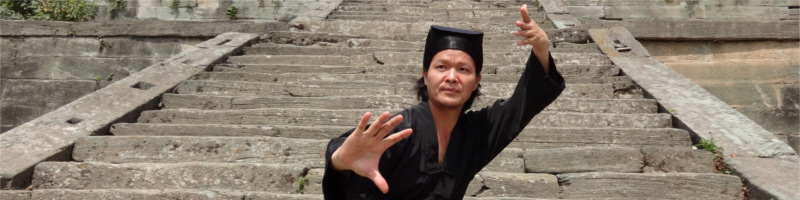

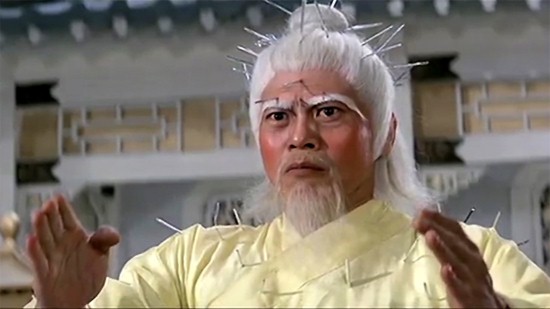
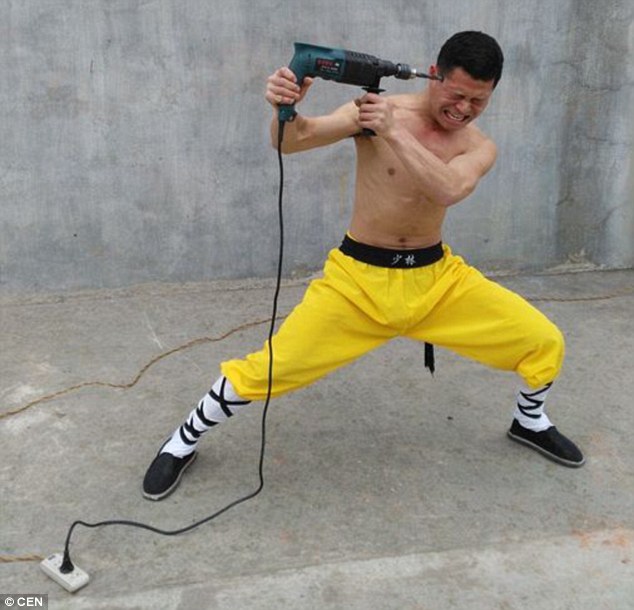
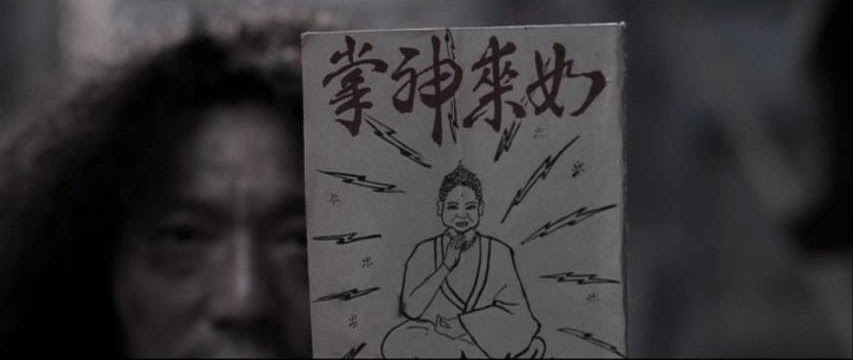





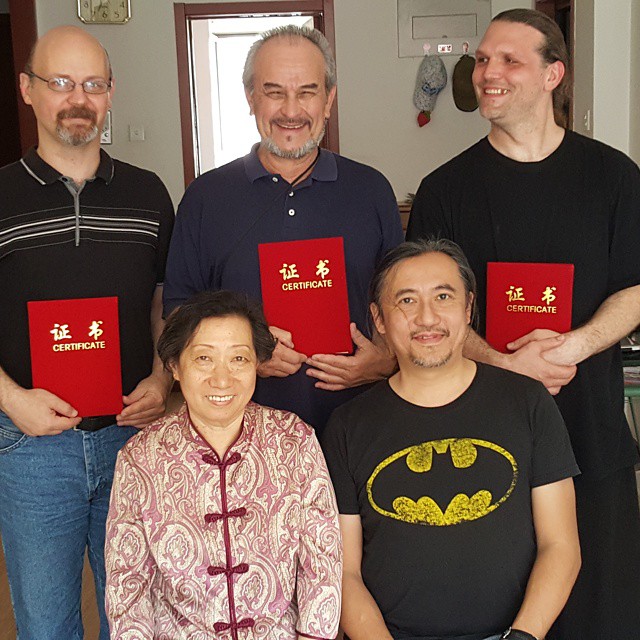
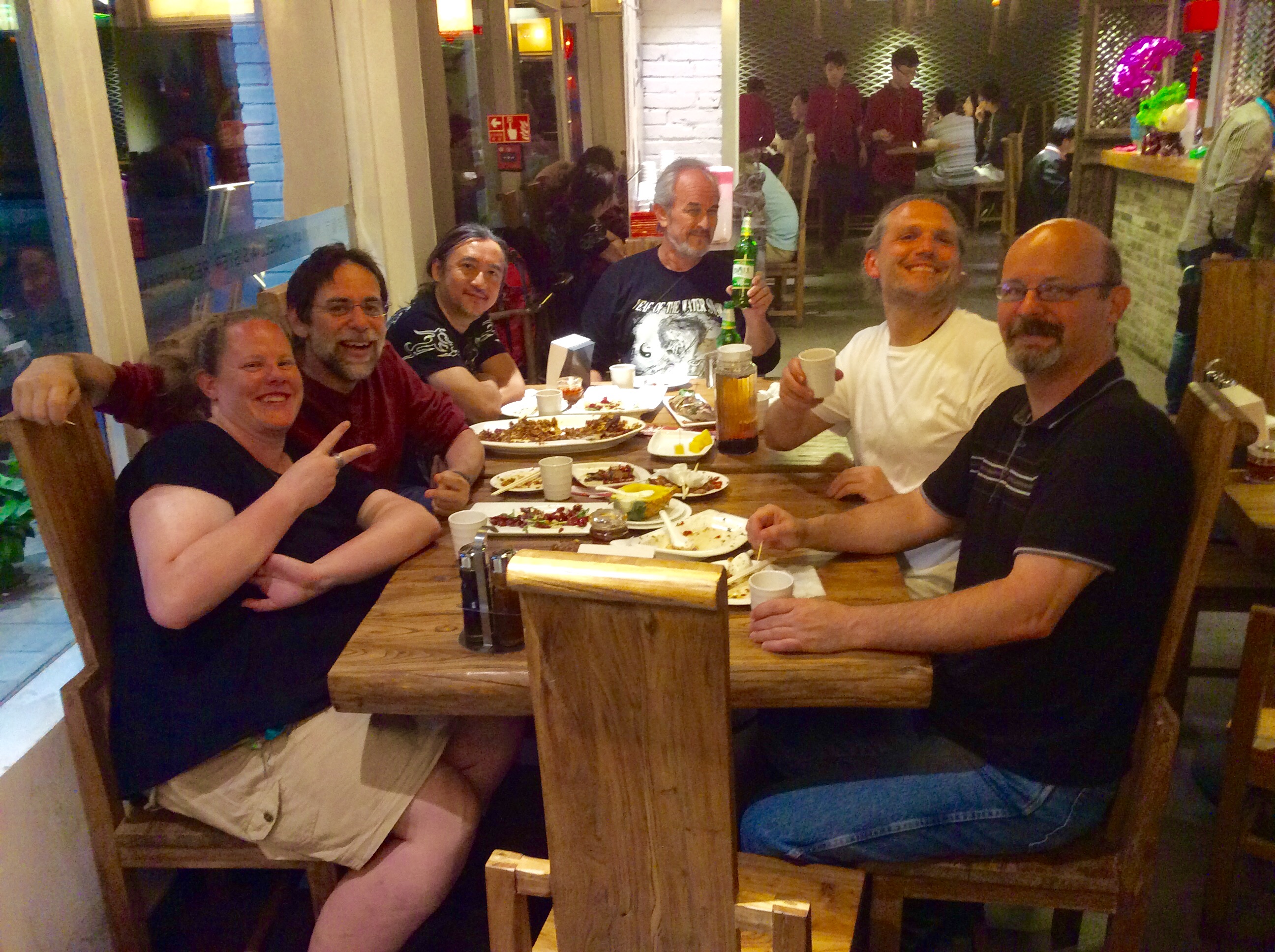

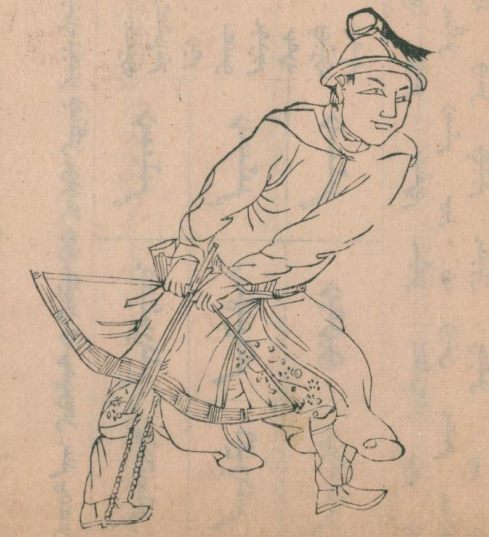

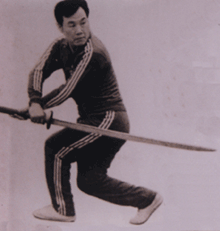
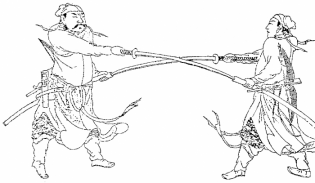

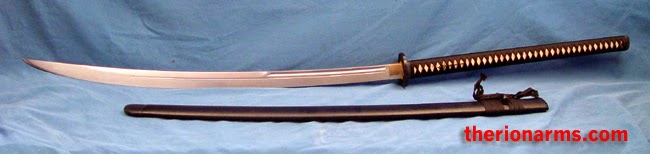

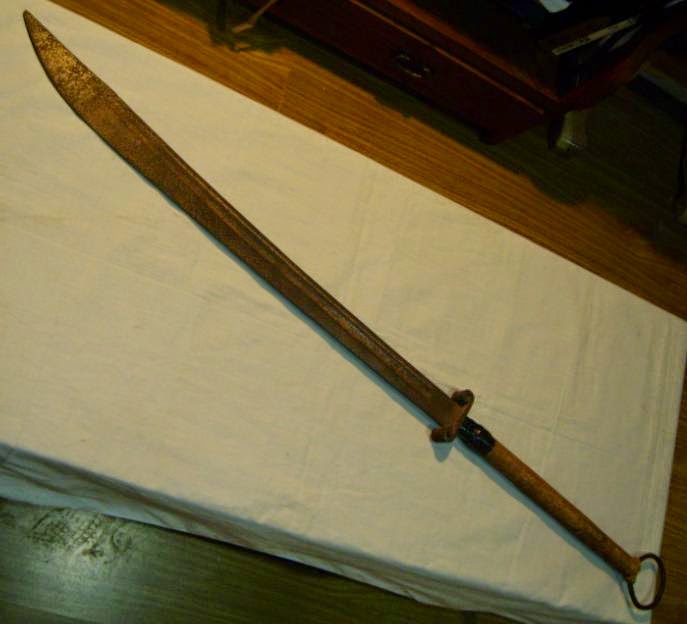


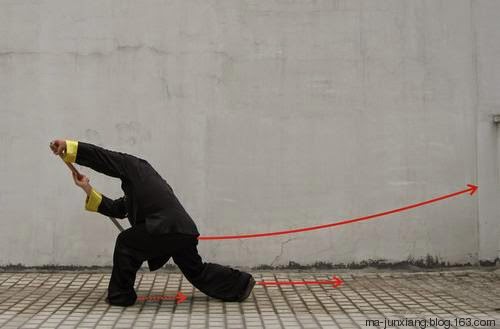
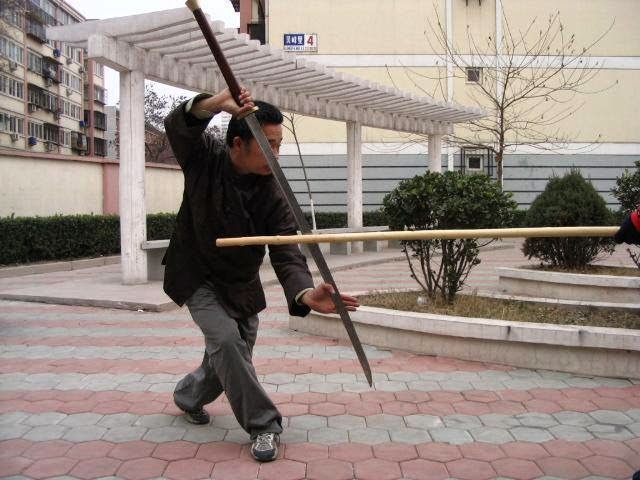
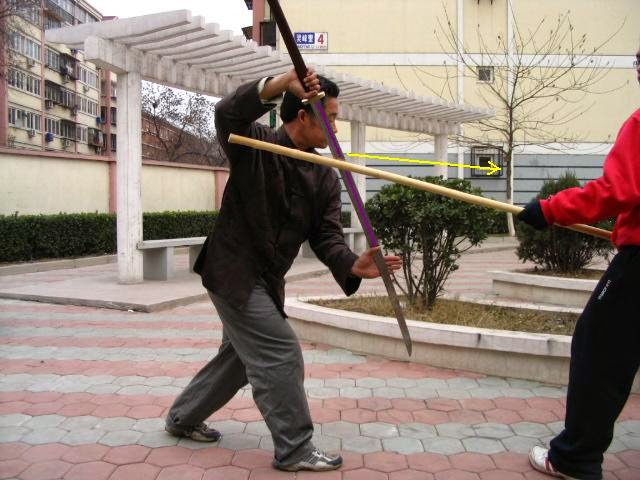

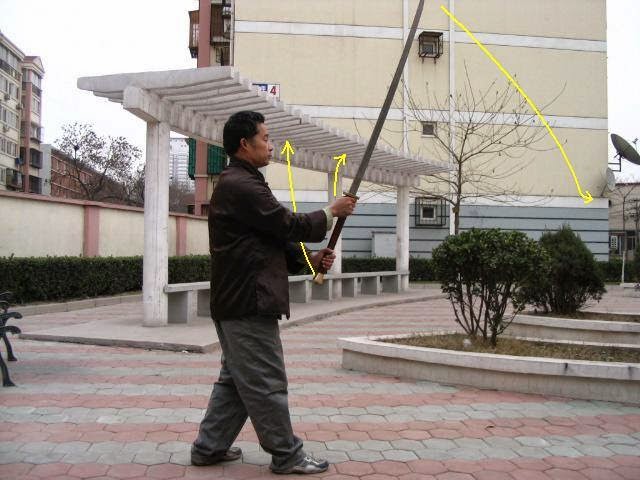

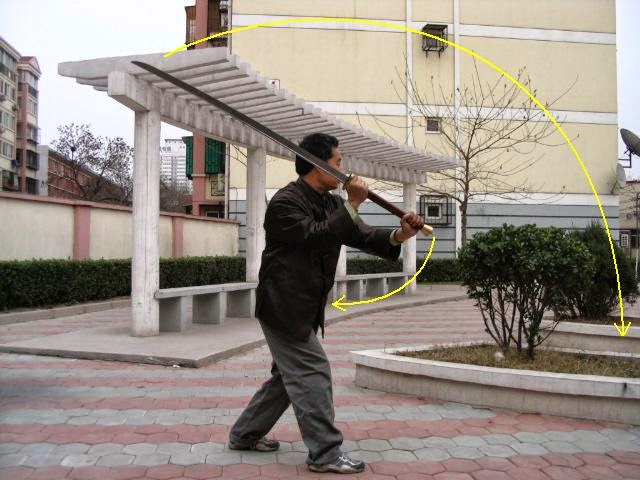
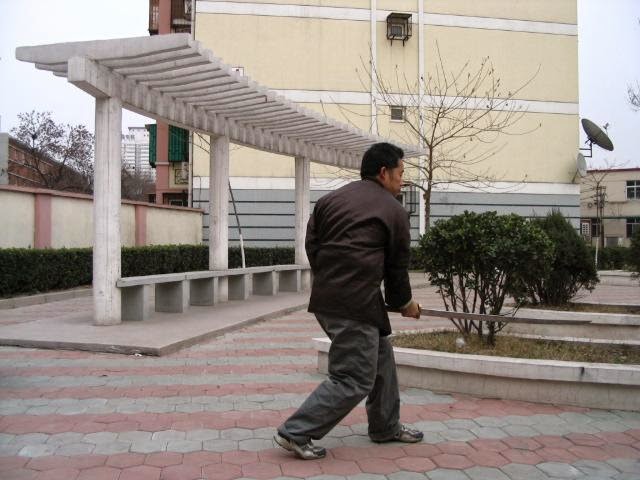
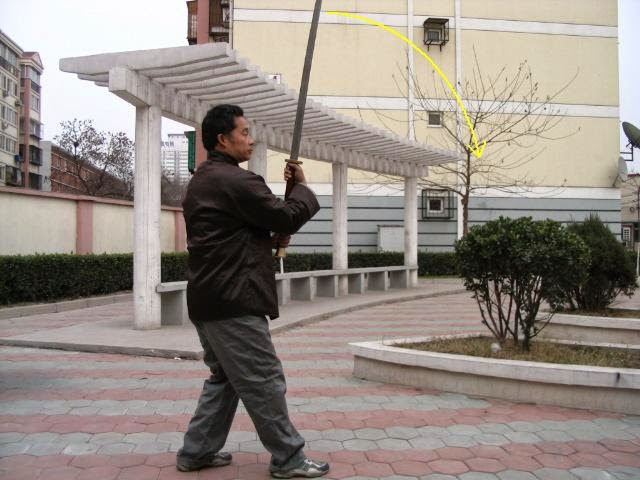
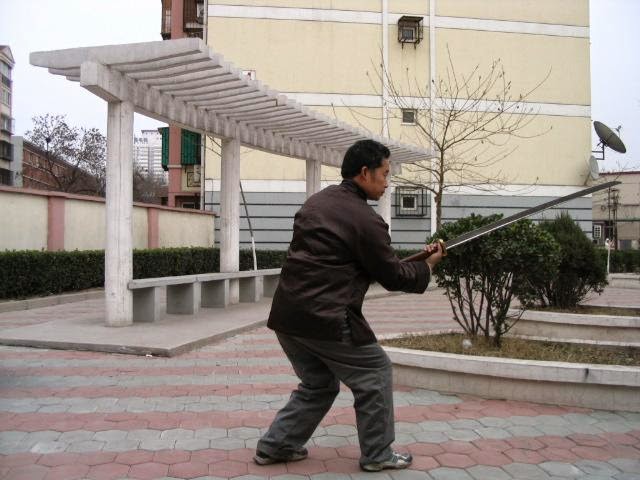









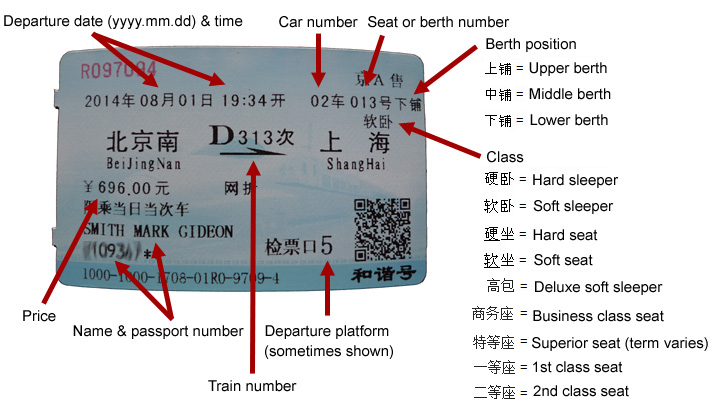
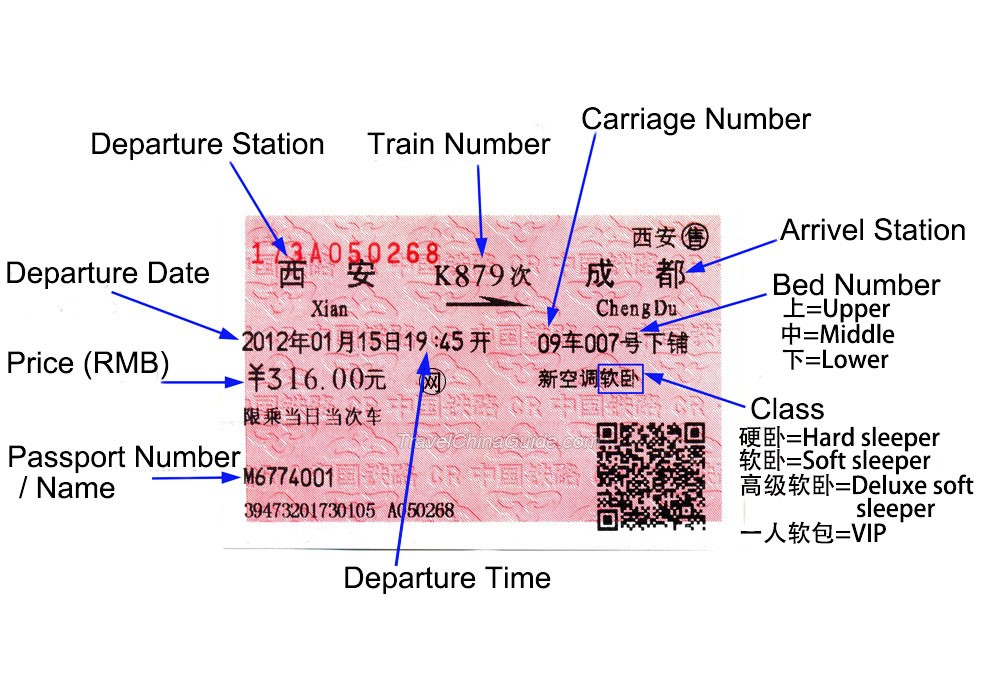
 SMA bloggers