From Your Heart! Passion is a must

Originally posted on the White Tiger Martial Arts website. ‎
Mind-HandsWhen students perform their techniques, whether in drills or patterns, it is very easy to tell if they are actually trying or merely dancing around. This is one of the tricky parts within training…or any education.

I had a student tell me that the way to fix that is to make them work harder. How does that get accomplished? Make the drills longer? Count louder? Stand over them the whole time? Nope. Never going to make their training better that way. If their passion hasn’t developed yet, no external factor will change the behavior.

Does training actually fit their goals? Are they looking for physical improvement? Maybe they just want the socialization in a subject matter that interests them. The only way that a student will improve and develop skill is when they choose to. This is a deceiving point, too, though. I’ve asked students to adjust technique to make them more effective and have gotten “That’s what I’m doing!” as a response. (We won’t discuss the respect issue now) But since it makes no sense that I would waste my time asking for things to be adjusted/corrected for no reason, they still haven’t chosen to learn the technique past what they “think” it is.

Now, I’ll give credit to those putting in effort and working but poor technique can only be helped so much by strength and commitment. There is some passion there, although needing direction. I came across a saying the other day which is very accurate. It stated “If you can’t do it slow, you can’t do it right.” which fits the piece above. The idea of being able to go slow would mean that your mind is in the work as well and that will show in your hands (and legs).

SimonSinek-Stress_vs_PassionI would wager that, if you are able to put your mind into the focus of the work, your heart is involved also. This changes the fear and anxiety and nervousness into enjoyment. Those feelings and emotions fade as the passion grows. The development of your passion is seen in the performance of your techniques. You start to see deeper and understand more. The desire to see others succeed rises and helps create the desire in you to work harder and learn more. It brings students together as a community…family…who supports each other off the floor as well as on. You are now building your passion.

These factors to improve your training are the same as those you need to develop your career, regardless of the field. If you don’t have a passion for what you are doing, how can people believe that you are knowledgeable and competent? Make sure your heart is in your training.

WTMA_Logo-2015-Web_BannerPlease comment, like and share this (and my other posts) if you have found it worthwhile.

Thank you!
Robert Frankovich

Some Benefits I Have Received From Training Martial Arts

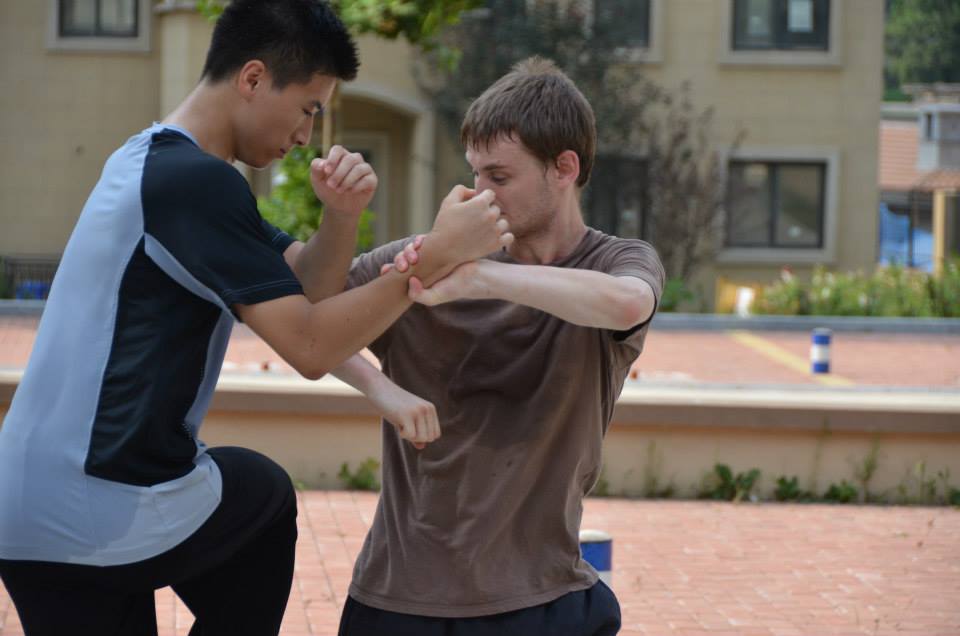
DSCN2270I have trained martial arts for over ten years now, in Britain, China, Hong Kong and South Korea. I’ve been lucky in that I have had a lot of unique experiences and have really learnt a lot in my time studying martial arts. I want to share a few of the benefits I feel that I have gained from my training.

  1. Confidence

Martial arts has helped me go from a shy, quiet and geeky teen to a strong, confident and assertive person.  Martial arts training is constantly forcing us to step out of our comfort zones to develop.  It’s only through stepping out of our comfort zones and confronting things we fear or dislike that we can develop.  I remember during my teens I had trained Wing Chun in the UK, and I had spent three years at a pretty poor school. Constantly training within my comfort zones and never being pushed I thought I was pretty good, until one day I decided to visit another club. The teacher there asked me what level I was and I arrogantly told him I was advanced. His reply was “great, so you can train with my senior students” and that night I took my first beating, and realised I had wasted a lot of time and money at the first school. I decided to switch to that school and spent about six months there before I moved to China. I learnt more in that six months than the three years previously. Most importantly, I learnt how to train.

That teacher always encouraged us to push beyond our boundaries, and it was that attitude I took to my training in China, which helped me gain the respect of the teachers I met, and to improve quickly. In fact, this attitude applies to all things in life, if we always stay in our comfort zones, we never truly grow as people or achieve our potential.

SDC10796It’s through pushing our boundaries and stepping out of our comfort zones that we develop confidence. We find ourself doing things we never thought possible. Whether it’s overcoming the fear or taking a punch in sparring, or overcoming the pain barrier of holding the “horse stance”, it’s all training which we can carry over into our daily life. The knowledge that you can effectively protect yourself also gives you an air of confidence which others can pick up on, and so you are less likely to be perceived as a possible victim.

2.  Perseverance

DSC05419Kung fu literally means “skill accumulated through hard work”. You will not get results without “eating bitter” as the Chinese say. When I first met my Shifu, Zhou Zhen Dong, he asked one senior student to teach me the movement “one step three punches”, and then they just left me alone. I spent the whole night just going up and down repeating this one movement without stopping for a break. I was taught a movement a day and we would train twice a day, and I would just repeat whatever I was taught over and over. After a couple of weeks, Zhou Shifu took notice of me and said he was impressed. However he also told me that it was easy to persevere in the short term, but not many people could continue to persevere long enough to really get “kung fu”.  Fortunately, I did persevere, and after three years, I was rewarded by being one of very few people to be accepted to be his formal disciple.

Perseverance is the key to succeeding at most things in life, and in our modern fast-paced life, we are always looking for a quick fix. This is a big difference from how the old masters grew up, in a society with very few distractions where they only entertainment they had was to train.

3. Good health

It’s a pretty obvious one this one, exercise is good for your health, and martial arts is exercise. However I feel that martial arts takes in one step further, as it combines all different aspects of exercise, such as strength, fitness, flexibility etc etc and on top of that has internal training which relaxes you and helps you attain a state of inner calm. Certain internal exercises are also considered to be beneficial to improved blood circulation, stimulation of the internal organs and various glands in the body.

After training martial arts for a while I began to notice that I felt a lot better in myself, I was much stronger and had better posture. Through stance training and forms practice you become very aware of your posture, and areas of tension in the body, which lead to various pains and problems.

4. Practical Combat Skills

1185958_184901581691280_1407079428_nMartial arts is basically training to fight, so it is common sense that you should learn to be able to fight. It is a common problem nowadays, as we know, that many people who train in traditional martial arts are unable to use what they learn. The techniques found in martial arts have been developed over hundreds, if not thousands, of years so that people may protect themselves, and so there is a rich pool of knowledge to draw from. The problem, however, is that many people train incorrectly and don’t spar or train against resisting opponents.  In the traditional method of learning Kung Fu, you would begin by learning a technique as a solo movement, until you get the form perfect and the power crisp, and then will progress to training it on a compliant partner, and then gradually increasing intensity until you are free sparring.

5. Making Friends

Throughout my martial arts training I have been lucky to make friends from all over the world, and all walks of life. Training in different schools in different countries has enabled me not only to improve my martial arts, but also to immerse myself in the local culture and learn about the customs of different people. Through being an active member of online martial arts communities, I have made many friends from all over, and have even been lucky to have a place to stay and a local guide when travelling to a new country. It’s always a pleasure to get together with new people, share experiences and cross hands.

If you enjoyed this, read more about my experiences at http://www.monkeystealspeach.co.uk

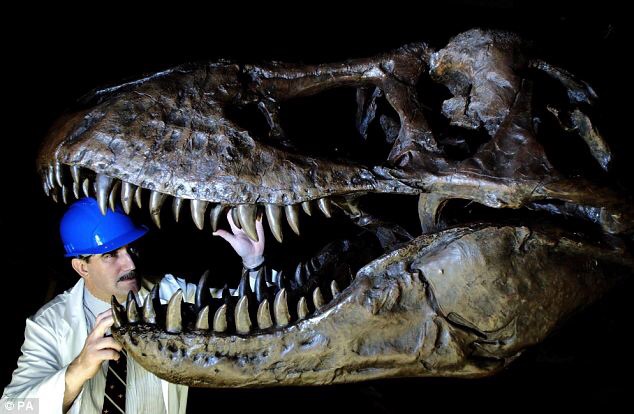
How the Dinosaurs Lost the Earth and Other Lessons in Conflict

It’s a little known fact that the mammals were responsible for the extinction of the dinosaurs.

If you believe your teachers, scientists or those dusty plaques next to the fossils at the natural history museum, you will hear that it was, in fact, a fatal combination of climate change and comet strike which the large creatures were unable to adapt to.

Not so.  I am here to tell you that the culprit was a tiny, furry critter that bore a resemblance to the modern shrew, and was little larger than your thumb. If you grant me your attention for a short while I shall tell you the tale which starts, oddly enough, with a tail.

Apatosaurus was not a morning dinosaur.  He never liked to start the day at the start of the day preferring, if at all possible, to start it when it had well and truly begun and sometimes, when it was on the way out again.  Partly this was because he was the length of two double-decker busses and it was never the easiest manoeuvre to climb out of bed, and partly it was because he was a lazy old sod.

This morning, however, he was awoken just before the sun peaked over the horizon by a flash in the sky.  He looked up, eyes glazed over with sleep dust, but could not make out the cause.  Was that a new, particularly bright star on the horizon?  Truth be told, it was hard to say since Apatosaurus rarely saw the sun rise, let alone observe the twinkling starts that preceded it.  Well, he was awake now.  Grumpily, and slowly, he rose to his feet and swung his neck in low arcs from left to right, looking for a nice breakfast bush to tuck into.

Instead, he swung his head straight into the tail of a passing Stegosaurus, getting a tail-spike square in the nostril.  Already grumpy at his early start, the Apatosaurus roared with anger.

“What the blazes do you think you’re doing?” He bellowed at the Stegosaurus (and I can tell you, when an Apatosaurus bellows, you jolly well know about it).

Unlike the Apatosaurus, The Stegosaurus was a morning dinosaur.  On this particular morning, he was making his way to the river for his morning drink, enjoying the fresh air and morning mists that covered the land just before the break of dawn.  Cheerfully, he smiled at Apatosaurus.

“Didn’t you see me walking here?” he said, “This is a clearly marked footpath, and I believe that as I am already on it, I have the right of way.”

“Right of way?” Bellowed the Apatosaurus (he was a bellowing kind of guy) “poppycock!  You were travelling way too fast!  You may have been on the path, but everyone knows that you have to give way to the dinosaur on the right-hand-side, especially if that dinosaur is already annoyed, and several times your size!”

“Now hang on a minute, sir, the right-of-way rule only applies if you’re giving way at a rock on a two-lane path and four paths cross, not three. Besides, size has nothing to do with it – I do hope you’re not trying to bully me?”

Well, now, that was it for the Apatosaurus.  Not normally quick to violence, as with any dinosaur no matter how nice most of the time, the wrong situation in the wrong mood with the right kind of escalation can make monsters of them all.  He lost his temper and, quick as a flash, swung his head round again to deliver an almighty head-butt to the smaller Stegosaurus.

The Stegosaurus saw this coming.  He ducked under the mighty blow, and lifted his tail high in the air which, as I’m sure you will remember from history class, has four vicious, meter-long spikes at the end.  One of these spikes impaled itself in the Apatosaurus’ eye as it passed, and continued deep into its brain.  The huge creature shivered briefly, then dropped down stone-dead – leaving his eye embedded on one of the Stegosaurus’s spikes, and making the ground tremble with the impact.

The Stegosaurus looked down with pity at the enormous corpse in front of him.

“Sorry old chap” he said, “that got out of control rather quickly, nothing personal you understand.”

He flexed the dustbin lid sized plates running down his back, angling them towards the sun to warm his blood and continued the journey to the nearby bank. He gave his tail a quick shake to try and dislodge the eyeball, but it was stuck fast.  Shrugging to himself, he set off again – pausing briefly to glance at a particularly bright star just above the horizon.

“Strange” he thought to himself “I don’t remember that one, but then my brain is the size of a walnut so perhaps it is just me”.

The going was slow – the Stegosaurus was as big as a van, and was not built for haste.  He waddled from side to side as he walked,  pausing from time to time to take mouthfuls of grass as he saw them whilst his enormous tail, and its hitchhiking eyeball, swished around behind him.

He had not travelled far in this manner before he noticed the Triceratops, standing on a small little hill beside the path, watching him carefully.

“Good morning!” cried the Stegosaurus, with a cheery sweep of its tail “And how are you on this fine, sunny day!”

“Get off my land.” Said the Triceratops.

The Stegosaurus gave him a friendly smile, and replied: “I’m terribly sorry Triceratops, I don’t wish to argue but I believe that I am on a public footpath leading down to that river, where I intend to take my morning drink.  Were I to be on your land I would happily remove myself, but I do not believe this to be the case.”

The Triceratops, standing atop a small hillock beside the path, pointedly stubbed his front hoof into the earth beneath his feet – once, twice, three times.

“This here” he snarled “is my property, and your path cuts through it.  Be warned, Stegosaurus, you are trespassing on my land I am within my legal rights to defend myself, and run you through.” With that, he lowered his head and exposed the three horns that sat there, each as long as a man, and the hard shield behind protecting his back.

The Stegosaurus had no wish to enter into a tussle with the Triceratops – the brute was bigger, stronger and grumpier. He could easily take a detour around the small hillock by the path, and access a riverbank a few hundred yards downstream instead.  But this path led to his favourite bank, where the water was shallow and clear and besides (Stegosaurs are notoriously stubborn dinosaurs), why should he back down?

“Run me through?  For wandering across the edge of your land?” he said, “don’t you think that’s a little extreme?” (which was, of course, an ironic thing to say, given he had just speared an Apatosaurus in the brain who crossed the road without looking not twenty minutes earlier.)

“Extreme?” replied the Triceratops with a snort.  I don’t know who you are or what you’re capable of – and after all, I’d rather be judged by twelve dinosaurs than carried by SIX!”

The Stegosaurus paused to consider what this could mean for a few minutes, before deciding it was something made for brains larger than his to comprehend.

“I’m very sorry, Triceratops, I mean you no harm, but I shall take this path to my favourite riverbank and whilst I could take a small detour for my morning drink, I believe I am in my rights to do be here and shall not be hindrance by you.”

The Triceratops, standing on his little hillock, glared at the Stegosaurus. Indicating Stegosaurus’s tail with a nod of his head, he said:

“What’s that, Stegosaurus?  Are you carrying a concealed weapon back there?”

image

“Huh?” replied the Stegosaurus, glancing back “oh those?  They come everywhere with me, I don’t really have a choice about it you know.  Or the eyeball as it happens, which now seems to go where the tail goes.  Besides, they’re hardly what I’d call concealed, Triceratops” and with that he gave them a gentle swish, making the eyeball wobble.

“A threat!”  Cried the Triceratops. “I have informed you that this is my property, which you are trespassing and which I have a right to defend.  I now have reason to fear for my life, since you have brought deadly weapons on to my property without a reasonable justification.  I have issued a clear warning, which you have not responded to.  I am left with little choice but to defend myself.”

And with that, Triceratops charged down the little hillock and before Stegosaurus had the chance to respond, plunged his horns deep into his chest.  After a few minutes of goring and head-shaking, Triceratops lifted his head stood over Stegosaurus’s ravaged corpse, blood running down his beak and dripping from his horns.

He snorted, shook the blood from his eyes, and almost as an afterthought used the spine frills round his neck to saw off the Stegosaur’s tail, the Apatosaurus eyeball still attached, and wrapped it around his neck as a warning to others.  Admiring himself in a nearby puddle, he trotted back up to the top of his hillock to admire the view.  Was that a new star on the horizon?  It seemed to have a small tail poking from one side.  Curious.  But no mind.

He stood a while, gazing over his property, keenly searching for intruders and threats, but his recent exertion had caused him to work up something of a thirst. Didn’t Stegosaurus mention something about a river nearby? He trotted down the hillock, gingerly stepping over the still-twitching corpse of the former Stegosaurus, and made his way towards the riverbank.

Before long the barren ground of small hillocks and rocks, tufted with grass which he called home gave way to patches of trees and scrubby bushland.  The river was not far, he could hear the waters babble on their way to the sea.  As the sun rose higher in the sky the air became warmer, and the breeze died away to a stifling stillness.

It was this stillness which caused Triceratops to pause when he spied a nearby copse of trees shiver and shake as if hit by a blast of wind.  There was no wind.

“What-ho!” he called out into the treeline: “Who’s there?  I know you’re in there, I’m no fool so you may as well come out and introduce yourself!”

The trees rustled some more and, slowly, a leathery snout rose above the leafy tops cautiously sniffing the air.  Then, following the snout, a head appeared lined with rows of sharp, serrated teeth.  Two piercing eyes focussed down on the Triceratops beneath them.

“Well hello there, Triceratops, well met on this fine sunny day.  And where, might I ask, are you headed to?”

The Triceratops gulped, and craned his neck to meet the eye of the Tyrannosaur staring down at him.

“Well met indeed, Tyrannosaur!” He said. “I am sorry to have disturbed you, I am simply taking a walk down to the riverbed to fetch myself a drink of water.”

“Indeed,” said the Tyrannosaur, “a fine way to spend what is proving to become a very warm and pleasant day.  Might I trouble you to also tell me from where you have come?  Forgive my curiosity.”

“Why, nowhere in particular, good sir! I have simply been enjoying the view from my hillock this morning, looking out across the plains, when a terrible thirst took hold of me, which could only be sated by a nice soothing drink down by the river.  Why do you ask?”

“Oh, it almost seems silly to say, and it’s probably nothing” replied the Tyrannosaur, idly scratching an itch on his chest with one of his tiny arms “but I couldn’t help noticing that you are covered from nose to shoulder in dried blood, and that you are wearing the tail of a Stegosaurus around your neck – a tail which, if I am not mistaken, has the eyeball of an Apatosaurus impaled upon it.”

“Oh, that?  It’s nothing my good sir, nothing at all.  As you know, I am a vegetarian and a pacifist, and was merely defending my property from an intruder using reasonable force, as is my legal right, since my intruder entered my property bearing dangerous weaponry clearly intended for no good.”

The Triceratops said all this whilst squinting up at the Tyrannosaur, and slowly backing away from the inquisitive head poking out of the treetops, drool glinting in the sun as it seeped between those long, sharp teeth.  The angle caused his trophy to slip and the bloody tail, eyeball and all, hit the floor with a wet slap.  There was no other sound. “Now that that has been cleared up, I shan’t disturb you any further, and will be on my way.  Good day, sir.”

But the Triceratops had not the time move far before, with a shake of tree trunks and with two great strides, the Tyrannosaur moved to block the path.  He turned his head slowly to look down upon the blood-stained Triceratops, suddenly looking very small in the larger dinosaur’s shadow.

“I’m afraid I cannot let you pass, my dear boy” he sneered. “I can see you are knowledgeable in the laws of our land, so you will understand my own concern in seeing you walk towards me, on public ground, soaked in the blood and gore of another dinosaur?”

The Triceratops backed up a bit, so he could look up to see the eyes of the Tyrannosaur.

“It is true that I could use a shower, Tyrannosaur, but I have explained to you the reason of my fearsome appearance and surely a creature as majestic and powerful as yourself cannot fear one as slow and cumbersome as I?”

The Tyrannosaur cocked his head to one side, narrowed his big, yellow eyes, and licked his lips.

“I wish I could be that confident of my own safety, I really do” he said quietly “but such is my fear that I have no choice but to protect myself by eating you.”

“Wait, wait!” cried the Triceratops “If you really fear me such, why not use those long, long legs of yours to run away?  Look how heavy I am, look at my squat, little legs I could never catch you – surely I pose you no threat?”

“Ah yes, but I must again remind you of the laws of our land, my dear Triceratops, those that allowed you to eviscerate Stegosaurus with such impunity? As you know, they protect each dinosaur in his home but they also ensure that each has the right to not retreat in the face of adversity, but defend themselves where they stand.  I wish there was some other way, but it is my legal right to confront you when in fear of my life, rather than to try and escape.  I wish there was something I could do but, well, the law is the law.”

And with that, Tyrannosaur lunged at Triceratops, caught his head and bony shield in his jaws, snapped his neck with a single twist and proceeded to feast on his insides.  Before long all that remained of Triceratops was a large, bony cavity where there was once a proud ribcage and satisfied, Tyrannosaur curled up for a nap.

And so it was that, as he was sleeping, a tiny shrew-like creature, out for a walk to gather berries and seeds, stumbled across the path and saw the tail of the Stegosaurus with an Apatosaurus eyeball dangling from it, the Triceratops with its chest cavity eaten bare and the snoring, contented Tyrannosaur with chunks of Triceratops flesh still hanging from its exposed teeth.

The shrew knew the law.  He stood there for a while, observing the scene, and tried to consider what a reasonable use of force could mean when applied to a shrew the length of a human thumb defending himself against a Tyrannosaurus Rex the length of six humans end to end, who had just eaten a Triceratops who had murdered a Stegosaurus who had mutilated an Apatosaurus.

Eventually, it appeared to reach a decision.

It is a little-known fact that mammals had evolved to the pinnacles of technology we see around us today, even back then at their dawn – they just didn’t make a big deal out of it.  The shrew whipped out a tiny, tiny mobile phone and jabbed in a few numbers. He pointed it at a passing, equally tiny, satellite.  The satellite received its command.  Slowly, it turned until it was pointed at a passing comet.  The laser changed the course of the comet, ever so slightly, pulling it into earth’s orbit.

The shrew put on a tiny helmet, burrowed a few feet into the ground, and stuck its fingers in its ears.  Within a few hours, the Earth’s gravity had done its work and the comets trajectory was such that it crashed into the atmosphere, becoming a savage fireball vaporising everything in its path.

And so, the Tyrannosaurus Rex, the Triceratops, Stegosaurus and Apatosaurus, along with his dinosaur kin, lost the arms race.  The mammals technology was wiped out by the blast, of course, but it only took them a couple of hundred million years to get back in business again and now, all this time later, it’s hardly as if anything happened at all.

Training with Master Chu Yucheng by Nikolaus Klinger

I had training with Chu Yucheng one on one for about a month (besides my tuina studies in shanghai). Master Chu is a very nice and friendly person and often corrects you with a smile.

I already have experience with baguazhang and I wanted to learn something new, additional or use my time in shanghai to see what other masters are doing. So Master Chu had a look at my bagua in the beginning and made a schedule according to my basics. He can only speak Chinese, so a bit of Chinese language skills would be good in order to study with him. Otherwise its sometimes too difficult for him to correct or explain things. We learned the 8 palm changes of his “Kiang” stye baguazhang, which is actually a mix of Li CunYis and Liang Zhenpu’s style. Not like the Liang style I have seen from Ma Chuanxu or Li ZiMing.

Master Chu’s baguazhang is very practical and straight with lots of strikes and sometimes Xingyi stepping. We also learned Li CunYis basic form called bagua wuxing san pan zhang, bagua five elements 3 levels palm. 3 forms with xingyi stepping and bagua techniques, which reminded me a lot about the famous bagua 64 hands form.

Master chu likes to show applications and keeps his forms simple and very practical. He will show you the use of each technique and how to perform it correctly. I joined one of his group classes, where partner work was a big part of his teachings.

Most people were doing xingyi quan and two of his disciples were practicing a Wudang two person form. That was absolutely interesting for me because I have been in Wudang. His two people sword form come from Li Jinglin a highlevel famous Wudang swordsman from days gone by. I would definitely like to learn this next time…

The only downside which I would mention is, that he seems to keep forgetting parts of his bagua forms and important movements which he showed a day earlier. Probably because his love is for xingyiquan and so is his teaching focus.

You can learn more about Master Chu Yu Cheng here.

Other People’s Rules: Martial-Arts Diplomacy

cmrmurray's avatarThe Wandering Fist

A story goes that Chee Kim Thong was challenged to push hands by a visiting Taijiquan practitioner. Master Chee agreed and, when the two made physical contact, he controlled his opponent deftly so that the Taijiquan man fell over.

The visitor was very angry. “Why did you do that?” he said. “That’s not how we push hands in Taijiquan.”

Master Chee replied, “This is how we push hands in Wuzuquan. Why should I follow your Taiji rules?”

He was right. Why on earth would he push hands like a Taijiquan player?

It was silly for the visitor to assume that push hands would follow his expectations (or to use that as an excuse when he found he couldn’t control Master Chee).

Push hands is a developmental exercise, so it is also foolish to challenge a reputable master openly, and stake one’s reputation on overcoming him/her, as though that would…

View original post 48 more words

Hangovers.

Excellent and honest post from my buddy Joe Gilmore.

coachjoegilmore's avatarResilient Health.

I’m hungover right now.

“You’re hungover!? A fitness coach, on a Thursday!?”

Yep. In all of my fitness superiority, telling others never to drink or eat bad foods or do anything except a strict routine of boredom and workout, I am hungover.

What’s the point of telling you this?

I made the choice last night (also my birthday-eve) to go out and drink with one of my best mates. Completely aware I would wake up feeling like this, completely aware that I have to work a solid 8 hours today as well as hit the gym; completely aware of the effects to my physical and emotional body.

When a person decides, usually on a Monday at work, that on the weekend they will go and drink 3 bottles of red and drown their awareness of the life they live, they usually do so without the awareness of the flow on…

View original post 432 more words

FURTHER WRITINGS OF SUN LUTANG

This is an amazing resource for students of Sun Style Boxing.

Paul Brennan's avatarBrennan Translation

ESSAYS BY SUN LUTANG

[translation by Paul Brennan, May, 2015]

In addition to Sun’s five famous books…

形意拳學 A Study of Xingyi Boxing (1915)
八卦拳學A Study of Bagua Boxing(1917)
太極拳學A Study of Taiji Boxing(1921)
拳意述真Authentic Explanations of Martial Arts Concepts(1924)
八卦劍學 A Study of Bagua Sword (1927)

he also produced several important essays:

論拳術內家外家之別
“Discussing Distinctions Between the Internal & External Schools of Martial Arts” (1929)
拳術述聞
“Some Things I Have Been Told About Martial Arts” (1929)
國術源流之管見
“My Opinions on the Origins of Chinese Martial Arts” (1930)
詳論形意八卦太極之原理
“A Detailed Look at the Theories of Xingyi, Bagua, and Taiji” (1932)

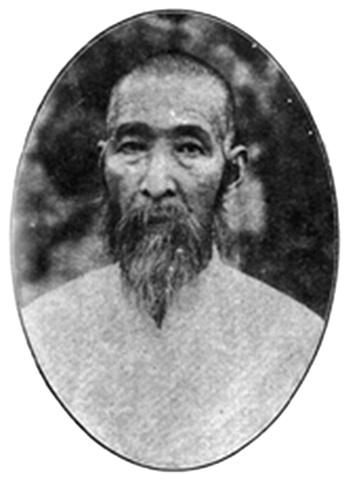
孫祿堂 portrait - 1929

教務長孫福全
Dean of Studies, Sun Fuquan
[photo from 江蘇省國術舘年刊Jiangsu Martial Arts Institute Annual, July 31, 1929]

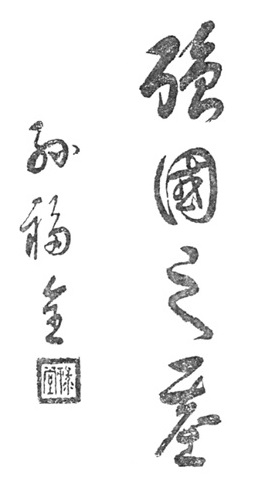
孫祿堂 calligraphy - 1931

強國之基
The basis of strengthening the nation
孫福全
– [calligraphy by] Sun Fuquan
[included in 鄞縣縣國術館一週紀念刋Yin County(in Ningbo, Zhejiang)

View original post 5,917 more words

Jianwu Basic – Fa Jin Prep Stages 1-6

Inside Zhan Zhuang's avatarInside Zhan Zhuang

????????????????????????????????????????

Aloha and Greetings from Maui. Here is a detailed presentation of a basic Jianwu movement trained for health and martial arts. Normally this type of in-depth video is reserved for my private students, but due to the interest and desire of so many to advance from where they are to where they want to be, I have decided to make it public.

View original post

A Flock of Starlings

A Flock of Starlings

One Easter holiday in 2012, I visited one of the five Buddhist holy mountains in China, Emei-Shan.

As you might expect from secular China, the spring equinox is not seen-in there as it is here.  Chocolate effigies of Pagan egg-laying rabbits are gone.  The crucified and resurrecting Christ, donkeys and palm leaves are ne’er to be seen.  The Chinese version, it turns out, is the ‘sweeping of the tombs’ festival, where people are meant to clean out the tombs of their ancestors in ritual manner.

What they actually do, however, is exactly what most people in the West do at Easter – ignore the symbolic rituals marking the start of spring, and go on a nice weekend break.  This, in China, brings a set of problems not encountered in the west which arise from the logistic considerations of 1.2 billion people deciding to go on holiday on the same day.  And on this particular day most of those 1.2 billion people, as it would seem, had also decided to visit the Buddhist Holy Mountain Emei Shan.

I would urge all of you to stay you criticism of the public transport in whichever part of the world you are reading this, until you have endeavored to take a coach to a Buddhist Holy Mountain in China when several thousand people in a room not much bigger than small church also intend on catching the same coach as you.

The entire building, from wall to wall, was a solid mass of flesh.  My arms were pressed so tight to my side that I couldn’t put my hand in my pocket.  The pressure was such that, to stop the fire exits bursting open, the station staff chained and padlocked them shut (Health & Safety not being a concept yet to filter down to the farther reaches of the land of the orient).

Being six foot two inches tall, a good measure higher than the indigenous population, I had a unique view of the chaos.  There was a life to it; waves rushing across the room, crashing against the barriers and walls like ocean swells against the rocks.  I’d heard the term crowd-surge before, of course, but I’d never experienced it – the feeling of complete and utter helplessness, the knowledge that one trip, one fall, and I would be immediately trampled by fifty people who had no more power to stop it than I did.  I realized that it wasn’t an ocean swell that I was reminded of.  It was a Tsunami.

And then the mood changed.  I don’t know when it happened.  I don’t know why.  But it spread from person to person in an instant, sparking between the bodies like a thought dancing between the neurons of a mind.  One moment the surge was good tempered, and the next it was sinister.  One moment there were smiles and good-natured cheers – the next there was silence, apart from the rustle of thousands of bodies in close friction, creating a dense white noise that filled the tiny gaps between the flesh.

A small handful of people at the edge of the mass took the initiative, pulled themselves clear and snuck around the barriers to get onto the nearest coach.  The Chinese in Sichuan being of a particularly laissez-faire disposition, the security gazed on indifferently.

Several of the crowd, though, did not.  Shouts erupted; bottles were thrown.  A few angry bodies at the front rushed the coach, and like the tip of a wave brought those behind with him.  They crashed over the coach, pulling the driver and passengers out, who then vanished under the surf and were pulled away by the current of hundreds of sweaty, grasping hands.  We did not see them again.  We didn’t see anything more, in fact, we had seen enough.  Thankfully we were near the back of the crowd, and with some well-placed elbows managed to fight our way to the calmer waters away from the station.

Here, word of what had now become a riot was carried as a whisper from person to person.  But with each murmer it lost its’ force, until the violent crash of waves against the rocks had diminished to the gentle lap of waves upon a beach.

In the English countryside in Autumn, if you’re lucky, you are treated to an ethereal sight.  As the sun sets, black clouds begin to rise up above against the rusty sky.  They swell like smoke from a forest fire, slow and fast, bulging against the pattern of the wind.  And then they dance.  They rise and fall, expand and contract, swooping and changing direction in seeming defiance of natural law.  Shifting shapes in the sunset, they seem like one enormous living, breathing behemoth.  But they’re not one, they’re legion.  A legion of starlings, returning to roost; coordinating as one with no central nervous system, no leader, no purpose.  They create this complexity and beauty with nothing but three simple rules:

  1. Stay within a fixed range of the starlings nearest to you
  2. Avoid collisions
  3. Respond to external threats

And with that, a flock is born.  When you see a lone starling flying through the dusk it is processing any number of individual bits of information as it swoops and rolls in the half light.  Navigating its way home, hunting for a meal, flirting with lady starlings, searching for nest material, navigating obstacles, planning routes, looking out for predator.  In a flock, there are three bits of information to process and they over-ride the individuals more natural urges, to keep the flock together.  This behavior is hard-wired, and has been carved into the starling mind over millennia to ensure that the flock, and thus the individual, is safe from predators.

It’s the touch-paper that lights race-riots in America, demonstrations against banks and war across the West, that sparked the Arab Spring which changed the world when one desperate Tunisian market trader set himself on fire.

Back at my coach station in China, we are not so different.  At what point did my flock become a riot?  As soon as one single person, in the right position, at the right time, responded to a perceived threat.  One point of external stimulus, one trigger, seen by one person is enough for them to change their behavior and that behavior to spread as fast as a thought across thousands of people.  Without any warning, without any conscious decision by any individual, a cheerful crowd going on their holidays has become a rioting mob and not one person inside it knows how it happened, when or even why.

We are not so different.  In large groups of people, powerful instinctual urges kick in that force us to conform to the behaviour of others, for very good reasons – to be different, to be isolated, is to be eaten. To not respond to a threat in the same way as those next to you is death.

When confronted by an angry mob, pack or gang you are not dealing with the behavior and judgment of an individual.  You are dealing with a de-centralised nervous system with no decision making ability, just response to stimulus.  If you are the victim in this dynamic, the stimulus is to hunt.

This is the danger of large groups. They, and the individuals within them, don’t sing the same song as the victim and their behavior cannot be predicted in the same way as an individual’s.  The only way to get a member of a group to make rational decisions about their actions is to separate them, physically or psychologically, from the group.  Riot police call this kettling, but it works as well with a small gang as it does with a baying crowd.  Don’t wait for an attack, instigate against the individual who glues the group together, the pack leader, the one whose gravity keeps the rest clustered around him.  Influence him – with ferocity or fear, bargaining or bludgeoning, whatever works for you or the situation – but focus on that one in your conflict de-escalation and you’re not trying to subdue many, but one.

Becoming A Seventh-Generation Disciple of Yang Lu Chan

This is the story of how three men from the US became seventh-generation disciples of Yang Lu Chan, the creator of Imperial Yang style of tai chi.

On the 25th April and until to the 5 of May, Ray Abeyta and Wolf Carter from the Texas School of Tai Chi in El Paso and Michael Paler from Colorado Springs will on the invitation of Dr. John Fung, officially a sixth-generation disciple of Imperial Yang Style will visit Beijing, to spend 10 days learning from his kung fu sister Wei XiLan the daughter of the late GM Wei Shuren. These three men will become the first Americans to be included in this particular linage of tai chi.

The story began when on the request of Ray Abeyta, Dr John Fung a 6th generation lineage holder of Imperial Yang living in Sydney Australia visited El Paso to teach a number of seminars. On seeing the dedication, skills, plus attitudes and personalities of Ray, Wolf and Michael as well as with much reflection Dr Fung decided to ask them if they would like to become disciples and join the Imperial tai chi family.

Dr John Fung’s lineage: 

Wei Shuren – Wang Yongquan – Yang Jianhou – Yang Luchan.

Yang Lu Chan
Yang Lu Chan

This in itself is a huge deal for the tai chi community in the United States as Ray and his fellow tai chi brothers are all keen to return and share their knowledge with those who attend their classes as well as further afield.

Ray said. “There are other Yang family organizations, but this is the only one considered Imperial Yang style. You have to remember originally, Yang Lu Chan was hired by the emperor to teach his guards how to fight. He was the best fighter in the land back then. That continued in Beijing, where he continued to teach people. We are going to become official disciples of this linage. Very few people are picked. I don’t deserve it, but I’ll take it. I’ve going to do my best to honour the art.”

Knowing what I do of Ray I know this to be true as he is already sharing the information he’s learned from Dr. John Fung not only to the people in his existing classes in El Paso, but also to students in Santa Fe where he teaches every three months, and also with some people up in Colorado Springs. Anywhere people want to learn, Ray will share with them.

11052381_10206515924725125_3064919410455893094_n
Wei Xinlan daughter of the late GM Wei Shuren, Dr John Fung, 6th Generation Lineage holder, Sifu Wolf Carter, Sifu Ray Abeyta, Sifu Michael Paler, 7th Generation Lineage holders.

Catching up with the group on my return to Beijing from Cebu I enjoyed listening to their stories and the whole groups enthusiasm for this rare art which is effectively what Bruce Frantzis calls Old Yang Style Taichi. An art that comes directly from Yang Lu Chan who was said to have only taught the emperor’s guard, the aristocracy and a select few disciples to a high level of excellence. The best of these students were his sons Yang Chien Hou, and Yang Pan Hou and Wu Chuan Yu from which Wu Style Taichi originates and which then subsequently led to the development of Sun Style Taichi.

Over some delicious Yunnan food we discussed taichi and martial arts related topics. Listening to John Fung and Ray I was struck by their genuine openness, kindness, knowledge and of course passion to share this fascinating art.

A delicious dinner of Yunnan food with my new friends, the day before the left Beijing.
A delicious dinner of Yunnan food with my new friends, the day before they left Beijing.

If you are ever in Sydney, Australia or Texas, USA and would like to learn more about Imperial Style Taichi. Check out the following links:

Sydney: with Dr John Fung – www.imperialtaichi.com

Texas: Ray Abyeta – Www.TexasSchoolTaiChi.com

Colorado Springs: Michael Paler – www.taichicoloradosprings.com

At http://www.studymartialarts.org we are keen to support those on their various epic martial arts journeys so please let us know if you have anything you would like to share.