What are the best foods in Taiwan?

Other must try foods in Taiwan

  • Braised pork with rice (Lǔròu fàn 滷肉飯): this is a typical local braised dish eaten on a bed of white rice;
  • Taiwanese hamburger (Gē bāo 割包): steamed bread enriched with minced meat and vegetables and a dusting of peanuts, so it’s really tasty;
  • Pineapple cupcakes (Fènglí sū 鳳梨酥): Great with a nice cup of tea.
  • Onion pancakes (Cōng zhuā bǐng 蔥抓餅): Fatty and filling.
  • Taiwanese ice (Bàobīng shān 刨冰山): Crushed ice with fresh mango. The hot weather of Taipei makes Taiwanese ice a must for keeping cool.
  • Rice cake cooked in bamboo (Tǒng zǐ mǐ gāo 筒仔米糕): this is a specialty of Daqiaotou, for lovers of mushrooms and the smell of bamboo;
  • Calamari (Huāzhī 花枝): A must try. Simply amazing when done right, and perfect with a Taiwanese Beer.
  • Noodles: (Niúròu miàn 牛肉麵) Beef Noodles and rice noodles, seasoned in oyster sauce (Hézǐ miàn xiàn 蚵仔麵線), are my favourite.

“Enjoy the tastes and smells of Taiwan”. 

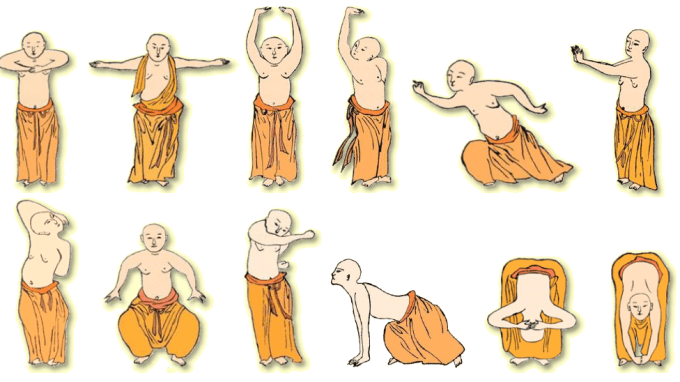
VIDEO: Yi Jin Jing – The Muscle Tendon change classic (Exercises 1-12 with full explanations)

16 Facts You (Probably) Didn’t Know About the Chinese Martial Arts, Part I

benjudkins's avatarKung Fu Tea

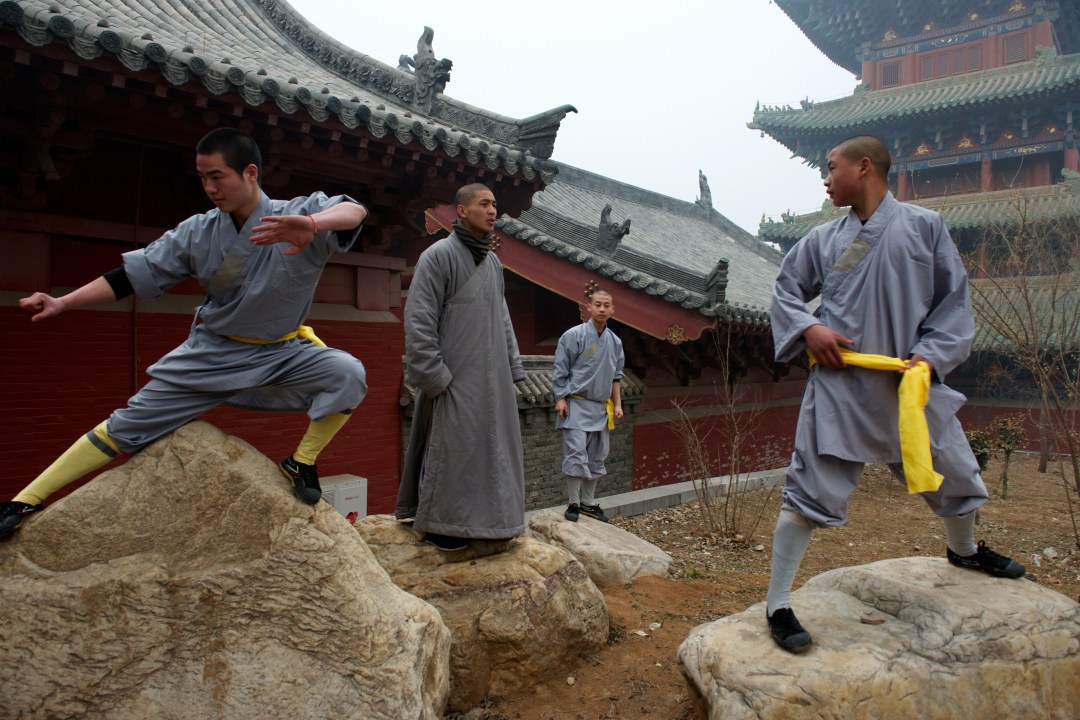
SHAOLIN MONASTERY, ZHENGZHOU, HENAN, CHINA – 2013/02/25: Shaolin Monastery or Shaolin Temple, a Cha?n Buddhist temple on Mount Song, near Dengfeng, Zhengzhou, Henan province, China Shaolin monks train in Kung Fu at Shaolin Monastery or Shaolin Temple, a Cha?n Buddhist temple on Mount Song, near Dengfeng, Zhengzhou.. (Photo by Jeremy Horner/LightRocket via Getty Images)

We all love clickbait. Sure, we say we hate those gimmicky titles that populate our YouTube play lists.  And none of us would willfully admit to clicking on “108 Facts about Rick and Morty” or, “20 Things that You Didn’t Know About Wing Chun”, but advertising dollars don’t lie.  Just check out the viewership on these videos.  Yeah, we all clicked on them.

The human mind loves a list. These discrete, bite-sized, bits of predigested information slot seamlessly into our larger matrix of beliefs and world views, all while invisibly reinforcing our subconscious predispositions. Nor should we ignore the…

View original post 3,071 more words

Research Notes: Weird Lions and Chinese Jiu-Jitsu in 1934 — Kung Fu Tea

I should be packing for a weekend visiting family. But before leaving I wanted to share something from my recent reading. Growing up in Western NY I had many opportunities to visit Toronto. Its Chinatown was the first of North America’s historic Chinese communities that I was able to get a real sense […]

via Research Notes: Weird Lions and Chinese Jiu-Jitsu in 1934 — Kung Fu Tea

1920: Jingwu Brings Kung Fu to Guangzhou’s Public Schools — Kung Fu Tea

It goes by many names. Organization, bureaucracy…”hard work”… It’s the sort of social effort that defines modern industrialized life. Weber famously termed it the “iron cage” of rationality. We so frequently speak of, or imagine, the martial arts as an intrusion of pre-modern tradition onto the global stage that one might be forgiven for […]

via 1920: Jingwu Brings Kung Fu to Guangzhou’s Public Schools — Kung Fu Tea

Martial Arts and the Body Politic: A Review in Memory of Denis Gainty — Kung Fu Tea

Denis Gainty. 2013. Martial Arts and the Body Politic in Meiji Japan. London and New York: Routledge. 208 pages. $55 USD. Reviewed by Benjamin N. Judkins. The passing of Denis Gainty in 2017 robbed the martial arts studies community of a promising voice. The earlier death of G. Cameron Hurst, Gainty’s dissertation advisor, […]

via Martial Arts and the Body Politic: A Review in Memory of Denis Gainty — Kung Fu Tea

Speed and timing; The Difference

senatus_0v6dpy_flvplayernowmv4

by Phillip Starr

“When you are young”, I tell my students, “Practice to develop speed. As you age, your speed will slowly decrease; that’s just the nature of being human. But remember that you can always improve your timing.”

There’s a considerable difference between speed and timing and many martial artists don’t fully grasp it. Speed is just that…speed of technique. There are numerous ways of developing speed in your techniques and I’ve elaborated on them in previous articles; using the candle, paper, and other routines are intended primarily to enhance this very valuable asset. However, it’s well to bear in mind that we reach our physical peak sometime in our late 20’s or even our very early 30’s. After that, strength and speed begin to slowly decrease. Sure, there are exercises you can do to retard this process but the fact is that eventually, you begin to slow down in terms of technique.

Timing, however, can be polished and improved throughout your life. I define “timing” as the moment when, during a given movement, you execute your technique. In the case of a punch, for instance, do you fire it AFTER your leading foot hits the ground? Do you punch so that your fist impacts the target AT THE SAME TIME that your foot hits the ground, or possibly even BEFORE it touches the ground? There’s no single correct answer; it depends on distance and “rhythm.”

In the case of a BROKEN RHYTHM, you strike after the opponent has executed his initial attack but BEFORE he can generate a second one. It is, in a sense, striking into the “spaces between his techniques.”

In the case of the MUTUAL RHYTHM, you evade or deflect the enemy’s attack and strike him at the same time. The techniques occur at the same time but hopefully, yours hits its mark and his doesn’t…

The PRECEDING RHYTHM requires that you learn to “sense” when your opponent is about to attack and you beat him to the punch, as it were. This doesn’t necessarily require tremendous speed at all; it requires razor-sharp reflexes and the ability to “connect” to your opponent.

All three of these rhythms are discussed in detail in my book, “MARTIAL MANEUVERS”, and training routines are laid out for each of them. Each one should be practiced very assiduously until you reach a high level of skill. Simply practicing each of them a few times to “get the feel of it” isn’t nearly enough.

If someone’s “timing” is sharp, it often gives the illusion of tremendous speed. Take the founder of modern aikido, Morihei Uyeshiba, for example or even his student, Master Gozo Shioda. They sometimes appear to be faster than their training partners but the truth is that their timing is perfect. Face it, there’s no way an 80-yr. old man can be physically faster than a 25-yr. old. However, the senior’s timing can be much finer than his junior’s.

Such perfection is not something to be wished for, nor can it be achieved in a short time. It requires great effort over a period of time. Hurrying will only result in lost, wasted time.


20 Martial Arts Blogs worth checking out

There are now hundreds if not thousands of great martial arts blogs out there covering numerous martial arts styles. But which ones are worth checking out and which ones are not?

Well, the guys at Feedspot have saved you sometime by putting together their definitive list of their Top 20 Martial Arts Blogs, Websites & Newsletters To Follow in 2018.

Their list includes one of our favourite blog’s Taichi Notebook but surprisingly has omitted Kung Fu Tea. You can check out their full list of martial arts blogs here on Feedspot.

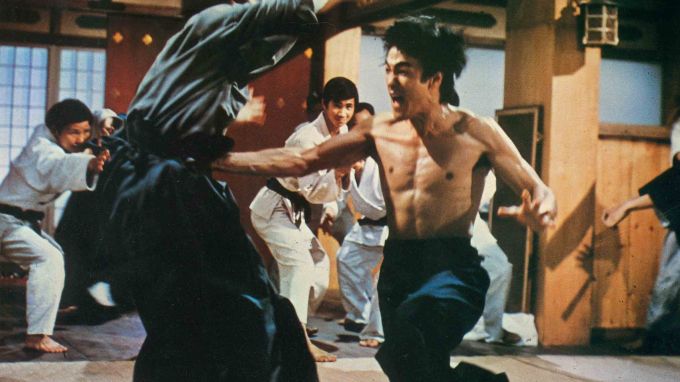
Chinese Martial Arts in the News: July 16 2018: Ip Man, Bruce Lee and the Shaolin Temple — Kung Fu Tea

Introduction Welcome to “Chinese Martial Arts in the News!” Lots has been happening in the Chinese martial arts community, so its time to see what people have been saying. For new readers, this is a semi-regular feature here at Kung Fu Tea in which we review media stories that mention or affect the traditional fighting arts. In […]

via Chinese Martial Arts in the News: July 16 2018: Ip Man, Bruce Lee and the Shaolin Temple — Kung Fu Tea

Rising Dragon Martial Arts School Review

Here is the latest Student Review for Rising Dragon Martial Arts School in Yunnan. The Review was written by Daniel Wright who stayed at the school for 1 month during the summer of 2018.

What an incredible life changing experience. For anyone thinking about doing this or something similar, just do it. It really pushes you and changes your perspective on life. The school itself was fantastically located, inside a Buddhist Temple and well into the mountains of China, about as picturesque as you could ask for. With a small town down the mountain you still have access to a bit of ‘normal’ life if you need anything. Food is great and healthy, however not too much meat so can be lacking in protein, so you may require supplements if you are staying there for a while.

Training was very tough, be prepared to work hard. If you honestly aren’t there to work your butt off pick a different school because everyone there is putting in the effort, and you will be required to train as hard as you can to the best of your ability. It really doesn’t matter where you start, whether you are very unfit and have no experience or the complete opposite. All that matters is that you are doing your best. My fitness and flexibility went through the roof in the short time I was there, and I was able to learn multiple forms of Shaolin Kung Fu, but injuries can be common place due to the nature of training and pushing your body so be careful and look after yourself/be smart.

Learn-Kung-fun-in-China-with-Rising-Dragon-martial-arts-training-camp

Unfortunately there was no Calligraphy or Mandarin lessons as advertised, as the monks are responsible for that and it depends on them. There was also only 1 trainer while I was there, so for multiple different training styles it could be difficult. But the 1 trainer (Meng), was the most amazing trainer and mentor. So kind, so lethal, and honestly cared about your progress and was great at adapting to everyone’s experience level. Another huge upside was the Accommodation. Max 2 to a room, all with en-suites with western bathrooms (no squat toilets). So that was very nice to come back to after a huge day of training.Overall an amazing experience that I would recommend to everyone.

Dave from StudyMartialArts.Org was insanely helpful, and honestly I don’t think he gets enough credit or commission for his work. Helped me narrow down my choice out of so many schools, answered all my questions regarding the school, travelling there, visas, etc. He was absolutely invaluable and I don’t think I would have been able to choose a school little own figure out all the logistics of going. So thank you so much Dave!