“Internal” martial arts – cultivating “CHI”

Tianmeng Shaolin Kung Fu Academy

by Duka Nadja current student of Tianmeng Shaolin Kung fu Academy

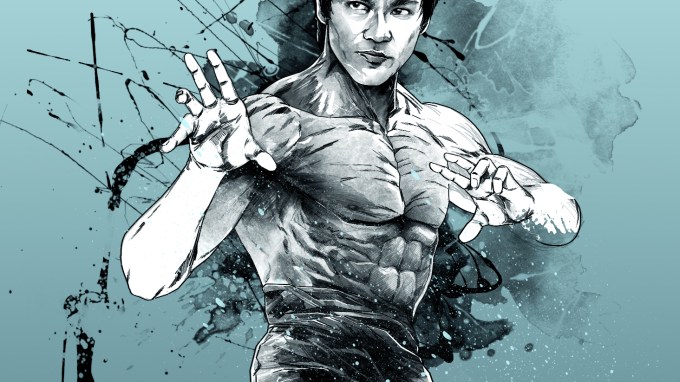
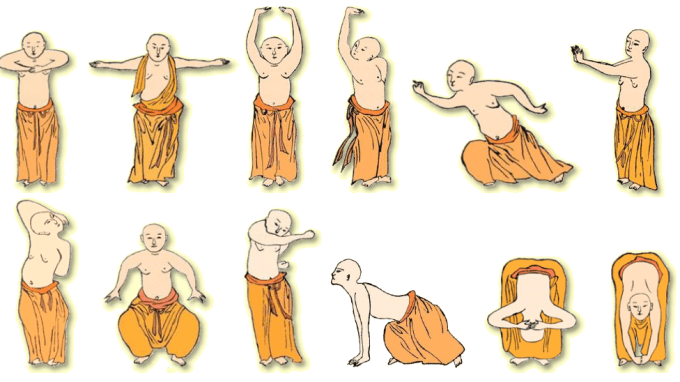
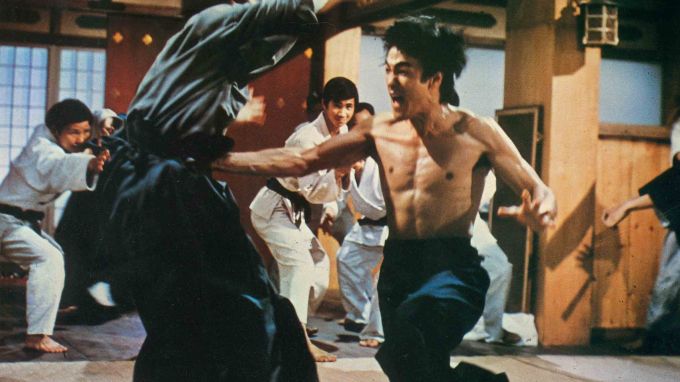
The term “internal,” is referring to a type of training that focuses on developing of the life energy called “Qi”. We come across the term life energy in every great and antient culture of the world: “Chi” (Chinese), “Prana” (Hindu). Nowadays researchers and scientist are able to prove the reality of the “Chi” existence, using special technical innovations. The real problem is a subtle nature of “Qi”, so that most people find it really difficult to feel how “Qi” flows inside their bodies and meridians. Our modern lifestyle, which puts an enormous pressure on the nervous system, causes “stiffens” of our feelings. So we can not feel higher vibrations of “Chi”. We miss the “unit with the nature” and natural flow of movements. So the “Tai Chi or Kung Fu retreat” in the natural environment of Tianmeng Shaolin Kung Fu Academy could be a great possibility to “come back to roots”. If the mind becomes less distracted and less stressed, it would allow the body to relax, giving you a possibility to feel deeply and completely. That’s why Tianmeng Shaolin Kung Fu Academy pays so much attention to internal martial arts practicing Qigong (life-energy cultivation practices). Qigong and Tai Chi are best ways of practicing for beginners and older people. It is important to develop the internal power before learning any fighting applications or Kung Fu forms. Additionally we offer Meditation to balance your emotions. A relaxed body works better and is less prone to injuries. So, integrating “internal” rounder and softer movements in the daily practicing routine of every “external” martial artists and athlete is a smart idea to achieve best results.  Bruce Lee describes “internal” martial arts as following.

“Moving, be like water. Still, be like a mirror. Respond like an echo.”

What is Leadership?

Leadership-Do_MoreThe idea of gaining rank, position or titles is a big draw. People like rewards and recognition. The problem is that true leadership has nothing to do with any of those.

In fact, I’m old enough to remember people regularly commenting upon military officers coming out of ROTC programs. These officers were very educated but not experienced and often thought they had the best ideas about how to do things. Those who became leaders from this opportunity understood how important their personnel were. The education they received from their sergeants after getting into a company taught them what real leadership was. The movie Heartbreak Ridge has a very good example of this.

Maj. Malcolm A. Powers: I am, sir. Major Malcolm Powers.
Colonel Meyers: Did you lead this assault?
Maj. Malcolm A. Powers: Sir, Lieutenant Ring and Gunnery Sergeant Highway disobeyed a direct order. I told them to wait for support but they went up this hill anyway.
Colonel Meyers: [to Highway] Why?
Highway: We’re Marines, sir. We’re paid to adapt, to improvise.
Lieutenant M.R. Ring: Sir, I gave the order to take this hill.
Maj. Malcolm A. Powers: Ring, this is going to ruin your career.
Colonel Meyers: Are you new to the infantry, Major?
Maj. Malcolm A. Powers: Yes, sir. Just came over from supply.
Colonel Meyers: Were you good at that?
Maj. Malcolm A. Powers: Yes, sir!
Colonel Meyers: Well then, stick to it because you’re a walking cluster fuck as an infantry officer. My men are hard chargers, Major! Lieutenant Ring and Gunny Highway took a handful of young fire pissers, exercised some personal initiative and kicked ass!

These lessons don’t end EVER. The role of a leader has no real boundaries. I’ve chatted with several martial artists who have agreed with me that some of their teachers and peers are called by their title even off the mat BECAUSE of how they live and the continuous lessons they offer (without trying). This is what leadership is actually about. The development of others to surpass your accomplishments and understand more than you do. This ties directly to what I believe tradition is. The continual development of excellence is the tradition! The techniques and methods used only re-enforce the principles but grow and improve over the years. Knowing more doesn’t change the reason (principles) for tradition.

Leadership_continues_afterwardYou should always work to become replaceable. If it can’t survive without you, then too little of the knowledge was passed on. This would be because you really don’t know enough or your were selfish and hadn’t really led anything.

The lessons that you provide as the leader MUST be usable throughout the student’s life! There are specific areas that your teaching is intended for and they need to be shown. This can be seen in how many martial arts schools claim to teach self defense. I have only recently recognized this issue. My Taekwondo does not truly teach personal protection. It has elements that support learning protection applications but it is really about personal development for students to strengthen their confidence and courage and spirit for dealing with daily life. Some of the applications within hyungs (forms) can provide some elementary insight into personal protection but the training doesn’t re-enforce that outcome. We are building leaders who will work in daily life activities (families, community, jobs).

The other areas of development require lessons from those teachers. It is important to seek them out and study. This is true about any interest or passion that you have. here is where a secret piece of leadership fits. You don’t necessarily become a leader in what gave you the skills! Many excellent martial arts teachers that I know only teach part-time. They have small schools and a small student base. The leadership that they provide is within these schools and they create more leaders but their leadership is most noticeable is not within the martial arts.

createLeadersOne example is Dr. Mark Crapo Sensei. He is a high ranking leader within Seidokan Aikido but you probably haven’t heard about him unless you’re part of Seidokan. His leadership has been invaluable to Seidokan but he has lead a far larger entity, Symmetry Global, that is a multi-national company. His leadership has created new leaders who are out supporting their own teams and educating more people. This is because he is a leader and leaders should create more leaders.

I’ve had the fortune to have train with Crapo Sensei and other excellent Seidokan teachers. I have had awesome Song Moo Kwan Taekwondo lessons as well. Currently, I have been able to recruit others to Haidong Gumdo but they were already leaders in their own right. This version of the leadership topic has been in my brain for the past few weeks as the Midwest Haidong Gumdo group promoted students into the yundasha (black belt levels). Where will our next leaders come from? Will they be leading in our schools or other places? I’ll be happy that they are leading because they are all quality students.

The Lone Warrior

I usually change “alone” to “by yourself”. If you can’t enjoy your own time to work on your goals/plans or do nothing, then you will never be able to truly help others.

AloneTime

Since all of the dreams, goals and desires come from within you, you MUST be able to spend time by yourself to work them. The time that you spend alone gives your mind the chance to work through the details and begin to see the path that they will take you on.

My Song Moo Kwan lineage continues one of the founder’s principles yet today. Supreme Grand Master Byung Jick Ro taught “nothing is impossible” (Ha Sa Bul Sung) as part of the principles that create success. This is presented during training, where YOU are the one doing the work and putting in the effort. This principle is to remind you that YOU are the reason you have success.

All of the things that you wish to accomplish are within you! They can be aided by others but you MUST do the work. The support systems that you develop help fill in the blanks in your plans and patch cracked sections, but they are not the energy and power that will make any plan a success.

I will admit that it is truly wonderful to find others with similar dreams and desires. These people help provide some insights and details that may be missing from your plan as they’ve lived through other different experiences than you have. These are the people who become true family.

Now, the flip side of working toward your dreams & goals is taking the appropriate time away from them and the other duties in daily life. Sleep is one of the biggest ways that we do this today. Sleeping is, for some, the only time they spend alone away from everything. Even when we say that we’re taking a break, many still answer emails or check Facebook.

The chemical based depression aside, I know a few people who become depressed when alone. Their fears become larger and take control. They hide within chemicals (drugs, alcohol) to ensure these fears don’t rise too high.

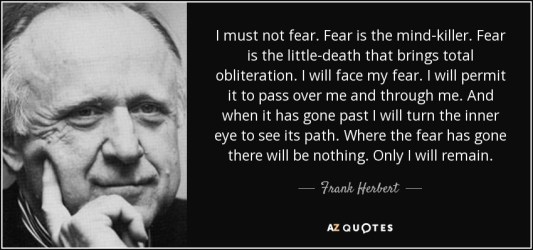
fear-frank-herbert-34-33-30

If a goal of training in the martial arts is to develop courage, then it should be applied to every part of your life. Your alone time is the perfect place to work through your fears and to develop the bravery that will allow you to serve others struggling through similar fears. There is so much within the realm of physical personal protection strategies and tactics that fit into personal development as well. The internal struggles can warrant responses nearly as great as the external attacks.

Fear_not_Real

Train physically to help develop mentally to fight the evils outside and inside. Your alone time is where you will set those skills as they apply to all of your dreams & goals. Don’t hesitate, don’t delay, train hard and long! Consider your alone time as part of your training…to help keep you from the insanity.

Hua Shan – the worlds most deadly hike

Hua Shan has 5 peaks, the deadliest of these is the infamous Plankwalk.  For those looking for a unique and frightening challenge while taking some deserved R&R from kung fu training this is for you.

Arriving in Huayin (the town at the foot of the mountain) the day before is advisable. That way you can get a rest the night before. Do make sure you book because this place gets busy.

Once your room is secured you have two options to get to the top of the mountain. The first is to take a 6 hour hike up the mountain stairs. This is the best way to get a good view of the landscape. The other is the new West Cable Car (140 RMB/pp each way, $22 or 100 RMB/pp with student car, $16) the earlier in the morning the better. If you successfully get on the cable car, expect a further 4-6 hours of hiking.

To avoid disappointment I’d recommend you plan to visit off season, defiantly not on a Chinese holiday.

Top tips for visiting Hua Shan & Detailed GuideScreen Shot 2016-04-12 at 23.07.35

  1. Plan ahead, check the weather and make sure its off season.
  2. Book your accommodation in advance
  3. Expect lots of people and cues
  4. Bring a change of underpants

What to expect from the Plankwalk

‘During the actual walk you are walking across a narrow plank walkway nearly 5,000 ft in the air after all during the least intense part of the hike.  The remainder of the trail is composed of iron rods protruding from the mountain, small cut outs in the actual rock for your feet and/or chains for gripping yourself close to the mountainside.

The path itself is TWO-WAY traffic for the entire day, which means you are sharing an already extremely treacherous path with limited space often.  You will be required to move your harness over other hikers heads and step on the outside of them, sometimes only having room for one foot to stabilize.  It gets especially tricky when sharing either of the ladder areas and/or cliff cut outs, as they have even less real estate to offer. (http://blog.unboundly.com)’


Fit Is Not Healthy: A Shaolin Monk’s Guide To Exceptional Wellness — shifuyanlei

In the age of social media, many people train for a body they perceive looks attractive to other people. When I was training at the Shaolin Temple, we didn’t even have a camera. Nothing was documented. We trained to conquer our mind and body and become the best we could in our chosen art form. Since […]

via Fit Is Not Healthy: A Shaolin Monk’s Guide To Exceptional Wellness — shifuyanlei

Rules

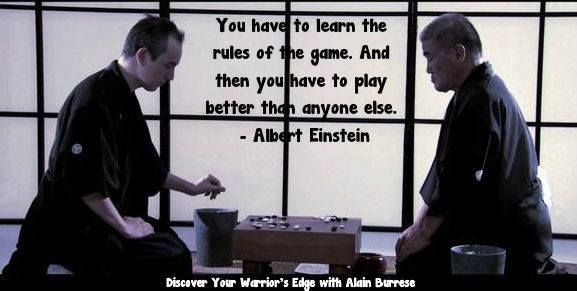
There are SO many aspects to this thought. When I saw the picture below posted on Alain Buresse’s Warrior’s Edge page, it struck me immediately. The irony of the game below, Go, has very few rules but can take hours, even days, to play.Rules-Eistein


One aspect is that of academia. You can regularly see posts from parents who are disgruntled with school districts and their testing requirements. I agree. There is WAY too much focus on taking tests to provide memorized information that don’t truly score knowledge or intelligence.

Since that is part of the game, though, parents need to help the younglings understand it. The hardest part of playing any game is not knowing the rules. A person who can learn them from the experiences of others will progress more quickly.

This leads nicely to a couple blog posts by Anna Valdiserri. Over the past couple weeks she’s posted these – Rule of Dumb -1 and Rule of Dumb -2. Both of which discuss following the rules and those who won’t. She makes some very good points about stuff you may think are obvious…but no one had said them. The key to figure out here is how you can stay within the rules (honor, integrity) and not get trashed by those who won’t play by them.

Maybe a good development tool is your martial arts (or other) training. A common occurrence during class is asking about which stance should be in that movement. Is that a back stance? Yes, it is. But you had your foot over there (3 inches different from typical)? This kind of exchange happens all the time but has no real bearing on the movement or technique.

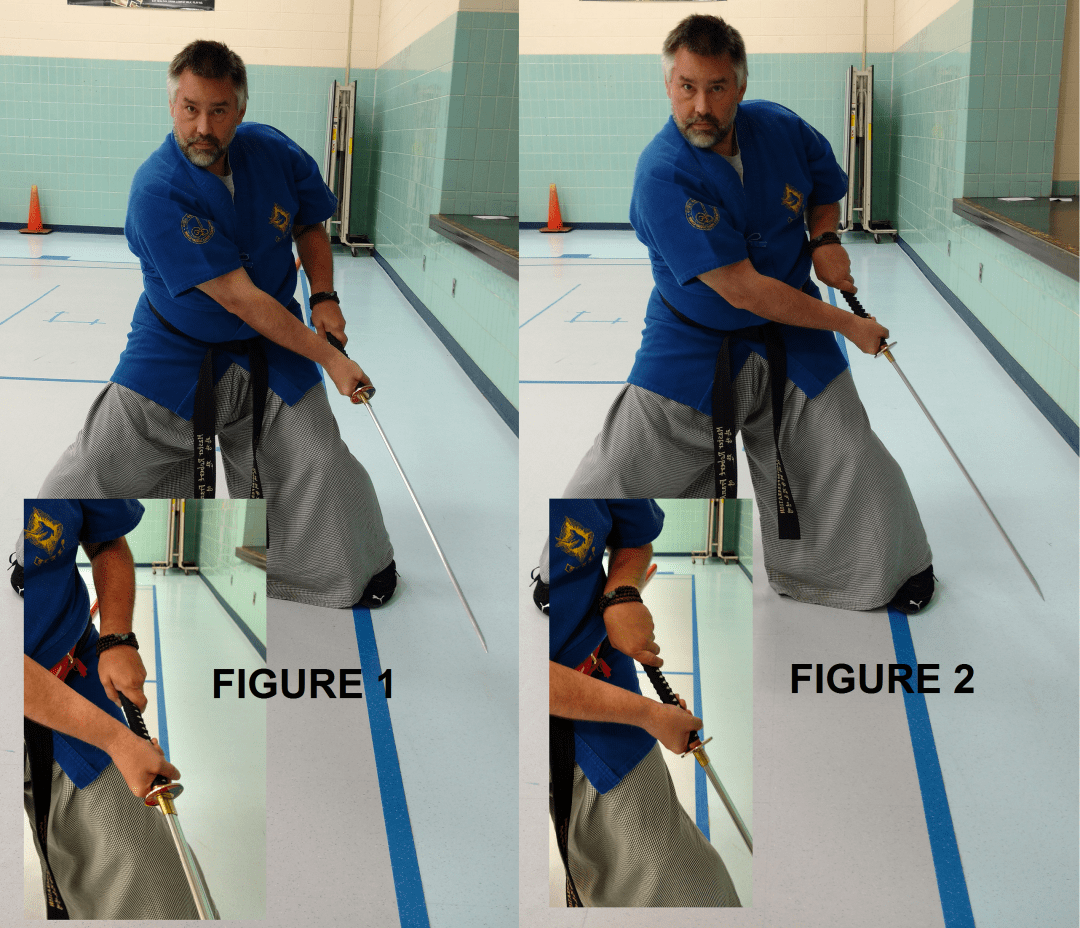
Now, some rules take precedence over other rules. Cutting with a sword has several of these. One example comes from Saseong Neri Bagi (big angle downward cuts). When doing a Left (to right) cut, it is rather easy to follow the rule “the sword stops nearly directly your side” as the twist through your torso will allow this as does help having your hands placed on the sword properly.

The struggle comes while trying to do a Right (to left) cut. As the hand placement on the sword affects your reach, the sword doesn’t get directly to the left side. This can cause the student to try still follow the rule of stopping directly to the side (figure 2). The problem with this is that it usually ends up violating a more important rule – “No kinky wrists.” By allowing the hand to turn or twist of the handle or the wrist to bend greatly, the student puts the sword in an awkward position where control is lost. The student following the more important rule of “No Kinky Wrists” (Figure 1) will find that the sword stops pointed about 45 degrees forward but allows proper cutting of targets.CuttingHands-1

Generational Leadership

General Stanley McChrystal discusses the ideas of leadership from his military experience. I think he hits several key points that carry over into the experiences that I’m having as I try to teach martial arts classes. One key point is the idea of generational leadership. The recognition that experiences can be vastly different from one student to another due to age needs to be kept in mind.

Now, I run a school that is different from most in the industry. I don’t have kid’s classes. Those younglings who are of a minimum age are in the regular class and are expected to keep up. Their age is an advantage as they can absorb a lot of information and repeat most of it almost immediately. Their brains aren’t biased by their past experiences and failures. Most believe that they can do anything…until they find something they can’t. This is where the adult students in class become the examples and lead the way. This is kind of an obvious example of generational leadership but it is very basic.

This leadership can take the form of “follow the leader” and younglings can mimic well. The challenge comes from trying to explain and illustrate what they should be doing. When most of the younglings today don’t know who John Wayne was, it can make it tough for some adults to use words for instruction. Then there are the other experiences that may or may not be common. I had one 11 yer old ask me why I kept calling them younglings. I asked if he knew that it came from Star Wars. He said “I do but no one else in class understands that!” So, at the beginning of class, I asked who knew the term and, truly, everyone raised their hands. At this point, a 12 year old asked when they’d get to become Padawans.

Knowing that many of the students are on the geeky side is why I tend to use Star Wars and Star Trek references in class often. The other regular references are from anime, which fits the geeky ones and many of the younger. I’ve been fortunate to not need to get into video game references as the anime stretches my limits and the video game experience is non-existent.

I’ve included General McChrystal’s TED Talk here for your enjoyment. he has some other insights that may show up in future posts.

Rules For Life

KillHouse_RulesThis came across a newsfeed recently. I think it is awesome! They may be a little blunt but they easily fit the rules for life. Taken from a combat setting, they can be applied to the every day World without much adjustment.

There have been many posts about wanting “safe places” and trying to twist situations for their own benefit. One example are those who feel they can claim their opinion as the only correct way and are offended to the point of taking legal action when offended. The mother who can’t believe that her son could ever do anything bad is another example.

Now, I will completely agree that it is very beneficial to have a support system, but…

The more important point is that people need to make sure they are working to their fullest BEFORE calling upon their support system. A few things like a vehicle breakdown or emergency room trip should use the support immediately. Even those are based on the degree of severity. I can’t fix many things on a vehicle but I can change a tire (and the oil) and make sure that those tools are included in the vehicle. If I can’t manage the situation, then I’ll call upon the support system. The recognition that no one is coming to save me is a mindset that can be established in these little incidents to be enabled in more serious situations.

Which brings us to the idea that YOU are responsible for everything. This, to me, clearly means that you must act on everything that happens and be held accountable to everything that you do. When the time comes, do you run toward danger or away from it? This is an extreme example but accurate for a society that has had many active shooter incidents. Have you trained well enough to be helpful is this situation or are you a hindrance? In daily life, this rule fits into things as simple as cleaning your room or taking out the trash. If you see that it needs to be done, do it. If you have to be told, you’re sheeple and not a warrior.

Save those who need to be saved fits simply into any bullying situation. If you, as a warrior, don’t stand with the person being bullied, then you are not a warrior. Be aware of the “educational beat down” (see Rory Miller’s “Facing Violence”), because that is NOT something to get involved with. Those who don’t respond when others are in need, don’t fit the warrior way. If you don’t at least call 911 to report the disabled vehicle, you are not being responsible. I will agree that family safety comes first but not calling to inform of the vehicle and provide mile-marker information is cowardly.

I really don’t encourage killing but this next rule can easily be applied to stopping bullies, reporting disabled vehicles and protecting those who have had “one too many” from possible ugly situations. Standing up with those who need help is as good as killing those who need killing.

Personally, I see “always keep working” in the same light as keep learning, challenge yourself, don’t stop getting better. In an emergency situation, moving from one problem to the next and getting the most accomplished is called triage. This is where all of your training and knowledge is put to the test AFTER he fact. I promote that you make sure that your training will stand up to the test but making sure you have everything you need ready to go and have conducted stress testing to reinforce it.

If you work these rules into daily life, your preparation to handle adversity will increase exponentially. You will probably enjoy life more as being of service to others is important.

“What’s your style?” – Bringing the Training Hall to the Lecture Hall — Kung Fu Tea

Introduction: “What’s your style?” A couple of months ago a conversion emerged between a few of my colleagues which got me thinking about the effects of personal training on those who wish to write on martial arts studies. Simply broaching such a question tends to elicit a number of knee-jerk responses. […]

via “What’s your style?” – Bringing the Training Hall to the Lecture Hall — Kung Fu Tea

Becoming Brave

The martial arts are centered around the personal development of the student. This development is for improving the quality of life for the student. Providing skills and techniques that provide the skills necessary to be successful at problem solving and leadership.

In order to accomplish this, the student needs to develop physical  skills to introduce the principles and concepts that will guide them through the dangers. This is evident in the credos of Song Moo Kwan.

The Four Credos of Taekwondo by Supreme Grandmaster Byung Jick Ro are:
1. Yehsi-Yehjong: Begin with courtesy and End with courtesy
2. Solseon-Soobeom: Lead by example
3. Budahn -Nohryeok: Never ending efforts
4. Hasa-Bulseong: Nothing is Impossible

The dangers vary from student to student. Something as basic as an elementary school math test to a presentation to the board of directors. The physical techniques and the principles provide the base skills to fight these fights. These principles are the way to help create bravery within yourself. Only through bravery does the student learn to step outside their comfort zone. Each time the student does this they further develop their bravery.

Brave_KidThe little guy in this video didn’t care about the size of the opponent but he was willing to charge in and help save the girl. He didn’t know that it was more play than threat and he didn’t care! That is bravery.

The unfortunate part is that bravery diminishes as we get older. We start playing it safe and stop taking the step outside of the comfort zone that we’ve created.

It is important to take the challenge. It is important to step past the things that you already know and step up to meet whatever is around the corner. Most of the time we under-estimate ourselves and our capabilities. After seeing students for the past 25 years, I have watched students rise to, maybe,  about 60%  of their capabilities. All because they still won’t push themselves beyond the last step they took.

If you look at any hero story, you find that they all follow the same story. Meet the challenges, fix the wrongs and make something better for those who follow the hero.

Whatever challenge arises, the hero will step up the engage it and succeed. The hero (and his help, whether it be a sidekick or comrades) push forward through the fear and doubt to accomplish the trial or task. In fact, several stories show that several attempts were needed to complete the trial or task (Budahn -Nohryeok: Never ending efforts). This only emphasizes that failure is only true if you quit (Hasa-Bulseong: Nothing is Impossible). Through their actions and continued efforts, they build bravery.

Seek to find the challenges that push you beyond your comfort zone. You will amaze yourself with what you can actually do and find true friends (comrades-at-arms) along the way.