
Huang Shan – China’s famous Yellow Mountain

The Yellow Mountain (Huang Shan, 黄山) is among the most visited and notable mountains in China. For those looking for a unique natural landscape and don’t mind having to compete for it with swarms of other tourists, this is the place for you.

You might have to use the new martial arts skills you’ve been learning at your Kung Fu School in order to fend off the other tourist that will be fighting for rooms and places to stay on this mountain. This is not a joke nor an exaggeration. Tensions can get pretty high over the last rooms when the alternative could be a cold sleepless night on this huge rock.

Once your rooms are secured you have two options to get to the top of the mountain. The first is to hike up the mountain stairs. This is the best way to get a good view of the landscape. The other is by Cable Car. The earlier you get the cable car the better. It’s not unknown for their to be kilometre long lines of people even at the break of dawn. If you successfully get on the cable car, expect more hiking.

Once at the top book into another hotel (this should be done in advance). That way you can relax and enjoy both sunset and sunrise the next day. In terms of the hotel quality, expect them to be overpriced, and rough. Prices range from 200 rmb to 1,000 rmb. For the 200 rmb range think refugee camp conditions.

Here is a link to some of the best accommodation options for Huang Shan.

To avoid disappointment I’d recommend you plan to visit off season, defiantly not on a Chinese holiday. Pre-buy and take with you any expensive food items. Whether expensive snacks or a cheeky bottle of rice liquor everything will be way more expensive at the top.

Huangshan, is a mountain range in southern Anhui province in eastern China. Vegetation on the range is thickest below 1,100 meters, with trees growing up to the treeline at 1,800 meters. Wikipedia
Address: Huangshan, Anhui, China
Elevation: 6,115′
Highest point: Xuelian Feng
Province: Anhui
Country: China
Phone: +86 559 558 0033
Listing: Ultra-prominent peak
Mountains: Tian Du Feng, Xuelian Feng, Guang Ming Ding

Top tips for visiting Huang Shan & Detailed Guide

  1. Plan ahead, check the weather and make sure its off season.
  2. Book your accommodation in advance
  3. Expect lots of people and cues
  4. Bring your survival and luxury rations
  5. Expect things to be more expensive

How to get to Huang Shan

Huang Shan is located in the western part of Anhui province. Below are a couple of options by train from either Shanghai or Beijing.

  • Shanghai (5 hours on the G1509, leaving in the morning at 8.27);
  • Beijing (there are fast trains from 8 in the morning to 15.30, and the trip lasts a little under 7 hours) and on the same line, Tianjin;

From the city of Huang Shan, where long distance options arrive, shuttles depart for Tangkou (汤口), adjacent to the entrance to the Park, at the foot of the mountain. If you choose to climb on foot, the climb starts at Tangkou. If instead you’re going for the cable cars, there are shuttles that connect directly to the station, airport and the city of Tangkou obviously. These city buses don’t cost more than 20 Yuan for the longest trip. Even taxis and tuk tuks are available if you arrive from the airport or station, but to get to the cable cars you can only use designated buses.

Pictures of Yellow Mountain (Huang Shan, 黄山)

Yellow Mountain

porters2

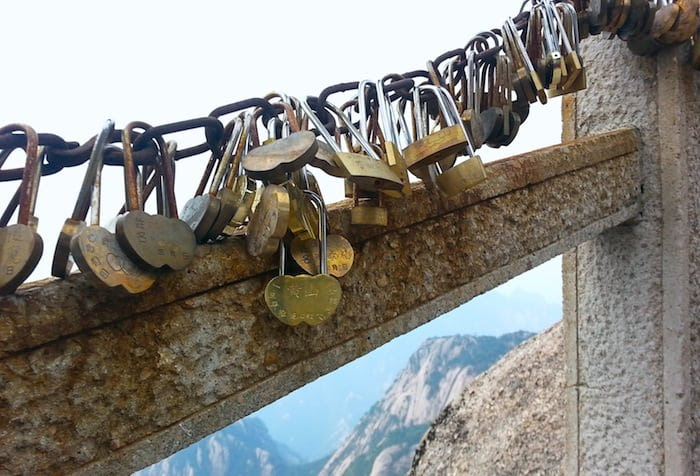
Locks on Huang Shan

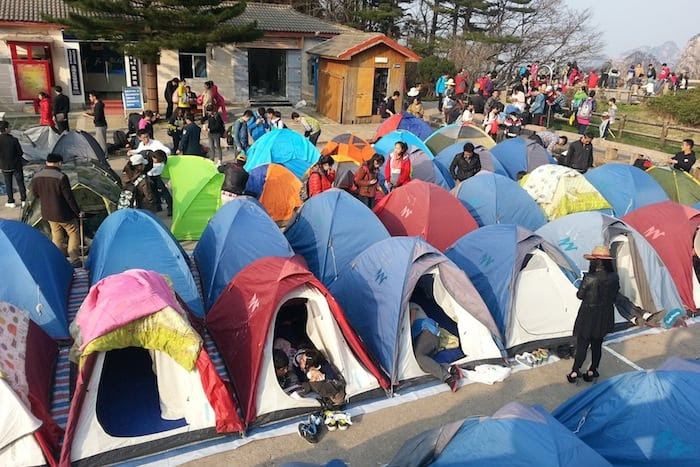
Campsite

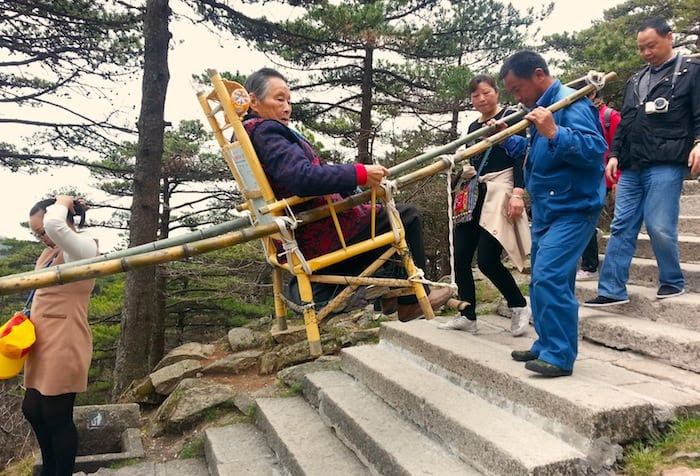
Porters

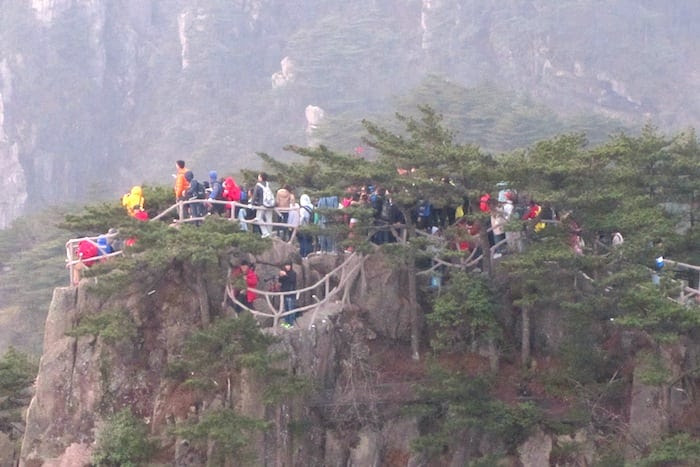
Crowd at sunrise

high-speed-premium-vpn-728x90-d5b5ef120ae5ca0c69e501d3a6d39f94

Skilled People

Dont_hire-Skilled-SimonSinekI think that I’ve got a company that has motivated people who have found inspiration in the challenges of my curriculum – official and unofficial. In fact, they can’t get hired into my company without a very long audition that demonstrates their motivation. Their inspiration feeds their motivation to make a wonderful cycle of personal growth. Another quote is to “Hire character. Train skill.” (Peter Schutz) as skill can be taught but character can’t be. I only want people of character to join me in working on these skills.
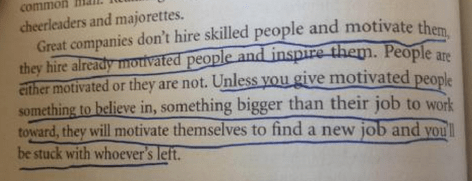
Yes, I will use this analogy of working for me because my whole brand and success is based upon how my students present themselves in life. The skills that they develop in my martial arts classes are not so much about learning personal protection as they are about learning about themselves.

This is an important distinction. Until recently, the past two years, I hadn’t been presenting my teaching well. The martial arts classes teach a system that has developed over time that focuses on specific techniques taught for a specific purpose (use) with acknowledgement being given to the lineage that created it.

This is not the same as a personal protection program. These focus on violence and how to survive it. They teach things that can keep you safe in an ugly world. My martial arts classes can teach the concepts and, even, some strategies for violence but it isn’t the same thing. The benefit of a martial arts class does come from being able to apply the martial arts principles, strategies and concepts into daily life.

Dont_hire_Skilled-BOOK-SimonSinekThe daily life applications help show these motivated people that there are things bigger than their job to believe in. The students as a group find ways to serve each other and the school, which then leads them to seeing how they can serve within their community (including other special groups that they belong to). I truly believe this as very few people decide to just “quit” our classes. They have life issues that get in the way. Many find their way back but it isn’t as important as them taking these applications with them.
Last year around this time, I received a graduation announcement from a student who hadn’t been in class to five years. It had an extra little handwritten note from both him and his mother asking me to stop during the party. I went without expecting much and learned that he had left class at 13 years old to focus on music and academics. He used the principles and concepts from Taekwondo, which are really the same in all martial arts just with different words, to reach his academic goals. His success had lead him to starting an engineering program.

I also have a student who is gone during the school year as he works on his Bachelor’s degree in physics, which is changed from his original idea of engineering, and returns for the summers. The chaos of life settles for a bit when he gets to train in Taekwondo again. I just don’t think I want to be around when he and my 2nd Dan Haidong Gumdo PhD candidate in Astrophysics have a conversation.

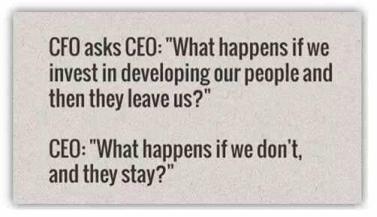
TrainingI have students from a wide range of skills and careers. They all come back and continue training because they see how much it helps their world beyond the physical fitness. I greatly enjoy investing in students. They don’t always see it but their effort and development is also their investment in me.

Demystifying Power Generation: Fali? Fajin? Fa-who-what-where-why?

by Master An Jian Qiu

What is Fali? What is Fajin? Are they the same? Are they different?

A lot of time is spent on power generation at An Wushu. There is, of course, a huge amount of depth to this topic not covered in this article.  This is just a short article as we often receive this question.

(Don’t worry if it doesn’t clear everything up! It’s not supposed to: In the West, we usually Learn then Do. At An Wushu, you Do then Learn: An Shifu will explain a small amount about a concept before showing you how to develop it. You’ll go away and practice it for many repetitions, and then when you have the feeling/experience of it, An Shifu will explain much more and it’ll truly make sense. For kung fu, this is almost always the best way to learn.)

Fali

Fali means to ‘release explosive power’ and is something anyone can do to a certain degree. If you go to the gym and lift a heavy weight off the floor, you are using (a low level of) fali.

Fali is performed by compacting the chi inside the body, and the body itself, then reversing this process to strike the opponent. In this way, fali requires a ‘wind-up’, like stretching your arms back before throwing a ball.

A strike performed with fali is a fairly ‘committed’ strike, meaning that even if your opponent moves during your strike, you are still committed to your path. (Do not think fali is not useful for this reason… a fali strike can still be incredibly fast!)

At An Wushu, we believe fali is best exemplified by Bajiquan. The video below shows some Bajiquan to see fali in action.

Fajin

Fajin is the joining of the whole body together (muscle, bone, tendon, ligament, and Yi [intent]) to send out a huge amount of power over a very short distance. Bruce Lee’s famous 1-Inch Punch is what a high level of fajin looks like.

Fajin can be considered ‘super fali’ as it requires no ‘wind-up’. It will naturally be developed as a practitioner’s body control increases from many hours of fali training, however certain styles train specifically for it.

While a strike performed with fajin does of course have momentum and therefore is ‘committed’ in a sense, a practitioner will be able to change directions very quickly compared to a strike powered by fali.

View the video below to watch some Xingyiquan to see fajin in action. Being a shorter body movement than fali, fajin is easier to feel than see; however, if you watch Xingyiquan after watching Bajiquan, you’ll see the explosive movements in each style have a different quality.

To learn more about An Wushu or how to study with Master An full-time in China visit www.StudyMartialArts.Org we work exclusively to help dedicated students connect to quality martial arts schools. This includes visa assistance and independent information all at no additional cost to you. Check us out with no obligation.

Martial Arts Travel Guide for China

People who travel to China without downloading this travel guide are 138% more likely to be unprepared for the journey ahead. All right, so maybe we’re exaggerating this point to grab your attention. However, the fact is that after you’ve read this guide you will know exactly what preparations are required before you begin your journey and also how you can deal with all that China has to offer.

This guide walks you through, the dreaded Chinese visa, what to pack, health and safety, money and banking, domestic travel, living in China, communications and much more.

You’ll learn:

  • How to prepare in advance of your trip
  • How to keep you and your belongs safe
  • What you’ll need to become an expert traveler
  • How to earn extra travel & training cash
  • Ways to save money

Download the guide here

Screen Shot 2016-05-29 at 22.50.14

That Look I Get When

That look I get when I ask students to work on a drill that moves differently than the other drill. Yeah, the one you just gave me…a bit of confusion.

Part of the Haidong Gumdo curriculum are fighting combinations that we do mostly as a movement drill to develop footwork and cut lines. These combination come from a set of gumbub (patterns) that are also required. They are a lot of fun to work on and provide insights into some strategy.

DSC_0865-1024x681The real fun comes when we add a partner to play the opponent (i.e. Bad guy). The designed response for the partner can throw off the movement of the combination. Movement angles change, techniques don’t seem to be on target any longer. Students can have a hard time “seeing” what they’re trying to accomplish. That’s when I get the “what are you talking about?” look or the “there’s no way this will make sense” look.

Once I start discussing the bunhae (application) of the movement, things usually start to brighten up. You can see the lightbulbs turning on. This is one of the faults in martial arts training. There are so many drills done, without the variables included, that the actual techniques and combination become ineffective. Students need to keep reminding themselves that they aren’t just learning physical techniques but, rather, parts of a fight. The dynamics of movement will change the whole drill. Yet, I only have given them one possible outcome variation. There are nearly limitless variations for that encounter due to the number of variables within the encounter. It is the student’s job to start looking for these applications while practicing the required version.

But, to get back to the look I get, it makes me wonder why the thoughts and hesitations come up when given an assignment. It seems to contradict that they came to me in the first place to learn the martial arts. The look from senior students is even more entertaining. After years of training with me, they still aren’t seeing the pattern or progression that is used to get them to the endpoint? That look of doubt (“You are goofy thinking that I can do it that way!”) on their faces always gives me a little smile.

DSC_0145-721x1024All too often, it is forgotten that there is a progression toward learning new techniques and applications. Some are obvious but many are hidden within the drill. If you get too focused on doing only the original drill, then the insights from the different version will be a struggle to find. This is the same for any subject matter. The physical techniques of personal protection and martial arts are easily recognized but there are others. An everyday example is driving. How many people only know two applications for the car – gas or brake? It takes time to see another option – coast. It takes time because it involves more knowledge and developed skill at reading traffic flow and timing for distances.

There is MUCH more in everything that we do. The level of success in any skill or activity is directly related to the development of knowledge and understanding in the subject matter. If you don’t get pushed outside of your comfort zone and knowledge limits, then you will not develop greater understanding. So, the next time your teacher presents something that doesn’t quite make sense, look deeper into the applications and purpose.

If you have enjoyed the posts here, please consider supporting our Kickstarter project, A New Home for White Tiger Martial Arts, with a donation. The project is running through the end of July 2016. Thank you.

“Internal” martial arts – cultivating “CHI”

Tianmeng Shaolin Kung Fu Academy

by Duka Nadja current student of Tianmeng Shaolin Kung fu Academy

The term “internal,” is referring to a type of training that focuses on developing of the life energy called “Qi”. We come across the term life energy in every great and antient culture of the world: “Chi” (Chinese), “Prana” (Hindu). Nowadays researchers and scientist are able to prove the reality of the “Chi” existence, using special technical innovations. The real problem is a subtle nature of “Qi”, so that most people find it really difficult to feel how “Qi” flows inside their bodies and meridians. Our modern lifestyle, which puts an enormous pressure on the nervous system, causes “stiffens” of our feelings. So we can not feel higher vibrations of “Chi”. We miss the “unit with the nature” and natural flow of movements. So the “Tai Chi or Kung Fu retreat” in the natural environment of Tianmeng Shaolin Kung Fu Academy could be a great possibility to “come back to roots”. If the mind becomes less distracted and less stressed, it would allow the body to relax, giving you a possibility to feel deeply and completely. That’s why Tianmeng Shaolin Kung Fu Academy pays so much attention to internal martial arts practicing Qigong (life-energy cultivation practices). Qigong and Tai Chi are best ways of practicing for beginners and older people. It is important to develop the internal power before learning any fighting applications or Kung Fu forms. Additionally we offer Meditation to balance your emotions. A relaxed body works better and is less prone to injuries. So, integrating “internal” rounder and softer movements in the daily practicing routine of every “external” martial artists and athlete is a smart idea to achieve best results.  Bruce Lee describes “internal” martial arts as following.

“Moving, be like water. Still, be like a mirror. Respond like an echo.”

What is Leadership?

Leadership-Do_MoreThe idea of gaining rank, position or titles is a big draw. People like rewards and recognition. The problem is that true leadership has nothing to do with any of those.

In fact, I’m old enough to remember people regularly commenting upon military officers coming out of ROTC programs. These officers were very educated but not experienced and often thought they had the best ideas about how to do things. Those who became leaders from this opportunity understood how important their personnel were. The education they received from their sergeants after getting into a company taught them what real leadership was. The movie Heartbreak Ridge has a very good example of this.

Maj. Malcolm A. Powers: I am, sir. Major Malcolm Powers.
Colonel Meyers: Did you lead this assault?
Maj. Malcolm A. Powers: Sir, Lieutenant Ring and Gunnery Sergeant Highway disobeyed a direct order. I told them to wait for support but they went up this hill anyway.
Colonel Meyers: [to Highway] Why?
Highway: We’re Marines, sir. We’re paid to adapt, to improvise.
Lieutenant M.R. Ring: Sir, I gave the order to take this hill.
Maj. Malcolm A. Powers: Ring, this is going to ruin your career.
Colonel Meyers: Are you new to the infantry, Major?
Maj. Malcolm A. Powers: Yes, sir. Just came over from supply.
Colonel Meyers: Were you good at that?
Maj. Malcolm A. Powers: Yes, sir!
Colonel Meyers: Well then, stick to it because you’re a walking cluster fuck as an infantry officer. My men are hard chargers, Major! Lieutenant Ring and Gunny Highway took a handful of young fire pissers, exercised some personal initiative and kicked ass!

These lessons don’t end EVER. The role of a leader has no real boundaries. I’ve chatted with several martial artists who have agreed with me that some of their teachers and peers are called by their title even off the mat BECAUSE of how they live and the continuous lessons they offer (without trying). This is what leadership is actually about. The development of others to surpass your accomplishments and understand more than you do. This ties directly to what I believe tradition is. The continual development of excellence is the tradition! The techniques and methods used only re-enforce the principles but grow and improve over the years. Knowing more doesn’t change the reason (principles) for tradition.

Leadership_continues_afterwardYou should always work to become replaceable. If it can’t survive without you, then too little of the knowledge was passed on. This would be because you really don’t know enough or your were selfish and hadn’t really led anything.

The lessons that you provide as the leader MUST be usable throughout the student’s life! There are specific areas that your teaching is intended for and they need to be shown. This can be seen in how many martial arts schools claim to teach self defense. I have only recently recognized this issue. My Taekwondo does not truly teach personal protection. It has elements that support learning protection applications but it is really about personal development for students to strengthen their confidence and courage and spirit for dealing with daily life. Some of the applications within hyungs (forms) can provide some elementary insight into personal protection but the training doesn’t re-enforce that outcome. We are building leaders who will work in daily life activities (families, community, jobs).

The other areas of development require lessons from those teachers. It is important to seek them out and study. This is true about any interest or passion that you have. here is where a secret piece of leadership fits. You don’t necessarily become a leader in what gave you the skills! Many excellent martial arts teachers that I know only teach part-time. They have small schools and a small student base. The leadership that they provide is within these schools and they create more leaders but their leadership is most noticeable is not within the martial arts.

createLeadersOne example is Dr. Mark Crapo Sensei. He is a high ranking leader within Seidokan Aikido but you probably haven’t heard about him unless you’re part of Seidokan. His leadership has been invaluable to Seidokan but he has lead a far larger entity, Symmetry Global, that is a multi-national company. His leadership has created new leaders who are out supporting their own teams and educating more people. This is because he is a leader and leaders should create more leaders.

I’ve had the fortune to have train with Crapo Sensei and other excellent Seidokan teachers. I have had awesome Song Moo Kwan Taekwondo lessons as well. Currently, I have been able to recruit others to Haidong Gumdo but they were already leaders in their own right. This version of the leadership topic has been in my brain for the past few weeks as the Midwest Haidong Gumdo group promoted students into the yundasha (black belt levels). Where will our next leaders come from? Will they be leading in our schools or other places? I’ll be happy that they are leading because they are all quality students.

The Lone Warrior

I usually change “alone” to “by yourself”. If you can’t enjoy your own time to work on your goals/plans or do nothing, then you will never be able to truly help others.

AloneTime

Since all of the dreams, goals and desires come from within you, you MUST be able to spend time by yourself to work them. The time that you spend alone gives your mind the chance to work through the details and begin to see the path that they will take you on.

My Song Moo Kwan lineage continues one of the founder’s principles yet today. Supreme Grand Master Byung Jick Ro taught “nothing is impossible” (Ha Sa Bul Sung) as part of the principles that create success. This is presented during training, where YOU are the one doing the work and putting in the effort. This principle is to remind you that YOU are the reason you have success.

All of the things that you wish to accomplish are within you! They can be aided by others but you MUST do the work. The support systems that you develop help fill in the blanks in your plans and patch cracked sections, but they are not the energy and power that will make any plan a success.

I will admit that it is truly wonderful to find others with similar dreams and desires. These people help provide some insights and details that may be missing from your plan as they’ve lived through other different experiences than you have. These are the people who become true family.

Now, the flip side of working toward your dreams & goals is taking the appropriate time away from them and the other duties in daily life. Sleep is one of the biggest ways that we do this today. Sleeping is, for some, the only time they spend alone away from everything. Even when we say that we’re taking a break, many still answer emails or check Facebook.

The chemical based depression aside, I know a few people who become depressed when alone. Their fears become larger and take control. They hide within chemicals (drugs, alcohol) to ensure these fears don’t rise too high.

fear-frank-herbert-34-33-30

If a goal of training in the martial arts is to develop courage, then it should be applied to every part of your life. Your alone time is the perfect place to work through your fears and to develop the bravery that will allow you to serve others struggling through similar fears. There is so much within the realm of physical personal protection strategies and tactics that fit into personal development as well. The internal struggles can warrant responses nearly as great as the external attacks.

Fear_not_Real

Train physically to help develop mentally to fight the evils outside and inside. Your alone time is where you will set those skills as they apply to all of your dreams & goals. Don’t hesitate, don’t delay, train hard and long! Consider your alone time as part of your training…to help keep you from the insanity.

Hua Shan – the worlds most deadly hike

Hua Shan has 5 peaks, the deadliest of these is the infamous Plankwalk.  For those looking for a unique and frightening challenge while taking some deserved R&R from kung fu training this is for you.

Arriving in Huayin (the town at the foot of the mountain) the day before is advisable. That way you can get a rest the night before. Do make sure you book because this place gets busy.

Once your room is secured you have two options to get to the top of the mountain. The first is to take a 6 hour hike up the mountain stairs. This is the best way to get a good view of the landscape. The other is the new West Cable Car (140 RMB/pp each way, $22 or 100 RMB/pp with student car, $16) the earlier in the morning the better. If you successfully get on the cable car, expect a further 4-6 hours of hiking.

To avoid disappointment I’d recommend you plan to visit off season, defiantly not on a Chinese holiday.

Top tips for visiting Hua Shan & Detailed GuideScreen Shot 2016-04-12 at 23.07.35

  1. Plan ahead, check the weather and make sure its off season.
  2. Book your accommodation in advance
  3. Expect lots of people and cues
  4. Bring a change of underpants

What to expect from the Plankwalk

‘During the actual walk you are walking across a narrow plank walkway nearly 5,000 ft in the air after all during the least intense part of the hike.  The remainder of the trail is composed of iron rods protruding from the mountain, small cut outs in the actual rock for your feet and/or chains for gripping yourself close to the mountainside.

The path itself is TWO-WAY traffic for the entire day, which means you are sharing an already extremely treacherous path with limited space often.  You will be required to move your harness over other hikers heads and step on the outside of them, sometimes only having room for one foot to stabilize.  It gets especially tricky when sharing either of the ladder areas and/or cliff cut outs, as they have even less real estate to offer. (http://blog.unboundly.com)’


Fit Is Not Healthy: A Shaolin Monk’s Guide To Exceptional Wellness — shifuyanlei

In the age of social media, many people train for a body they perceive looks attractive to other people. When I was training at the Shaolin Temple, we didn’t even have a camera. Nothing was documented. We trained to conquer our mind and body and become the best we could in our chosen art form. Since […]

via Fit Is Not Healthy: A Shaolin Monk’s Guide To Exceptional Wellness — shifuyanlei