Salvage as Method in Martial Arts Studies — Kung Fu Tea

***What follows is the text of my keynote address delivered at the 2019 Exploring Imperial China Workshop held on June 5-6 at Tel Aviv University. I would like to thank both the Department of East Asian Studies and the Confucius Institute for inviting me to take part in this event which showcased some great […]

via Salvage as Method in Martial Arts Studies — Kung Fu Tea

Concentrated…

by Phillip Starr

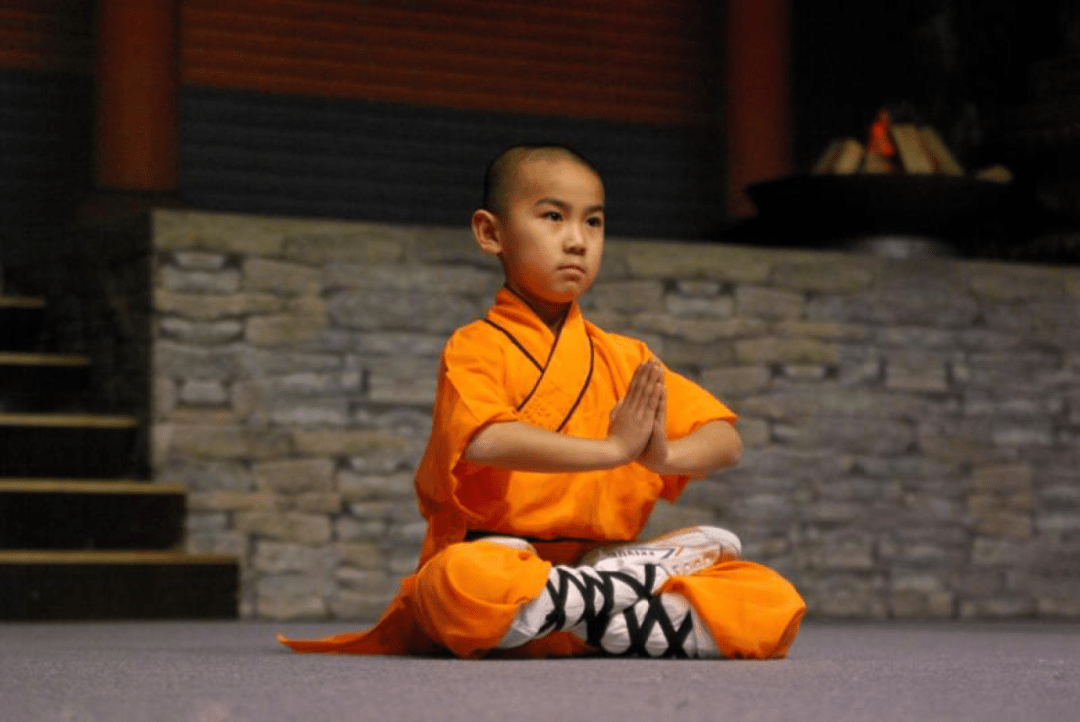
We often hear our teachers tell us to “concentrate your mind on….”, but truly focusing our minds on any given thing is more than a little difficult. One of my early karate instructors had a cure for that. I don’t know if he learned it from someone else or if he thought of it himself, but it certainly worked.

During one class, he instructed all of us to sit on the floor. As we did so, he placed a clock on the floor in front of us. “This is a good exercise for teaching you how to really concentrate”, he said. “Focus on the clock and use your mind to stop the second hand from moving.”

I figured he was kidding but I guessed wrong. The best was yet to come.

“Sit comfortably so you won’t be shifting around or fidgeting your hands…” Okay, no problem. This was sure a lot easier than firing off endless reverse punches and front kicks! Then came the punch line…

“…and don’t blink your eyes. Not even once.”
Concentrated

What the ****!!! Okay. I had faith, so I did it. My mind soon was focused on something other than the clock; it was wholly concentrated on NOT BLINKING! Now, blinking is an involuntary action of the body but…it can be consciously controlled! To do so requires more than a little concentration and determination, however.

We only practiced this exercise for about one minute the first time. With practice and effort, I slowly built up my time to five minutes but my teacher cautioned us that to do it much longer than that might have undesirable results (the eyes dry out pretty quickly). But after I was able to control my urge to blink fairly easily, I was free to focus back on stopping the second hand of the clock.

Which I never was able to do… but then, that wasn’t the point of the exercise.

If you would like to learn martial arts and how to meditation in China you can find a number of great courses and schools when you visit StudyMartialArts.Org. To read more on the subject you can also check out some of these great articles.
Pilgrimage and Travel in Martial Arts Training — Kung Fu Tea

Bear up under days of cold and heat, withstand exposure to wind, rain, sleet. Walk mountains and difficult paths. Do not sleep under a roof; consider it fundamental to sleep out in the open. Be patient with hunger and cold. Carry no money or food provisions. If there are unavoidable battles at a destination, participate […]

via Pilgrimage and Travel in Martial Arts Training — Kung Fu Tea

The Goals and Moral Codes of Chinese Kung Fu

by Du Peizhi

The most important goal of learning Kung Fu is self-defense, in ancient time before firearms were invented, Mastering Kung Fu was considered a matter of life and death for many people.

Today, that goal has shifted toward defending oneself against an enemy or to protect dear ones in a battle. But some kung Fu masters and their students believe that the end goal of practicing kung Fu was not for fighting but for enhancing their health, in other words some Kung Fu masters believe that the health-promoting function of kung Fu is essential but without it is self-defence function it cannot be considered as Kung Fu but as a kind of health promoting exercises.

Enhancing one’s health is another important function of learning Kung Fu, when a person practices Kung Fu very well it will help him/her to become mentally and physically fit.

The other important goal of learning kung Fu is character development, this is an important factor that Kung Fu masters should instill into their students.

Kung Fu requires students to follow a certain moral code. There are three qualities that students naturally acquire during their long journey of learning Kung Fu, these three qualities are- patience, insight, and calmness, for you need patience to develop your Kung Fu techniques, insight to understand how Kung Fu principles work, and calmness to anticipate your opponent’s movements and respond in the most appropriate and efficient manner.

The character-developing function of learning Kung Fu is shown clearly in the Shaolin Moral code.

The Shaolin Moral Code contains three parts:

  1. 12 shaolin ethics
  2. 10 forbidden acts
  3. 10 obligations

12 Shaolin Ethics

  1. Respect the master, honor the Moral Code and love fellow disciples.
  2. Train kungfu devotedly and build up a strong, healthy body.
  3. Forbidden to molest or rape, forbidden to go astray.
  4. Forbidden to show off the arts nor to offend the seniors.
  5. Forbidden to laugh for no reason, or to tell lies.
  6. Forbidden to bully those under you, or to take advantage of high office to settle personal differences.
  7. Forbidden to quarrel loudly, or to wave the hands wildly.
  8. Forbidden to kick about aimlessly, to stand at fighting stances, or to make accusations against others noisily.
  9. Forbidden to spread false rumors, or to boast of strength and oppress the weak.
  10. Forbidden to be greedy, neither to rob nor to steal others’ properties.
  11. Be humble and soft-spoken, be unbashful in seeking advice for knowledge.
  12. Develop self-control, be co-operative and helpful.

10 Forbidden Acts

  1. Forbidden to molest or rape.
  2. Forbidden to rob another person’s wife, or to force someone into marriage.
  3. Forbidden to bully kind and gentle people.
  4. Forbidden to rob.
  5. Forbidden to take advantage of intoxication to do evil.
  6. Forbidden to torture or to be cruel.
  7. Forbidden to be involved in improper activities.
  8. Forbidden to show disrespect to elders.
  9. Forbidden to repel against the master.
  10. Forbidden to associate with villains.

10 Obligations

  1. Obliged to maintain peace.
  2. Obliged to eliminate bullies and help the weak.
  3. Obliged to save lives and to contribute to humanity.
  4. Obliged to eliminate the cruel and the villainous.
  5. Obliged to protect the lonely and the oppressed.
  6. Obliged to be chivalrous and generous.
  7. Obliged to right wrongs courageously.
  8. Obliged to spread Shaolin teachings and kungfu.
  9. Obliged to learn the Art for self-defense and to overcome calamities.
  10. Obliged to pass on the Art unselfishly to selected, deserving disciples.a

My Journey to China to Learn Kung Fu

by Carmen Isabella

Here in Germany most of the kids do an Au pair year or go to Australia for Work & Travel or just take a break for one year at home to find out what they want to study after it. From my school a lot of my classmates go directly to university because that is the way it is supposed to be if you attended the ‘Gymnasium’ (the version of high school that only lasts twelve years of school and is commonly described as the most difficult one) – according to teachers and principals.

“What are you going to do after your abitur?”

I must have heard that question about a thousand times. My response almost comes naturally:

“I am going to travel to China and there I am going to study Kung Fu.”

Some people gave me a polite laugh and then asked again: “No really, what are you going to do? Which university will you go to?”, others just raised their eyebrows and didn’t ask any further. I think that a lot of people thought it was just a phase I was going through. Last week a friend came to me and asked me if I still wanted to go to Asia. Yes, I booked my flight month ago, yes I do this voluntarily: I want to train the whole day six times a week. Yes, I am a 18 year old girl and yes I do Taekwondo and am really passionate about martial arts. But I am not annoyed. I love to talk about it and I don’t mind explaining every last detail my research came up with to anybody. I know that this is what I want to do after school, what I want to do now.

I am really lucky that my family supports me and my decisions. Almost one year ago I spend weeks researching on the internet for a programme that would allow me to study Kung Fu. The idea came right after I spend my summer break in Korea at the Sehan University with my Taekwondo-Team. I have never been that exhausted in my life. Three training sessions a day (at least) and rice everyday to lunch and dinner. And I loved it.

I decided to try a different style of martial arts and chose Kung Fu. A really easy decision
since I have been dreaming about becoming a Teen-Shaolin-Monk since I was a kid and got obsessed with the ‘Five Ancestors’– book saga by Jeff Stone. I am currently on the last metaphorical meters to finishing my last 3 exams before high school is over and somehow I still find the time to write this article/blogpost and enjoying my
time. I am even enjoying studying. Because I understood and still learn to understand every single day that I live in the present and that I can determine it. So why not take a chance and go to China ;).

I know I can only get to the very top of the iceberg by researching, reading the website of the Yuntai Mountain Cultural and Martial Arts school over and over again, learning the basics of the Chinese language and getting in contact with people who have already experienced similar adventures.

At this point I would like to add that I am really thankful for the help and support with my plans which I got and still get from the website www.studymartialarts.org and it’s operator David Kelly. I can’t imagine how my individual experience will be and how I am going to change. I will probably laugh about the things I imagine now at the time I am there but I do it anyway. This blog is as much for me as it is for everyone interested in the topic for various reasons. If I can make my future self laugh or paint a smile on her face I already achieved something with it.

Screen Shot 2019-07-01 at 9.41.01 PM
Carmen Isabella

Carmen Isabella – Studies martial arts in China. She recently graduated from high school and did Taekwondo in her home country Germany which already led her to Korea last summer. Her interest in martial arts in general will lead her this summer to China where she plans to study Kung Fu for 6 month. As one of her other passions is writing she wants to share her future experiences with detailed reports about her journey to help and give tips to other travellers and especially women who are interested in martial arts. To learn more about Carmen’s journey click here.

Columbia and Venezuela: The Political Economy of Stick and Machete Fighting in the New World – Part 2 — Kung Fu Tea

Introduction Greetings, and welcome to the second part of Michael J. Ryan’s guest series on stick and knife fighting in the Caribbean region. If you missed the first installment of this series I would suggest clicking here to get caught up before going on. That said, the traditional combat schools of Colombia and Venezuela are […]

via Columbia and Venezuela: The Political Economy of Stick and Machete Fighting in the New World – Part 2 — Kung Fu Tea

Stop fighting in push hands — The Tai Chi Notebook

I don’t really enjoy push hands. I used to, I used to enjoy it much more when I saw it as a medium for exploring arm locks, takedowns, wrist locks, throws. In short, when I saw it as a way to practice techniques. I used to love it. In more recent years I’ve reframed my […]

via Stop fighting in push hands — The Tai Chi Notebook

Happy Friday! Sometimes You Compete, Sometimes You Support the Competitors — A Skirt on the Mat

Happy Friday everyone! I pretty frequently go to some of the smaller, more local tournaments to coach my teammates, sometimes to act as their videographer and sometimes just to offer support as a friend and teammate. While I get it, it’s a long day to sit around in a gym, if you can, I would […]

via Happy Friday! Sometimes You Compete, Sometimes You Support the Competitors — A Skirt on the Mat

History of Xing Yi parts 7 and 8 – Armour, weapons, and their influence on Xing Yi — The Tai Chi Notebook

After looking at the rise of the Mongol Empire for a few episodes my Heretics podcast has come back around to looking at Xing Yi and in particular the use of weapons, military strategy and armour in the Song Dynasty armies. Part 7 starts with a rebuke to the criticism “You haven’t even got to […]

via History of Xing Yi parts 7 and 8 – Armour, weapons, and their influence on Xing Yi — The Tai Chi Notebook

Chinese Kung Fu throughout the ages

by Du Peizhi

There is no doubt to many Chinese that the original source of martial arts is China, but the history of this art is highly controversial. In primitive times when tribes traveled throughout what is now known as China. They fought not for trophies or medals, but for survival against wild animals and other tribes or even within their own hierarchy.

The first time martial arts started it is widely thought it came in form of wrestling. Participants would intertwine their arms to mimic the interlocking horns of animals and the stronger would try and subdue the weaker. The only weapons that would have been available at this time were primitive clubs, sticks and small rocks.

When the tribes became more organized they started to develop their weapons and combat skills. They sharpened the ends of sticks to make spears. Also, they began to tie a shaped rock to a club, to produce a weapon that we call today as an ax.

Shang period (16—11 century BCE)

When Chinese tribal society developed as result their combat skills were developed. The most important change came during the Bronze Age in China between the (16th and 11th centuries BCE).

After discovering the bronze there was a significant advancement in the development of different weapons, such as ax, the halberd, spear, straight sword, bow and arrow and broad sword.

At that time the several Chinese tribal began to organize their armies by equipping their armies with horses, armor, and long-handled weapons such as the long-handled broadsword

Horsemanship skills were improved during that time in order to use the weapons more effectively.

Spring & autumn and warring states period (770-220 BCE)

During this period both armed and unarmed combat skills became highly improved by adding many methods of attack, self-defense as well as counter attack.

Also during this time martial art competitions and events became very popular throughout China and many people were seriously wounded or killed because of lack of protective and safety clothes and wraps. This did not lead stoppage of the enthusiasm for competing, however.

Fighting using swords became very popular during this time. Both female and male shared the love of sword fighting.

Qin dynasty (221-207 BCE)

Martial arts competitions became much stricter during this period, with more rules, the placement of referees and improve the use of the laitai (a raised open ring; pronounced lay tie).

During the periods previously mentioned, combat skills were used to develop the armies whose leaders were always struggling for supremacy. Many of the famous generals during that time were very skilled in armed and unarmed combat skills, and by this time the martial arts’ skills were continuously being refined or modified to keep up with the development of weapons. With the several weapons now being used, the most popular were known as the Eighteen Weapons (sword, longbow, crossbow, lance, battle-axe, staff, long-bladed spear, cudgel, dagger ax, fork, truncheon, mallet, jingal, joined bludgeon, chain, hooks, halberd, and shield).

Han dynasty (206 BCE—220 CE) to Sui Tang dynasty (518-907 CE)

During Han and Sui Tang Dynasties the development of martial arts within the army forces continued. Officers and generals had to take tests then ranked by their skills. These tests consisted of the both armed and unarmed combat skills, on foot or on horseback.

Now you can see how the Chinese martial arts developed through the military training. Many people in the West have only heard of the word of Kung Fu to refer Chinese martial arts, but in fact, the correct term that refers all Chinese martial arts is Wushu. The term Wushu covers all kinds and styles of the Chinese martial arts.

The Chinese character Wu 武means military and the Chinese character for Shu 术means art.

So merging the two characters together simply merges the military training and the arts together.

There is a direct translation of Wushu into English but is generally known as Chinese martial arts.

Song dynasty (960-1279 CE)

During the Song Dynasty, martial art associations had been organized and set up in the different provinces of China. And Kung Fu/Wushu was most popular art during this period.

A part of the civilian population was now demonstrated Kung Fu/Wushu performances at festivals.

While many street performers demonstrate their Kung Fu Skills by breaking large rocks with their bare hands and breaking spear shafts.

Ming dynasty (1368-1644 CE)

During the Ming Dynasty, Kung Fu/Wushu began to form many different schools.

Before this time martial artist and Masters kept their skills secret and lessons were passed from the master to the student through word of the month, there was very little written books or articles, therefore the student was not able to read and they only rely on watching and listening to their masters.

However, there are paintings that have been unearthed dating back to the primitive age and shows men wrestling in different combat stances.

Qing dynasty (1644-1911 CE)

During the Qing Dynasty, the martial arts became more defined in their several skills, every school developing its own approach to the many training methods. There was also a rise in secret societies that used Kung Fu/Wushu to great effect.

It reported that students practiced not only their art but also they were taught poems or songs and calligraphy, the words of which held the secret of their fighting skills.

During this period many of the styles that we know today were developed, such as Tan Tui, Xingyiquan, Taijiquan, Baghuaquan, Changquan, Bajiquan, and Tongbiquan.

the Jing Wu Sports Society (Shanghai) was formed In 1910 and that was considered the beginning of the Kung Fu/Wushu martial arts that we know today. In 1928 the now-famous Nanjing Academy (the Central Wushu Institute) was established by the Chinese Government to develop Kung Fu/Wushu as a structured training syllabus, not just for self-defense but for the obvious health purposes.

It was during the Qing Dynasty that many of the Kung Fu styles known today were developed including Taijiquan.

1900 onward

In 1936 Kung Fu delegates were sent out to visit Southeast Asia in order to spread and develop the many different styles of Kung Fu. In the same year, the Chinese Wushu Team present a show at the XI Olympic Games in Berlin.

Since the founding of the People’s Republic of China in 1949 Kung Fu/Wushu has become a significant part of the Chinese culture, and is on all physical education curricula. Kung Fu is listed in all existed sports institutes.

The Chinese Wushu Association was founded in 1956. The State Physical, Cultural & Sports Commission in 1958 presented the first draft of Kung Fu/Wushu Competition Rules, which was officially adopted during the same year. Throughout Wushu history from old times to today, the fundamental rationale for competitions was aimed to spread the culture, knowledge, and skills and to improve the development of Kung Fu/Wushu.

The term Kung Fu originated in Hong Kong and means any skill that requires an effort or “a skilled man” that works with his hands.

Kung Fu as were introduced to the west by the Bruce Lee in early 1970s.

Since then there has been an increasing interest in Kung Fu particularly Kung Fu Films. The first television series about Kung Fu was David Carradine’s (Kung Fu), Jackie Chan has made many successful films, Chow Yun Fat is a well known movie for Crouching Tiger, Hidden Dragon, and Jet Li is now the new world Kung Fu star. All these famous films have been very good for the promotion of Chinese Kung Fu.

The International Wushu Federation and the Executive and Technical Committees supported by the Chinese Sports Ministry, are all working toward improving Kung Fu/Wushu and their efforts yielded entering of Kung Fu/Wushu into the 2008 Olympic Games, which hold in Beijing.