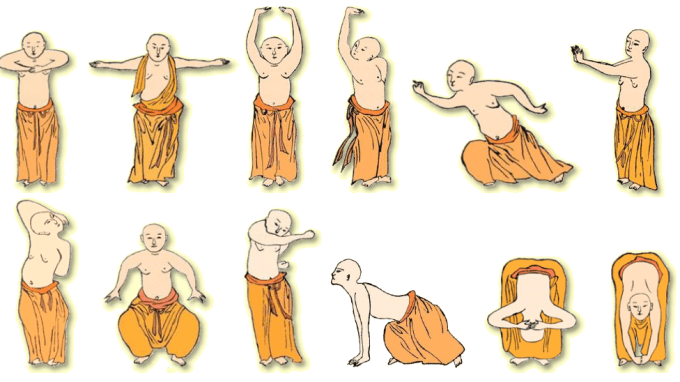
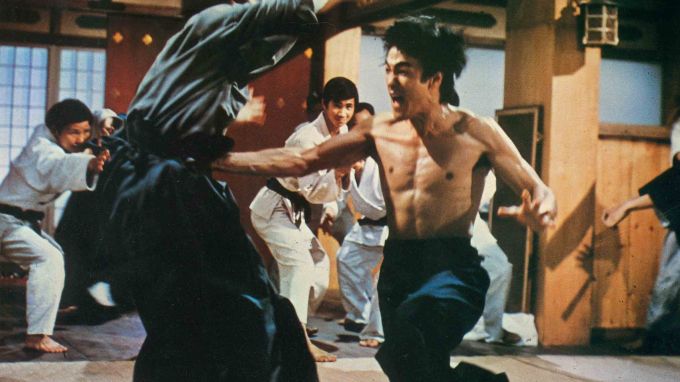
Does Cormier’s dirty boxing point the way for CMA in MMA?

What to do in Taipei!

This is a quick guide detailing what to do in Taipei Taiwan’s vibrant capital.

TAROKO-NATIONAL-PARK

Taipei Highlights

  • National Palace Museum (Guólì Gùgōng Bówùyuàn國立故宮博物院): here you’ll find all that was preserved when Kuomintang fled mainland China. This museums is better than any in mainland China.  Tickets costs 250 NT$. To get there you’ll first need to get to Shilin (士林) stop on the red Line 2, then look for Bus R30 (紅30) on the same side of the street (there’s one normally every 30 minutes or less).
  • Chiang Kai-shek Memorial Hall (Zhōngzhèng Jìniàn Táng中正紀念堂) or CKS Memorial Hall: The park (Chiang Kai-shek Memorial Park 中正紀念公園) is very popular especially in the morning and is a great place to see taiji players. The complex also includes a theater (National Theater 國家戲劇院) and a concert hall (National Concert Hall 國家音樂廳). Line 2 red or Line 3 green to Chiang Kai-shek Memorial Hall (中正紀念堂).
  • Taipei 101 (台北101): a source of great local pride, the skyscraper is earthquake proof and ecologically sustainable; its shape bears homage to a bamboo plant and inside you’ll find a very popular shopping mall and views over Taipei (Taipei 101 is open from 10am to 10pm).
  • National Sun Yat-Sen Memorial Hall (Guólì Guófù Jìniànguǎn 國立國父紀念館): The Sun Yat-Sen monument celebrates his life; at the memorial there is a changing of the guard which is a highlight of the visit. You can take Line 5 blue to Sun Yat-sen Memorial Hall (國父紀念館) station.
  • Longshan Temple (Lóngshān Sì龍山寺): is one of the most famous temples in Taiwan; Take Line 5 blue to Longshan Temple (龍山寺).
  • Shung Ye Museum of Formosan Aborigines (Shùnyì Táiwān Yuánzhùmín Bówùguǎn 順益台灣原住民博物館): here you can learn about the history of Taiwan, which predates the influx of Han Chinese from mainland China. Today only 2% of the population live in the mountainous regions of the east coast. Shung Ye Museum is located next to the National Palace Museum.
  • Ximending (西門町): is popular among the youth for fashion and subculture. The area surrounding Ximending is a hot bed for clubs, pubs and night entertainment. Get there via Line 5 blue or line 3 green to the Ximen (西門) stop.
  • (Xin) Beitou baths(北投溫泉): in the centre of Taipei is perfect for rest and recuperation. If you can spend the night there. Get there via Line 2 red to Xinbeitou (新北投). Then spend the night in Beitou.
  • Yongkang Street (Yǒngkāng Jiē永康街): is a must visit to eat food.  Check out Din Tai Fung. Line 2 red or line 4 orange to Dongmen (東門).
  • Yangmingshan National Park (Yángmíngshān陽明山): can be combed with Beitou and the baths as they are in the same area. Yangmingshan is perfect for outdoors types with parks, hiking trails, interesting plants and wildlife a plenty as well as internationally famous hot springs.

The Best of the Night Markets

  • Shi-Da (師大) and Gongguan (公館): Close to the National Taiwan Normal University and Gongguan is a nearby neighborhood next to it, a lively place and a great stop for night life. Catch Line 3 green to Taipower Building Station (台電大樓) or the Gongguan (公館) stop.
  • Raohe (饒河街觀光夜市): this market is excellent for food. Line 3 green to Songshan (松山).
  • Shilin (士林夜市): is one of the most popular and crowded night markets. Good for food and shopping. Take line 2 red, but get off at Jiantan (劍潭).
  • Huaxi (華西街觀光夜市): perfect for those in need of yummy snake soup. Line 5 blue to Longshan Temple (龍山寺).

Shilin-Night-Market-in-the-Shilin-District-of-Taipei-credt-Ronnie-Chua.jpg

To find out where to stay and how to get there click here

Screen Shot 2015-08-19 at 22.04.55

Martial Arts Training in the Summer Heat — Kung Fu Tea

Feeling the Heat Here is a fun fact to consider. The modern mechanical air conditioner was invented by Willis Carrier (a Cornell graduate I might add), not in Arizona or Florida, but in western New York state. It may come as something of a surprise to learn that Buffalo, best known for images […]

via Martial Arts Training in the Summer Heat — Kung Fu Tea

Guide to Banking in China

by www.teachingnomad.com

The Chinese currency is the Yuan Renminbi, it is referred to as Yuan, CNY or RMB (Renminbi). It is the only currency that can be used to purchase local items. In general, the Chinese do not use checks. Most payments, including payrolls, are done through bank transfer. Therefore, you will need to open a bank account before you get paid. Fortunately, this will likely be one of the easiest things you do in China.

Screen Shot 2017-10-04 at 7.11.34 PMChoosing a Bank

In the main cities, the three major banks are ICBC, China Construction Bank and Bank of China. Generally, the first two are more numerous in terms of branches. Check with your employer in China which bank they prefer you to bank with (if they have any preference at all). This is because it is cheaper and faster for companies to pay their employees if they use the same bank. Often, people have accounts with multiple banks just in case.

Apart from these three, there are smaller, more specialized banks also. Both China Minsheng Bank and China Merchants Bank get good reviews. There are some foreign-owned banks in the larger cities also, such as HSBC (British), Standard Chartered (British), Citi (American), Hang Seng Bank (Hong Kong) and DBS (Singaporean).

Although International banks are more geared toward expats, they may require large initial deposits and are not so numerous in terms of branches. Agricultural Bank of China is one of the larger banks in China, but is more suited toward those working in more rural areas, due to the number of branches.

Opening an Account

Opening a Bank Account is very straightforward in China. You will need your passport, a contact telephone number and a contact address. Branches in more central areas are more likely to have an English-speaking representative. You will also need to bring anywhere between RMB15 to 25. This will cover the cost of your bank card and your initial opening balance.

You will have numerous forms to sign, and you will get your card right there and then. You will be asked to choose a 6-digit PIN code. Note that your bank card will not have your name on it, just your card number.

After you finish account opening process, which takes about 15 minutes, your card is ready for use.

Internet banking

Note that when you have your bank account, and if you want Internet Banking, you will have to request this. When you open Internet banking, you will also activate your telephone banking, so you should have a mobile phone set up beforehand. You will have even more documents to sign, and you will need your passport. When they activate your Internet Banking, they will give you your account’s security devices, which vary depending on the Bank. It may be in the form of a USB drive or a code-generating device. You will need these devices whenever you make a transaction using online banking. They will also give you instructions for your first Internet banking login. This will likely be in Chinese, however, so consult a Chinese friend if you need any help.

Union payChina UnionPay

China UnionPay is the main (and only) debit card in China. It is similar to the Maestro, MasterCard and Visa systems we get at home. In China, you can conduct the vast majority of your banking (including deposits, withdrawals, bill payments and transfers) by using your card in an ATM of the same bank. Although China UnionPay is the only accepted payment system in China (apart from high-end hotels and restaurants), it is of less use in other countries.

Note that it is not guaranteed that merchants outside of China accept China UnionPay as a form of payment. For this reason, you may want to look into the possibility of transferring your funds out of China to your account at home before you go home for the holidays. Bank of China does issue a Maestro debit card, but this is only available upon request at the larger branches and after opening a US Dollar account.

International Transfers

Many of you may be planning to save extra money while you are in China and bring back home with you. In this case, you will probably want to wire the money to your account in your home country. This will certainly be easier if someone at your bank speaks English. The wire process is really pretty simple and your bank will walk you through it, but first you will need to convert your YUAN into your home currency. The bank will do this if you can prove that you already paid taxes on your money, therefore you will want to save your pay stubs! Without your pay stubs the limit for a foreigner is $500USD/day, so don’t wait until the last day! The average fee for international transfers is $25. You can also do an international transfer using Internet Banking. You will need your security device to do this.

There is another method for transferring money abroad, and that’s through PayPal. They will charge a 3% fee. Make sure you have two separate PayPal.com (not PayPal.cn) accounts, one linked to your Chinese account and the other to your account at home. Make a PayPal withdrawal from your Chinese account, and then transfer this sum over to your second PayPal account. Then, transfer the sum from your second Paypal account to your bank account at home. Note that you will need to have Internet Banking enabled on your Chinese bank account to do this, and you must activate your account to handle online payments. Instructions for this for each bank, in Chinese (use Google translate), can be found on here.

wechat and alipayWechat Pay & Alipay

These two apps are revolutionizing the way transactions and money transfers are made. First launched as a chatting platform, Wechat has now lots more to offer. First limited to Chinese citizens only, Wechat pay is now foreigner-friendly and setting up an account has become much easier. What you’ll need is a debit card linked to Chinese bank account and a phone number. Wechat has become one of the most popular mobile payment solutions and it will make your life so much easier and more convenient. Same goes with Alipay. Trust our word for it.

A few clicks now suffice to send/receive money from/to anybody with a Wechat/Alipay account; comes in handy to split restaurant bills, pay services, pay online, give money, etc. Paying your bills and topping off your phone were never simpler because you can do it from your Wechat wallet as well. No more trips to your phone carriers. Both apps also allow you to order a taxi, book flight/train tickets for your next holiday, and even pay for your bottle of water at the convenience store.

Useful phrases

Screen Shot 2017-10-04 at 7.11.00 PM

This blog entry is curtsey of www.teachingnomad.com

Teaching Nomad was founded in March 2011 on the basis of connecting great teachers with great schools in Asia. After moving to Shanghai, our founder, Brett, discovered a need to fill the gap between these two groups. A school’s reputation relies on its teachers and teachers must trust their school as they brave moving to a new country. Neither group wants to be let down, but unfortunately many people were being let down. Teaching Nomad has been designed to be a cut above other recruiters, to provide a trustworthy source of great jobs for teachers as well as a time and cost saving tool for schools.
Teaching Nomad is here to take all the guesswork out of the equation, make everyone’s job a little bit easier and ensure that no one has to go it alone. The Teaching Nomad staff, all of which have experience living and/or teaching abroad  know first-hand the positive impact that exploring the globe has on an individual. We see Teaching Nomad as our way of giving back and helping others to have great experiences teaching overseas!


Chinese Martial Arts in the News: June 18, 2018: MMA, Taijiquan and Bruce Lee

benjudkins's avatarKung Fu Tea

A student performs at a demonstration near Mt. Song. Source:http://www.dailymail.co.uk/

Introduction

Welcome to “Chinese Martial Arts in the News!”  Lots has been happening in the Chinese martial arts community, so its time to see what people have been saying.

For new readers, this is a semi-regular feature here at Kung Fu Tea in which we review media stories that mention or affect the traditional fighting arts.  In addition to discussing important events, this column also considers how the Asian hand combat systems are portrayed in the mainstream media.

While we try to summarize the major stories over the last month, there is always a chance that we may have missed something.  If you are aware of an important news event relating to the TCMA, drop a link in the comments section below.  If you know of a developing story that should be covered in the future feel free to send me…

View original post 2,522 more words

Thoughts on an interview with Wang Yan, head coach of the Chenjiagou Taijiquan School — The Tai Chi Notebook

Born in 1990, Wang Yan became head coach of Cheng village training centre in 2013 and is as a Taiji fighter as well as a coach, not to mention an expert in forms. He was one of the “nine tigers” – the best nine students of Chen ZiQiang. There’s an interview with him in English […]

via Thoughts on an interview with Wang Yan, head coach of the Chenjiagou Taijiquan School — The Tai Chi Notebook

Study Martial Arts in China

Here’s a short video explaining why if you want to study martial arts in China you should book through www.StudyMartialArts.Org

Screen Shot 2018-04-11 at 7.56.04 PM

If you book your place before the end of June 2018 you’ll get 5% off your training, accommodation and food. Other exclusive offers can be found on the website’s current promotions for kung fu schools in China.

StudyMartialArts.Org offer – Martial Arts Training and Travel experiences in China and Thailand. With one point of contact and independent information as well as support its not just a booking platform but much more. Contact them now for further information.

What to pack for a BJJ competition!

Recently I stumbled accross this article on what to pack for BJJ competitions, written by the guys at Grapplers Planet.

The article covers what to wear in terms of uniform, what to bring in terms of protective gear, what you must do in terms of hygiene, equipment and clothing, food and other stuff.

Check it out here.

“I always bring the latest Grappling magazine because it passes the time before your fight, and often stimulates conversation between other guys competing.”

–          Chris Arsenault – Blue Belt, Pictou County Titans (Team Renzo Gracie)


“Underwear… you need new underwear after fights!”

–          Mike Aviado – Blue Belt, Body of Four (Franco Behring)


“An extra Gi.  You know…for those wardrobe malfunctions.”

–          Dan SETH, Purple Belt, McMaster BJJ (Franco Behring)


“Ah, I bring an apple to help settle my stomach.”

–          Paul Zenchuk, Purple Belt, Pura BJJ (Mendes Bros.)

Judo and the Chinese Martial Arts: the View from 1928

benjudkins's avatarKung Fu Tea

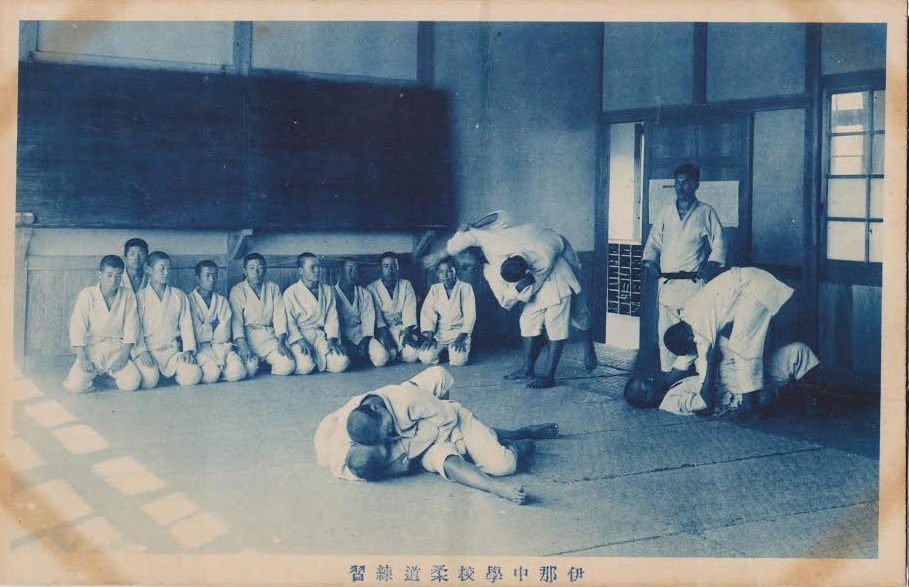
Judo at Ina Middle School. Vintage postcard circa late 1930s. Source: Author’s personal collection.

Staging a Global Controversy

Origin stories are very often political.  People everywhere intuitively understand this.  If you can pinpoint (or simply construct) the moment of something’s creation you can also attempt to socially frame its subsequent practice in all sorts of useful ways.  Rhetorical slight of hand allows us to claim that when we know about something’s past we are empowered to act as arbiters of legitimacy or authority in the present.

I suspect that this basic impulse is what first draws so many practitioners to the topic of martial arts history.  Even if the art we practice is only a hundred years old (relatively modern in the grand scheme of things), the moment of its creation is still far removed from our personal life experience. As individuals become aware of this…

View original post 3,533 more words

Pulling Earth, Pushing Heaven Part 3