The air up here. — The Little Fighter With A Big Heart

Well, it’s nice to check in with you all again. I thought I’d say thanks as always for checking in with my now less regular than I’d like blog. You must of had a slightly less exciting than usual Easter because I had a lot of visits. That’s always good to see. Although I keep […]

via The air up here. — The Little Fighter With A Big Heart

Cobra Kai and the TRUTH about the Karate Kid

Through a Lens Darkly (51): Early Kendo in California

benjudkins's avatarKung Fu Tea

Boy Scouts practice Kendo in California, 1928. Source: Vintage Press Photo. Author’s Personal Collection.

Of Boy Scouts and Kendo

A recent post focused on the role of the global scouting movement in promoting the spread of the Asian martial arts during the first half of the 20th century. In that essay I mentioned a photograph of Japanese-American and Caucasian scouts practicing Kendo together in California during the 1920s. Yet observant readers may have noticed I did not actually include that photo in the post.

Sadly I had misplaced that particular photo so it didn’t make it into that piece. But it recently resurfaced as I was shuffling through my collection. Better yet, I came across another related item which also helps to add detail to our understanding of Kendo in America prior to 1941.

I quite like the first of these press photos. In it we see two figures seemingly…

View original post 1,586 more words

Pushing and Pulling: Scouts and the Spread of the Asian Martial Arts

Structure and Agency Contrary to popular opinion, nature does not love parsimony. This frequently repeated opinion is more an aesthetic judgement on the part of some scholars rather than an empirical observation about the actual functioning of the natural or social worlds. When looking at questions as complex as the global spread of the […]

via Pushing and Pulling: Scouts and the Spread of the Asian Martial Arts — Kung Fu Tea

Koto Ryu

by Fane Hervey – Ninjutsu London

The ‘Tiger Knocking Down School‘ does not really have an exact origin. Like Gyokko Ryu, it is thought to have originated from China, being brought to Japan by a monk called Chan Busho, but when, or even if this is true, remains a mystery. This makes it hard to really tell what influenced it from a Chinese kung fu perspective. On one hand, the linear fashion of Koto Ryu would indicate something of a Xing yi origin, although Xing yi itself is steeped in legend and the exact origin of that art are also unknown. Maybe that’s just a coincidence! Certainly though, Xing yi has an older claim, with its originator supposedly being Yue Fei, the famous Song Dynasty general (10th-13th century). The first Soke of the Koto Ryu; Sakagami Taro Kunishige, is dated as being 16th century. It could also have easily originated from a monk, Xing yi being a popular Taoist martial system.

The second Soke of Koto Ryu was meant to be Bando Kotaro Minamoto Masahide, but unfortunately he was killed in battle around 1542. Therefore the sokeship past to Sougyoku Kan Ritsushi, who was the 17th generation Soke of Gyokko Ryu. So since then, the Koto Ryu and Gyokko Ryu, follow the same lineage. Traditionally only the next soke was taught the Koto Ryu, whereas any student could have been taught the Gyokko Ryu. However, there are instances of many ninja knowing both, so it would appear that this was not a steadfast rule.

Koto Ryu is a hard natured discipline, so it really requires conditioning and tough training. This used to be done by punching and kicking stones and gravel. Supposedly this would empower the practitioner to puncture a tree with 5 holes from a ‘shako ken’ – claw strike!!!

The name of the school, knocking a tiger down, implies that the techniques are for hitting a larger, more powerful opponent.The techniques are rough in their execution and the attitude is a ‘do or die, no mercy’ type of mentality. It is a very brutal system.

Koto Ryu is known for its koppojutsu, (bone breaking/attacking) , shurikenjutsu, and kenjutsu. Unlike the Gyokko Ryu which plays more with distances, Koto Ryu is very close in its execution and is far more offensive. The angling of the attacks can often be at 90 degrees to the opponent, so the timing and rhythm of the practitioner must be excellent in order to be successful. However, the starting distances in the densho for the Koto Ryu are often quite far apart, so this would indicate that it was designed more for the battlefield, rather than confined spaces.
So technically the Gyokko Ryu (and therefore Gikan Ryu) and Koto Ryu complement each other really well, and they form the basis of self defense in the Togakure Ryu too. However, you should not forget that the Koto Ryu is also a system in itself, independent from the Gyokko Ryu, with unique ways of moving.

This school is taught inside the “Bujinkan”, “Genbukan”, and “Jinenkan”, even though Soke Hatsumi is actually the only registered Soke of the school.

To visit Fane Hervey’s site or more writing on Ninjutsu visit – www.ninjutsulondon.com

Best Kung Fu School in China for Food

This is my list of the best kung fu schools in China for 2017. In this article I have chosen only the very best kung fu schools based on what they offer in terms of training, location, food and how well they cater to kids. Each year we will update this list based our school visits and student reviews.

Best for Food

Best Kung Fu Retreat for Food

To say that this Kung Fu School in China was only best for food would be an injustice. Kung Fu Zen Garden Retreat has so much more going for it. The retreat is on the outskirts of Beijing within in a beautiful traditional court yard. It offers not only excellent traditional Chinese food, but also zen meditation, calligraphy practice, lectures on Chinese martial culture and of course the ability to learn martial arts in a number of traditional styles.

The food at the school is locally sourced, and lovingly prepared to suit all tastes and diets.

To find out which school I recommend for Best Location, Best for Kids and Best for Food. Click here. Learn Kung fu in China with StudyMartialArts.Org

To learn kung fu in China or learn more about any of these schools. Visit the StudyMartialArts.Org website or email us direct at info@studymartialarts.org


Gyokko Ryu

by Fane Hervey – Ninjutsu London

The Gyokko Ryu, meaning “School of the Jewelled Tiger”, is one of the oldest Japanese martial arts and one of the few that claims its origins from China. This is of particular interest to me, since I also practice Baji Zhandao kungfu, which like the Bujinkan, is made up of many different schools of martial art. This shows a link between the Chinese and Japanese arts that I practice. It is said that Gyokko Ryu’s development was based on Chinese Kempo. Personally I think this is too much of a generic explanation. In reality, according to Chinese Martial Art history, there are 3 likely origins: Shaolin, Muslim Chinese arts such as Jia Zi Quan (a very old martial art from west China, that later may have become part of Baji quan and Piqua Zhang) or Taoist arts such as Taoist wrestling which would later become Shuaijiao and the origins of tai chi. Jia Zi Quan is of particular interest, because the description of the movements, are not only very similar to Baji Quan, but also have similarities to the Gyokko Ryu. The style is based on quick, agile movements interspersed with sudden stops and steady still stances, performers are said to be `now moving like the wind, now standing nailed to the ground.`takamatsumigi-1-e1478527938616

Gyokko Ryu is often described as requiring fast body movements, strong striking & blocking techniques, and needs to be both powerful and graceful. Yet the power and strength come exclusively from the refined way of aligning and structuring the body, as opposed to muscular contraction. Since most of the techniques of the Gyokko Ryu end with controlling the attacker, the originator, a Chinese General called Cho Gyokko, was thought to have been a defector from the Imperial Guard. If this is true then it is unlikely that he was Shaolin, since the monks did not often populate the Imperial guard, and they were not known for these types of controlling techniques. When we say controlling, this can include stamping on the the opponent when they are down, something that Kacem has pointed out as specific to the Gyokko Ryu. This is similar to the stamping that is found within Baji Quan and the Jia Zi Quan influence (a military art that specialised in Spear; no coincidence that this is also the description for Baji Quan or Ba Zi Quan as it was formerly called!). It should also be noted that the Muslim Communities during the Tang Dynasty were the main populace that made up the Imperial army! However, due to Empress Wu’s influence, Taoists were also influential, and also had many restraining and controlling techniques in their arsenal, so who knows, but I think we can be a little more specific than just ‘Chinese Kempo’ as the originator.

A Gyokko Ryu practitioner waits for the opponent to attack, in order to leave them with no chance. Once you have found the opponent’s weak point, attack this with all your strength, no mercy. This is the philosophy of the school. The mindset needed is to believe in certain victory! However, although one must destroy the force of the enemy, you should also endeavour to spare his life. These are high principles indeed, and more common to a Taoist or Zen Buddhist philosophy, as opposed to a Muslim one.
takamatsumuso-1

There are also other rules that apply to the personality of the student if they wish to practice Gyokko Ryu: “…a true warrior should always be aware of the responsibility he has towards his nation and his fellow man. He should forget his ego and take care of virtues like discipline, patience, and courage. However, in case of danger, he should keep his spirit free and remain silent. The techniques and knowledge acquired should not be passed to others without the explicit approval of the teacher.”

Today the Gyokko Ryu forms the technical basis of the Tenchijin – Bujinkan syllabus. Although it has been listed as a Ninjutsu school by the Bugei Ryuha Daijiten, it is more of a Bujutsu school. It has been passed down through the generations to Masaaki Hatsumi who is the 28th grandmaster.

Almost only the area of kosshijutsu (attacks against muscles and nerves) is taught these days within the Bujinkan. The only exception I have found to this is Kacem who has taught Gyokko Ryu Koppojutsu (bone breaking) elements in past seminars. At the same time, it’s techniques form a basis for the entirety of our taijutsu training. The most important elements are command of the forms of the five Sanshin (3 hearts) and the eight basic techniques – the Kihon Happo. This includes all the important fighting methods: blocking techniques, strikes, kicks and attacks against soft and hard parts of the body as well as joint locks and ‘throws’ (in reality, we do not do many throws, but more breaks and drops, since throwing requires hip rotation which we distinctly try to avoid). Furthermore, these eight basic techniques are also to be found in other Bujinkan Ryu, each with different feelings of movement and partly with different techniques. The ‘form of the five elements’, the sanshin no kata, also incorporates various styles. This is the preferred style out of which several scenarios for fighting techniques are practised.

The main feature of the school is the footwork. When a joint lock is being practised, this is not done using pure muscle strength but, by using skillful footwork and with retention of the joint lock, you move your body to apply pressure on the opposing joint.

takamatsumusha-1The three basic Kamae (spiritual attitude or posture) of this school show the role of the Boshi Ken as a weapon: in ichimonji no Kamae, hicho no kamae and jumonji no kamae, the thumbs always point upwards. This can be used effectively for catching and guiding a weapon or limb where you want it without having to grab it, plus it keeps the thumbs ready for pressure striking the body at unusual angles. The preferred position for defence is Migi no kamae (right leg in front) in order to protect the heart better against attacks.

The Gyokko Ryu is known not only for its extremely effective kosshijutsu, but also for the effective use with the katana, tanto and bo staff. The weapons specific to the Gyokko Ryu are not often taught within the Bujinkan, but once again, as with the koppojutsu, with Kacem and Ishizuka Sensei, there is an exception.

To visit Fane Hervey’s site or more writing on Ninjutsu visit – http://www.ninjutsulondon.com
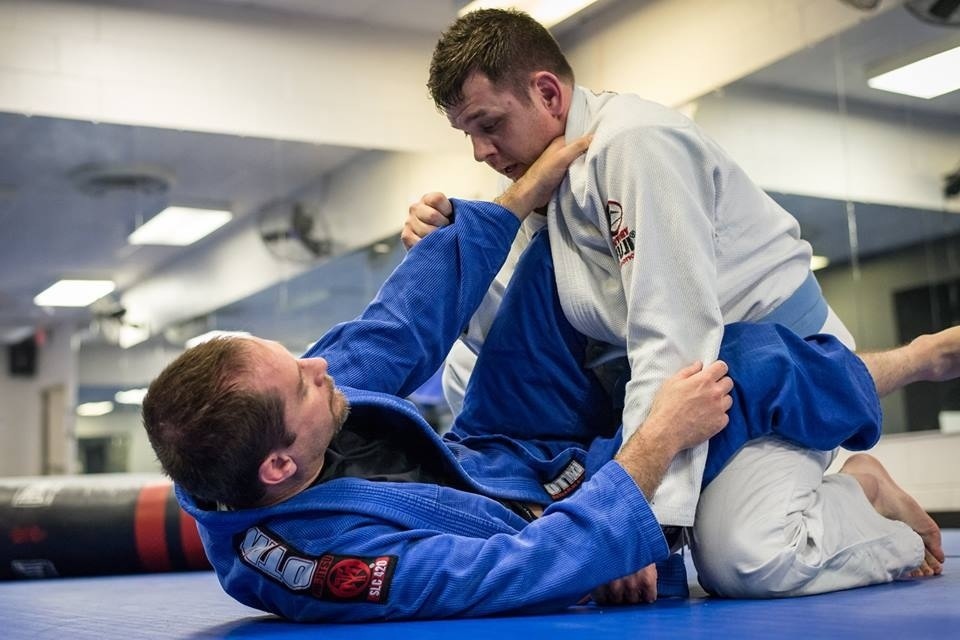
Jiu-Jitsu and Mental Health

BJJ image1

Recently Ron Drumgoole from breaking grip made a guest post for StudyMartialArts.Org on how jiu-jitsu can help your mental health. Check out the full article and learn this fantastic combat art can make a big difference to not only your physical fitness but also your mental health.


The problem with push hands challenges

Best Kung Fu School in China for Kids

This is my list of the best kung fu schools in China for 2017. In this article I have chosen only the very best kung fu schools based on what they offer in terms of training, location, food and how well they cater to kids. Each year we will update this list based our school visits and student reviews.

Best for Kids

Best Martial Arts School for Kids
Best Kung Fu School for Kids

I have chosen Yuntai Shan International Culture and Martial Arts School as being the best school for kids 12-16 because unlike other martial arts schools this one offers an authentic opportunity for your children to interact and train with other Chinese kung fu students of a similar age. This means that they are not forced to hangout with older students, and so are less likely to be exposed to inappropriate language or behaviour.

Another benefit of this schools is that throughout the day students are expected to present themselves for line ups. This means that students are regularly monitored and accounted for throughout the day. On the downside however, older students can find this tedious. In terms of the schools accommodation and amenities. These are fairly basic and internet connections can be irregular. Nevertheless, this school has much more experience than other schools of a similar nature. Hence it has a better track record of dealing with foreigners.

To find out which school I recommend for Best Location, Best for Kids and Best for Food. Click here. Learn Kung fu in China with StudyMartialArts.Org

To learn kung fu in China or learn more about any of these schools. Visit the StudyMartialArts.Org website or email us direct at info@studymartialarts.org