The Martial Arts of Love

I am entranced by a book I downloaded called The Art Of Peace. It is written by Morihei Ueshiba, the founder of the martial art of Aikido. Wikipedia Description: Aikido (Japanese: 合気道? Hepburn: aikidō) [aikiꜜdoː] is a modern martial art developed by Morihei Ueshiba as a synthesis of his martial studies, philosophy, and religious beliefs. Aikido […]

via The Martial Art of Love — Find Your Middle Ground

Kungfu News in China

interactchina162's avatarInteract China

quanzhou taolu cup.jpgquanzhou taolu cup2.jpgFirst Taolu World Cup

The first Taolu World Cup was held by International Wushu Federation and attracted more than 200 top Wushu athletes from over 22 countries.  These athletes were “The top 8 placed athletes from the 13th World Wushu Championships,” which made this a very elite competition. There were 22 individual competitions, including Man’s Taiji Quan, Women’s Jian Shu and so on.

Fuzhou, China, 18th to 20th November 2016
 

 hainan.jpg

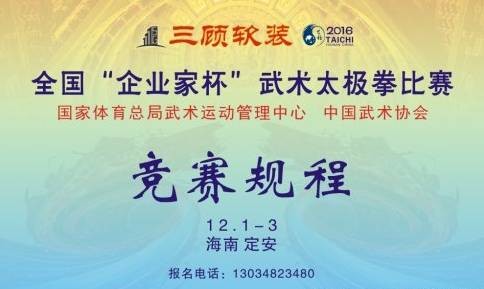
hainan 2.jpg3RD National Wushu Taiji Quan cup

The 3RD National Wushu Taiji Quan cup took place after two speculated competitions were held in Qionghai and Ding’an in 2014 and 2015. Many famous Chinese Kung Fu stars such as Jet Li and Ji Chunhua were invited and attended the event. According to Huailiang Liu, who is the president of Hainan Wushu Association, the purpose of this competition was “to emphasize Chinese traditional martial art and grow the influence of Taiji… Also, the core value of Taiji is ‘harmony’ and this event can express our wish of building a harmonious society.”

Hainan, China from December 1st to 3rd 2016


 hongkong.jpg

hongkong2.jpgThe…

View original post 321 more words

Anime and the Education of a Martial Artist

benjudkins's avatarKung Fu Tea

Introduction

Occasionally life takes a turn and one’s personal martial arts training gets moved to the back burner.  The last couple of weeks have been like that as my wife and I have been engulfed in a seemingly unending move.  It certainly could have been worse as on paper it was a just a short hop up the road to a new apartment complex.  Still, one should never underestimate the utter devastation that is unleashed by a stack of cardboard boxes and a U-Haul van.

At times like this I find myself envying Buddhist monks and other individuals who have walked away from the concept of material possessions.  My weakness, unsurprisingly, is books.  And it seems that a very large percentage of these books feature images of martial artists on their covers.

Unfortunately, all of those books are still sitting in neatly labeled, identical, 12 inch by 12 inch moving…

View original post 2,568 more words

Research Notes: Kung Fu at the American School in Shanghai, 1936

benjudkins's avatarKung Fu Tea

A young TY Wong, right, at the 1928 Central Goushu Institute’s national martial arts demonstration in Nanjing, China. Source: From the Collection of Charles Russo.

Martial Arts Exhibitions, Old and New

Earlier today I saw a Facebook notice reminding me that I am about to miss an event with the lightsaber combat group that I am currently doing an ethnography with.  They have been asked to give an exhibition by a local charity.  The entire thing sounds like a lot of fun, and if I was not in the middle of a move into a new apartment, I would certainly be going.

Nevertheless, an experienced martial artist could probably guess what will be on their agenda, even if you have never seen a lightsaber exhibition before.  A few highly dedicated groups specialize in elaborate staged spectacles that include real scripts, extensive combat choreography, stage direction and special effects.  The late…

View original post 929 more words

An Opportunity to Document the Indian Martial Arts

benjudkins's avatarKung Fu Tea

Introduction

Prof. Phillip Zarrilli’s  name will already be familiar to many.  His book, When the Body Becomes All Eyes: Paradigms, Discourses and Practices of Power in Kalarippayattu, a South Indian Martial Art (Oxford UP, 2000) was an important landmark in the development of Martial Arts Studies.  It provided readers with both the first ethnographic study of kalarippayattu and new models for the scholarly study of the physical aspects of the martial arts.  Those wanting to learn more about his body of work may want to check out this paper, or watch his keynote address at last years Martial Arts Studies conference.

Recently, I was asked if I would pass along the following note from Professor Zarrilli, and I have done so below.  This could be a great opportunity for any scholar or filmmaker interested in this martial art.  Please feel free to share this request on social media.

View original post 327 more words

Chinese Martial Arts News

Introduction Welcome to “Chinese Martial Arts in the News!” Its great to be back at the blog. I am happy to report that the conference in Utah went very well and I had a chance to talk with a number of political scientists about the work that we are doing in Martial Arts Studies […]

via Chinese Martial Arts in the News: May 22nd, 2017: Wing Chun, Missing Ninjas and the Viral Fight — Kung Fu Tea

Cheng Zongyou, Shaolin’s Martial Missionary

Introduction Few individuals have influenced our understanding of the martial arts during the late Ming dynasty more than Cheng Zongyou. His manuals provide historians a glimpse into a world of martial arts practice that is at the same time familiar and strange. His works describe an environment that is characterized by a […]

via Lives of Chinese Martial Artists (19): Cheng Zongyou, Shaolin’s Martial Missionary — Kung Fu Tea

A Duandao, Looting, and the Image of the Chinese Boxing in the West — Kung Fu Tea

What is it? The first question seems straight forward. This sword was purchased at auction a few years ago. It is a short saber, often called a duandao by martial artists. Its blade is just under 18 inches (46 cm) long, and its tang (broken at the end where the […]

via Three Questions: A Duandao, Looting, and the Image of the Chinese Boxing in the West — Kung Fu Tea

Jingwu and the Female Martial Artists of 1920 — Kung Fu Tea

Introduction I am interested in the frequent, seemingly unconscious, way in which the word “traditional” is appended to the name “martial arts” in modern speech and writing. One does not simply study “Japanese wrestling” or “Chinese physical culture.” From about the 1970s onward everyone became a student of the “traditional martial […]

via Research Notes: Jingwu and the Female Martial Artists of 1920 — Kung Fu Tea