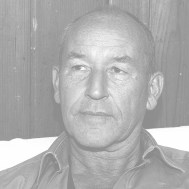
Teaching of Song Shuming

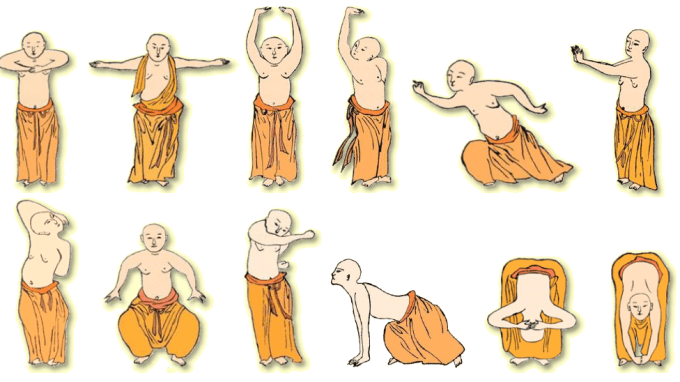
– 太極功 THE TAIJI ART 宋書銘 by Song Shuming [1908] [translation by Paul Brennan, Mar, 2017] – [Wu Tunan wrote in 1983 that this document was presented to him by a friend named Zhang Ximing in 1908. There is no date within the document itself to tell us when exactly it was written. Wu also […]

via TEACHINGS OF SONG SHUMING — Brennan Translation

Infinite Dao – 尝试空手道 Trying Karate

Extracts from Patrick Kelly’s book ‘Infinite Dao’ Chapter 1. (Part 1)

尝试空手道 Trying Karate

之后的一年,我大部分时间都呆在神学图书馆,翻阅着每本能找到的内修书籍,因为我甚至知识是实践的铺路石。只是,虽然那时的我对简明的禅宗佛理有着浓厚兴趣,但让我数年如一日地天天打坐冥想几个小时却很难。早年的我热衷于日本剑道、空手道、合气道、弓道(射箭术)等武术,也读过有关武术与禅宗关系的书籍。综合考虑后,我决定一边继续探索各类灵修,一边做其中一种武术的学习,同时从情感方面培养并平衡好日常生活中的人际互动。For the next year I spent most of my days in the Theosophical library, reading every interesting book on the subject of inner development that could be found. Simultaneously, I saw that knowledge was only a preparation for practise. I was attracted by the apparent simplicity of the Zen Buddhist philosophy but the thought of sitting with a blank mind for hours each day, for many years, did not exactly appeal at that time. Because of my previous interest in the martial arts and having read of their connection with Zen – eg Kendo, Karate, Aikido and Kyudo (Archery) – I decided to take up one of these martial arts while continuing my investigation of the different spiritual traditions. All this of course while not forgetting the emotionally nurturing and balancing interpersonal interactions of normal daily life.

University life

在大学的我并不重视专业的学习,但却会一周两三次跑去参加校园里一家极真会空手道的培训。大山倍达大师是这种空手道的创始人,他年轻时曾以赤手空拳对博并杀死了数只大公牛。但他的力量也是他的弱点。此外,个人认为,这项武术对精神层面的修炼并不够重视,虽然练习这一武术的人认为,大量体格训练的同时精神面也得到了训练。At the University – where I continued to neglect my academic studies – there was a Kyokushinkai Karate school and I began training 2 to 3 times per week. The creator of this style, Master Masutatsu Oyama, was known for his physical prowess having fought and killed large bulls with his bare hands in his younger days. But his strength was also his weakness and the spiritual side of the art, which they felt they trained due to the tremendous physical efforts made in their training, was for my own inclination, not emphasised sufficiently.

Growing regard for health

由于日本武术会刻意无视身体的健康,我和其他学员就不断遭受着各种外伤的困扰。学习日本武术,练习者必须压制肉体对舒适和健康的渴求以增强意志,并最终以某种神秘之法打开灵修通道。该理念虽有事实依据,但它施行起来技巧生硬。我为了进一步了解其训练方式,坚持了下来。Besides that, the intentionally careless disregard for the health of the body, typical of the Japanese Martial Arts, generated injuries in myself and all those others with whom I trained. The idea was that by deliberately pitting the will against the body’s desires for comfort and health, the will would grow in power, thereby, hopefully, in some unexplained manner giving access to the spiritual dimension. The idea had a basis in truth but the execution was not skilful. Still, I continued to practise, in the process understanding something of how to train and something of how not to train.

Sanchin

首年学习快结束时,空手道师傅让我去翻阅图书馆里的中国武术书籍,但并没告诉我缘由。空手道师傅曾向我提及一位非华人不教的中国师傅,说他亲眼见识过那位师傅的非凡能力并向他请教过内力(中文称为“气”,日文为“ki”)的练习法,得到的答复是:学习空手道最好重点练三战。三战的招式动作适用于绝大多数的空手道,它们缓慢但伸缩有力,要求有极大的意志力。Towards the end of my first year of training, for no apparent reason, my Karate teacher instructed me to go to the library and read about the Chinese Martial Arts. He also told me about a Chinese teacher he knew who had shown him some remarkable abilities but refused to teach non-Chinese students. My Karate teacher had asked this man how to train the internal force (Qi – Chinese, or Ki – Japanese). The Chinese teacher replied that, if utilising Karate, the best chance was to concentrate on practising the Sanchin Kata. This set sequence of movements is universal to most styles of Karate and is executed slowly with strong contraction together with an extreme, irresistible, effort of will.

Continued….

pk2web克利 Patrick A Kelly

began Taiji with an experienced student of Master Huang Xingxian in 1973. In 1977 he moved to Kuala Lumpur, Malaysia where he studied full time in Master Huang’s school. In 1979, following tradition, Master Huang accepted Patrick as his personal disciple – the only non-Chinese to ever enter Huang’s inner-school. From that time Patrick Kelly travelled and taught beween Asia, Australasia and Europe while continuing to learn personally with Master Huang untill his death late 1992. Simultaneously Patrick worked closely both with the Naqshibandi Gnostic Sage Abdullah Dougan for 14 years until Abdullah’s death in 1987 and for 30 years with the Raja Yogi Mounimaharaj of Rajasthan who died in 2007 at more than 105 years old.

1973年,派瑞克利开始向黄性贤大师的一位资深学生学习太极。1977年,他来到马来西亚吉隆坡,在黄性贤大师的学校全日制学习太极。1979年,遵循传统惯例,黄性贤大师收派瑞克利为徒,他成为了黄性贤大师唯一的非华人入室弟子。自那时起,派瑞克利往来于亚洲、澳洲及欧洲教拳,同时继续私下向黄性贤大师学习,直至大师于1992年末去世。同一时期,派瑞克利还跟随纳什般迪派和诺斯替派哲人阿卜杜拉多安学习十四年,直到1987年阿卜杜拉去世,跟随拉贾斯坦的胜王瑜伽大师穆尼玛哈拉吉学习三十余年,直至穆尼大师在2007年以105岁高龄去世。

Yim Wing Chun, the Boxer Rebellion and Buffy the Vampire Slayer

What at first appears new is often something remembered. The human mind has trouble categorizing and finding meaning in anything that is truly unique or alien. Good storytellers know that originality is not always a virtue. The construction of meaning is rooted primarily in what we feel to be familiar. The […]

via Remembering Yim Wing Chun, the Boxer Rebellion and Buffy the Vampire Slayer. — Kung Fu Tea

Infinite Dao – 灵修启蒙 Spiritual Initiation

Extracts from Patrick Kelly’s book ‘Infinite Dao’ Chapter 1. (Part 1)

灵修启蒙 Spiritual Initiation

大量的内心自我反省下,我虽未通过大部分的学科考试,但我找到了心理平衡发展之路,思维也转向了对生命终极意义的探索。我发现现代艺术圈的创作都很感性且以自我为中心,而我早年为探索灵修所读的道家和禅宗等传统类书籍所追求的,是更高深的东西。At the end of that period of intense self examination – which incidentally resulted in failures in most of my university
exams – having found a path forward in terms of psychological balance, my thoughts turned to the ultimate meaning of life. My spiritual enquiry had been activated in that previous year by the reading of books on artistic creativity within the Daoist and Zen traditions. There it was clear that they aspired to something more subtle than the highly emotional, self-obsessed creativity, obviously apparent in the modern artistic world.

Toward a spiritual dimension

就这样,年方21岁的我重新踏入了灵修的探索领域。虽然我并不确定以能量和神灵为载体的内在世界是否真实存在,但凭着当时有限的探索智慧,我就已经认识到:如果一切的一切仅仅是肉体(包括大脑),那我以怎样的方式修行都无所谓,因为死亡会带走一切;但假如肉体之外确有这么一个世界,那么漠视它的存在而虚度人世就是彻头彻尾的愚蠢。我坚信自己的灵魂终能听到内心所愿,至今我都还清楚记得自己从觉悟最深处发出有人能将自己带上灵修之路衷心祈求的那天。回顾过去,我的灵修之路其实正始于197112月的那个时刻。So at the age of 21 my efforts were re-directed towards the spiritual dimension. It was not certain to my superficially enquiring intellect that the inner-worlds of energies, spirits and gods really did exist, however it was bright enough to realise that if all there was, was the body (including the brain), then it didn’t matter much how I proceeded as all would be gone when I died, but if there was this world beyond the body then to spend a lifetime on the surface of existence, as if that inner world did not exist, was pure stupidity. Reasoning that my Spirit could hear my inner wishes, one day, still now fresh in my memory, from the deepest state of consciousness I could generate, I sent a heartfelt plea for help to be led on the inner path. Looking back now to that moment in December 1971, I realise it was the moment I began.

Continued…..

pk2web克利 Patrick A Kelly

began Taiji with an experienced student of Master Huang Xingxian in 1973. In 1977 he moved to Kuala Lumpur, Malaysia where he studied full time in Master Huang’s school. In 1979, following tradition, Master Huang accepted Patrick as his personal disciple – the only non-Chinese to ever enter Huang’s inner-school. From that time Patrick Kelly travelled and taught beween Asia, Australasia and Europe while continuing to learn personally with Master Huang untill his death late 1992. Simultaneously Patrick worked closely both with the Naqshibandi Gnostic Sage Abdullah Dougan for 14 years until Abdullah’s death in 1987 and for 30 years with the Raja Yogi Mounimaharaj of Rajasthan who died in 2007 at more than 105 years old.

1973年,派瑞克利开始向黄性贤大师的一位资深学生学习太极。1977年,他来到马来西亚吉隆坡,在黄性贤大师的学校全日制学习太极。1979年,遵循传统惯例,黄性贤大师收派瑞克利为徒,他成为了黄性贤大师唯一的非华人入室弟子。自那时起,派瑞克利往来于亚洲、澳洲及欧洲教拳,同时继续私下向黄性贤大师学习,直至大师于1992年末去世。同一时期,派瑞克利还跟随纳什般迪派和诺斯替派哲人阿卜杜拉多安学习十四年,直到1987年阿卜杜拉去世,跟随拉贾斯坦的胜王瑜伽大师穆尼玛哈拉吉学习三十余年,直至穆尼大师在2007年以105岁高龄去世。

The Origins of Xingyi Liuhe Quan

by Will Wain-Williams

Xinyi Liuhe Quan is a very old, and somewhat rare system of Chinese martial arts, originating in the Chinese military before being passed down among Hui Muslim communities and then finally finding its way to Shanghai at the turn of the 20th century. The system is considered an “internal” style of martial arts, a fairly fuzzy term, which implies that power is derived through relaxation and correct alignment of the body as opposed to brute force. It is considered the ancestor of several more modern martial arts systems such as Xinyi Quan and Da Cheng Quan.

Picture3Movements and strategy

The movements and strategies of Xinyi Liuhe Quan reflect the military nature of the system, as legend has it they were derived from the famous general and patriot Yue Fei, who made a system of hand-to-hand combat based on his high level of skill with the spear and bow-and-arrow. The movements are outwardly linear, however they utilize coiling of the body to generate power, and require flexibility and strength in the hips and waist. There are no high kicks or flashy, performance based movements. The overruling strategy is to engage the opponent directly and finish the fight as quickly as possible, focussing all your power forward. If you imagine a regiment of troops in battle, all marching forward towards the enemy, then this concept is easy to understand. Just as a regiment moves as a whole unit, in Xinyi Liuhe Quan, the body also moves as one. The Chinese word Liuhe in fact means “six harmonies” and refers to the feet, knees, hips, shoulders, elbows and hands all moving unison. At the same time the practitioner must have a kind of “killer intent” when they fight, concentrating totally on the task at hand, which is one of several interpretations of Xinyi, which literally translates as heart-mind.

Picture2The system

The core of the system is made up of Shi Da Xing, or ten great shapes. In fact, in Shanghai, the system is colloquially known just by that name. The ten great shapes are ten different animals, however it doesn’t mean imitating animals movements, rather understanding and implementing the characteristics of certain animals, for example the raw power of how a tiger pounces on prey, the agility of a monkey or the speed and viciousness with which an eagle swoops. The ten animals are: hawk, eagle, chicken, swallow, snake, dragon, bear, tiger, monkey and horse. Each animal has its own strategies and techniques, and suits a person of a certain body type, for example a large bulky framed person might focus on bear, which uses a lot of heavy power to overwhelm, whereas a slim framed person might focus on swallow, which swoops down suddenly only to dart up again unexpectedly. Several weapons are also taught, including of course, the spear, as well as the sabre, sword and two-sectioned staff. The weapons are regarded as an extension of the hands, and so the techniques and strategies are much the same regardless.

Combat

Besides being an effective fighting system, Xinyi Liuhe Quan is also well known for the longevity of its practitioners. Many masters have lived to be in their 90s and even 100s and practiced right up to their last days. This is due to the holistic workout gained through training; there are three levels a student will go through. The first will be training of the muscles, the second is the training of the tendons and bones, and the last level is the training of the blood and qi. The combination of relaxation and tension, as well as the twisting movements of the trunk of the body ensure a whole body workout, while various meditative exercises are also carried out to train the mind.

Picture1Heritage

Xinyi Liuhe Quan was passed down in Henan province among communities of Muslim Hui people, who were historically very conservative and closed people, due to discrimination by the Han majority. It is possibly due to this that the system was able to remain relatively unchanged and preserve the brutal nature that arose from its military origins. It was brought to Shanghai early in the twentieth century by a man named Lu Song Gao, a native of Zhoukou County in Henan. Born in 1875 and passed away in 1961, he began his martial arts training during childhood, studying under the seventh generation master Yuan Feng Yi. As a young man he took a job as an armed bodyguard escorting cargo around China, before moving to Anhui and Nanjing, before finally settling in Shanghai where he was hired to work security at a flour factory. It was here that he had a lot of free time to refine his art, and his reputation grew as an excellent fighter. During this time he made acquaintance with a man named Ding Ren 丁仁, who was also a native of Henan.  Ding was also highly, and was two generations higher than Lu. Being impressed with Lu’s skill, he told him that passing on Xinyi Liuhe Quan would be his responsibility, and so spent the next six months visiting him in the Mosque daily to learn all he could from him.

Keeping the style alive

Transmission outside of the Muslim community is generally acknowledged as beginning with a man named Jie Xing Bang, who was originally a native of Hebei province, but grew up in Shanghai where he was an underground agent for the communist party while working as a police detective for Yangpu district during the Republic era. At 1.9m tall, he was keen on martial arts from a young age, and in order to study Xinyi Liuhe Quan pretended to be a Muslim to gain access. He became a student of Lu Song Gao and became a top class fighter who was admired by his peers. It was after encountering him that Lu Song Gao opened his doors to all whether Muslim or not.

Where it can be found

Since that time Xinyi Liuhe Quan has spread throughout Shanghai and become one of its representative martial arts styles. Today you can find people in almost every park in the city practicing in the morning, who are attracted to it for its health benefits, as well as more serious practitioners who practice the system in its entirety, albeit often behind closed doors.

To find out more you can visit www.monkeystealspeach.com

Infinite Dao – 前半生 Previous Life

Extracts from Patrick Kelly’s book ‘Infinite Dao’ Chapter 1. (Part 1)

前半生 Previous Life

时间回到距离此次初访四年前的1973年。当时的我在即将结束新西兰惠灵顿大学学业之前,就已经开始学习黄大师太极。我从小练习格斗术,而太极就是我的巅峰格斗术。随太极而来的,还有后来令我兴趣倍增的深奥灵修术。自十岁起,住在父母农场里的我便开始学习西方拳击和摔跤;12岁,全家搬到一个小镇,我还在学拳击和摔跤。到了16至18岁,面对高中期末考试以及大学入学准备的压力,我暂时将格斗学习放置。19岁时,我离开父母搬到了惠灵顿继续数学学位的学习。Exactly 4 years before this first meeting, while approaching the end of my university studies in Wellington, New Zealand, in 1973, I had begun training Master Huang’s system of Taiji. That in itself was the culmination of many childhood years training the fighting arts, together with a more recent interest in esoteric spiritual arts. From the age of 10, while still living on my parents’ farm, I trained in western boxing and wrestling. At the age of 12 we moved into a small town where I continued that training. From 16 to 18 my training lapsed as I completed my final exams at high school and began University. At the age of 19 I left home and moved to Wellington, where I continued with my mathematics degree.

Intrinsic motivation

打心眼里我就对个体的内修很感兴趣。生活中的人们往往会避开自身不足,偏重自身优势,这让个人的平衡承压。狭隘的大学环境令很多教授迷失自我,可我并不想成为其中的一份子。于是我去学心理学,却又发现那些肤浅的学术研究对我没有任何帮助。长时间以来,我一直苦苦思索着自己今后的人生道路。With an intrinsic interest in the inner-workings of the individual and having noticed how people oriented their lives towards their strengths while avoiding their deficiencies, thereby increasing their personal imbalance, I recognised a danger of losing myself in the narrow university atmosphere – as so many of the professors obviously had. In vain I included some courses in psychology, but the superficial academic approach negated any benefit. I thought deeply over that time on how to direct the rest of my life.

Developing emotions

很明显,我的情感部分在标准化教育体系下并没有得到良好发挥。为了解决这一困境,我阅读了大量创意类和艺术类书籍,思忖着它们能助我增强情绪状态。但坚持了近两年后,我发现它们的帮助并不大而且也过于以己为中心。再往下走的最好办法,就是要在日常生活中与周边人做更深入的情感互动。据此,我决定将方向重新确定。原来的我在大学环境下,走是纯学术化、知识型的方向;现在的我,要视一切以人类互动为前提的生活为目标,自觉激发平衡生活追寻之路上的不足。It was clear that the emotional part of myself, due to the standardised school system, had been under-exercised. As a possible remedy to this I read many books on creativity and the arts and seriously considered the potential of these fields to enhance my emotional state. But after pursuing the arts for almost 2 years, I decided that the emotional development resulting from the fine arts was in general too limited in scope and too egocentric. The best way forward, it appeared, was to involve myself more deeply in the daily emotional interactions with people about me in normal life. I decided from that point on to re-orient myself from the purely academic, intellectual direction, towards which my university experience had been pushing me, to a life where human interactions came first and all other things second, consciously invoking my weaknesses in pursuit of a balanced life.

Continued…….

pk2web克利 Patrick A Kelly

began Taiji with an experienced student of Master Huang Xingxian in 1973. In 1977 he moved to Kuala Lumpur, Malaysia where he studied full time in Master Huang’s school. In 1979, following tradition, Master Huang accepted Patrick as his personal disciple – the only non-Chinese to ever enter Huang’s inner-school. From that time Patrick Kelly travelled and taught beween Asia, Australasia and Europe while continuing to learn personally with Master Huang untill his death late 1992. Simultaneously Patrick worked closely both with the Naqshibandi Gnostic Sage Abdullah Dougan for 14 years until Abdullah’s death in 1987 and for 30 years with the Raja Yogi Mounimaharaj of Rajasthan who died in 2007 at more than 105 years old.

1973年,派瑞克利开始向黄性贤大师的一位资深学生学习太极。1977年,他来到马来西亚吉隆坡,在黄性贤大师的学校全日制学习太极。1979年,遵循传统惯例,黄性贤大师收派瑞克利为徒,他成为了黄性贤大师唯一的非华人入室弟子。自那时起,派瑞克利往来于亚洲、澳洲及欧洲教拳,同时继续私下向黄性贤大师学习,直至大师于1992年末去世。同一时期,派瑞克利还跟随纳什般迪派和诺斯替派哲人阿卜杜拉多安学习十四年,直到1987年阿卜杜拉去世,跟随拉贾斯坦的胜王瑜伽大师穆尼玛哈拉吉学习三十余年,直至穆尼大师在2007年以105岁高龄去世。

Roland Barthes and the DNA of Martial Arts Studies

benjudkins's avatarKung Fu Tea

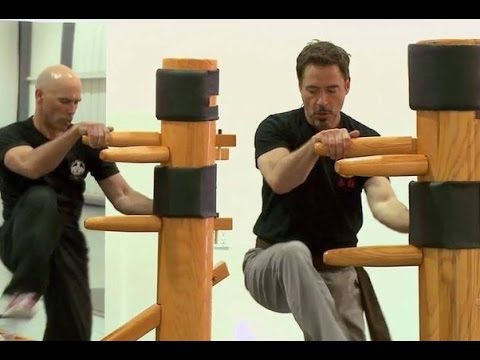
Robert Downey Jr. and Eric Orem working on the wooden dummy. Robert Downey Jr. and Eric Orem working on the wooden dummy.

Paul Bowman. 2016. Mythologies of Martial Arts. London and New York: Rowman & Littlefield. 184 pages.

Professor Paul Bowman’s latest book sets a new standard for exploring the cultural, sociological and ideological criticism of the martial arts within modern society.   It also suggests two questions that any reader will be forced to consider quite carefully.  First, what is ‘Martial Arts Studies’? Secondly, what does it have to do with Roland Barthes?  Indeed, the memory of Barthes’ widely-read Mythologies (1957) is directly invoked by the title of the present work.[1]

While such questions may, at first, sound trivial, they are at the heart of Bowman’s current project.  Martial Arts Studies can be described as a new interdisciplinary research area that engages with cultural, historical, sociological and media studies arguments (among others) examining the origins, function and social significance…

View original post 1,504 more words

Taiji Boxing According to Wu Tunan

– 科學化的國術太極拳 A MORE SCIENTIFIC MARTIAL ART: TAIJI BOXING 吳圖南 by Wu Tunan [published by 商務印書館 The Commercial Press, LTD, Oct, 1931] [translation by Paul Brennan, Feb, 2017] – 科學化的國術太極拳 A More Scientific Martial Art: Taiji Boxing 褚民誼題 – calligraphy by Chu Minyi – 吳啚南著 by Wu Tunan: 科學化的國術太極拳 A More Scientific Martial Art: Taiji […]

via TAIJI BOXING ACCORDING TO WU TUNAN — Brennan Translation

Villains, Guns and Humor: Giving Texture to the Early 19th Century Chinese Martial Arts

benjudkins's avatarKung Fu Tea

"Muslim Bandits," Xinjiang, China [c1915] Marc Aurel Stein [RESTORED] “Muslim Bandits,” Xinjiang, China [c1915] Marc Aurel Stein [restored]

Any traveler can attest that detours come in two forms.  They all take a little longer, and most offer nothing but delay.  Others can lead to fascinating discoveries.  These often come in the form of local sandwich shops frequented by hipsters or a scenic overlook. This same principle applies regardless of whether one is on a purely geographical journey, or if you are traveling through time.

And it goes without saying that there is no better portal for time travel than the rare book collections at Cornell University.

That is where I found myself earlier this week.  I was about to embark on a lengthy exploration of how Chinese martial artists were discussed in the Western press between the months of May and August in 1900.  Historically informed readers will immediately recognize this as one of the most fluid periods in…

View original post 1,648 more words

Infinite Dao – The Way Opens

Extracts from Patrick Kelly’s book ‘Infinite Dao’ Chapter 1. (Part 1)

第一章启路1 The Way Opens

初遇大师Meeting the Master

30度的高温下,满怀期望的我在吉隆坡墓园见到了黄性贤大师。选择在这样的地方建立大型培训学校,着实令大师门下的诸多弟子哑然,虽然学校的楼下还开有一间传统的马来中式咖啡屋。黄大师年约67岁,有着普通亚洲人的身高。他胸膛宽阔,犀利的眼神似乎能洞穿一切。一个外国人的突然到访虽令其有些诧异,但他并不动声色。他若一直如此,我也许还有胜算的机会。但此前大师与外国人的接触仅限于几个上了他几堂课的旅行过客的经历,给我的机会蒙上了阴影。出于尊敬,大师还是将我这个访客请进了屋并询问了我的意图。得知我拜师的想法后,一直不动声色的大师这时说:“我不喜欢你的模样,我不会教你。”这一言就道出了大师对我的真实感受,也令在场惶恐的翻译煞是为难。I greeted Master Huang Xingxian with high expectations in the 30 degree heat of the Kuala Lumpur graveyard. That was where, to the consternation of many of his students, he had chosen to establish the large training studio above a typical Malaysian-Chinese coffee house. He was average height for an Asian, barrel chested, around 67 years old with his piercing look giving nothing away. The unexpected appearance of a Westerner on his doorstep almost certainly surprised him, but he did not show it. If he had remained impassive it would perhaps have been more fortunate, but the fact that his previous experience of Westerners was limited to a few transient travellers who had passed casually through his classes before me, precluded that. Ever polite to a guest he invited me inside and inquired what I wished of him, the first indication of his real feelings not appearing until he understood that I hoped to become his student. The nervous translator struggled with Master Huang’s response, “I don’t like the look of you. I don’t intend to teach you.”

The Journey

来此之前,我仔细考虑过此次拜师之行的各种不确定性,比如自己能否在吉隆坡找到住所,资金是否足够,自己是否能找到黄大师,即便找到了,凭那点基础的汉语,自己是否又能听懂并理解大师的所授等等,但我终究还是来了。可我偏偏就没想到,在我卖了房、安顿好生活然后千里迢迢跑到东南亚找到大师时,大师就这么一句话就将我拒于门外。There had been many uncertainties in the planning of this journey, such as whether I could find accommodation in Kuala Lumpur, whether my funds would be sufficient, whether I could even find Master Huang and whether I could understand and appreciate his teaching if I did find him – especially given my rather basic knowledge of the Chinese language. All these practical difficulties had been carefully considered before the journey and I had decided to take my chances with them. However, that he would simply refuse to teach me had not even been vaguely considered when I sold my house, put my outer life in order and set out to South-east Asia to find him.

Genuine Displays

此前我曾跟一位太极导师学了四年。期间,我常听他谈起他和他父亲的师傅黄性贤大师强大的力量及大师对力量的非凡运用。其中令我记忆犹新的,是几年前黄大师与国际著名摔跤手较量的事迹。那名摔跤手比黄大师年轻20岁,体重也重过大师15公斤,他曾多次公开指责太极和黄大师的能力。作为回应,黄大师接受了他的挑战。结果在公开赛上,黄大师将他连摔在地26次,而大师自己一直都站得稳稳当当。如此轻描淡写的胜利,既让人们亲眼目睹了大师的非凡能力,却也让一些后来目睹者心生疑窦,而这样两极分化式的影响在大师今后的生活中还在不断出现。对此,大师的看法是:“太极越是本真和玄妙,理解和相信它的人就会越少。光太极向外界展示出的速度及其戏剧化的动作,都会令人心动。”而我自己后来也有了类似的经历。凭着自身练习与教学的深入,我发现有些人一开始就会努力去了解并最终体验到了太极的价值所在,可也有些人从一开始就对太极抱有一定的抵触态度,之后却在自己的偏差练习和错误理解下,想当然地对太极进行指责。My previous Taiji instructor, in the four years I had known him, had often talked of the remarkable powers and exploits of his and his father’s teacher, Master Huang Xingxian. One memorable example was the story of the Master’s fight with an internationally famous wrestler a few years earlier. The wrestler was 20 years younger and 15 kg heavier. Master Huang – accepting the challenge in response to repeated public denunciations by the wrestler of both Taiji and Master Huang’s abilities – threw the wrestler 26 times over the course of the public bout, never once going down himself. The ease with which Master Huang won, both convinced everybody present of his remarkable abilities, and ironically, aroused doubt within those who only later saw the incredible result. This polarising effect on those around him was to be a recurring story in his life. As he explained later, “The more genuine and subtle the Taiji, the less people understand and believe, but on seeing external, fast, dramatic moves, they are naively impressed.” Later I was to experience this same effect for myself. As my practice and teaching became deeper, people either made an effort to understand, consequently experiencing its value, or from the earliest contact they set part of their mind against the system, then self-righteously criticised it on the basis of their own deviant practice and incorrect understanding.

The Initial Meeting

带着对大师名誉的笃定,面对跟前的大师,我努力“消化”着这突如其来的拒绝,也没想就自己的模样去辩驳。几年后我才明白到,所谓的首访闭门羹,其实是传统上对学员决心的一种测试。对那些还没有对‘铁杵磨成针’做好充分准备之人,导师就不必浪费时间和精力。或许我当时的茫然和长时间的沉默让黄大师认定了我不是那种轻言放弃之人,又或许当时他心底下认为应该再给我一次机会吧,总之好一阵后,大师说道:“先来一个星期吧,每晚5309点上课,观摩一下。” 他还说可以考虑拜师的事。看来这第一步还有收获!带着些许安慰,我谢过大师后离开。初访的经历夹杂有意外,但我与黄大师间的一生深厚关系却由此展开。199212月,大师仙逝于中国福州。 Now, standing before him at this initial meeting with his reputation firmly in mind, there was no thought of arguing over my appearance as I struggled to process his unexpected refusal. Years later I understood that this first refusal is a traditional test of the student’s determination to learn. It prevents the teacher wasting time and energy on those unprepared to make the substantial effort necessary to make a success of the training. Perhaps it was my blank stare and what seemed like ages of nothing said as he awaited my response, that convinced him it would not be so easy to send me away, or was it that he experienced some inner-prompting that convinced him to give me a second chance? Either way, after a time he spoke again, “Attend the classes every evening for a week. Watch the practice from 17:30 to 21:00.” Meanwhile, I was told, my request to be taught would be considered. With some relief I expressed my gratitude for the chance and satisfied with this first step, took my leave. That was the unexpected beginning of an intense and close relationship that lasted until Master Huang Xingxian’s death in Fuzhou, China, in December 1992.

Becoming a Disciple

两年后的1979年,在大师位于婆罗洲孤岛的古晋小镇家里,我与师傅的深厚关系经传统的敬茶仪式得到了正式确立。敬过茶,我即视师为父,师傅则视我为子,师傅的个人太极传承自此开启。被收为内校弟子看似荣耀,背后却是大量的勤学苦练。假如师傅在我初访时就告知这背后的艰辛和之后多年我可能会有的经历,我那时未必就能坚持下去。如今几十年过去,那最初的两年恍如一梦。那时的我懵懵懂懂,既没真正意识到自身内在的变化,也没留心那些复杂却又只可意会不可言传的中式礼仪,还有那些让我感觉那样陌生和遥远的中华文化,但我还是将自己的一生交付给了这位在中式文化教育下长大、谜一般却又充满魅力的人。That relationship was formally cemented two years later in 1979 at his home in Kuching, a small town on the isolated island of Borneo, when – after the traditional ceremony in which I presented him with a bowl of tea and accepted the obligation towards him of a son, while he took the responsibility of a father – his personal transmission of the art really began. But that acceptance into his Inner School was an honour which had to be earned. If it had been known at that first meeting, what it would be necessary to go through in those succeeding years, I would have been reluctant to proceed. Now, decades later, those two initial years seem like a dream and that is how I went through them, more or less unconscious of the internal processes being initiated within myself during this time and oblivious to the complicated unspoken Chinese etiquette, placing my life in the hands of this charismatic and enigmatic person, from, what was to me at that time, a strange and distant culture.

The Title Master

谈及各位导师时,本书均以“大师”称之。这些人都是我跟从过的老师,“大师”这一称呼无论从年龄还是传统而言,都是比较恰当的文化表述。此外,我也用它来称呼我的师公及任何极富经验的知名人士。大师这一称谓是弟子对导师的一种尊重,但它非导师所独有,真正的大师也不会这么做,而那些要求他人称己为大师者与真正的大师之间,必有相当大的差距。就个人而言,我不会尊重任何一个拿个称谓就指望他人用其称呼自己,或仅凭那一称谓就指望得到他人尊重的人,无论他是医生、教师、小贵族还是一国之王。称呼黄性贤为大师,还因为他是掌握太极精要之人。黄大师与学员间的关系并非英文词义中的主仆关系,我自己也从不称其为“主人”,而总是叫“老师”。在东方,人们尊称郑曼青为老师,但他为了避免可能的英文“主人”歧义,选择了英文的“教授”称谓。当然,世间确有有视己为主人的伪老师,还有很多学生容易上当受骗,会屈服于那些“主人”的淫威之下。The title “Master” is used quite lucidly in this book when speaking of various teachers. It is used for those teachers under whom I studied and who were at an age and in a tradition where that title was culturally appropriate. It is also used for my teachers’ teachers and any other well experienced and well recognised teachers. It is a term of respect from a student to a teacher. It is not a possession of the teacher. No real teacher can appropriate the title to themselves and any teacher who demands to be addressed as master has gone well off the Way. I personally have no respect for anybody in life – whether doctors, teachers, minor aristocrats or kings – who take on a title and expect or hope other people to address them with it or respect them because of it. When we called Huang Xingxian “Master”, the implication was also that he was someone who had mastered the art of Taiji as in the term “master-craftsman” – not of course the simplistic implication that he was our master and we his slaves. Never actually in my life did I address him as “Master” – it was always Laoshi (Old Teacher). Zheng Manqing, also known as Laoshi in the East, chose the English rendering “professor” thereby avoiding the possibility of the “master-slave” misunderstanding which many false teachers assume and to which many gullible students submit.

pk2web克利 Patrick A Kelly

began Taiji with an experienced student of Master Huang Xingxian in 1973. In 1977 he moved to Kuala Lumpur, Malaysia where he studied full time in Master Huang’s school. In 1979, following tradition, Master Huang accepted Patrick as his personal disciple – the only non-Chinese to ever enter Huang’s inner-school. From that time Patrick Kelly travelled and taught between Asia, Australasia and Europe while continuing to learn personally with Master Huang until his death late 1992. Simultaneously Patrick worked closely both with the Naqshibandi Gnostic Sage Abdullah Dougan for 14 years until Abdullah’s death in 1987 and for 30 years with the Raja Yogi Mounimaharaj of Rajasthan who died in 2007 at more than 105 years old.

1973年,派瑞克利开始向黄性贤大师的一位资深学生学习太极。1977年,他来到马来西亚吉隆坡,在黄性贤大师的学校全日制学习太极。1979年,遵循传统惯例,黄性贤大师收派瑞克利为徒,他成为了黄性贤大师唯一的非华人入室弟子。自那时起,派瑞克利往来于亚洲、澳洲及欧洲教拳,同时继续私下向黄性贤大师学习,直至大师于1992年末去世。同一时期,派瑞克利还跟随纳什般迪派和诺斯替派哲人阿卜杜拉多安学习十四年,直到1987年阿卜杜拉去世,跟随拉贾斯坦的胜王瑜伽大师穆尼玛哈拉吉学习三十余年,直至穆尼大师在2007年以105岁高龄去世。