Introduction Welcome to the seventh entry in our series of guest posts titled “Doing Research.” If you missed the first essay by D. S. Farrer (which provides a global overview of the subject), the second by Daniel Mroz (how to select a school or teacher for research purposes), the third by Jared Miracle […]
Discipline is one of the most difficult words that I know. No, it isn’t a spelling thing! The difficulty comes from all the aspects that it encompasses. All of the little things that are required to truly have discipline.
The importance of goals will not be included here beyond the point that you NEED goals for your life in order to accomplish anything. How big your goals are will dictate how much discipline you need to develop.
1. If you want to change the world, start off by making your bed. “If you can’t do the little things right, you will never do the big things right.”
It is amazing how something so small and trivial can start you out the right way. It isn’t about being rewarded by your parents for doing your chores. It is about taking responsibility to get things done. As Aristotle said…
There are dozens of everyday things that help develop discipline. These range from following a bedtime and a wake-up time to regular oil changes in your car. Discipline allows you to build on successful and failed activities. It helps in remembering the lessons from everything that you do.
A common example comes from learning any subject. Once you set a goal (earn the next martial arts rank), you must spend the time and effort to learn and perform properly. It is common that students “think” they know their material but fail horribly when tested on it. This is usually from the lack of applying discipline to their training. I use pretests to show students that they aren’t as ready as they think. Once they’ve completed the pretest., I ask them if it was their best performance. Usually, they admit not. My next question becomes “why wasn’t it?” It may take several ranks of repeating this cycle before it sinks in but most eventually recognize that it is discipline that keeps “good enough” from ruining “excellent.”
It is important to utilize discipline in everything you do daily. The benefits of a little discipline changes your whole day just because you know where your car keys are. People also greatly enjoy when you apply discipline to getting things done that you said you would. This is also part of your career. Not completing tasks can lead to unemployment. In your private life, it builds trust and shows respect.
How can you tell if your discipline is lacking? I’ve asked students (in front of their parents) the question “How many times should you be told to do something??” The answer from students is “Once!” How many times did you need to be told to get the last project/chore done?
In China dedicated martial arts students who plan to make the most of their time generally fall into two categories.
Type A – You’re a martial arts student in China and you’ve reached a level where in order to further develop your understanding and skill as well as make your life easier you’ve got no choice but learn the language.
Type B – You’re a Chinese language student who’s always been interested in martial arts but has yet to take the step into training. But things have finally come to a head and you’ve had enough of conversations about where you’re from, how much you earn and whether you like Chinese food, girls or football.
Chances are a few of you reading this post have had at least contemplated at least for a second combining martial arts with language learning.
You might have considered the following options. A university course with a certain amount of martial arts training, finding an elusive badass master and informally studying the language or by joining one of the many international kung fu schools and taking their free classes.
The benefit of combining martial arts and language learning can be found in the practical skills you learn that not only add to the experience but also your CV. Indeed such a step can take many in completely new directions abound with opportunities for the wily foreigner. Overall these programmes allow participants the opportunity to develop their martial arts and deepen their own understanding of Chinese culture and language.
“It’s a unique way to study with a high level master outside the normal international kung fu school route as that all important Chinese visa can be provided relatively cheaply through a University.”
Find a badass kung fu master
This video clip above was taken in Yantai, Shandong province.
Yantai is a small second tier Chinese City on the northeast coast of China. It has cheap housing and has a good environment. Yantai is famous for a number of kung fu styles including Taichi Mantis, Tongbei quan, and Baguazhang. Locally with a little care you can find good masters. The city itself is a hot bed of kung fu schools and is well worth a look.
“Yantai is a hot bed of kung fu schools and masters on the east coast of China”
For details of our Traditional Martial Arts and Language Learning programmes in Yantai email info@studymartialarts.org. You can also check out Master Sui’s full biography and training schedule here. Or you can have a look at this school Kunlun International Kung Fu School which has links to Ludong University in Yantai for long term visas and currently has a very good Shaolin Kung Fu and Mantis Kung Fu master that you can study martial arts with.
Two alternatives that may be more suitable for those who are less independent or would prefer an all-inclusive experience are The Yuntai Mountain International Culture and Martial Arts School founded by Shi Yan Lin, also known as Xie Xu Yong. This school is the only martial arts school currently offering a quality half day martial arts and half day language learning programme. The other option I would recommend is Capital Sport University of Physical Education in Beijing.
Yuntai half and half programme
Master Shi Yan Lin is a master with over 10 year experience in teaching to both Chinese and International students Shaolin Martial Arts. The school is located in the famous Yuntai geological park, which attracts thousands of tourists every year and is fairly close to the fabled Northern Shaolin Temple. The Martial Arts training at the school will primarily focus on the various Shaolin fists and weapons as well as Sanda and Taichi. The school building formally a hotel has been converted into student accommodation, as a result the rooms are comfortable and comparatively of a high standard. The newly built training area and performance hall is five minute walk from the main accommodation area, so everything you need is close at hand.
The Chinese language course organised as part of the half martial arts, half language learning programme is available in partnership with Jiaozuo University. These courses can be specially tailored and intensive. This, makes the school a very real prospect for serious Chinese language learners. This close relationship between the martial arts school and the university means that long term student visas can be obtained for long term International students of the school.
The down side to the programme primarily relates to the schools relative isolation and the management insistence for compulsory school line ups throughout the day. Sometimes this can make students feel like they’re prisoners rather than students.
University Programme
Captial University of Physical Education & Sports is one of Beijing’s premier Martial Arts Training Universities providing top-ranking conditions for international and domestic students. The university is supported by Hanban and Confucius Institute offering Chinese Language Learning Programs, Martial Arts University Programs, TCM, Sports & Health Care Programs.
The University offers the following programs; 4 Year Undergraduate Programs, 3 Year Master Programs, 3 Year Ph.D Programs, 1-2 Year Non-degree Programs and Short-term Programs.
The Universities Featured Programs are:
1. Chinese Language Programs The University employs a special team for teaching Chinese as a Foreign Language. This team is specializes in training international students who want to learn Chinese Culture and speak the Chinese Language. Class sizes are smaller than other universities and attention and help given to students is higher than at other Universities. Thjs helps to ensure that students acquaire the language competences sufficent for their speciality studies in China. Small classes of differnt levels are provided as well as one-to-one teaching to meet students needs.
2. Martial Arts Programs According to the period of study students can expect to study martial arts from martial arts champions who are experienced in both teaching and competitions for performance and also sport.
3. TCM Sports Health Care Programs
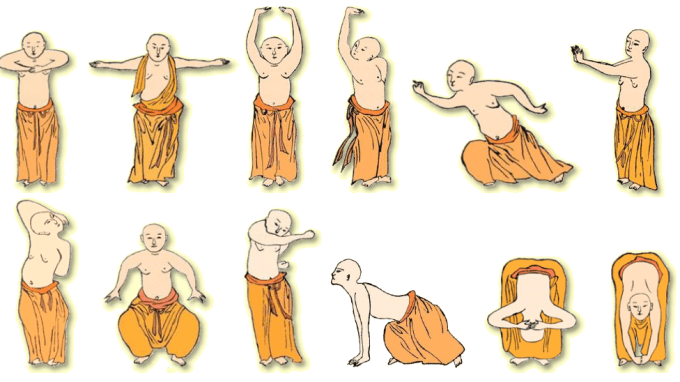
The instructor for this program is Ru Kai an assistant professor of Sports Rehabilitiation Department of Schools of Sports Science and Health. He is also the successor and master of Xisui Neigong, Baduanjin and Yijinjing.
One of the main benefits from studying Mandarin at Capital Sports University is obviously the facilities, access to top coaches plus relatively small class size for language learning.
If you would like to learn more about studying martial arts and learning Chinese check out these great articles.
Take a peek at Jesse Encamp’s video about the 2020 Olympic Karate inclusion.
Now, it has been quite a while since Taekwondo was changed from a demonstration sport to a full medal winning event. This was good for Taekwondo in the same way. I think that the inclusion of Karate will benefit Taekwondo schools again, too.
There are still a great many people who don’t recognize there are differences between Taekwondo and Karate. This will bring people into schools of both arts possibly looking for the other. I hope that our industry takes the opportunity here to promote each other!
I have long taken the stance that the different arts and the different schools are not actually competitors for students. Each art appeals to a personality. Those who like to grapple may not like a striking art. They won’t attend striking schools and vice versa. By “playing nice” with other arts, we can make sure that we all have students who are achieving their goals. This goes for schools within the same art that teach different material or aspects of an art. I am not an Olympic Taekwondo person. I don’t care for the sparring and sport aspect. My school could even be labeled more as Korean Karate, than Taekwondo. Now, this doesn’t stop me from referring students to schools, who play nice and have been respectful, when they ask for that version.
Since the new TMNT movie has come out, we may even see an influx from there. All the parents trying to find places for their ninja younglings. It will be common to get calls asking about programs and age requirements. After chatting with the parents and having an idea what they think they want, I won’t hesitate to direct them to schools where I think it’ll match.
A big point here, for those school owners who happen to read my posts, is that I hope that we truly develop our martial arts community more than we do the martial arts industry.
“Because life is so brief and time is a thief when you’re undecided. And like a fistful of sand, it can slip right through your hands.” (Rod Stewart – “Young Turks”)
Being “undecided” is the same as choosing to not do something. At some point the decision MUST be made to take action. This is a highly promoted concept in personal protection. Choosing to do something to protect yourself has a much greater chance of survival than choosing to do nothing.
Now, timing is a key in choosing when to act! Learning to see the timing comes from training (i.e. practicing to make decisions). One of the ways that martial artists train for this is sparring. If you don’t decide on something to do, you get hit. Your first attempts at deciding what to do could also get you hit but you have now learned what variables go into decision making. This leads to better decisions. Since I live in Minnesota, it is inevitable that I’ll drive on icy roads in the winter. It usually takes a slip or slide or two to remember what to pay attention to after the first snow storm but it doesn’t take long to have the decision making for those situations back in good use.
The previous reflected physical and tangible things to make have to make decisions about. The problem is when we can’t take our decision making skills and apply them to non-physical and intangible things. How to chase your dreams is a great illustration here. How long have you hesitated in making a decision about what to do? How many opportunities have passed that would have let you achieve everything you wanted? “And like a fistful of sand, it can slip right through your hands.” This can be anything from finding that perfect job posting and not applying for it because “it’s not the right time” or allowing “I don’t know how” to interfere with moving forward.
These hesitations will cause nothing but resentment. It will build negative thoughts and create insecurity. The further a person goes down this path, the more they criticize others. More time is spent complaining about how badly things are going than about how well things have grown and developed. The only way that accomplishments can be made is through deciding to get them done.
For many years, Tony Robbins has helped motivate people to work for and reach their goals. The idea struck me hard after reading his quote. I recognized the bunch of little things that I’ve been afraid to work on because I couldn’t believe the outcome would be more valuable than what could potentially go wrong. It has left me with more confusion about how to get these things done but that will change as the plan is decided and the work begun. I know that my students have seen some of this occurring but it can’t be helped because I’m not far enough along to have everything smoothed out. It should be seen by them, though, as the journey never ends and the work continues.
If you have enjoyed the posts here, please consider supporting our Kickstarter project, A New Home for White Tiger Martial Arts, with a donation. The project is running through the end of July 2016.
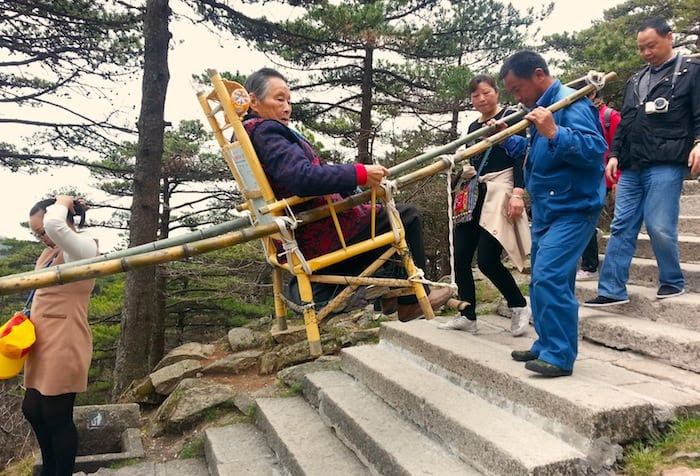
The Yellow Mountain (Huang Shan, 黄山) is among the most visited and notable mountains in China. For those looking for a unique natural landscape and don’t mind having to compete for it with swarms of other tourists, this is the place for you.
You might have to use the new martial arts skills you’ve been learning at your Kung Fu School in order to fend off the other tourist that will be fighting for rooms and places to stay on this mountain. This is not a joke nor an exaggeration. Tensions can get pretty high over the last rooms when the alternative could be a cold sleepless night on this huge rock.
Once your rooms are secured you have two options to get to the top of the mountain. The first is to hike up the mountain stairs. This is the best way to get a good view of the landscape. The other is by Cable Car. The earlier you get the cable car the better. It’s not unknown for their to be kilometre long lines of people even at the break of dawn. If you successfully get on the cable car, expect more hiking.
Once at the top book into another hotel (this should be done in advance). That way you can relax and enjoy both sunset and sunrise the next day. In terms of the hotel quality, expect them to be overpriced, and rough. Prices range from 200 rmb to 1,000 rmb. For the 200 rmb range think refugee camp conditions.
To avoid disappointment I’d recommend you plan to visit off season, defiantly not on a Chinese holiday. Pre-buy and take with you any expensive food items. Whether expensive snacks or a cheeky bottle of rice liquor everything will be way more expensive at the top.
Huangshan, is a mountain range in southern Anhui province in eastern China. Vegetation on the range is thickest below 1,100 meters, with trees growing up to the treeline at 1,800 meters. Wikipedia
Address: Huangshan, Anhui, China
Elevation: 6,115′
Highest point: Xuelian Feng
Province: Anhui
Country: China
Phone: +86 559 558 0033
Listing: Ultra-prominent peak
Mountains: Tian Du Feng, Xuelian Feng, Guang Ming Ding
Plan ahead, check the weather and make sure its off season.
Book your accommodation in advance
Expect lots of people and cues
Bring your survival and luxury rations
Expect things to be more expensive
How to get to Huang Shan
Huang Shan is located in the western part of Anhui province. Below are a couple of options by train from either Shanghai or Beijing.
Shanghai (5 hours on the G1509, leaving in the morning at 8.27);
Beijing (there are fast trains from 8 in the morning to 15.30, and the trip lasts a little under 7 hours) and on the same line, Tianjin;
From the city of Huang Shan, where long distance options arrive, shuttles depart for Tangkou (汤口), adjacent to the entrance to the Park, at the foot of the mountain. If you choose to climb on foot, the climb starts at Tangkou. If instead you’re going for the cable cars, there are shuttles that connect directly to the station, airport and the city of Tangkou obviously. These city buses don’t cost more than 20 Yuan for the longest trip. Even taxis and tuk tuks are available if you arrive from the airport or station, but to get to the cable cars you can only use designated buses.
I think that I’ve got a company that has motivated people who have found inspiration in the challenges of my curriculum – official and unofficial. In fact, they can’t get hired into my company without a very long audition that demonstrates their motivation. Their inspiration feeds their motivation to make a wonderful cycle of personal growth. Another quote is to “Hire character. Train skill.” (Peter Schutz) as skill can be taught but character can’t be. I only want people of character to join me in working on these skills.
Yes, I will use this analogy of working for me because my whole brand and success is based upon how my students present themselves in life. The skills that they develop in my martial arts classes are not so much about learning personal protection as they are about learning about themselves.
This is an important distinction. Until recently, the past two years, I hadn’t been presenting my teaching well. The martial arts classes teach a system that has developed over time that focuses on specific techniques taught for a specific purpose (use) with acknowledgement being given to the lineage that created it.
This is not the same as a personal protection program. These focus on violence and how to survive it. They teach things that can keep you safe in an ugly world. My martial arts classes can teach the concepts and, even, some strategies for violence but it isn’t the same thing. The benefit of a martial arts class does come from being able to apply the martial arts principles, strategies and concepts into daily life.
The daily life applications help show these motivated people that there are things bigger than their job to believe in. The students as a group find ways to serve each other and the school, which then leads them to seeing how they can serve within their community (including other special groups that they belong to). I truly believe this as very few people decide to just “quit” our classes. They have life issues that get in the way. Many find their way back but it isn’t as important as them taking these applications with them.
Last year around this time, I received a graduation announcement from a student who hadn’t been in class to five years. It had an extra little handwritten note from both him and his mother asking me to stop during the party. I went without expecting much and learned that he had left class at 13 years old to focus on music and academics. He used the principles and concepts from Taekwondo, which are really the same in all martial arts just with different words, to reach his academic goals. His success had lead him to starting an engineering program.
I also have a student who is gone during the school year as he works on his Bachelor’s degree in physics, which is changed from his original idea of engineering, and returns for the summers. The chaos of life settles for a bit when he gets to train in Taekwondo again. I just don’t think I want to be around when he and my 2nd Dan Haidong Gumdo PhD candidate in Astrophysics have a conversation.
I have students from a wide range of skills and careers. They all come back and continue training because they see how much it helps their world beyond the physical fitness. I greatly enjoy investing in students. They don’t always see it but their effort and development is also their investment in me.
What is Fali? What is Fajin? Are they the same? Are they different?
A lot of time is spent on power generation at An Wushu. There is, of course, a huge amount of depth to this topic not covered in this article. This is just a short article as we often receive this question.
(Don’t worry if it doesn’t clear everything up! It’s not supposed to: In the West, we usually Learn then Do. At An Wushu, you Do then Learn: An Shifu will explain a small amount about a concept before showing you how to develop it. You’ll go away and practice it for many repetitions, and then when you have the feeling/experience of it, An Shifu will explain much more and it’ll truly make sense. For kung fu, this is almost always the best way to learn.)
Fali
Fali means to ‘release explosive power’ and is something anyone can do to a certain degree. If you go to the gym and lift a heavy weight off the floor, you are using (a low level of) fali.
Fali is performed by compacting the chi inside the body, and the body itself, then reversing this process to strike the opponent. In this way, fali requires a ‘wind-up’, like stretching your arms back before throwing a ball.
A strike performed with fali is a fairly ‘committed’ strike, meaning that even if your opponent moves during your strike, you are still committed to your path. (Do not think fali is not useful for this reason… a fali strike can still be incredibly fast!)
At An Wushu, we believe fali is best exemplified by Bajiquan. The video below shows some Bajiquan to see fali in action.
Fajin
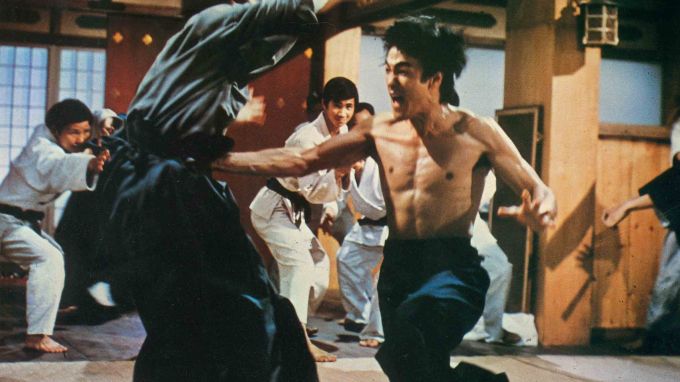
Fajin is the joining of the whole body together (muscle, bone, tendon, ligament, and Yi [intent]) to send out a huge amount of power over a very short distance. Bruce Lee’s famous 1-Inch Punch is what a high level of fajin looks like.
Fajin can be considered ‘super fali’ as it requires no ‘wind-up’. It will naturally be developed as a practitioner’s body control increases from many hours of fali training, however certain styles train specifically for it.
While a strike performed with fajin does of course have momentum and therefore is ‘committed’ in a sense, a practitioner will be able to change directions very quickly compared to a strike powered by fali.
View the video below to watch some Xingyiquan to see fajin in action. Being a shorter body movement than fali, fajin is easier to feel than see; however, if you watch Xingyiquan after watching Bajiquan, you’ll see the explosive movements in each style have a different quality.
To learn more about An Wushu or how to study with Master An full-time in China visit www.StudyMartialArts.Org we work exclusively to help dedicated students connect to quality martial arts schools. This includes visa assistance and independent information all at no additional cost to you. Check us out with no obligation.
People who travel to China without downloading this travel guide are 138% more likely to be unprepared for the journey ahead. All right, so maybe we’re exaggerating this point to grab your attention. However, the fact is that after you’ve read this guide you will know exactly what preparations are required before you begin your journey and also how you can deal with all that China has to offer.
This guide walks you through, the dreaded Chinese visa, what to pack, health and safety, money and banking, domestic travel, living in China, communications and much more.
That look I get when I ask students to work on a drill that moves differently than the other drill. Yeah, the one you just gave me…a bit of confusion.
Part of the Haidong Gumdo curriculum are fighting combinations that we do mostly as a movement drill to develop footwork and cut lines. These combination come from a set of gumbub (patterns) that are also required. They are a lot of fun to work on and provide insights into some strategy.
The real fun comes when we add a partner to play the opponent (i.e. Bad guy). The designed response for the partner can throw off the movement of the combination. Movement angles change, techniques don’t seem to be on target any longer. Students can have a hard time “seeing” what they’re trying to accomplish. That’s when I get the “what are you talking about?” look or the “there’s no way this will make sense” look.
Once I start discussing the bunhae (application) of the movement, things usually start to brighten up. You can see the lightbulbs turning on. This is one of the faults in martial arts training. There are so many drills done, without the variables included, that the actual techniques and combination become ineffective. Students need to keep reminding themselves that they aren’t just learning physical techniques but, rather, parts of a fight. The dynamics of movement will change the whole drill. Yet, I only have given them one possible outcome variation. There are nearly limitless variations for that encounter due to the number of variables within the encounter. It is the student’s job to start looking for these applications while practicing the required version.
But, to get back to the look I get, it makes me wonder why the thoughts and hesitations come up when given an assignment. It seems to contradict that they came to me in the first place to learn the martial arts. The look from senior students is even more entertaining. After years of training with me, they still aren’t seeing the pattern or progression that is used to get them to the endpoint? That look of doubt (“You are goofy thinking that I can do it that way!”) on their faces always gives me a little smile.
All too often, it is forgotten that there is a progression toward learning new techniques and applications. Some are obvious but many are hidden within the drill. If you get too focused on doing only the original drill, then the insights from the different version will be a struggle to find. This is the same for any subject matter. The physical techniques of personal protection and martial arts are easily recognized but there are others. An everyday example is driving. How many people only know two applications for the car – gas or brake? It takes time to see another option – coast. It takes time because it involves more knowledge and developed skill at reading traffic flow and timing for distances.
There is MUCH more in everything that we do. The level of success in any skill or activity is directly related to the development of knowledge and understanding in the subject matter. If you don’t get pushed outside of your comfort zone and knowledge limits, then you will not develop greater understanding. So, the next time your teacher presents something that doesn’t quite make sense, look deeper into the applications and purpose.
If you have enjoyed the posts here, please consider supporting our Kickstarter project, A New Home for White Tiger Martial Arts, with a donation. The project is running through the end of July 2016. Thank you.




 A common example comes from learning any subject. Once you set a goal (earn the next martial arts rank), you must spend the time and effort to learn and perform properly. It is common that students “think” they know their material but fail horribly when tested on it. This is usually from the lack of applying discipline to their training. I use pretests to show students that they aren’t as ready as they think. Once they’ve completed the pretest., I ask them if it was their best performance. Usually, they admit not. My next question becomes “why wasn’t it?” It may take several ranks of repeating this cycle before it sinks in but most eventually recognize that it is discipline that keeps “good enough” from ruining “excellent.”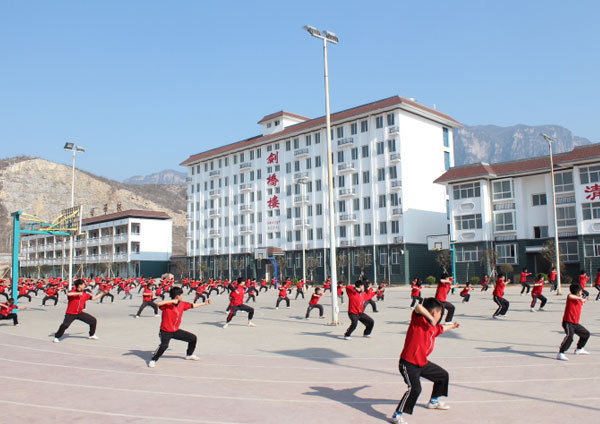


 Being “undecided” is the same as choosing to not do something. At some point the decision MUST be made to take action. This is a highly promoted concept in personal protection. Choosing to do something to protect yourself has a much greater chance of survival than choosing to do nothing.
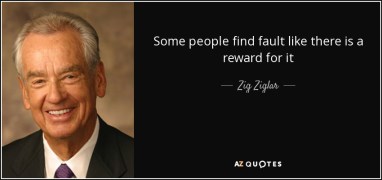 The previous reflected physical and tangible things to make have to make decisions about. The problem is when we can’t take our decision making skills and apply them to non-physical and intangible things. How to chase your dreams is a great illustration here. How long have you hesitated in making a decision about what to do? How many opportunities have passed that would have let you achieve everything you wanted? “And like a fistful of sand, it can slip right through your hands.” This can be anything from finding that perfect job posting and not applying for it because “it’s not the right time” or allowing “I don’t know how” to interfere with moving forward.
 For many years, Tony Robbins has helped motivate people to work for and reach their goals. The idea struck me hard after reading his quote. I recognized the bunch of little things that I’ve been afraid to work on because I couldn’t believe the outcome would be more valuable than what could potentially go wrong. It has left me with more confusion about how to get these things done but that will change as the plan is decided and the work begun. I know that my students have seen some of this occurring but it can’t be helped because I’m not far enough along to have everything smoothed out. It should be seen by them, though, as the journey never ends and the work continues.




 I think that I’ve got a company that has motivated people who have found inspiration in the challenges of my curriculum – official and unofficial. In fact, they can’t get hired into my company without a very long audition that demonstrates their motivation. Their inspiration feeds their motivation to make a wonderful cycle of personal growth. Another quote is to “Hire character. Train skill.” (Peter Schutz) as skill can be taught but character can’t be. I only want people of character to join me in working on these skills.
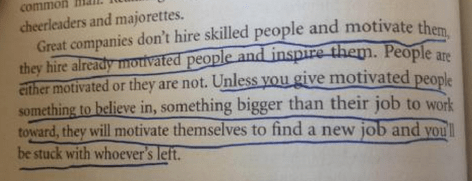 The daily life applications help show these motivated people that there are things bigger than their job to believe in. The students as a group find ways to serve each other and the school, which then leads them to seeing how they can serve within their community (including other special groups that they belong to). I truly believe this as very few people decide to just “quit” our classes. They have life issues that get in the way. Many find their way back but it isn’t as important as them taking these applications with them.
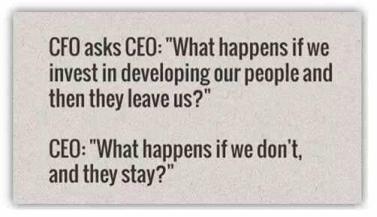 I have students from a wide range of skills and careers. They all come back and continue training because they see how much it helps their world beyond the physical fitness. I greatly enjoy investing in students. They don’t always see it but their effort and development is also their investment in me.
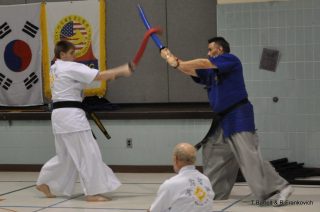 The real fun comes when we add a partner to play the opponent (i.e. Bad guy). The designed response for the partner can throw off the movement of the combination. Movement angles change, techniques don’t seem to be on target any longer. Students can have a hard time “seeing” what they’re trying to accomplish. That’s when I get the “what are you talking about?” look or the “there’s no way this will make sense” look.
 All too often, it is forgotten that there is a progression toward learning new techniques and applications. Some are obvious but many are hidden within the drill. If you get too focused on doing only the original drill, then the insights from the different version will be a struggle to find. This is the same for any subject matter. The physical techniques of personal protection and martial arts are easily recognized but there are others. An everyday example is driving. How many people only know two applications for the car – gas or brake? It takes time to see another option – coast. It takes time because it involves more knowledge and developed skill at reading traffic flow and timing for distances.
 SMA bloggers