
Why There Are No Successful Wing Chun Competitors in MMA (or How to Stop Caring and Just Do Your Own Thing)

by Steve Grogan

PHOTO 1Unless you have had no TV or internet for the last 25 years, then you have heard of the rise of Mixed Martial Arts (MMA) tournaments, which began on November 12, 1993 when the first Ultimate Fighting Championship aired.

Back then, a “mixed martial art tournament” meant something different than it does now. You were exposed to matches that featured a Jiu-Jitsu practitioner versus a Shotokan Karate person, Muay Thai versus Sumo Wrestling, and so on.

I’m not sure if all those styles were paired off in that way, but they are meant to be examples of what MMA used to mean: it was a practitioner of one style versus a practitioner of another style. End of story.

These days it means something different. It means there are two competitors in the ring whose styles are a combination of various arts. Each man is a smorgasbord of styles unto himself.

Many years after the first UFC, Donnie Yen starred in a series of movies based on the life of a gentleman named Ip Man, who was previously known only by his identification as Bruce Lee’s teacher. Thanks to Mr. Yen and these movies, he also became known as the last undisputed grandmaster of Wing Chun.

The caused a spike in Wing Chun’s popularity. People came to it with great curiosity, but they left with nothing but disgust, contempt, and countless dismissive remarks.

The reasons for that are many. It doesn’t look like any other martial art. Most practitioners are not massive brutes. Instead of hitting someone with one killer punch, Wing Chun practitioners rely on the cumulative effect of many short, rapid attacks to overwhelm the opponent. Oh, and they also engage in this silly little “patty cake” game called Chi Sao.

When most people are faced with something new, they react by making fun of it. Wing Chun was no different. Eventually, a few people who practiced this style got sick of all the armchair debates and decided to do something about it, so they started entering themselves into MMA tournaments.

This did not help matters. 98% of the videos you can find on YouTube that say “Wing Chun in MMA” show the so-called Wing Chun person getting trounced. (Honestly, I may even be underestimating when I say 98%.)

Why is this? If this style is so effective that it charmed Bruce Lee into being devoted to it, then why aren’t Wing Chun practitioners cleaning up in the ring?

There are many reasons. Being someone on the inside who has done Wing Chun since 1995, I feel I can offer some real insight into what might be a more coherent answer. Forget all the armchair warriors who just watch a video and say, “Yeah, that wouldn’t work.” This is in-depth, real world analysis.

“It’s not martial sport, it’s martial art.”

Many Wing Chun people (both teachers and students) use this line. In fact, it has been overused.

This is what they mean when they make that statement: since Wing Chun includes dangerous strikes to help a weaker person overcome a larger opponent (finger jabs, groin strikes, etc.), and these things are not allowed in MMA tournaments, that there is no way a person would really be using Wing Chun in the ring.

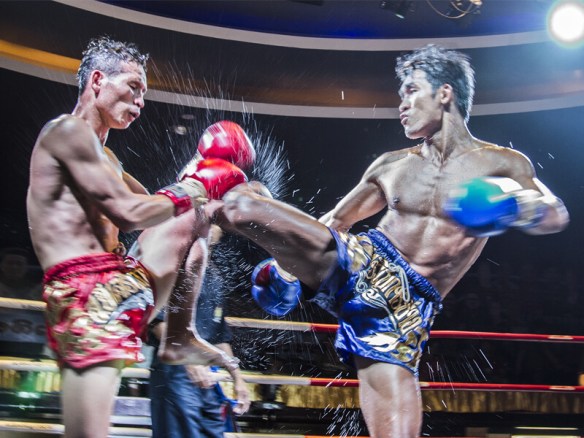
Well, weren’t all the styles we have already seen in MMA considered “martial arts?” Then why is it okay for them to be used in the ring? Why is it someone who practices Muay Thai for self-defense is NOT accused of “not using Muay Thai” when they go into the ring? Many people have criticized this statement, and for once I have to agree with the haters: it’s a copout.
MuayThai5

Also, many of the Wing Chun strikes that are not allowed in MMA are ones that wouldn’t be used all that frequently anyway. Think about it: if some alpha male oaf confronts you at a bar because he thought you were looking at his girlfriend, are you going to bust out the eye gouges and throat strikes? I mean, you might use a groin strike, but not the others.

There are ways Wing Chun could be trained so it is MMA tournament-friendly: just do what those practitioners from other styles did and leave out the techniques that the rules say you can’t use. (Of course, that’s a discussion for another article.)

“Wing Chun is meant to be used in a narrow hallway or something like that, not on a football field.”

This is sometimes switched out for the phrase, “Wing Chun has no outside game.” It implies that if an opponent is more than arm’s length away, the Wing Chun practitioner would stand there, passively waiting for them to get close enough.

The sad thing is, it isn’t only Wing Chun haters who utter this statement. Wing Chun practitioners do it too, which is a tragedy. It’s like they’re mocking the style they claim to love.

I am going to pose two questions now that will blow your mind, and they will make almost anyone who thinks Wing Chun can’t work in MMA rethink their stance. (I say “almost anyone” because some people will still cling to the party line.)

So here are the questions:

Question #1: Isn’t it true that grappling arts like Judo and Jiu-Jitsu are styles that have to be done up close?

Answer: Of course. You can’t grapple if you can’t grab.

Question #2: Isn’t it also true that, in the early days of MMA/UFC, grapplers like the Gracies cleaned up?

Answer: Again, that is a resounding “yes.”
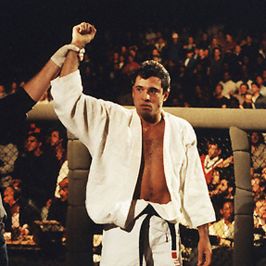
PHOTO 3

If a grappling style like Jiu-Jitsu (which is in a closer range than Wing Chun) can succeed in MMA, then it stands to reason that Wing Chun could also work.

Also, let’s not forget a few other facts about Wing Chun:

  • It has low-line kicks, which can be used to distract AND bridge the gap to your opponent.
  • There is a pole form, which is loaded with long-range techniques. It’s true that a student isn’t taught the pole form until they are several years deep into their training, but they are still there.

I could go into an explanation as to why so many Wing Chun schools hold off on the pole form but, just like with the first issue we discussed, the answer could be another article, so now we will move on to the next concern.

Lots of training at Chi Sao Range

For those of you who don’t know what Chi Sao is, it’s a training tool used specifically in Wing Chun to develop the student’s sensitivity, as well as to develop their reflexes at such a short range. It starts by two practitioners standing less than arm’s length apart and touching their arms together near the wrists. This is known as the Chi Sao “roll.” From here, the practitioners will attempt to strike each other.
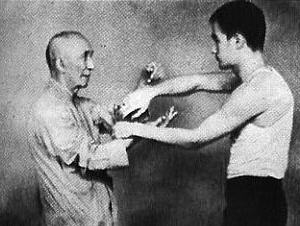
PHOTO 4

While Chi Sao is an indispensable tool for learning how to react in such a small space, there is one flaw in it: the students have already bridged the gap. They miss out on the opportunity to learn how you can get to this range while taking little to no damage as you make your approach.

A good way to eliminate this training flaw would be to have students start from outside the Chi Sao range, so they have to learn the footwork, timing, and defensive skills they will need to get this close without getting pummeled on the way in.

Not taking full hits

Here is another flaw of Chi Sao, although it could be alleviated if the school also made the students spar.

Although Wing Chun people develop the ability to hit hard in short ranges, it’s still nothing like taking the brunt force of a boxer’s right cross. To compete successfully in MMA, the students must get used to being hit.

A lot of “weekend warriors”

The majority of Wing Chun practitioners I’ve met are not prime physical specimens. I’m not talking about rippling muscles or six-pack abs; I’m talking about stamina. If you get winded going up one flight of stairs, you won’t last in an MMA fight.

How can you solve this problem? You are already devoting so much time to Wing Chun that you don’t have the ability to do one of those six-days-per-week, 60-75-minute workouts. Plus, you don’t want to run the risk of overtraining.

Well, you don’t have to. The exercise routine I recommend to all martial artists is called “high-intensity training.” This is not to be confused with “high-intensity INTERVAL training.” The latter is cardio exercises, while the former is all about the weightlifting. I wrote a more in-depth article about it:

High Intensity Training: The Martial Artist’s Answer to the Exercise Conundrum

Also, for those of you who still believe the myth that weightlifting will make you too tense to do well in Chi Sao, check out my interview with Jay Primarolo of BioFitNY:

Does Weightlifting Keep You from Being Relaxed During Chi Sao?

You don’t see pure ANYTHING in MMA anymore.

No Muay Thai, no Karate, no Judo. As I said at the start of this article, all MMA fighters grab techniques from different styles. Granted, there are certain styles they favor over others (as discussed in this article here), but the point remains the same: the days of someone with one style are no more.

This raises the question: if the early days of UFC did feature fighters who professed to have only one style, then why were there no Wing Chun champions popping up back then? I can’t speak for every Wing Chun practitioner all over the planet, but my guess is they adhered to the “martial art, not sport” line.

Even when you see Wing Chun in an MMA fight, it is not recognized as such.

Having said all this, one might think I’m knocking my own style. However, that’s not the case. How is it not? Well, because I’m going to let you in on a little secret: Wing Chun has been used in the ring, and it has worked.

If that were true, then why didn’t anyone see it?

Simple: because it wasn’t recognized as Wing Chun. However, fighters like Anderson Silva, Tony Ferguson, and Alan Orr (plus his stable of fighters) have all used Wing Chun in MMA and won.PHOTO 5

We run into an interesting case with Alan Orr because, even though he does in fact identify as a Wing Chun practitioner, people look at how he fights and say, “That’s not Wing Chun.” On the other hand, if you put someone in the ring who fighting style looks like traditional Wing Chun, and they get pummeled, then people say Wing Chun doesn’t work.

What is the lesson to be learned here? There is no pleasing some people.

PHOTO 6And the other lesson?

Sometimes when people make up their minds to believe something (for example, I’ve gotten into many arguments with people who still believe you have to register your hands as deadly weapons once you reach a certain rank), it’s like trying to wake someone up who has been inside The Matrix too long: their minds just don’t want to let go of that belief.

PHOTO 7

In Conclusion

Wing Chun is to martial arts what the Smashing Pumpkins are to music. The Pumpkins were massively popular, winning awards and gaining critical praise. However, being well-known and being well-liked are two different things, and despite all the records they sold, you’d still be hard-pressed to find a fan of theirs.

To this day it is still very much in vogue to hate the Pumpkins, and this is also the case with Wing Chun: millions of people know about the style, and the majority of them bash it.

It is sad to see people so dismissive of Wing Chun because it is a beautiful, intelligent system. However, unless there are adjustments made to the training methods that will produce some consistently dominating fighters, it is unlikely you will ever see Wing Chun get any credit in the MMA world.

Even when Wing Chun has been successfully used in MMA, it doesn’t get any credit. Therefore, the only thing we can do is ignore the ones we can’t please and focus on training that at least pleases us.

ABOUT THE AUTHOR:

Steve Grogan has been practicing Wing Chun Kung Fu since January 1995. He is the founder of Geek Wing Chun, a website (with accompanying YouTube channel) that provides free tips on how someone can create a training routine at home, should they be unable to make it to class. He is the author of The Lone Warrior, which collects some of his greatest tips in one neat little book, and the developer of The Lone Warrior App, which helps people keep track of the daily goals they set for their training (available for both iPhones and Androids).

MAIN SITE: http://www.geekwingchuninc.com/

YOUTUBE: https://www.youtube.com/c/geekwingchuninc

LONE WARRIOR (BOOK): http://www.geekwingchuninc.com/TheLoneWarrior.html

APP on iPHONE: https://apple.co/2MaBNpp

APP on ANDROID: https://bit.ly/3ceiZQv


Latest School Review – Xinglin Traditional Shaolin Kung fu Academy

Screen Shot 2020-05-01 at 2.10.28 PM

This review from a student highlights why the services provided by StudyMartialArts.Org are so vital when booking the right intensive martial arts experience. With so many kung fu schools to choose from it’s easy to get lost in romantic notions of hard training, and great martial arts masters like Pai Mei.

thumb_complaining-about-horse-stance-sounds-like-sbmeone-needs-more-horse-49215834

“I went for a month and a half and It felt more like a kung fu themed holiday at times rather than a training trip but that may be down to the group I was with. Training was interrupted with snacks and drinks frequently, we were taken to a spa and taken for meals, drinks and karaoke. Many in my group enjoyed this aspect of the trip but if your primary goal is to train hard and improve significantly this may not be the best choice Favouritism is very apparent (he will only learn the names of favoured students) and usually based more heavily on the lightness of your skin/hair than training ethic or character. I have met others who received good quality teaching from Xinglin and come back with greatly improved skill.

I would recommend traveling solo and taking several months out for the best training experience and not asking to learn a particular weapon or style. The food is home cooked and very good, accommodation is comfortable and air conditioned so don’t expect to live like a Buddhist monk.

Translator Cindy is extremely friendly and kind”.

If you would like to read more reviews for this school or other schools in China, Thailand and Japan click this link to learn more with StudyMartialArts.Org.

Yuntai Shan International School Review

Check out this latest Kung fu School review posted by Des from the Philippines. She studied at the school for 1 month this summer.

I studied at the Yuntai Shan International School for one month.

Training begins at 5:50 am and there are four to five compulsory meetings everyday. Students can only leave the school on Wednesday mornings and Sundays OR if you have a valid reason to (e.g., visa renewal in the city center). I begin with this information because, for potential students, this might be something worth considering. During my time there, we did have some people come in from Shaolin Temple who thought that Yuntai Shan was maybe a bit too strict. In my opinion, however, it was just right. As someone who considers myself a complete beginner, I thought the training was very good. The shifus and the rest of the staff are very welcoming and helpful, and that goes a long way towards creating what I felt was a very supportive culture within the school.

Food and accommodation weren’t that great, but they were decent. I was there during the summer break, so I’m not sure if there are more food choices at the canteen when the regular school term is underway. In any case, if what’s offered at the canteen isn’t satisfactory, you can always try the restaurant right across. Every room has its own bathroom and for non-Chinese students, if I’m not mistaken, you’ll at most be two people per room. Rooms do have air conditioning, but they can only be turned on at certain times of the day.


For those who want to sneak in some sightseeing, one of the benefits of the school’s location is that it’s located very near the Yuntai Geo Park, which is classified AAAAA by China’s Ministry of Culture and Tourism (that’s the highest rating they give). I highly recommend asking for a day or two off training to go see it. You can also ask the Shifus to help organize trips to nearby Shaolin Temple or Luoyang.

All in all, if you’re looking for value for money, you can’t really go wrong with choosing this school. I had a great month there and if I ever go back to China for martial arts training, choosing Yuntai Shan again would be a no-brainer.

Booking with StudyMartialArts.Org – I liked how much information there was and that was instrumental in helping me decide which school to attend.

36th Chamber of Shaolin

The 36th Chamber of Shaolin, also known as The Master Killer, Shaolin Master Killer and Shao Lin San Shi Liu Fang, is a 1978 Hong Kong kung fu film directed by Liu Chia-liang and produced by Shaw Brothers, starring Gordon Liu. The film follows a highly fictionalized version of San Te, a legendary Shaolin martial arts disciple who trained under the general Chi Shan.

The 36th Chamber of Shaolin is widely considered to be one of the greatest kung fu films and a turning point in its director’s and star’s careers. It was followed by Return to the 36th Chamber, which was more comedic in presentation and featured Gordon Liu as the new main character with another actor in the smaller role of San Te, and Disciples of the 36th Chamber.

Lengfan – ‘eating cold rice’

by Phillip Star

sunlutangSun Lutang (1860-1933), renowned founder of the Sun styles of both baguazhang and taijiquan rose early each morning in Beijing to walk to his baguazhang practice with the famous master, Cheng Tinghua. Upon completing his bagua training for the day, he’d immediately set out to walk to the other side of the city where he’d train in xingyiquan under the tutelage of the legendary Guo Yunshen (the “Divine Crushing Fist”). That must have been a really arduous task; even in those days, Beijing was huge. The foot traffic had to be all but impassable, but he walked the route every day, in the blistering heat of summer and the snowy days of winter.
In 1938, Masutatsu Oyama left Korea (being a native Korean named Choi Young Li, and he would later adopt the Japanese name, Masutatsu Oyama) to apply at the Yamanashi Aviation School. He had high hopes of becoming a pilot but was refused because of his nationality, so he managed to find a menial job driving a small truck through Tokyo in the wee hours of the morning. After studying karate under Gigo Funakoshi at Takushoku University, he went into the wilds of Mt. Minobu in Yamanashi Prefecture where he trained outside of the small hut he’d constructed. Eventually, he stopped living in the run-down structure and when he no longer received supplies of food from a friend who had been bringing them to him regularly, he lived outdoors…even in the winter! He noted that he’d sleep on the snow-packed ground and hunt for berries and other foodstuffs to sustain him during the nearly 3-year period he spent on the mountain. He would go on to found the Kyokushin school of karate.

1_jEydbfJt1U40419rfecHgQ

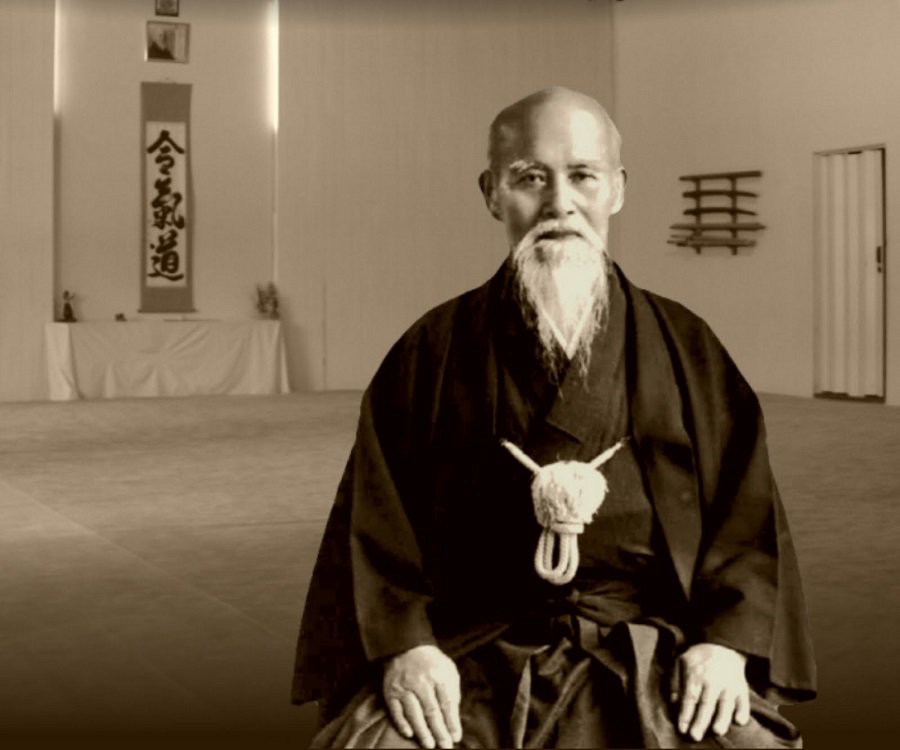
Morihei Uyeshiba (founder of modern aikido) often allowed his most senior disciples to live in his home and he’d wake up in the middle of the night, having dreamt of a new technique. He’d wake his pupils, who would act as his uke (receiver) although they were still half-asleep and bleary-eyed.

And today…students ignore the aches and pains of daily training, push aside the concerns of a day at work or school, and do their best to resist the urge to settle back onto the couch and watch a movie or settle in with a good book. On certain evenings they venture out to class, where they’ll be thrown about and be attacked with a variety of puches and kicks…for reasons that are a little difficult to verbalize. They’re bright enough to understand that practicing their chosen art will likely never land them a Hollywood contract, turn them into invincible super-heroes, or enable them to enjoy a wealthy lifestyle. But they endure through the humidity of summer and the ice of winter to continue travelling their path where the reward for suffering through the phsical and intellectual maze of technique and form is to have more of the same heaped on. And the further they travel along this path, the more demanding it becomes.

Errors and lapses in attention might be forgiven when they are beginners, but illuminated in a harsh spotlight by their teachers as they progress. And finally, as they approach the level where their teachers have no more to teach or even criticize, they may think their journey is nearing the end. Not so. At this advanced level, the practitioner must turn inward to re-examine his technique and lifestyle to seek out weaknesses, impose upon himself even more hardships, and searching for a level of the Way that is increasingly severe.

This is sometimes referred to as “lengfan” or “eating cold rice.” Unless you eat rice as a part of your regulat diet, you may wonder about this expression. Well, the next time you find some leftover rice in the refrigerator, try a mouthful before you warm it back up. You’ll probably find it a bit less than palatable. Very different from the freshly steamed variety. Soldiers in the field would eat cold rice because they lacked the equipment and time to heat it. Bachelors are known to garf it down in the morning when there’s nothing else available for breakfast. A bowl of cold rice can make us appreciate that even the most blessed and fortunate among us will suffer from time to time. Not every meal will be just as we like it…

Eating cold rice puts eating in a new perspective. If we’re hungry, it sustains us. The austere training of the martial will fill our bellies even though it’s not as tasty as we’d like. The austerity of practce in the martial Ways is a lot like that…they are disciplines that are stripped of self-indulgences and ego decorations. To follow them requires a certain amount of stoicism and an enduring spirit. The true martial artists doesn’t mind cold rice; he sees it as an essential means of improving himself and perfecting his spirit.

He doesn’t prefer cold rice, but he accepts it; he knows that true contentment is not gained through acquiring things. If one cannot be happy or content unless they have hot rice (or that new car, or the latest fashionable shoes…), one is probably going to live a very unsatisfied, unhappy life. But if you can be content with the rice – hot or cold – chances are that you’ll find contentment in everything life offers.

The masters of days past ate cold rice many times in their lives; they endured and moved forward. Their lives weren’t centered pn material goals; they’d accepted a different path – one that requires accepting some hardships. Without such a stoic outlook, they’d have learned much less than they did. One well-known author said that all of the valuable lessons he’d learned in life were learned through suffering. So those who have chosen to follow the martial Ways must determine in what direction they want to go. But they must be prepared to eat a bowl of cold rice from time to time…

0025bc9ba44e1e3c3a75a84a18b3c167

Visual, Auditory and Kinesthetic Learning Styles in Grappling

by Charles Smith

Overview

People learn in many different ways and no two people learn in exactly the same way. As a coach you can help your players train more efficiently if you teach in a way that takes into account the various differences in their learning styles.

In this article.. I cover three basic styles: visual, auditory and kinesthetic.

Visual learners want to see how something is done. Auditory learners prefer to hear explanations and like to talk their way through things. Kinesthetically oriented people want to get lots of hands-on experience so they can feel how something is done. I’ve covered each of these sensory learning styles in their own article, linked at the bottom of this page.

As you read the articles keep in mind that everyone uses a mix of learning styles. Some people have one dominant style, and use the others only as supplements, while other people use different styles in different circumstances. There is no right mix. People’s learning styles are also quite flexible. Everyone can develop ability in their less dominant styles, as well as increase their skill with styles they already use well.

Note to Coaches:
The key for you as a coach is to present information in a multi-layered mixture of styles. Don’t get stuck teaching in just one mode. Make sure you’re doing all you can for each style and pay particular attention to how you can blend the styles together.

Finally, and perhaps most importantly, you should help your students discover their own learning styles and how to make the most of them.

Check out this great article Charles Smith. You can find the full article here.

Teach or Train

By Phillip Starr

    Over the years, I’ve heard several martial arts instructors remark that they like to “work out” in the classes that they teach and/or that they use the classes as their own workouts. I think this is a very bad idea for two reasons…

     First, it cheapens the instruction received by the students.  If the teacher is focused on himself and his own workout, he is not able to closely observe what his students are doing.  If he had to stop periodically to make corrections here and give encouragement there, or explain a particular principle or concept, his workout would be constantly interrupted.  If he really intends to work out, he must be wholly attending to what HE is doing rather than on what the students are doing.

    Secondly, if the instructor allows his personal workout to be constantly interrupted, he isn’t able to focus completely on what he’s doing.  It’s really not much of a personal workout at all.

     Using class as his own training time takes away from the quality of instruction received by the students and also ruins the teacher’s workout as well.

     I have told teachers (who informed me proudly that they simultaneously utilize class time as their own workout time) that they really must stop doing so.  I told them that in class, they should devote themselves to TEACHING and pay attention to the students.  Their own workouts must be conducted separately, on their own time.  Class time is intended for the students.  Period.

WU WEI SI – LIVING IN A CHINESE KUNG FU TEMPLE — THE VEGAN VOYAGERS

If you’ve been searching for a peaceful retreat from a busy western lifestyle, want to learn Kung Fu, get to know the ‘real China’ or just looking for tasty vegan food, this is the complete guide to living in a Chinese Kung Fu Temple! Wu Wei Temple, a Buddhist monastery, with a 1000 year history, […]

via WU WEI SI – LIVING IN A CHINESE KUNG FU TEMPLE — THE VEGAN VOYAGERS

The Pros and Cons of BJJ Video Instructionals

Everyone wants to get better at BJJ, right? But how? Enter the BJJ instructional. Whether it’s by DVD or an online course, the thought of getting instruction from a well known instructor is tempting. And while finding the best online jiu jitsu course can sometimes be a challenge in and of itself, what is even more difficult is learning how to best utilize the instruction.

Will a DVD or online course really be the lynchpin that improves your closed guard game? It could be…if done right.

Let’s review the pros and cons of learning BJJ by video and how you can get better at BJJ with instructionals.

Advantages of learning BJJ with video instructional

How many times in class have you said to your instructor: “Can you repeat that technique?” Fortunately, when you are watching a video clip all you need to do is to hit the rewind button to replay the instruction. You no longer have to be that guy (or gal) who always wants to see it just one more time.

Another advantage to online bjj training is that you can really focus on nuance. By this we mean that you can find just about any position or technique and have it explored from many perspectives. You are not just limited to what your instructor says on a particular evening. With the explosion in instructional content, you can find entire encyclopedias of BJJ knowledge, so to speak, that will help you become a better grappler for a particular position.

A third advantage to learning by DVD or online is that you get access to world class instructors for pennies of what a seminar might cost. Seriously, this point cannot be emphasized enough.  How much would it cost to have a private session with Marcelo Garcia? You probably do not want to know…

Last, the production value of instructionals has increased over the years. As Modern BJJ has evolved so has the quality of the BJJ instructional. These courses are not your 1990s martial arts VHS tapes, or heck, even early 2000s DVDs for that matter. These days, you can expect that a course will offer good sound, lighting and editing to enhance the learning experience.

Disadvantages to learning BJJ with video instructionals

There is no substitute for learning in a real life setting. You could watch every BJJ video online and still not improve one iota if you never practice the techniques in real life.

The main disadvantage with learning BJJ by instructional is that you cannot receive live feedback. Yes, a training partner can help, but unless they are a coach or higher level belt, you won’t know if you are doing the techniques properly.

How to best learn with a BJJ instructional

Here are three tips for learning BJJ by DVD or with a subscription online.

First, alway have a training buddy. This will emulate actual training like at your gym.

Learning by yourself is tough. And since BJJ is done against an opponent you are missing half the equation if you are just watching a DVD or course by yourself. Find a training partner and watch the material together. This is the most practical way to get better.

Second, review what you learned on an instructional in your actual class. Find time after a training session to put your new techniques or approach to the test. This should sound simple, but you need to practice these techniques just like everything else you learn from your actual profesor.

Third, take notes! If you take notes during your actual BJJ class this should be a no brainer. Taking notes helps reinforces concepts. Approach the video lessons as you would a normal academic course. Write down what you learn and then try to summarize the principles. Of course, BJJ is not a writing sport, you must eventually practice on the mat!

Conclusion

BJJ is a sport that takes time to learn. Learning online can help speed up this process, but it must be used in conjunction with your real life training, not against it. Stay focused and study with a goal in mind.


History of East Asian Martial Arts: Week 7 – Buddhism and Martial Arts — Kung Fu Tea

Introduction I have noticed a persistent tendency by some to strive to maintain an artificial barrier between the physicality of martial arts practice one the one hand, and the myriad ways it is discussed in literature, film and popular culture on the other. Typically this is articulated as a frustration with the inability of the […]

via History of East Asian Martial Arts: Week 7 – Buddhism and Martial Arts — Kung Fu Tea