
Introduction
Opportunities come in many forms, even in the guise of a sore throat. Since I have been feeling a bit under the weather I decided to use the next few days to catch up on …

Martial Arts Travel & Training
Study Martial ArtsIntroduction
Opportunities come in many forms, even in the guise of a sore throat. Since I have been feeling a bit under the weather I decided to use the next few days to catch up on …
The road that links Yunnan’s three main backpackers haven from Dali old town (大理古城) to Lijang (丽江), the former capital of the Naxi Kingdom, and the ancient Tibetan town of Shangri-la (香格里拉) a…
Source: From Dali to Shangri-la | Off-the-beaten tracks itinerary in Yunnan
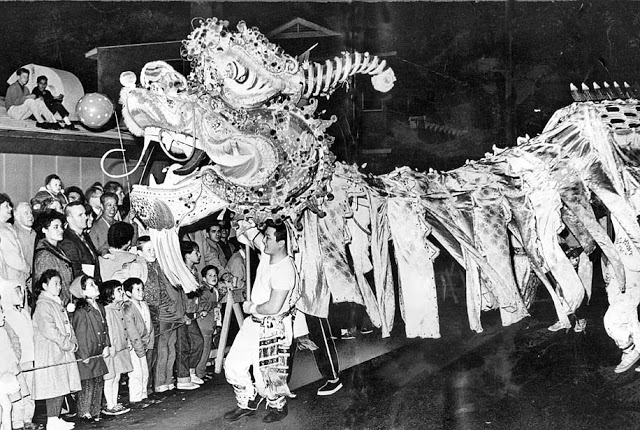

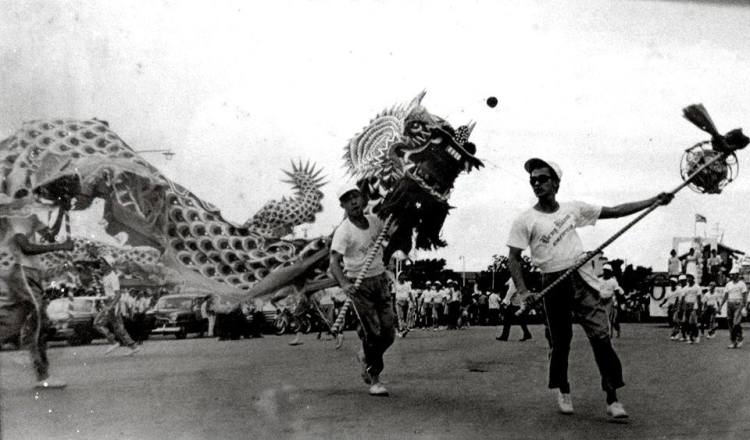
The Spring Festival (or “Chinese New Year”) is now upon us. The most important holiday of the Chinese social calendar, this time of year is also significant for students of martial arts studies. It is a busy time for Lion, Qilin and Dragon Dance associations, as well as the martial arts schools and community groups that sponsor them. Indeed, it is a time of the year when martial skills and values are on public display. They can be seen in the various sorts of street processions that have long been part of life in Chinese communities as well as in smaller martial arts and dance exhibitions celebrating the season.
Source: Martial Values, Social Transformation and the Tu Village Dragon Dance
You owe it to yourself not to be the drunken foreigner and more importantly the wrong type of drunken foreigner and let yourself down. Remember the purpose of your journey is to Study Martial Arts. Heavy drinking won’t help you reach your aims and objectives and may cause you, your hosts or school and Shifu to loose face (embarrassment).
Drinking in China and smoking is common place. With cheap alcohol and cigarettes everywhere, this is not the best place to run away to if you want to change these bad habits. This must start at home.
Most social drinking in China is primarily associated with eating. Most drinking takes place around the dinner table and meals as a way to cement relationships and do business. As a topic this subject could easily have a series of blog entries but that will be a story for another day.
Here are my top 5 tips for surviving drinking in China in brief.
1. Showing respect when drinking is probably one of the first things someone will explain to you. When drinking tea or when drinking alcohol with a superior clink your cup/glass lower. Its super simple and easy to remember. But its much appreciated by your elders, fellow guests, shifu’s. The rest of the customs and rules need not be learnt straight away and are things you’ll pick up on or learn as you go. As a foreigner you’ll not be expected to know them or everything.
2. When inviting or being invited out for dinner or meals in China. The standard rule of thumb is usually the inviter pays unless stated otherwise.
3. When drinking follow the lead of others at the table in terms of speed quantity and times. Whatever you do avoid mixing baijiu and beer. You should remember drinking in China can start very slowly but once the individual toasting starts it can be rapid and all those small cups will start catching up on you especially if you’ve insisted on drinking out of turn.
4. If you don’t want to drink have an excuse prepared in advance or warn your host of this. Excuses related to health tend to be the best. Having tried many over the years these where best received by hosts and guests. If you’re not going to be drinking much but still want to show respect have tea ready in your cup and don’t empty the cup (ganbie) just drink as you wish (suiyi).
5. Eat, eat and eat. Show appreciation and be a good guest.
If you would like to learn more about how to survive in China why not check out my post on 10 Mistakes Foreign Martial Arts Students Make in China.
by An Jian Qiu
At An Wushu, we believe that if you want to use your kung fu in combat, you must train hard qigong.
(What is hard qigong? Breathing and conditioning exercises that make your body harder, more resistant to pain, and able to give and take more force without becoming injured. Breaking a brick with your hand is probably the most well-known example.)
Many schools don’t share this belief, so it makes sense you may be wondering why…
Let’s look at a hypothetical scenario: Imagine if you were to go and punch a brick wall as hard as you could, right now. What do you think would happen? You’re probably thinking about:
Hurting your hand badly, maybe even breaking your fingers or wrist
Losing your calm due to the pain
Instinctively hunching over your posture and holding your damaged hand to your chest
Why did this happen?
Obviously, the brick wall was much harder than your hand and wrist… or put differently: your body wasn’t strong enough to deliver your strike.
And what if you’d been fighting a live opponent? Losing focus so drastically can be the difference between life and death or victory and defeat.
Of course, hopefully your opponent isn’t as hard as a brick wall(!), but the difference is small when you’re both moving at high speeds and impacting at the strange angles of real combat, not “straight-on” like when you hit a bag. If you’re unconditioned, it doesn’t take a lot of force to become seriously injured.
Hopefully this has shown you why hard qigong is so important for offense.
What about for defense?
The example is obvious: imagine you get punched in the stomach so hard that you lose track of your senses. The next hit is definitely coming for your head!
At An Wushu, one of the things we recommend all new students do is ask Shiye (Grandmaster) An De Sheng if you can touch his stomach. No, we aren’t crazy… despite being 67-years-old, an age where most will have lost all their muscle mass, Shiye’s stomach is harder than steel from years of hard qigong. (The look of surprise on a new student’s face when they poke Shiye’s stomach is always a fun moment for older students.)
This is what days and days of hard qigong training does to the body: your body becomes not just firm like from working out, but literally hard like iron. This is where the name ‘Iron Body’ comes from.
As you progress through lower levels of training, you’ll find yourself taking less damage: receiving less bruises from sparring and watching them disappear much more quickly.
At higher levels of training, this protects you from even more harm, you heal amazingly quickly, and eventually, your opponent will hurt themselves by hitting you! The level of focus you can now have in training and fighting is what it needs to be for you to reach a truly high level of kung fu skill.
As a bonus, the hard chi that is packed into your body by hard qigong also greatly increases your physical health, your strength and your ability to fali/fajin (generate power). There are schools of Daoism that practice hard qigong purely for its health benefits.
These days, hard qigong isn’t so popular and has been lost from many styles, but in the years of true masters, hard qigong was a core part of all traditional kung fu systems. The ability to survive both your own offence, and your opponent’s, is a non-negotiable for a true fighter.
An Jian Qiu, is the headmaster of An Wushu International Martial Arts School in Dezhou, Shandong Province, China.
For further information on studying at An Wushu or other traditional martial arts schools in China visit www.StudyMartialArts.Org
by Sifu Adam Mizner
When I am teaching classes or workshops on taijiquan I always emphasize the three principles of timing, placement and power.
These three skills are not only fundamental to acquiring real world taijiquan skills but are fundamental to the successful application of any martial arts technique.
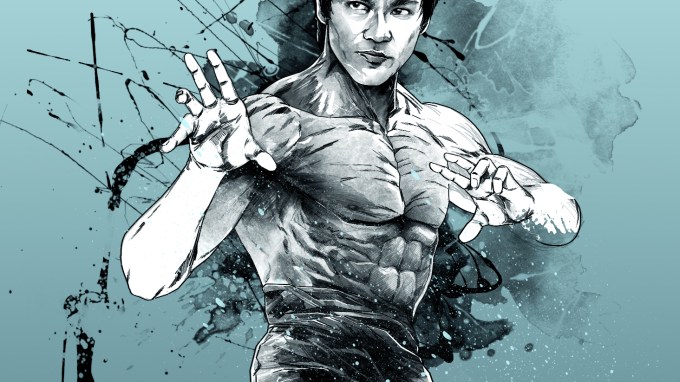
 Bruce Lee and other famous martial artists often talk about speed as one of the most important attributes of a successful martial artist. This is not untrue, though I would say that timing is more important than mere speed. It is certainly possible to miss the mark because one arrives too early or is too fast.
Understanding this we should strive to master timing rather than just speed. When we arrive “on time” in this way, our opponent is where we perceived him to be and our technique is neither early nor late. In tai chi chuan this ‘correct time’ is when the opponent has “fallen to emptiness”, he is off balance and frozen or double heavy. This is the right time to attack and finish the confrontation. Many attacks delivered with the wrong timing are not as effective as one that is delivered on time, whether it be delivered fast or slow.
The skill that is most often overlooked in modern martial arts training is the skill of being in the right place at the right time, not just applying the technique at the right time. This is referring to the footwork, angle of attack, distance and also the impact area. The training to develop this skill of placement is honed and refined in tai chi chuan within the arena of push hands practice. It is here within pushing hands that we can investigate and ingrain all the different body positions and their advantages and disadvantages.
Push hands allows one to train this in a safe way and to get familiar with the up close and personal fighting range of tai chi chuan, a range that is shared by very few styles, somewhere between the clinch range and the striking range. This taiji range gives us the advantage of being able to strike or throw without changing range and keeps us in a range that most opponents simply are not familiar with.
When you placement is correct you naturally exploit the weakness in your opponent’s structure while capitalizing on the strength of your own. The application of Da or Fa will leave you in a perfect structure, neither confined nor over extended and the placement and angle of the body and arms should make you as safe as possible, whilst still being able to apply your technique on the opponent.
It is said in Chinese martial arts that Gong Li or power is the most important skill a martial artist can possess. I consider this to be absolutely true and in my teaching and training I place a great deal of effort into the development of power.
Just imagine fighting with a small child who has many techniques, has good timing and good placement but lacks power. The child would be unable to finish the fight and we, as grown adults could easily defeat the child simply with power, even with little technique. This illustrates the importance of Gong Li or power in martial arts.
Waijia cultivates Gong Li with many methods, including various kinds of weight lighting and resistance training, striking bags to develop powerful full body coordination and conditioning of the body to make the body hard and resistant to impact. Within the Neijia schools the development of Gong li is equally important, however the method to attaining it and the kind of force we generate is very different. This is where the differentiation between Jin and Li becomes important. While Li is generated by the contraction of muscle and the acceleration of mass, Jin is generated by the release of tension and the propagation of waves of force through the body. This topic is beyond the scope of this short article, we can look at it in a future blog.
For practical purposes, in taiji quan the jin is cultivated through the practice of standing pole, form practice and sometimes heavy weapons. Although the jin is cultivated in such solo trainings it is in the partner practice of pushing hands and fajin that we learn to refine this power and how to apply it with timing and placement. When these three skills of timing, placement and power come together, we have the almost magical looking effortless power that tai chi chuan is famous for.
In the below video you can see a demonstration of timing, placement and power.
Sifu Adam Mizner teaches Yang Style Taijiquan (Tai Chi Chuan), in the tradition of Huang Sheng Shyan and Yang Shao Hou. With his Discover Taiji online training programme you will find one of the most complete and powerful traditional Tai Chi Chuan systems available today. The programme openly provides all of the tools, methods and training secrets his personal students at the Heaven Man Earth Taiji school have been enjoying.
Kron Gracie is the youngest son of the legendary Rickson Gracie, the whole Gracie family are probably the most well known family in the world of JJiu Jitsu. The Brazilian fighter has continued on his family and country’s tradition in the emotional evolutionary martial art.
Kron shows the best chess like strategy approach to Jiu Jitsu with skilled maneuvers and angles that represents the purer movements of the martial art.

Learn more from the source by clicking the link below.
Source: Martial Arts Focus: Kron Gracie

I have but little talent and shallow learning, and my skill level is quite inferior. How could I presume to make books and invite ridicule from experts? It is simply because the great benefit I have received from martial arts I would not dare to keep to myself. I want to share it with my compatriots throughout the whole nation, particularly those who are weak or often ill. With constant practice, martial arts can turn the weak into the strong. As I do this out of a mentality of self-love and caring for others, I have roused my courage in hopes that my small efforts will bring about a large benefit.
When I was young, I was constantly ill. Once I became an adult, I was still frail and weak. Medicines had been having no effect, to the great anxiety of my parents, but in our town there was a Fu Tingjia, who was an expert in martial arts, so they asked him to give me instruction. After just a year, all my chronic ailments had quickly been cured, and I was also inspired to take it further. At that time, the well-known Taiji expert An Dingbang was teaching at the Beijing Health & Fitness Society, so I left home to approach him for instruction. His skill was exquisite, his teaching method was systematic and patient. I trained hard from morning to night, feeling blessed to have access to such teachings. My strength grew to abundance and I had been transformed.
Follow the link to learn more……
Here is our latest StudyMartialArts.Org Video. In this video you’ll see footage from our visit to An Wushu Family Martial Arts School.
An Wushu International Martial Arts School is a kung fu school steeped in family tradition. Located in Prefactured City of Dezhou within Shandong Province the school is just two hours from the capital Beijing by fast train. Dezhou and the School is therefore easily accessible for those wishing to experience traditional Chinese martial arts training.
The school offers both full-time and part-time classes to both Chinese and international students with the international students primarily being taught by An Jian Qiu.
Teaching at the school takes place in a picturesque setting and there is both indoor and outdoor facilities. This school offers a warm welcome to those who are serious about studying martial arts and learning about Chinese culture. Recent improvements to the school mean that it can cater for long term students providing both accommodation and food.
Like and share…

This modern wushu form in the video below was created by Jet Li in 1989 and is based on one of his favourite poems Man Jiang Hong.
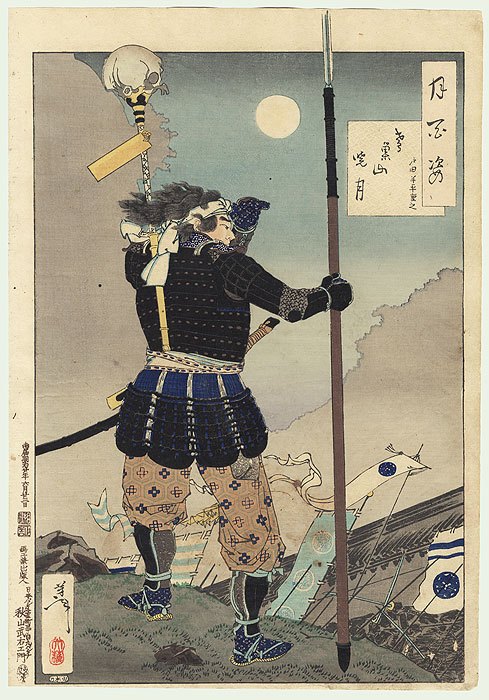
Mǎn Jīang Hóng (满江红; literally means All are red in the River) and it is the title of a set of lyrical poems sharing the same pattern. If unspecified, it most often refers to the one normally attributed to legendary Song Dynasty general and Chinese national hero Yue Fei.
Man Jiang Hong
My wrath bristles through my helmet, the rain stops as I stand by the rail;
I look up towards the sky and let loose a passionate roar.
At age thirty my deeds are nothing but dust, my journey has taken me over eight thousand li
So do not sit by idly, for young men will grow old in regret.
The Humiliation of Jing Kang still lingers,
When will the pain of his subjects ever end?
Let us ride our chariots through the Helan Pass,
There we shall feast and drink barbarian flesh and blood.
Let us begin anew to recover our old empire, before paying tribute to the Emperor.
(Traditional Chinese Original)
满江红
怒发冲冠,凭栏处、潇潇雨歇。
抬望眼,仰天长啸,壮怀激烈。
三十功名尘与土,八千里路云和月。
莫等闲,白了少年头,空悲切!
靖康耻,犹未雪;
臣子恨,何时灭?
驾长车,踏破贺兰山缺!
壮志饥餐胡虏肉,笑谈渴饮匈奴血。
待从头,收拾旧山河,朝天阙!

